Every company sits on a mountain of internal knowledge — contracts, technical manuals, compliance policies — that traditional AI models simply cannot access. When a general-purpose LLM answers a question about your business, it either guesses or hallucinates. Retrieval-Augmented Generation (RAG) solves this by grounding AI responses in your actual documents, but doing it securely is where most projects stumble.
In my 20+ years leading IT and Web3 initiatives, I've seen brilliant RAG prototypes die in production because nobody thought about data governance. Let me share what actually works.
Why RAG Beats Fine-Tuning for Internal Knowledge
The instinct is often to fine-tune a model on company data. In practice, that's expensive, slow, and dangerous — once information is baked into weights, you can't easily "unlearn" a leaked salary table or an outdated contract clause.
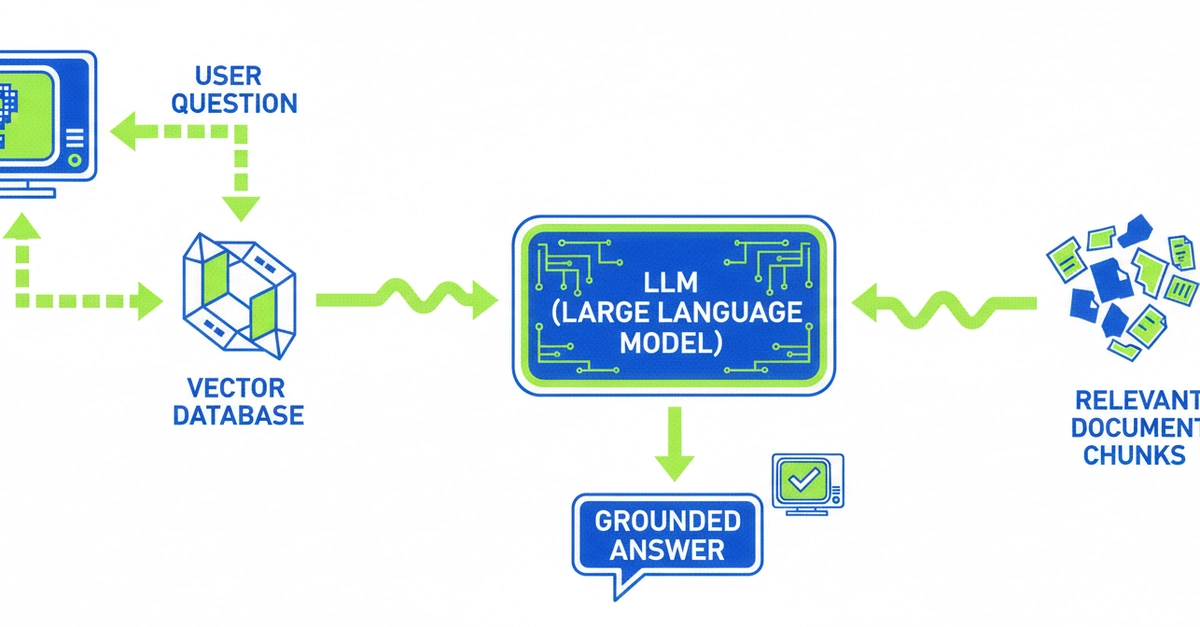
RAG takes a smarter path. It keeps your documents in an external vector database and retrieves only the relevant chunks at query time. The architecture looks like this: