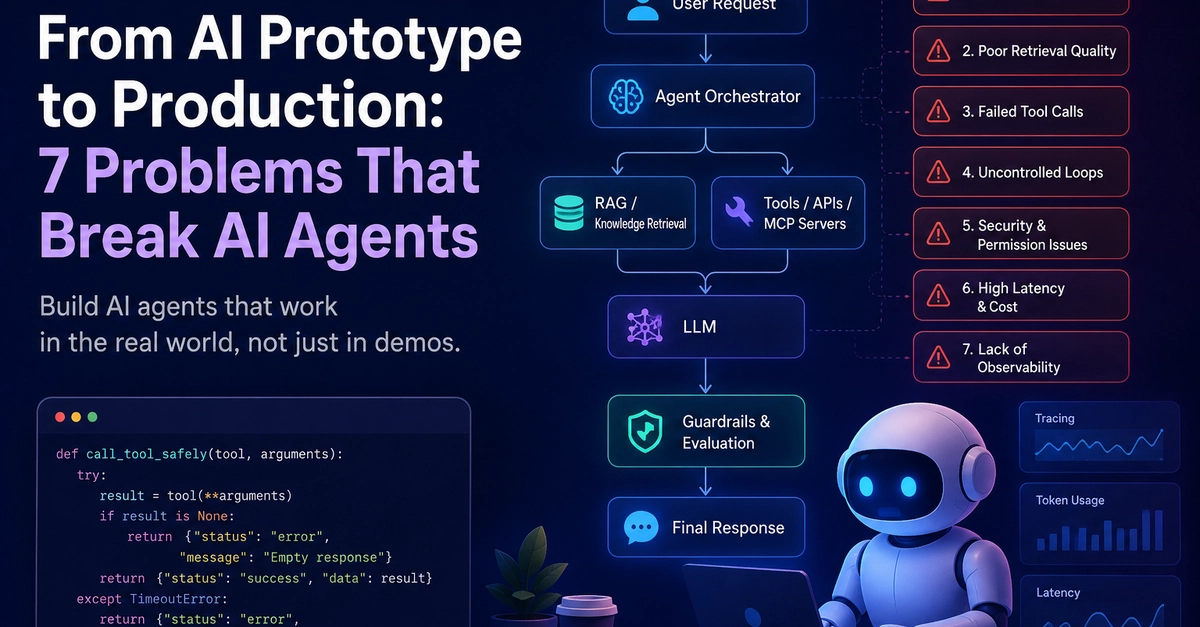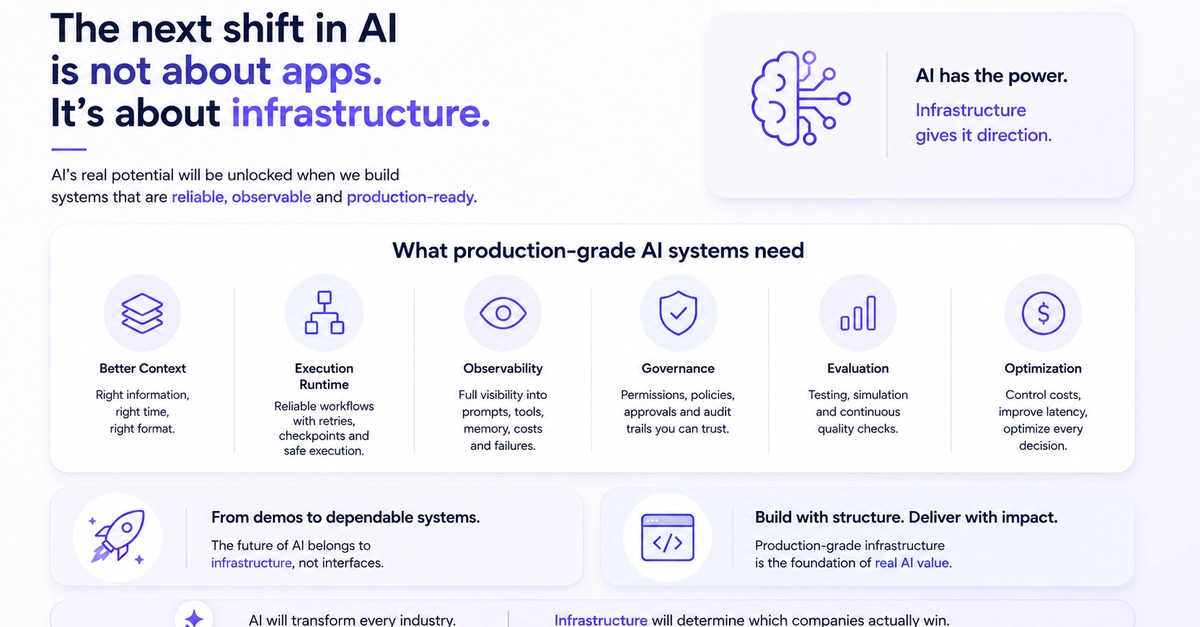
Remember when everyone was building wrappers around large language models and calling them revolutionary? That era is officially over. The excitement around AI agents has shifted from what they could do in a controlled demo to what they actually do when left alone with your company's production database. It turns out that building a prototype that books a flight or drafts an email takes about an afternoon. Keeping that same agent from hallucinating, racking up a massive API bill, or deleting critical data over a six-month period is a completely different story. Demos are cheap.
As we move deeper into the operational reality of artificial intelligence, the conversation has shifted from raw capability to reliability. Here is what it actually takes to get these systems out of the sandbox and into the wild.
The Shift from Flashy Pilots to Boring Reliability
In the rush to adopt AI agents, many organizations have hit a hard wall. According to industry observations on 2026 trends highlighted by gaper.io, the vast majority of agent pilots never actually make it to production. The reason is simple. A demo runs on clean, hand-picked data. Real life is messy, unstructured, and unpredictable.
When an agent encounters a situation it has not been programmed to handle, it does not just stop. Often, it tries to force a solution, leading to cascading errors that can disrupt entire business pipelines. This is why the focus has shifted from raw capability to rigorous evaluation. Enterprises are no longer impressed by a model that can write a python script on stage. They want to see the evaluation suites that prove the agent will behave predictably under stress. Predictability is the new metric of success, which is really a build vs buy decision in disguise, since the answer usually comes down to whether a team can actually verify the thing before it touches real users.