Most developers have built an AI agent demo using LangChain or LlamaIndex. It takes less than fifty lines of Python to get a chat interface that queries your database or summarizes a document. But there is a massive chasm between a local Streamlit prototype and an agent running reliably in a production CI/CD pipeline or enterprise workflow.
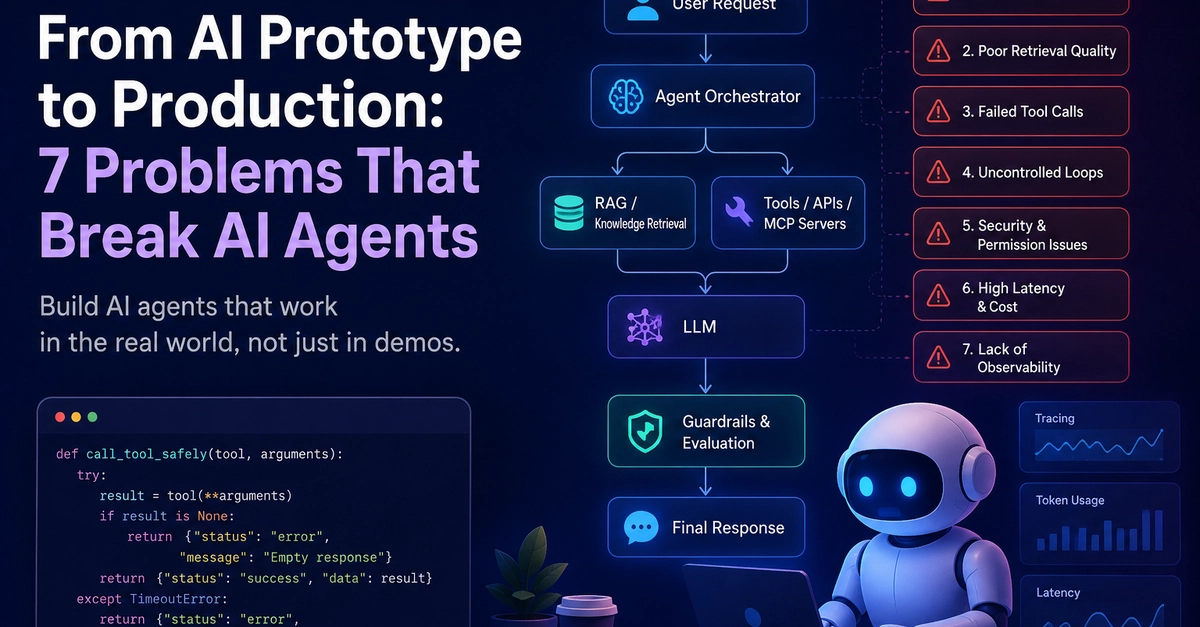
When you move agents to production, the challenges shift from prompt engineering to system engineering. You must handle rate limits, state persistence, transient network failures, and unpredictable LLM outputs.
Moving From Chat Interfaces to Event-Driven Agents
A production agent should not live in a standalone chat window. Instead, you need agents that act inside the workflow your team already uses. This means building event-driven architectures where your agent triggers based on specific webhooks, processes the payload, executes sandboxed tools, and writes the output back to your existing databases or communication tools.
Consider a robust ticket triage agent. Rather than waiting for a human query, the agent listens for new ticket webhooks, retrieves historical context, runs a classification step, and updates the database.