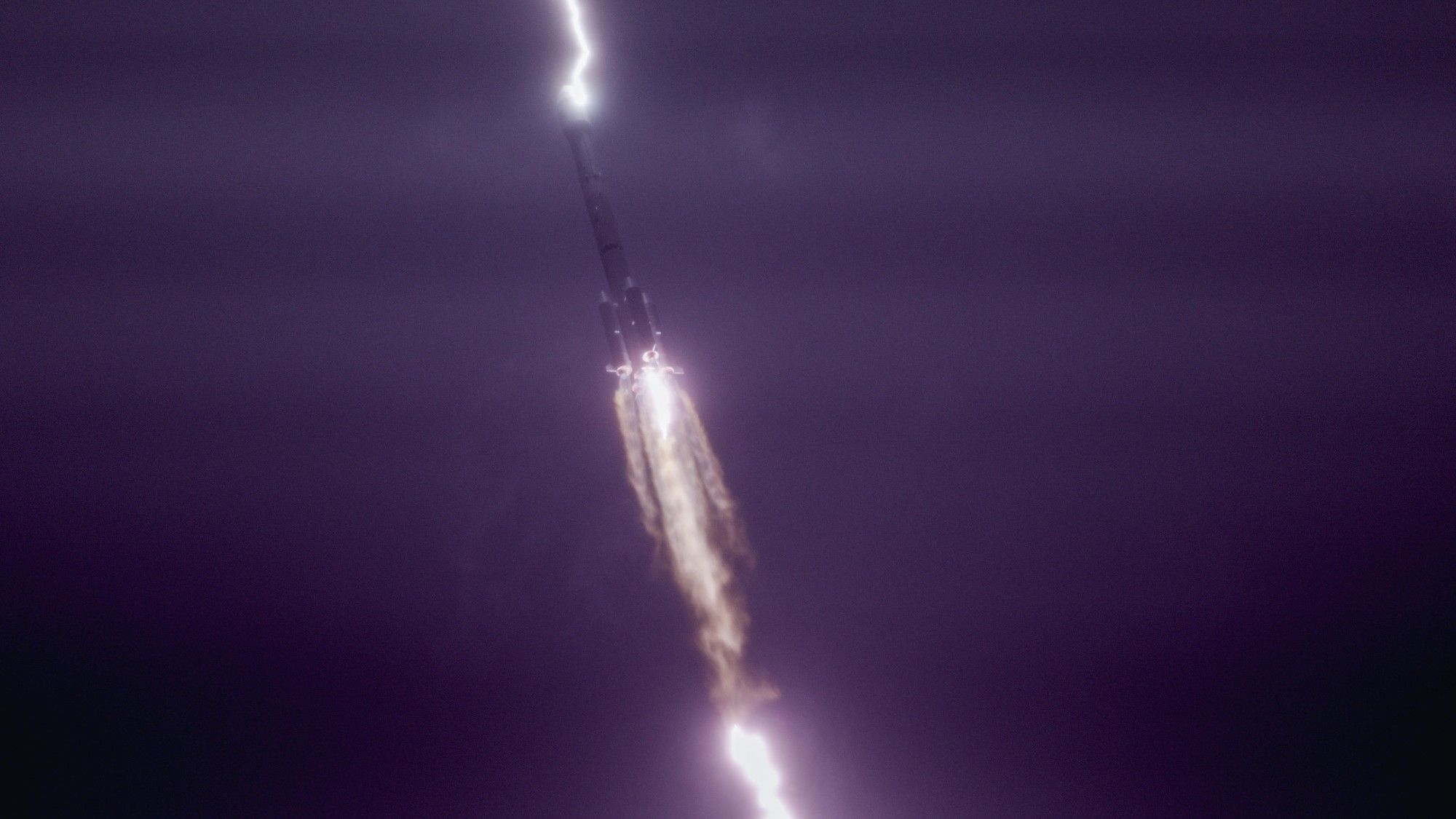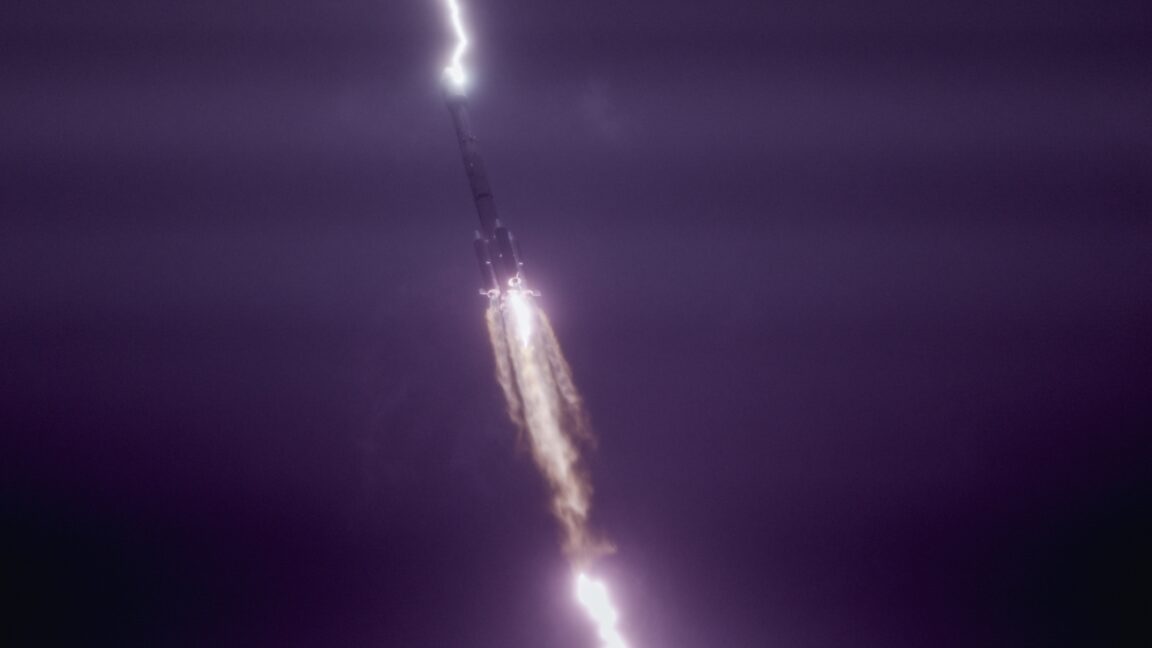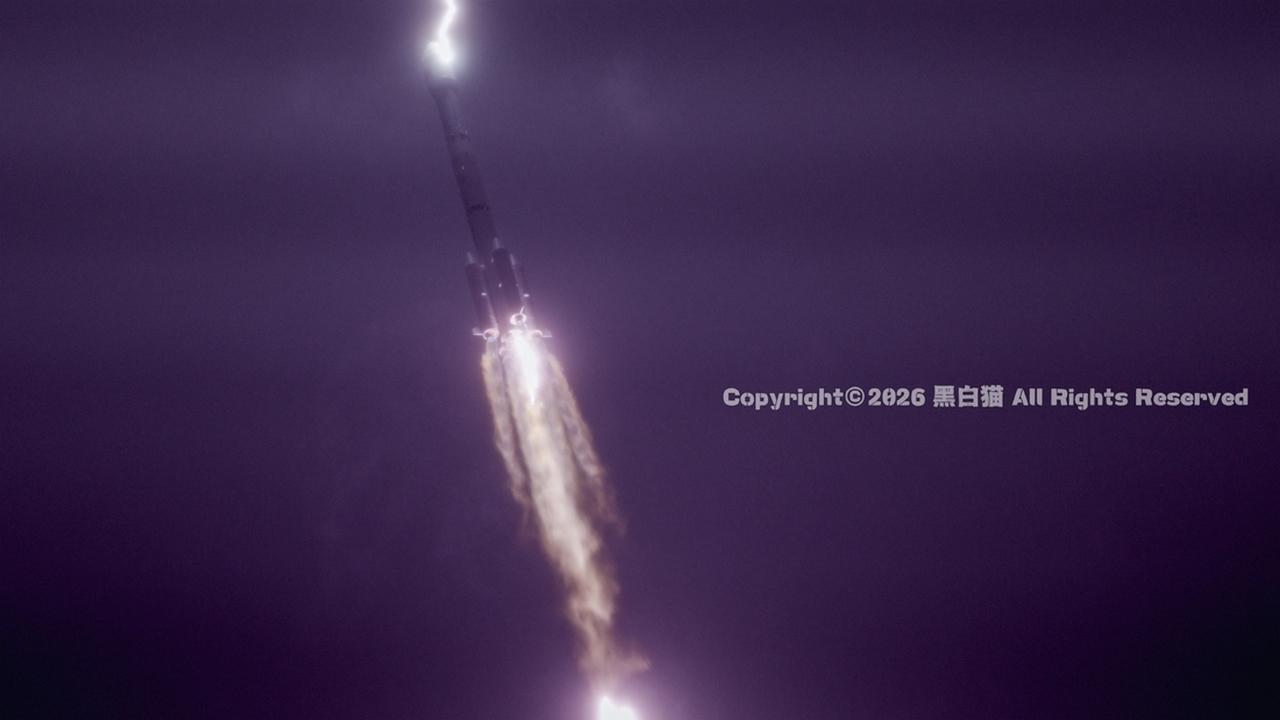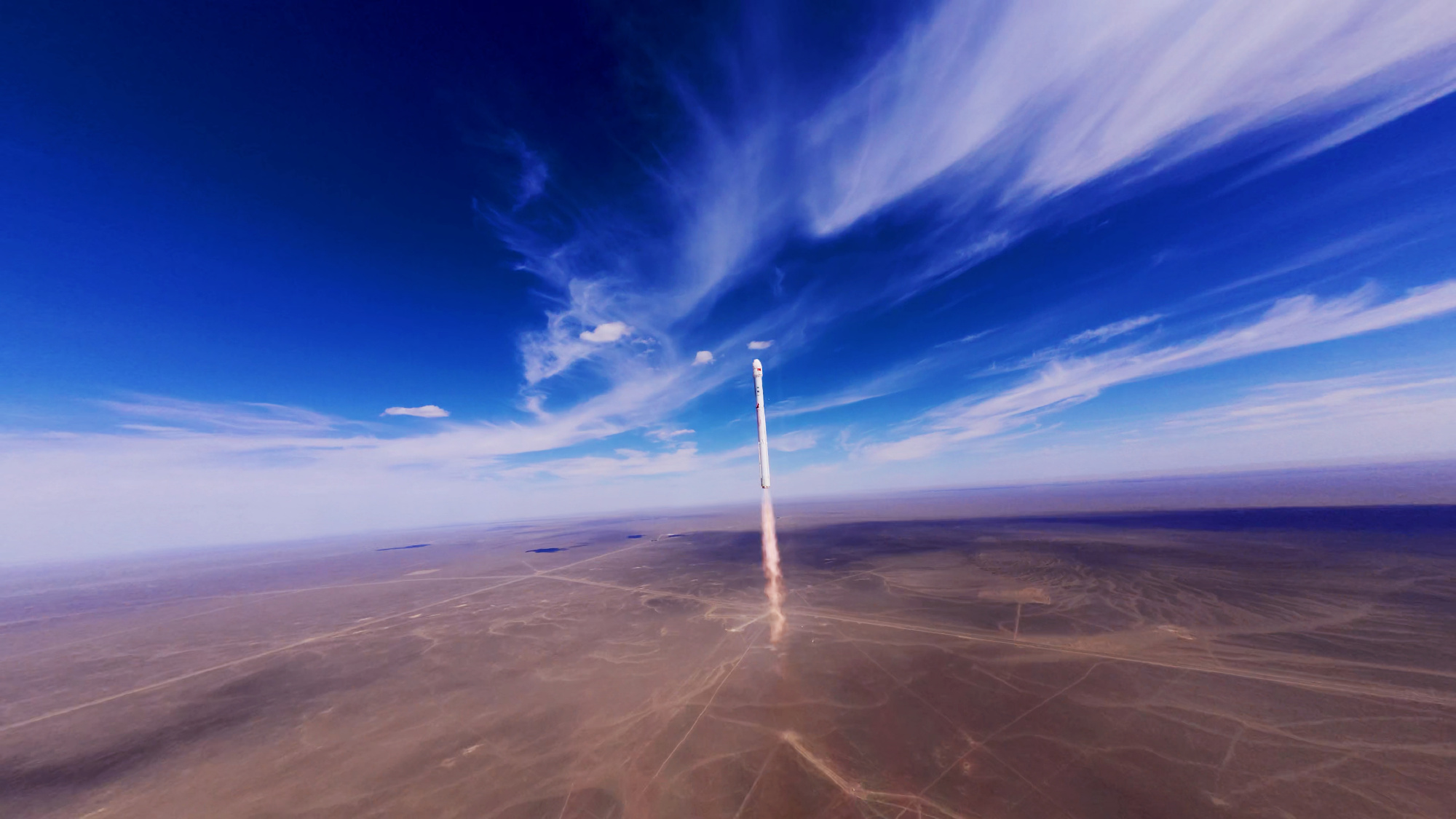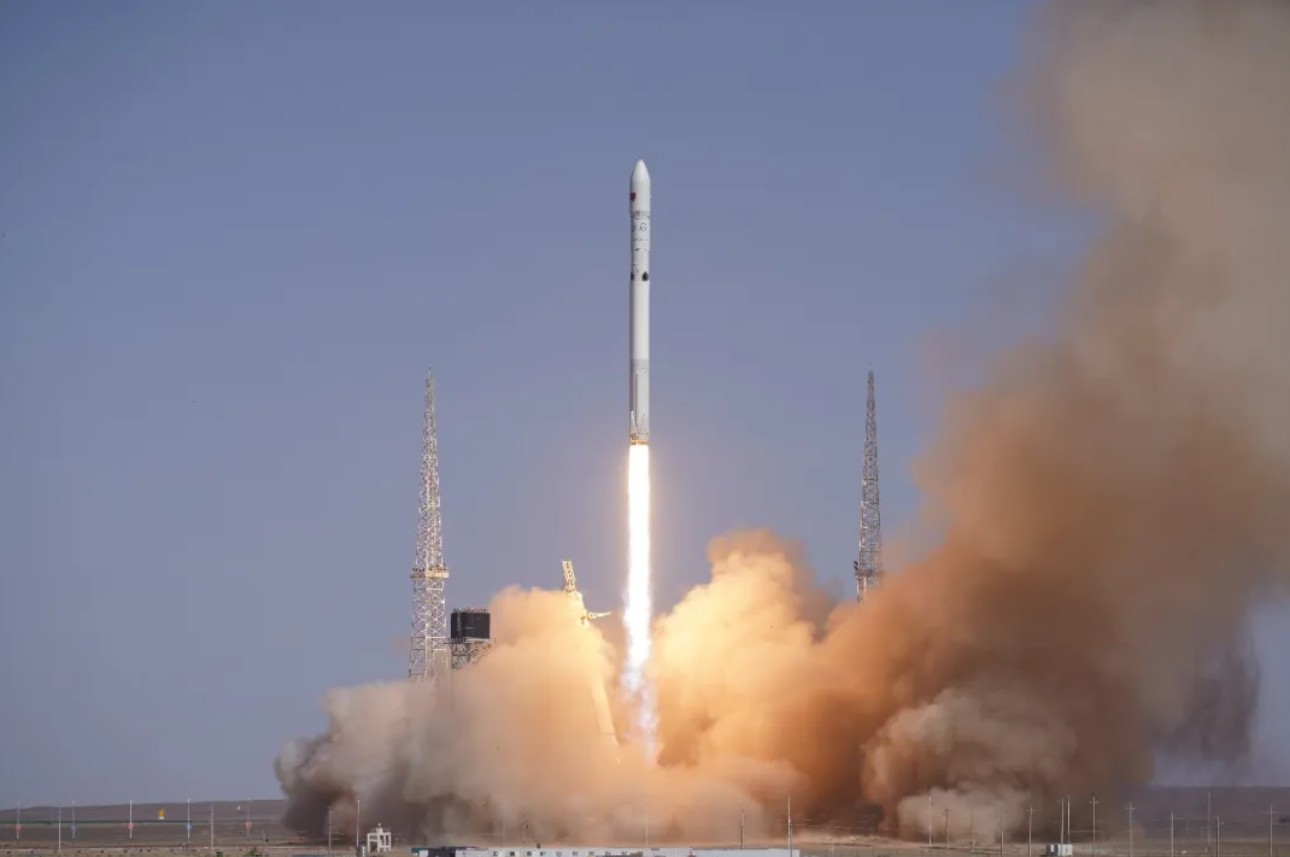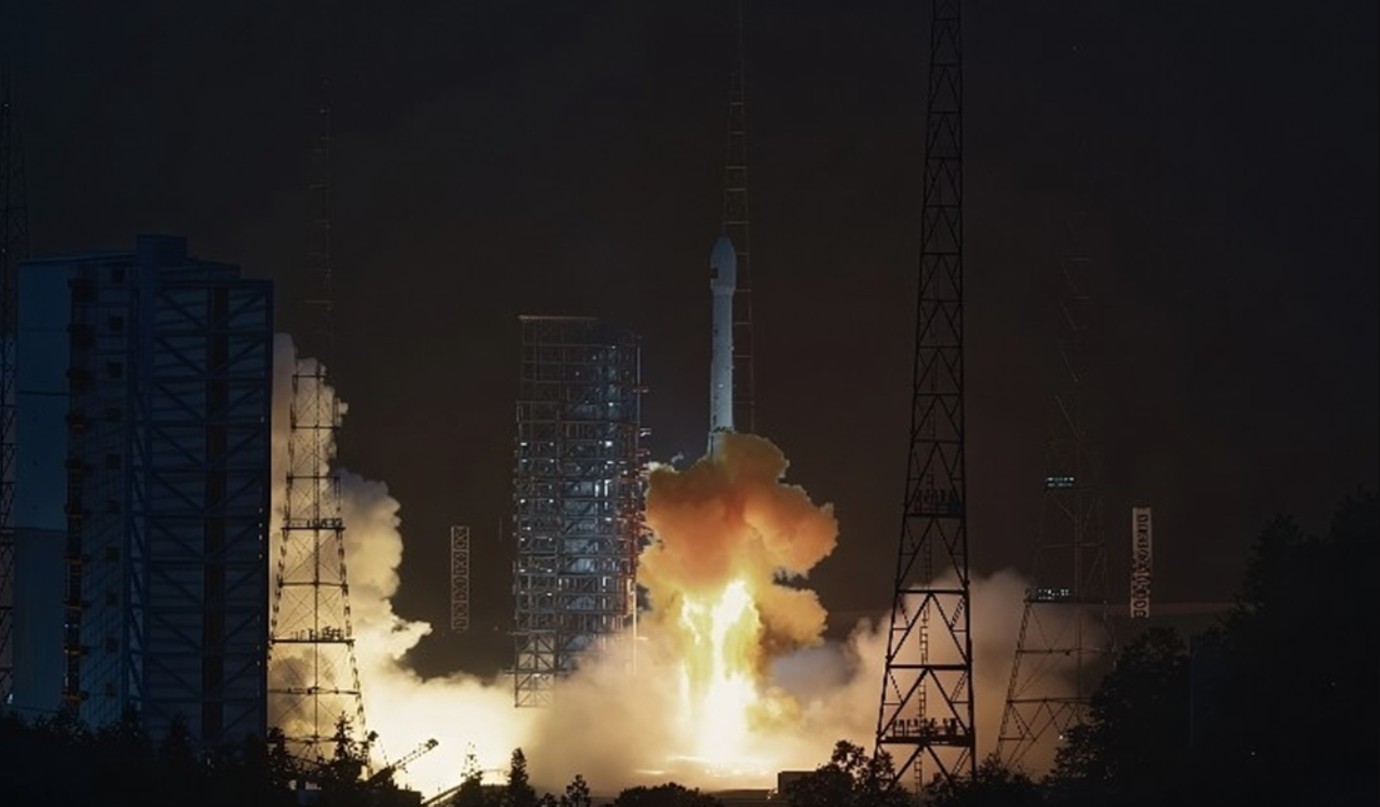
A Long March 3B rocket lifts off from Xichang, July 23, 2026, shortly before being struck by lightning. Credit: CASC
HELSINKI — China conducted a pair of launches Thursday, including a Long March 3B rocket which delivered its payload to orbit despite a lightning strike.
The Long March 3B rocket lifted off at 8:00 a.m. Eastern (1200 UTC) July 23 from Xichang Satellite Launch Center in southwest China, heading for geostationary transfer orbit. However, lightning struck the launch vehicle around 30 seconds into the flight, amateur footage captured from a nearby viewing area and shared via Chinese social media revealed.
The strike was reminiscent of the famous lightning strike affecting the crewed Apollo 12 lunar mission in 1969 and a 2019 Soyuz launch carrying a Glonass-M satellite. The 1987 Atlas-Centaur 67 flight ended in failure after a lightning strike, prompting the tightening of modern Lightning Launch Commit Criteria.
Despite the lightning strike, the payload, revealed by the China Aerospace Science and Technology Corporation (CASC) to be the Tianlian-2 (06) relay satellite, successfully reached its intended orbit. CASC’s post-launch statement did not mention the lightning event, only announcing the mission to be a complete success.