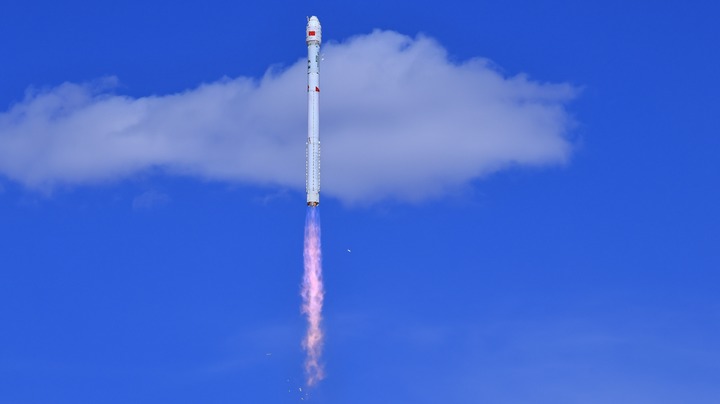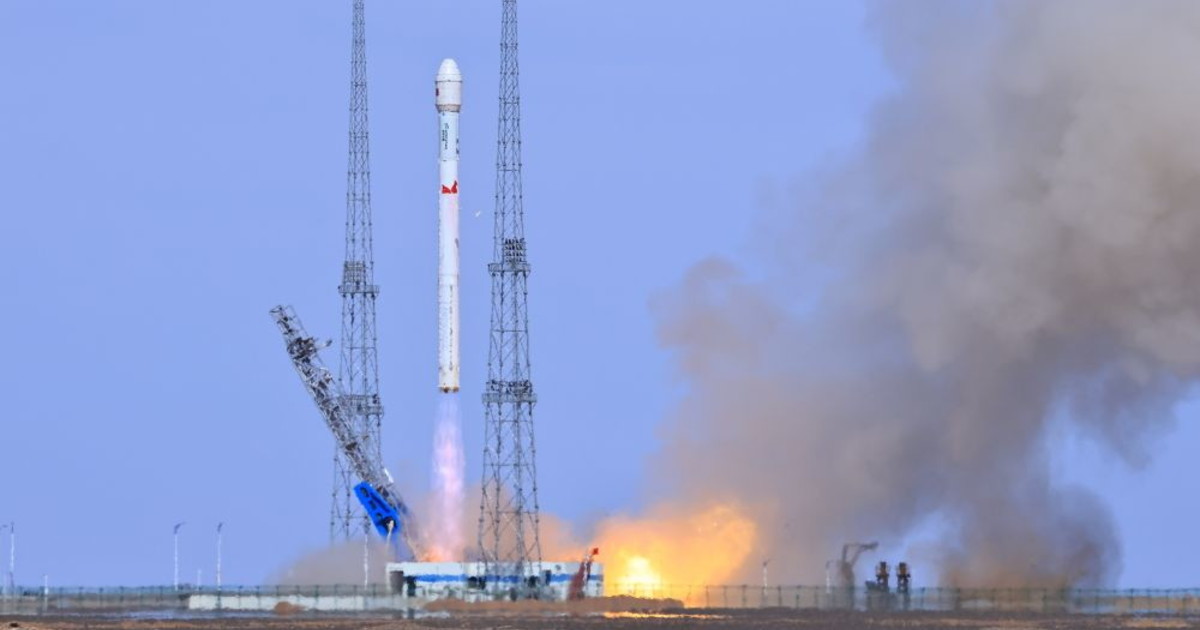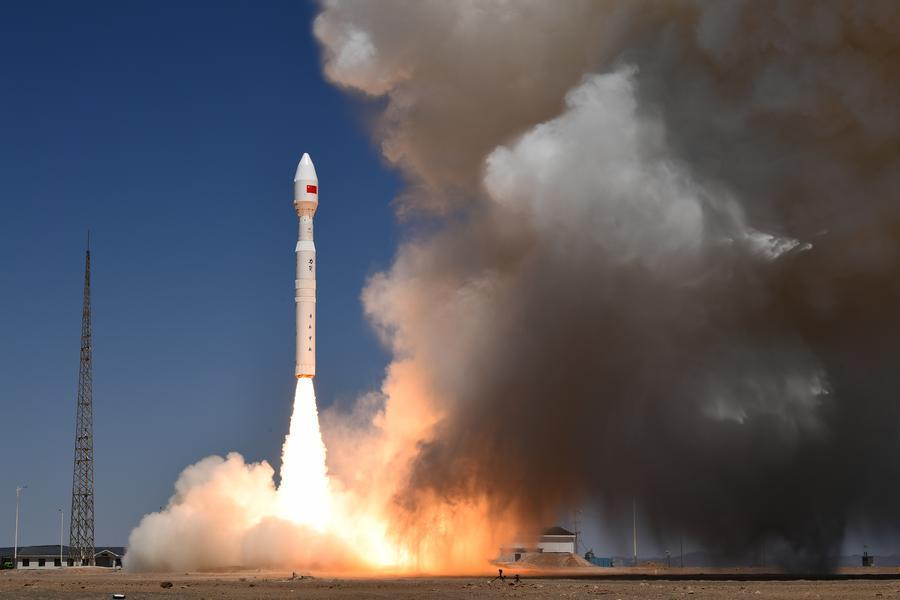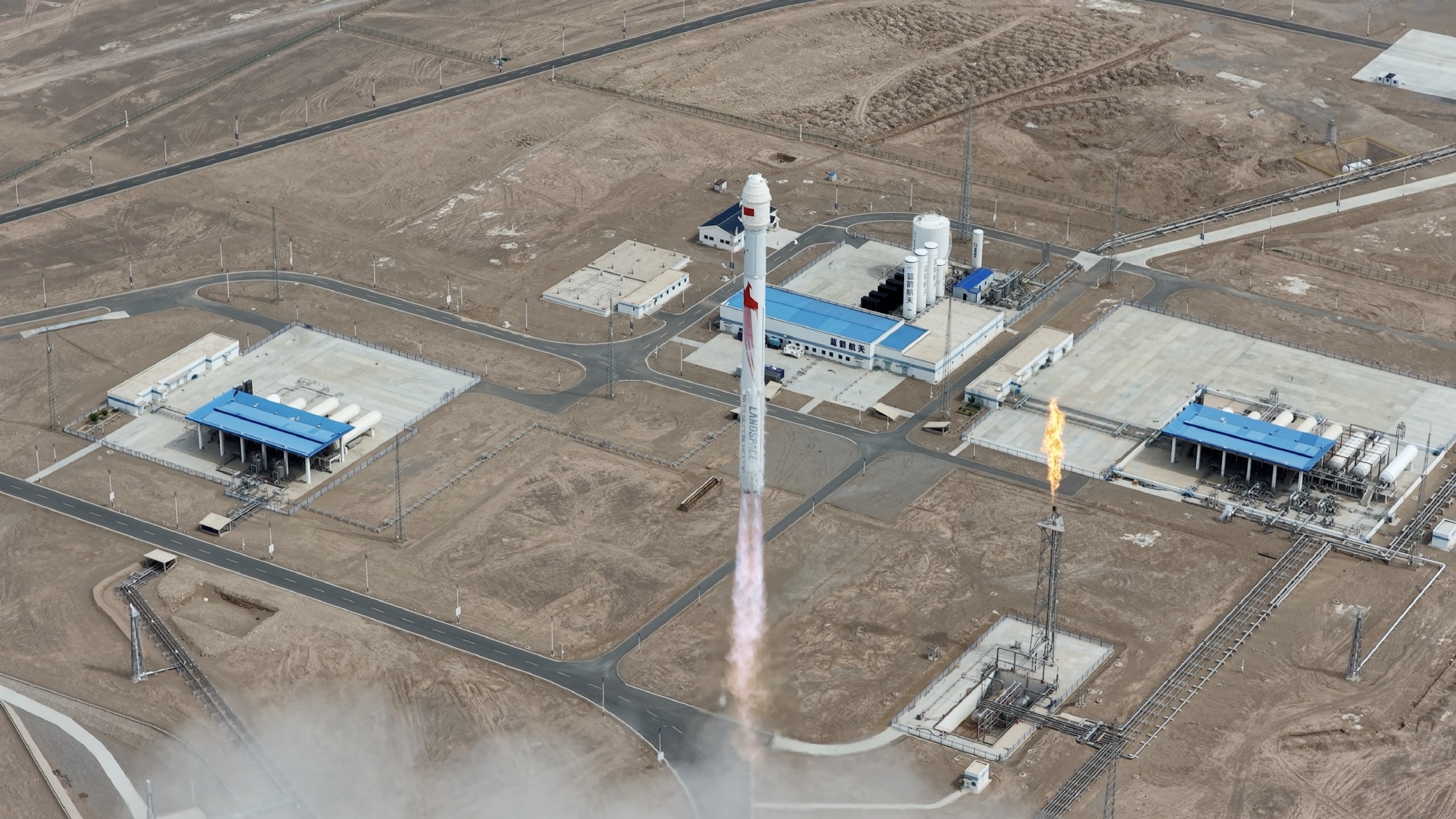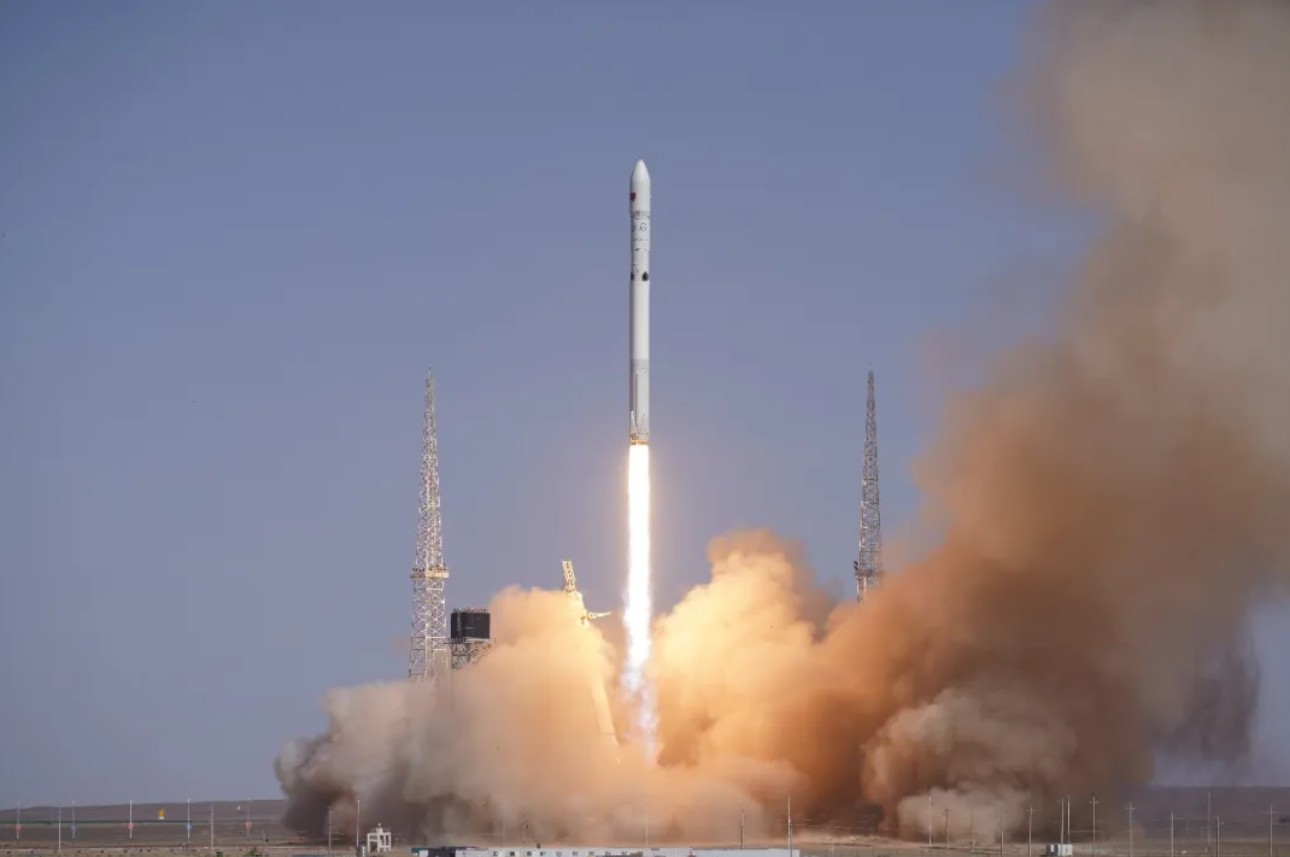
A Zhuque-2E rocket rises above the Jiuquan spaceport in the Gobi Desert, June 9, 2026. Credit: Landspace
HELSINKI — China has conducted a pair of launches to advance its communications capabilities, using the country’s largest rocket and a commercial launcher.
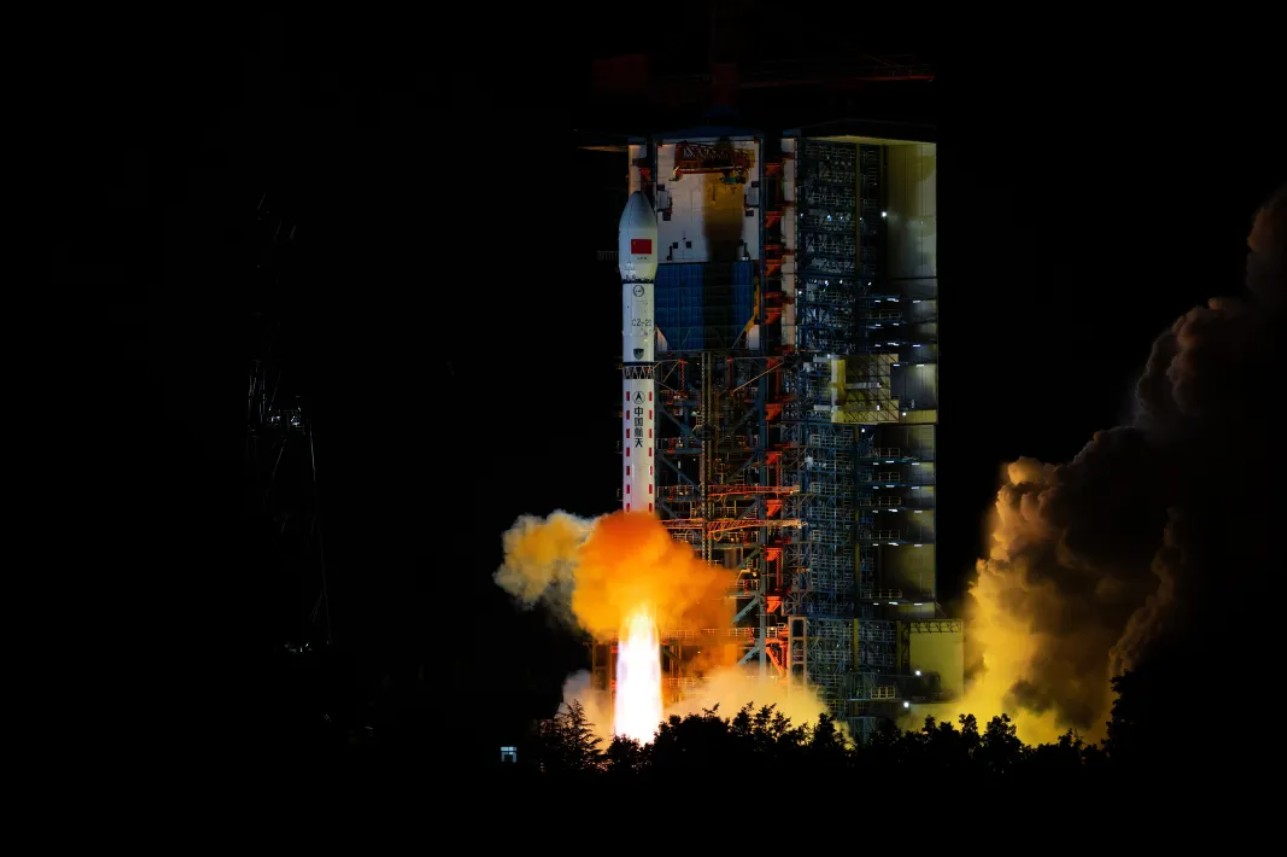
The Long March 5 lifted off at 3:30 a.m. Eastern (0730 UTC) June 11 from Wenchang Satellite Launch Center on Hainan island, targeting geosynchronous transfer orbit (GTO). The China Aerospace Science and Technology Corporation (CASC) confirmed the success of the launch, revealing the previously undisclosed payload to be the Tongxin Jishu Shiyan-25 (TJS-25).
TJS-25 will be mainly used to carry out multi-band and high-speed communication technology validation tests, according to CASC. No images of the spacecraft nor further information were published.
The TJS series mainly operates in geostationary orbit (GEO). It is seen by Western analysts as potentially carrying out classified missions including signals intelligence, early warning missions and satellite inspection activities to support the People’s Liberation Army (PLA). The vast majority of TJS series satellites have launched on the workhorse Long March 3B. The use of the Long March 5, capable of sending 14,000 kilograms into GTO, suggests TJS-25 is a heavier satellite than those launched via the Long March 3B (5,500 kg to GTO).