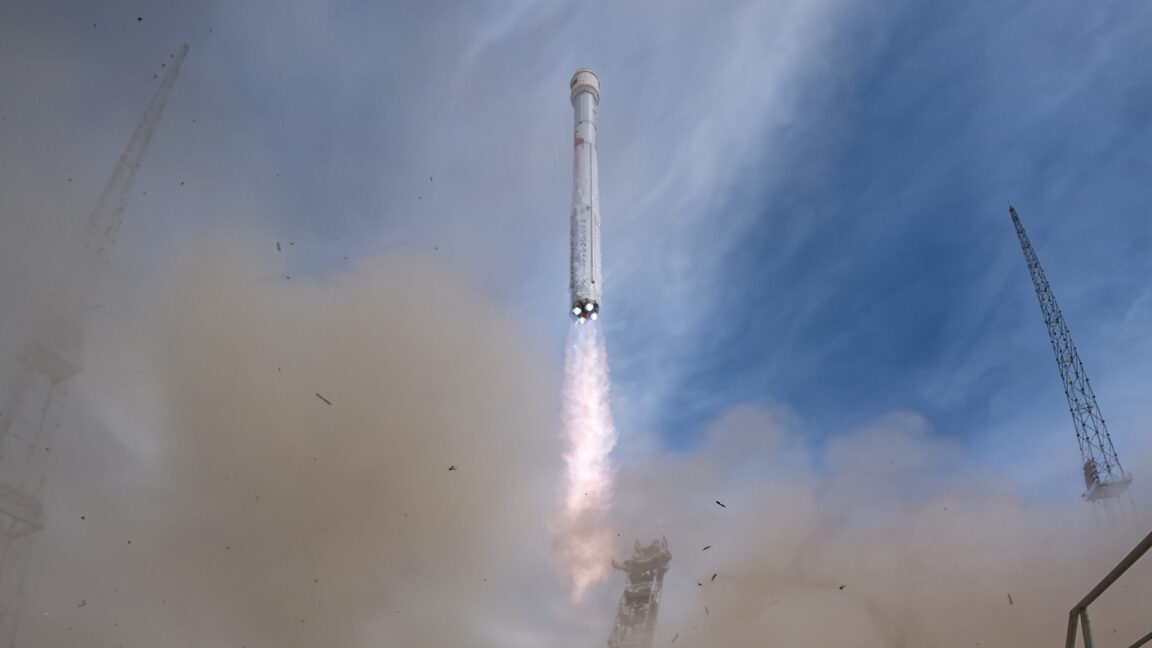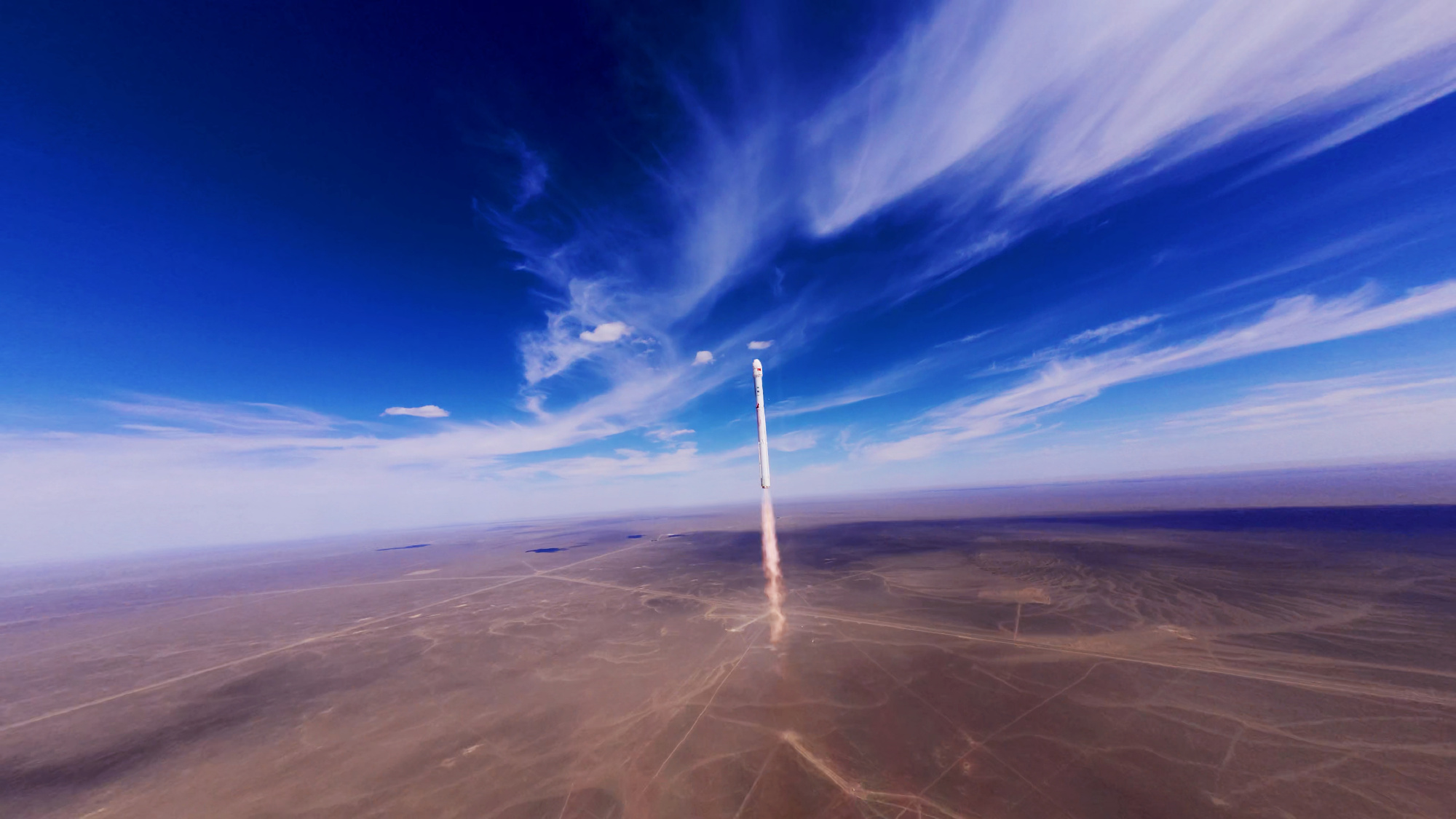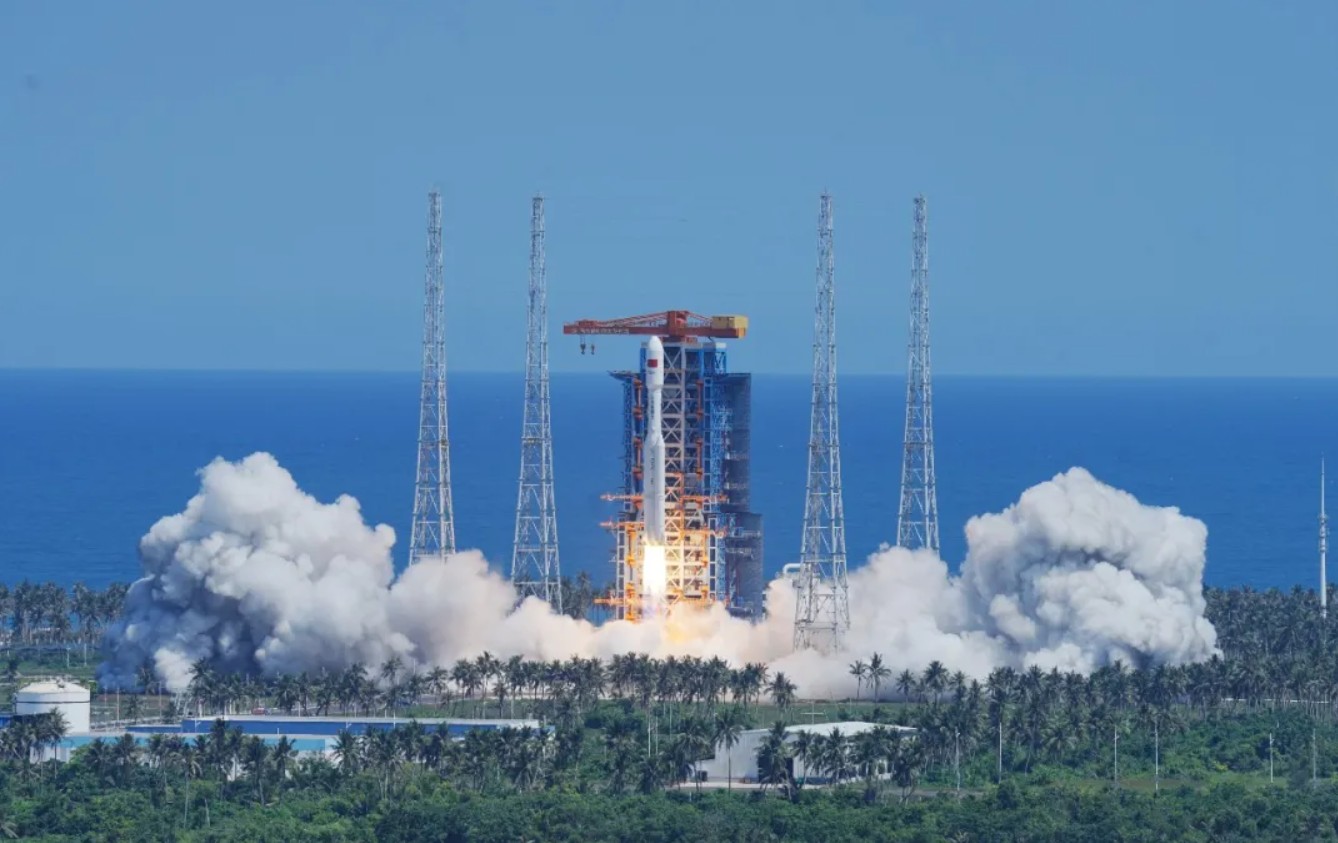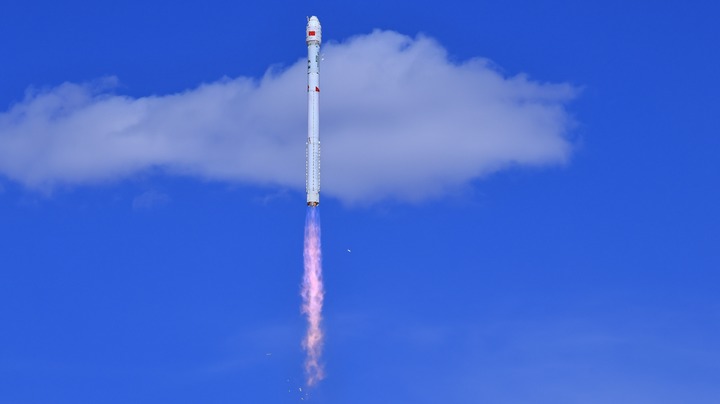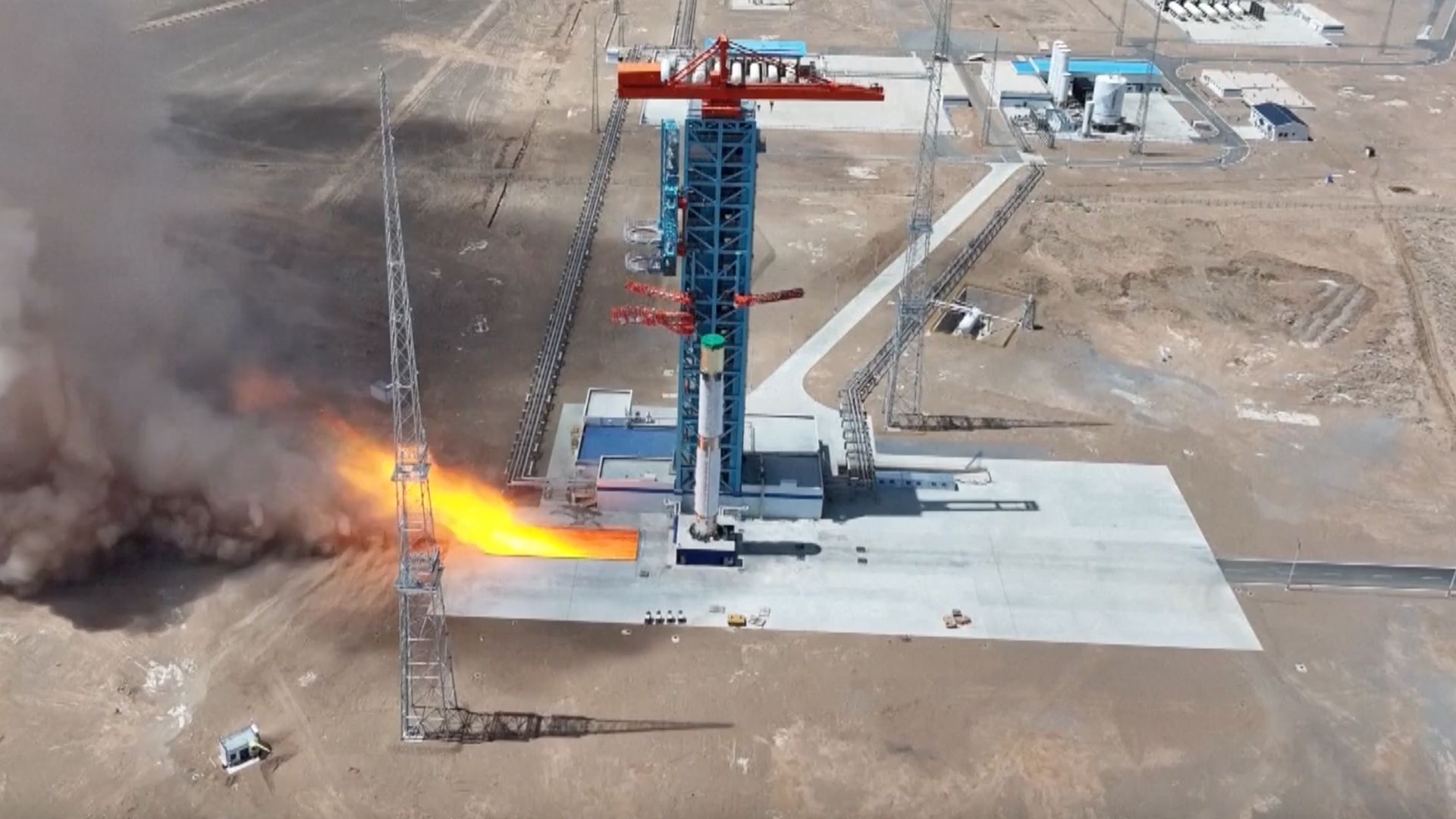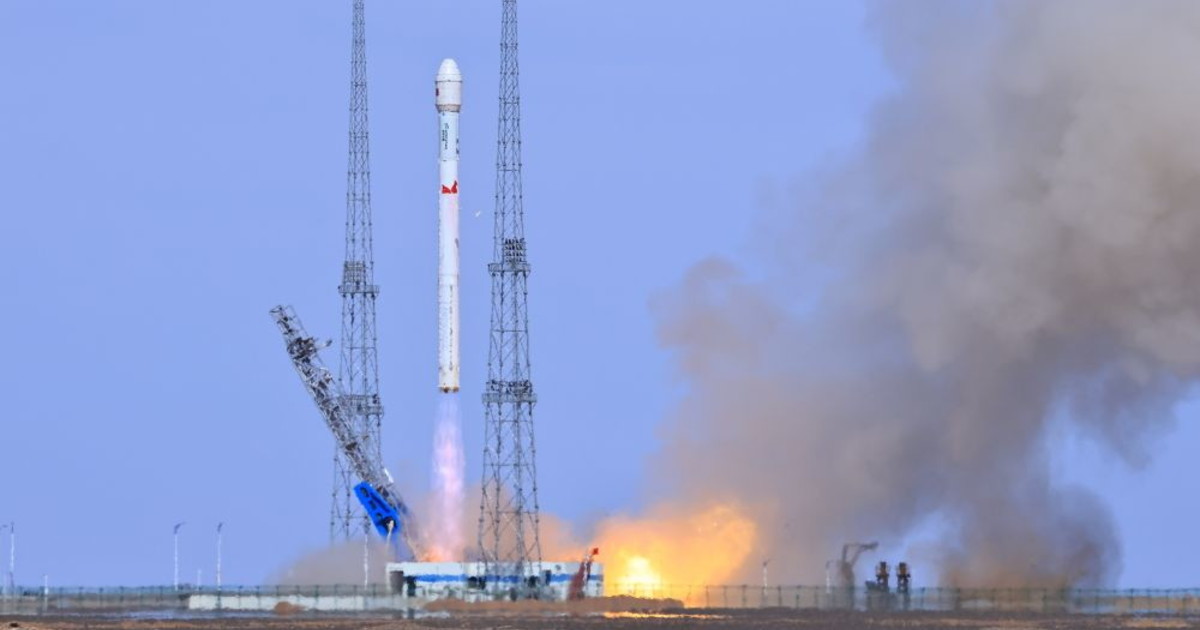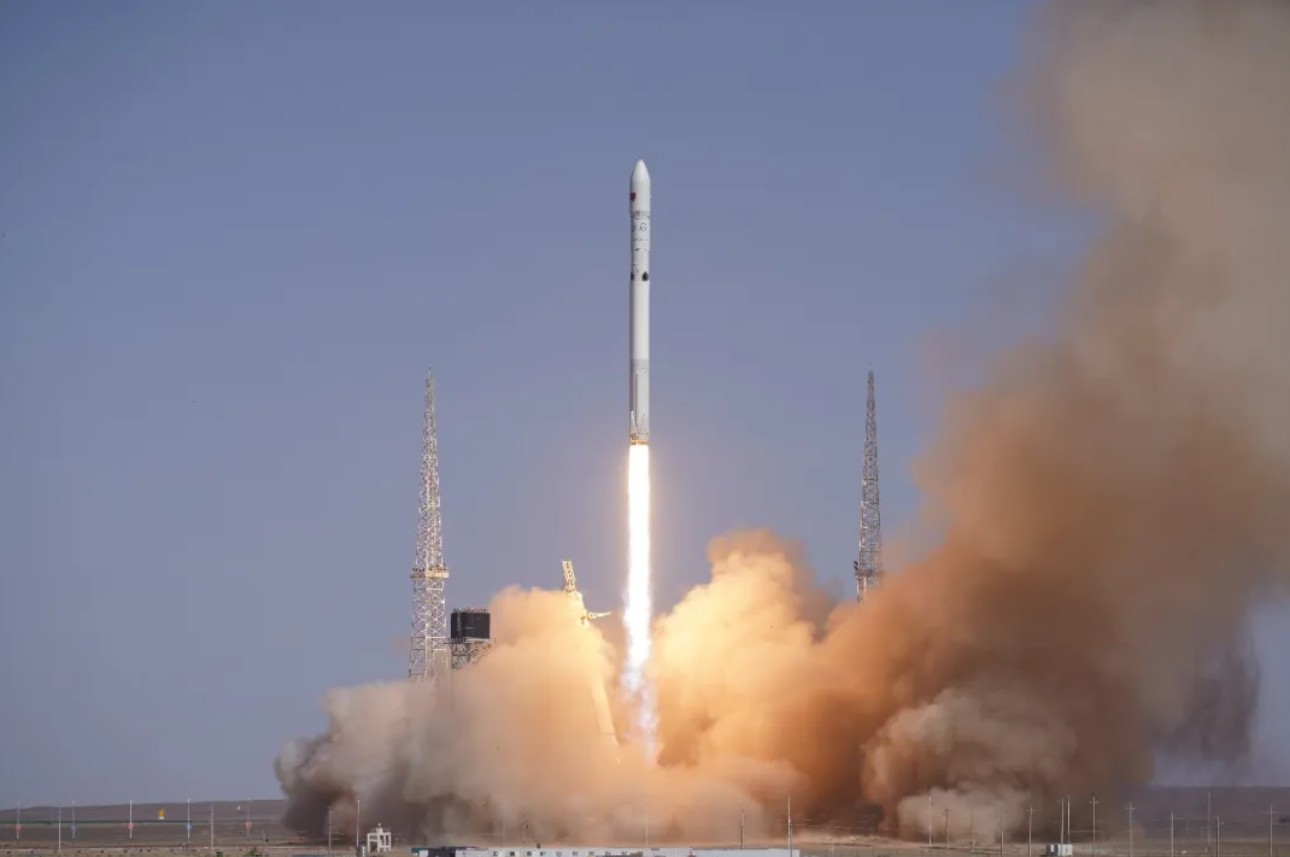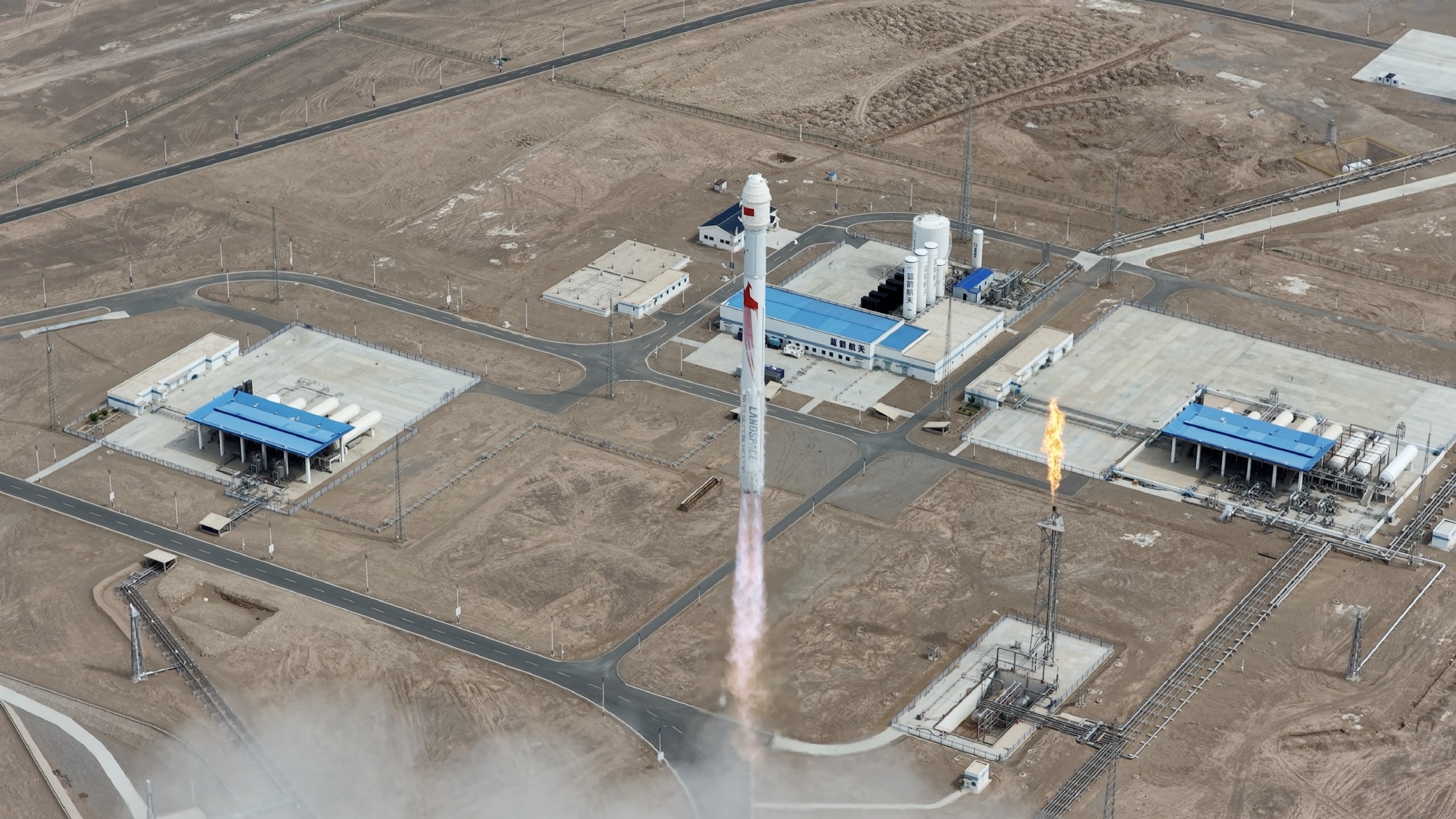
The Zhuque-2E (Y5) rises from the pad at Jiuquan's commercial pilot launch zone, May 14, 2026. Credit: Landspace
HELSINKI — China has added a new batch of satellites to the Qianfan megaconstellation, while the commercial Zhuque-2E made a return-to-flight featuring numerous improvements.
The Zhuque-2E methane-liquid oxygen rocket lifted off at 11:00 p.m. Eastern, May 13 (0300 UTC, May 14) from a dedicated Landspace pad at the Dongfeng Commercial Space Innovation Test Area at Jiuquan Satellite Launch Center, northwest China.
The launch successfully inserted a 2,800-kilogram customized payload described as a “large-scale constellation deployment experiment” into a 900-kilometer polar orbit, according to Landspace. The mission demonstrated high-mass payload launch capability and readiness for multi-satellite launch services, the company said in a post-launch statement, as it looks to secure launch contracts from China’s megaconstellation projects.
It was the fourth launch of the Zhuque-2E, a “block 2” variant of the original Zhuque-2 which debuted in 2022, and reached orbit on its second flight in July 2023. The previous Zhuque-2E flight, in August 2025, ended in failure and the loss of four satellites. The failure of the Zhuque-2E (Y3) was caused by a voltage issue affecting the second stage, triggering a self-destruct, according to Landspace.