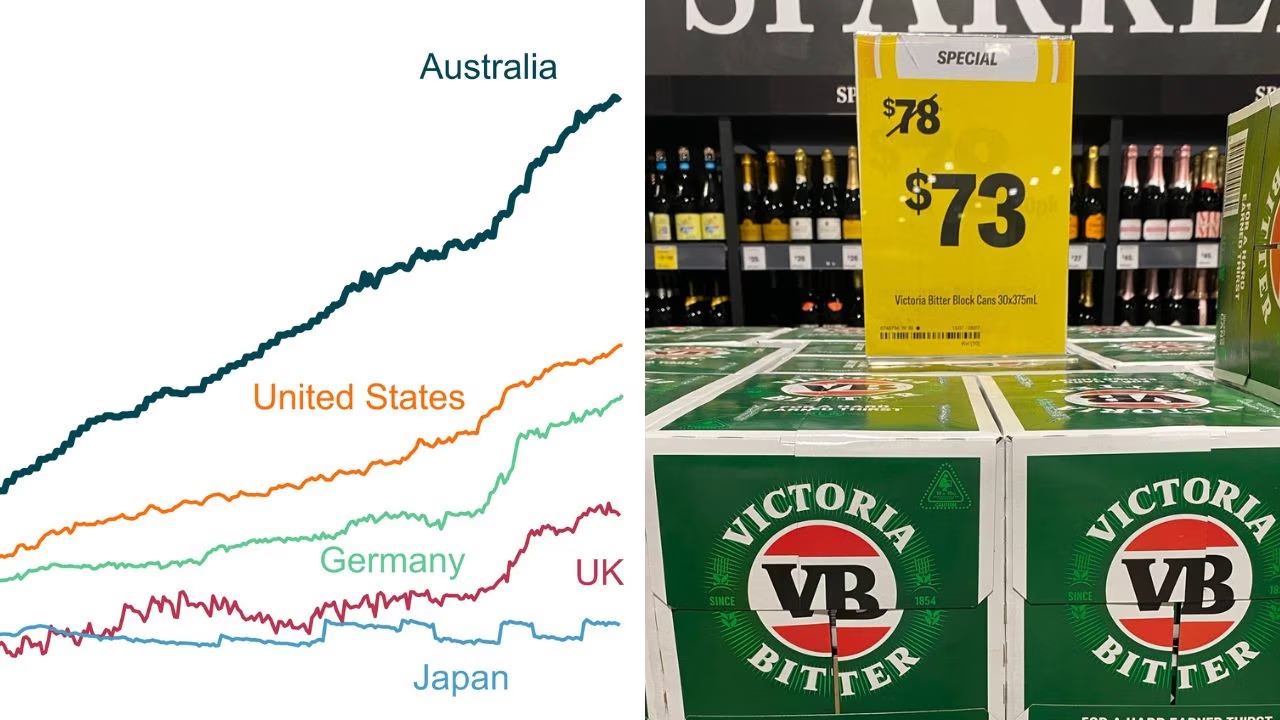
The cost of a beer in Australia has surged far beyond other advanced economies over the past two decades, with a new chart revealing the scale of the blowout.The beer consumer price index chart showed Australia was broadly in line with the United States, the United Kingdom, Germany and Japan in the early 2000s.But over the following two decades, local beer prices surged dramatically, pulling well clear of those comparable economies.Now, only a handful of global outliers are more expensive than Australia, such as Qatar, where strict alcohol controls and heavy import taxes have pushed up prices.“Excise is a material part of this that differentiates Australia,” wrote Alex Joiner, chief economist at IFM Investors, when he shared the chart with followers this week. “I think there is something lost if it becomes too expensive for younger people in particular to go out and a few beers with their mates.”Commentators expressed dismay at the graph, among them demographer Simon Kuestenmacher of The Demographics Group, who said it revealed a “severe problem”.“Culturally, drinking a bit of beer has lots of positives,” Mr Kuestenmacher said. “In Australia it is part of the general easy going nature. Pricing people out of their evening beer is doing more social harm than health (and tax) good. Beer must become cheaper again.”Beer is expensive in Australia because of heavy taxation that automatically increases with inflation twice a year. Combined with the 10 per cent GST, these layered policies make up around 42 per cent of the price of a standard pint.The Albanese government has paused the indexation on draught beer excise and customs duty for two years. The freeze applies to tap beer and prevents automatic, inflation-linked tax increases from August 2025 to August 2027. But it doesn’t apply to packaged beer, which will continue to see tax hikes twice a year.Brewers Association of Australia Chair James Brindley said the freeze was a “welcome first step, but more needs to be done”.“Australia has the third-highest beer tax in the developed world,” Mr Brindley told news.com.au. “Since Covid, high inflation has seen the tax on beer accelerate sharply, costing Australian drinkers more. “Other comparable countries like Canada, the UK and the United States have meaningfully reduced the beer tax impact on their drinkers.”It comes after Sydney and Melbourne were ranked as the most expensive in the world to buy beers and ciggies, according to Deutsche Bank’s annual cost of living indexes, which rank 69 global cities on their affordability across housing, transport, salaries, quality of life, dining and shopping.Among its analysis is what the bank calls the “Oasis index”, comparing the cost of five beers and two packs of cigarettes across the world’s most famous cities.Melbourne held the unfancied honour of leading the 2026 rankings at $US111.20 – or almost $159 – pushing Sydney back to second spot at $US109.50, or $156.30.Prices for five 500ml beers and two 20-packs of Marlboros in both cities was now more than double than in New York City, the report found.Australians were paying $20 in taxes for every slab of beer bought, according to the Brewers Association of Australia.Industry officials say the government’s freeze on the excise for tap beers will not bring prices down at all.In fact beers giants Lion and Asahi announced in March draught beer charges would be going up due to increased costs of labour and goods.The amount Australians pay in beer taxes became a political attack line for Senator David Pocock and proponents of a new gas export levy in early 2026.Mr Pococok revealed the Treasury reaped about $2.7 billion from the beer excise, more than it did from the Petroleum Resource Rent Tax paid by multinational gas companies.Taxes on tobacco products have also been widely criticised as the ballooning cost of cigarettes toward $50 a pack led to the formation of a billion-dollar black market.— with Heath Parkes-Hupton
Shock graph shows how tax made Australian beer among the most expensive in the world
The cost of a beer in Australia has surged far beyond other advanced economies over the past two decades, with a new chart revealing the scale of the blowout.
642 words~3 min read