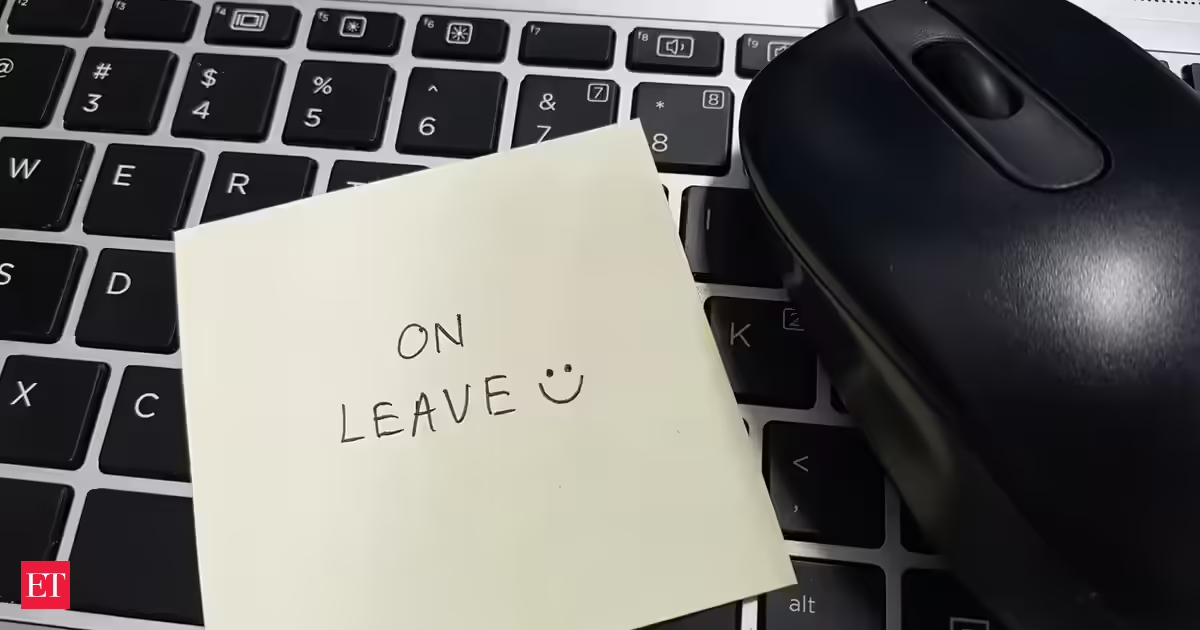
For many employees, a week-long break usually means choosing the familiar Monday-to-Friday leave schedule. But career coach Simon Ingari believes there may be a smarter way to plan time off. According to Ingari, taking leave from Wednesday to Wednesday instead of Monday to Friday could make returning to work less stressful and help employees manage their workload more effectively.Sharing his thoughts on X, Ingari wrote about a conversation where a manager approves one week of paid time off and asks employees to choose their preferred days. He suggested that choosing Monday to Friday may not always be the best option.Why Wednesday-to-Wednesday leave could work betterIngari explained that a midweek break can offer several advantages, especially when it comes to managing work pressure before and after a vacation.You return to a quieter inboxOne of the biggest challenges after returning from leave is dealing with a pile-up of emails and pending tasks. Ingari said the largest backlog often builds up on Mondays. Returning on Wednesday means many urgent matters may have already been addressed by the team, making the transition smoother.You Might Also Like:— Simon_Ingari (@Simon_Ingari) Your absence is spread across two workweeksAccording to Ingari, being away from Wednesday to Wednesday can make colleagues feel like you have not been absent for an entire working week.Since the leave is divided between two weeks, the impact on team workflow may feel smaller and easier to manage.You Might Also Like:Handovers become easierA Wednesday departure gives employees time at the beginning of the week to complete important tasks and communicate urgent updates before leaving. When they return, there are still working days left in the week to reconnect with ongoing projects rather than immediately facing a full Monday schedule.You avoid returning on the busiest dayMondays are often filled with meetings, weekly planning, deadlines and team discussions. Ingari pointed out that returning on Wednesday allows employees to avoid coming back on what is often considered the most hectic workday.Better work-life balanceYou Might Also Like:Ingari said a Wednesday-to-Wednesday break allows employees to work a few days before and after their leave instead of completely disappearing for an entire workweek. For some professionals, this can make catching up feel more manageable and reduce the stress that often follows a vacation.Why Monday-to-Friday leave may feel harderWhile Monday-to-Friday leave is the traditional choice, Ingari explained why it can sometimes create challenges.A bigger email backlog awaitsReturning on Monday can mean facing five working days' worth of emails, requests and updates that accumulated while the employee was away.Missing weekly planningImportant discussions, decisions and priority-setting meetings may happen during the absence, leaving employees needing extra time to understand what changed.Catch-up can become overwhelmingInstead of starting the week productively, Monday can turn into a day spent only reading emails and catching up on missed information.Work may have already been reassignedIngari said tasks and decisions may have already moved forward while someone was away, requiring them to spend additional time reconnecting with projects.It can create a disconnectBeing away for an entire workweek may create a gap between an employee and ongoing work, making it harder to immediately return to the flow of projects.Ingari's advice highlights that even small decisions like choosing vacation dates can influence how smoothly employees transition back into work. For some professionals, changing the timing of leave could be a simple way to make breaks feel more refreshing and returns less stressful.
Returning from leave on Monday? Career coach says it may be the worst day to come back
Career coach Simon Ingari suggested that taking one week's leave from Wednesday to Wednesday may be smarter than the traditional Monday-to-Friday break. He said returning midweek often means a quieter inbox, easier handovers, less pressure and a smoother transition back to work. In contrast, Monday returns can bring email backlogs, missed planning meetings, overwhelming catch-up and work that has already been reassigned, making the first day back more stressful.
560 words~3 min read