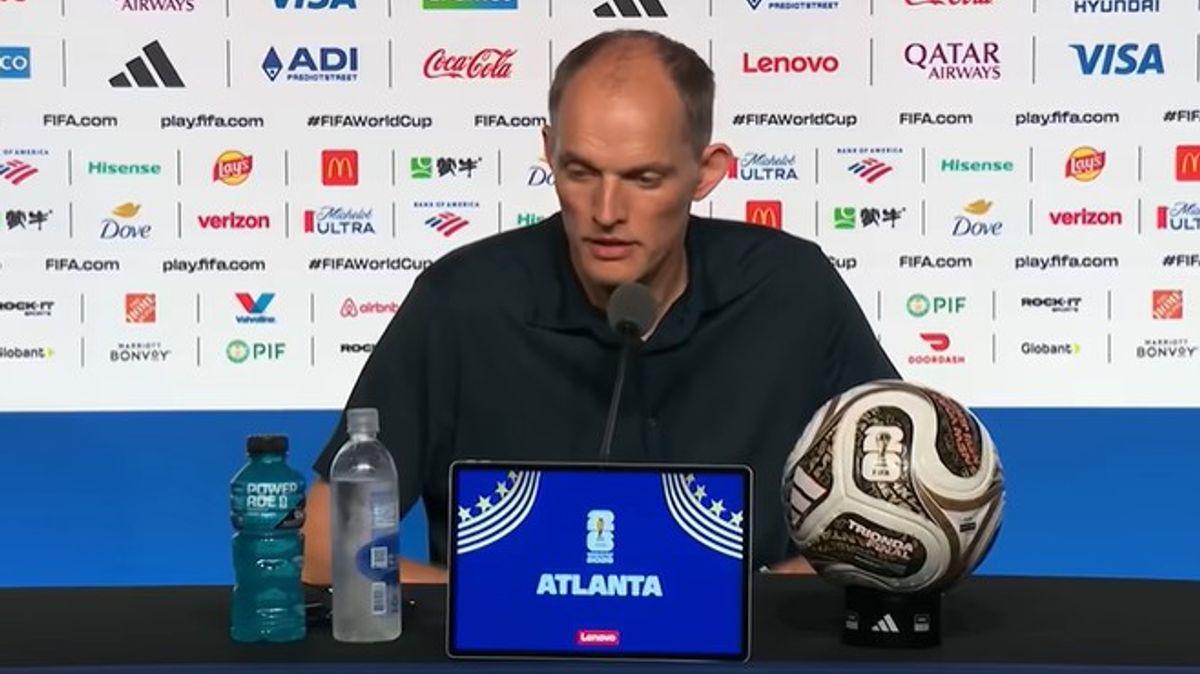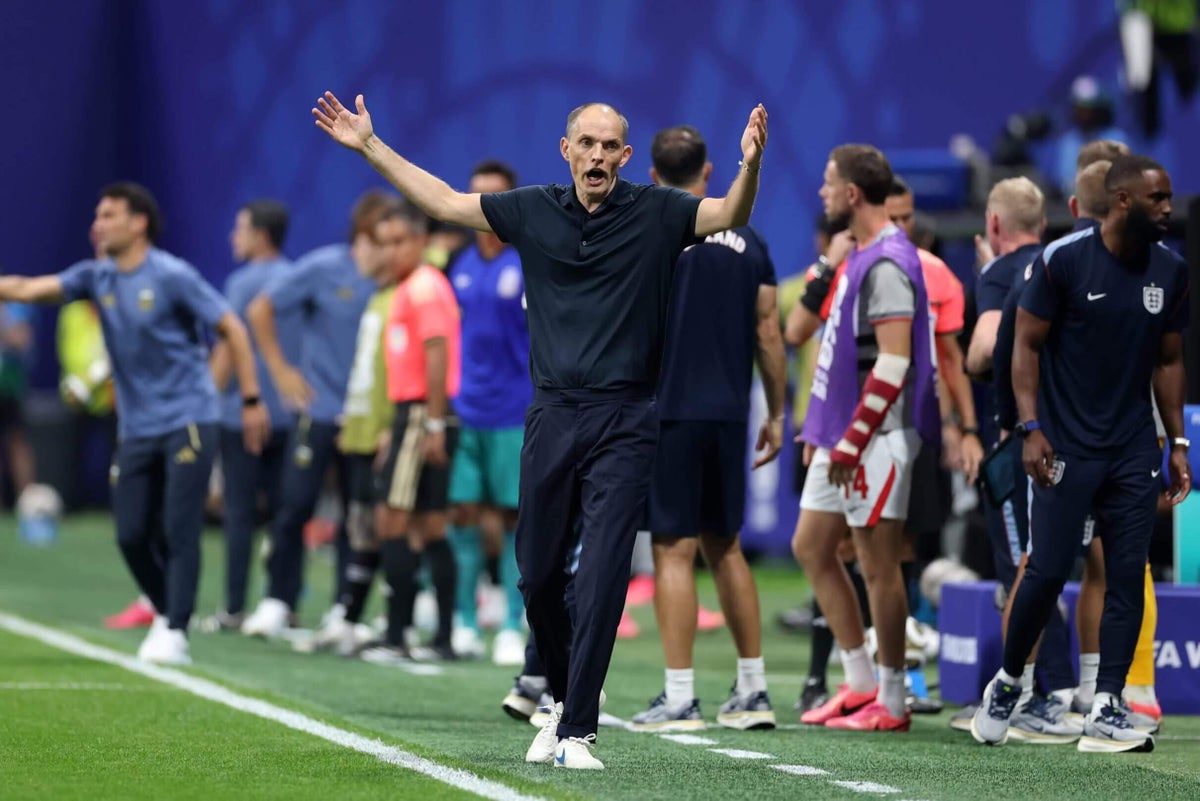
Most England supporters have never seen them perform so well at the World Cup, yet most England supporters seem angrier than ever about the manner of their exit from this summer’s World Cup.A semi-final defeat to Lionel Messi’s Argentina by the odd goal, on paper, is an acceptable outcome for England’s campaign. But head coach Thomas Tuchel’s tactical and personnel changes in the second half of that game were unpopular, and his comments afterwards were even more so.“You need to get back on the ball — otherwise, you cannot break the pressure, and you cannot get the momentum back,” he said after England failed to hold onto a 1-0 lead, conceding twice late on. “Ball possession plays a crucial role; it’s maybe not in our DNA like it is in Spanish DNA or in Argentinian, Brazilian DNA, to take the ball and control the game with the ball.”Cue outrage back in England. ‘Does Tuchel think he’s working with a non-League side?’, etc.But it’s worth pausing to consider what English football has become all about over the past half-decade.There have been three particularly notable trends.The first is the surprise shift by Pep Guardiola and Mikel Arteta — two classy deep midfielders in their playing days and managers who broadly want to dominate possession — to often fielding a back four comprised solely of centre-halves.Guardiola did it often on Manchester City’s run to Champions League glory in 2023, and Arteta has dabbled with it throughout the last couple of seasons as Arsenal have evolved into title winners. It hasn’t necessarily been their default approach, but it indicates an evolution in the style of English football.The second is the overwhelming focus on set pieces.Last season’s Premier League, at times, seemed to be about a territorial contest to earn dead-ball situations in dangerous positions. Long throws and inswinging corners were back in fashion.And third, perhaps above all else, is the overwhelming focus on intensity.The concept of pressing is, for some managers, the primary focus in terms of both defence and attack. Attackers who can create chances with a moment of magic, and midfielders who can control possession, have become less desirable than they were five to 10 years ago.This is now the defining feature of the Premier League.There have been slight rises in sprinting distance in the four other major European domestic leagues, but the English top flight has gone sprints-crazy, and its matches have become increasingly frantic.None of these has suggested a shift towards possession football.And all this, strangely, is despite the fact that, 1) around 70 per cent of Premier League players in recent seasons have not been English, and 2) that only one of its 20 clubs were managed for the entirety of the 2025-26 campaign by an Englishman. There is something deep-rooted about playing football in England.At the same time, followers of the national team have almost become conditioned to think this generation of footballers is on a different technical level to those who came before. And by now, it probably should be.
Thomas Tuchel was right – England’s DNA doesn’t allow them to control matches
Head coach's comments may have provoked a spiky reaction, but recent Premier League trends suggest he was correct
1,425 words~6 min read