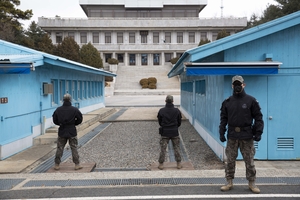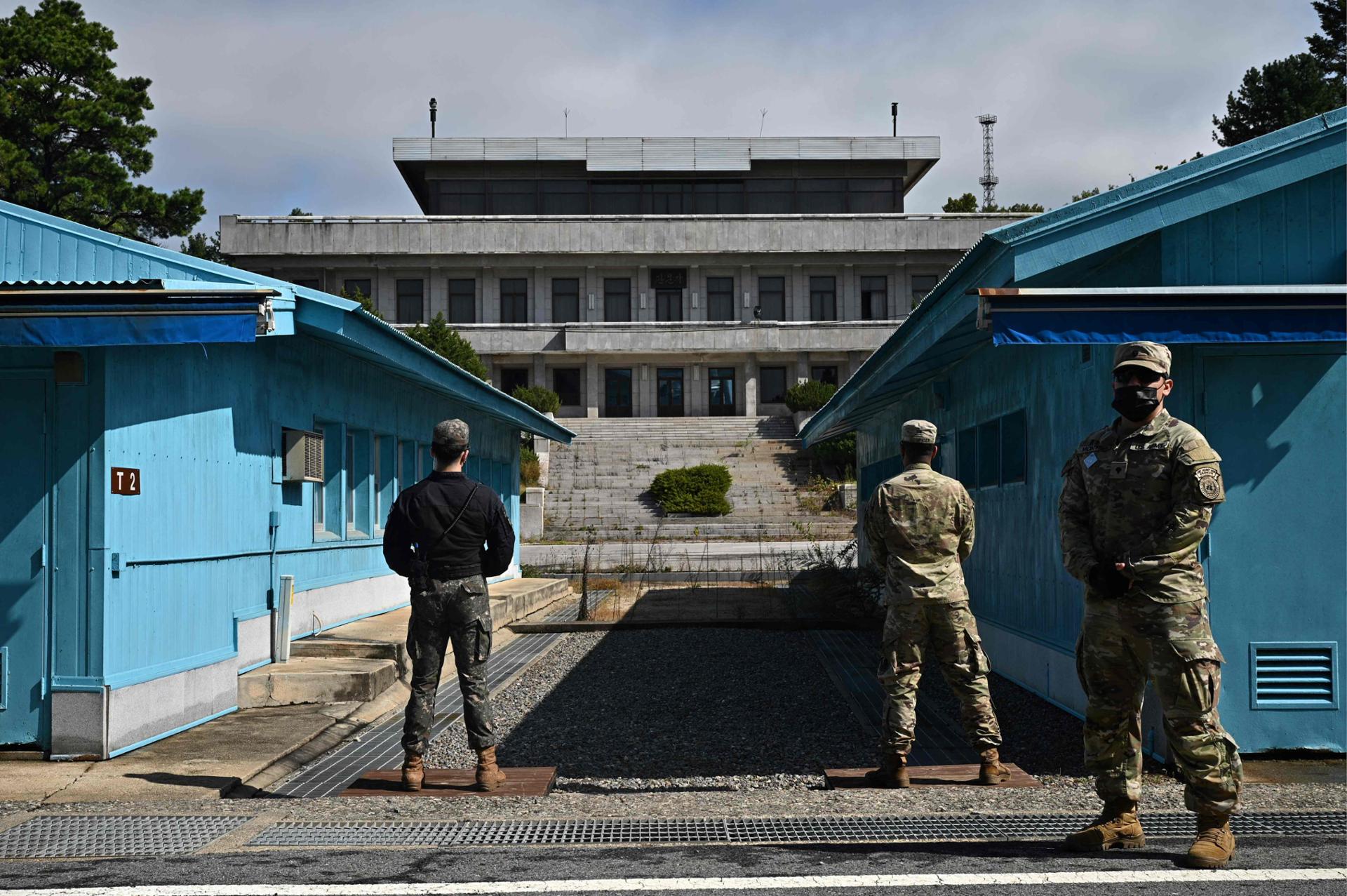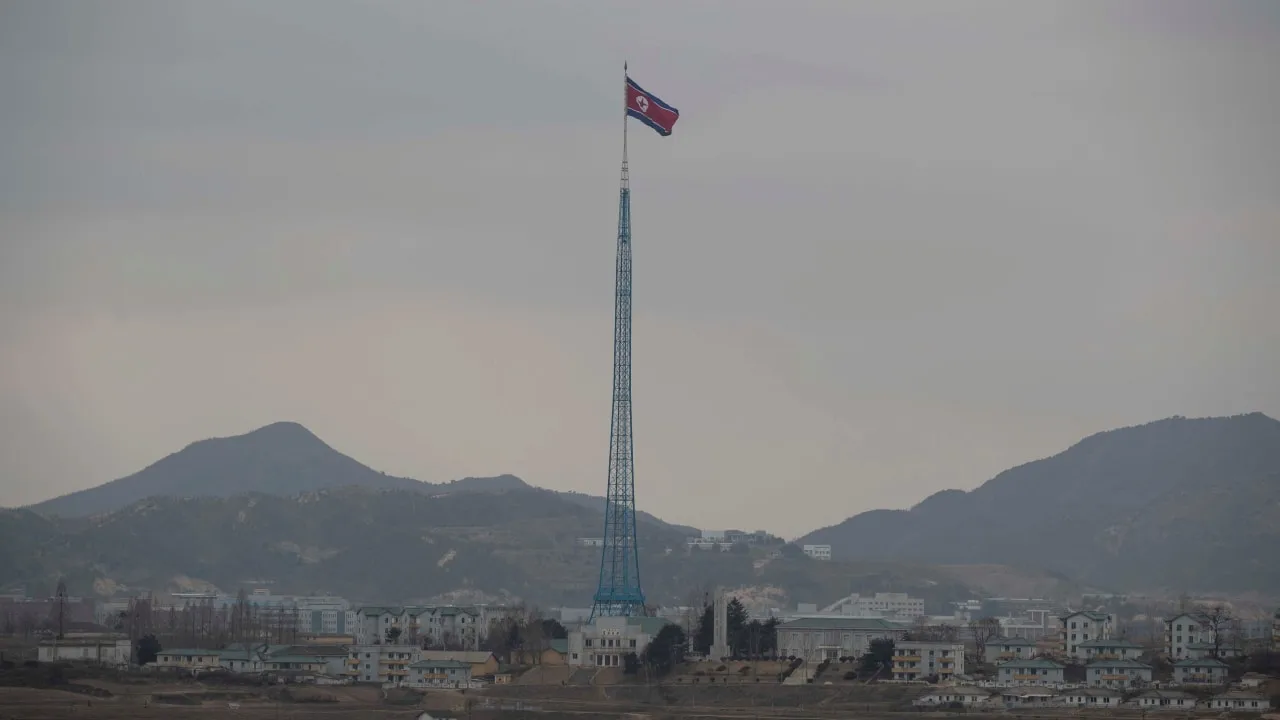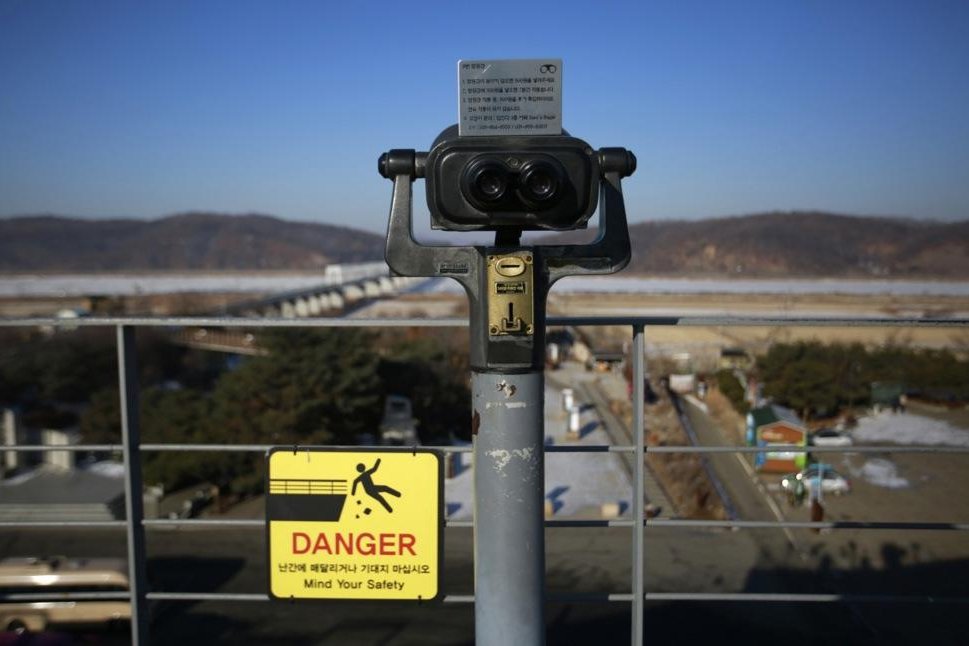
A binoculars stand is seen overlooking the Freedom Bridge to the North Korean side of the border at Imjingak Park, near the Demilitarized Zone in Paju, Gyeonggi province, South Korea. The bridge is a former railroad bridge used by prisoners of war or soldiers repatriated from the north. File Photo by How Hwee Young/EPA
July 23 (UPI) -- I crossed four national borders illegally, evading the guns behind me and the soldiers and police watching for people like me. I tumbled down mountainsides. I nearly capsized on a river whose depth I could not guess.
There were moments when I was close to fainting from hunger and could not ask a single person for help, because I had entered each of those countries without a passport.
This is an experience possible only for people from a country where most citizens will never hold a passport in their lives, and where leaving is, in nearly every form, a crime.
Until a few years ago, that was where I lived -- a place where every life runs along a track laid out in advance, where the content of your education is decided before you are born, where what you wear, what you listen to and what you may say are all determined for you. And even inside that society, I carried a particular status. I was the daughter of a traitor.