Audio By Vocalize
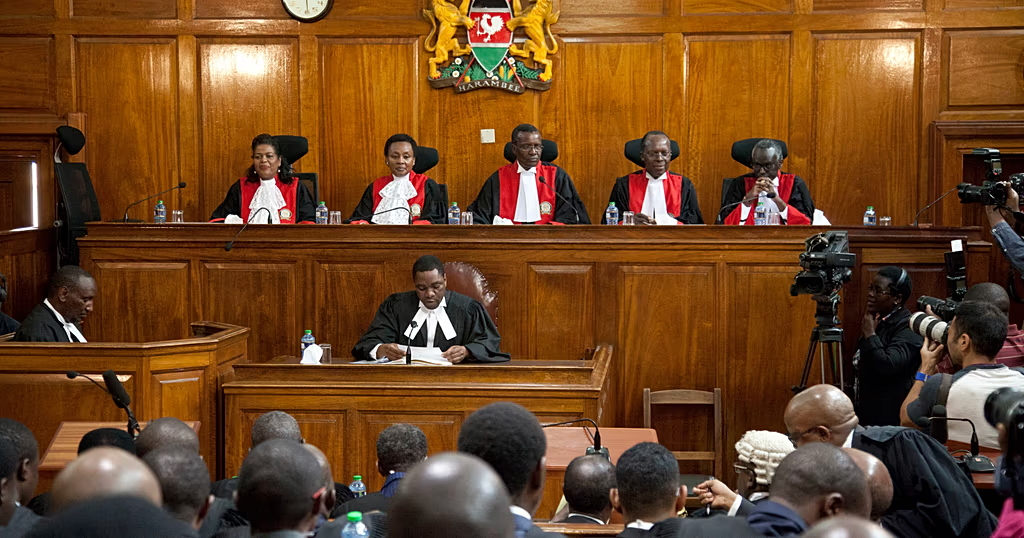
Law Society of Kenya Nakuru branch, led by Chairperson Wangari Mwangi and advocate Kipkoech Ngetich at Nakuru Law Courts during the nationwide court boycott on July 22, 2026. [Kipsang Joseph, Standard]
July 22, 2026, will go into history as a remarkable day when the advocates showed that it is possible to push for urgent reforms and efficiency of our judiciary. The national boycott by advocates of our courts and a resolve to permanently boycott the proceedings by certain judicial officers, signified an extra-legal but very necessary measure in pushing for what has appeared untenable through the normal pipeline of the Judicial Service Commission as an institution. As expected, in such a discourse, social media became a very powerful tool for messaging and advancing the debate of the different ways of which the agenda of judicial accountability can be advanced. The events of the day, from the courts to the presser that was held by the Law Society of Kenya ultimately reveal that all advocates would agree on the clarion call to judicial accountability as there has been a serial and severe misuse of the independence accorded to the Judiciary and its officers.
From a casual view, the tension between judicial independence and accountability appears to be a simple one but very complex when viewed from the architecture of our constitution. We must, at this juncture, reflect deeply whether the framers of the Constitution were overambitious of the kind of judicial safeguards on the Judiciary and its officers. This problematising of these two equally critical concepts must begin from understanding that they play different but complementing roles. Judicial independence serves the purpose of ensuring that a judicial officer does not mark-time looking left and right before undertaking their judicial mandate. It ensures that key principles of juridical power are exercised in a manner that meets the ends of justice without interference from disciplines such as political power, social nuances and economic inducements that at times are multilayered and interconnected within a particular setting of a state.