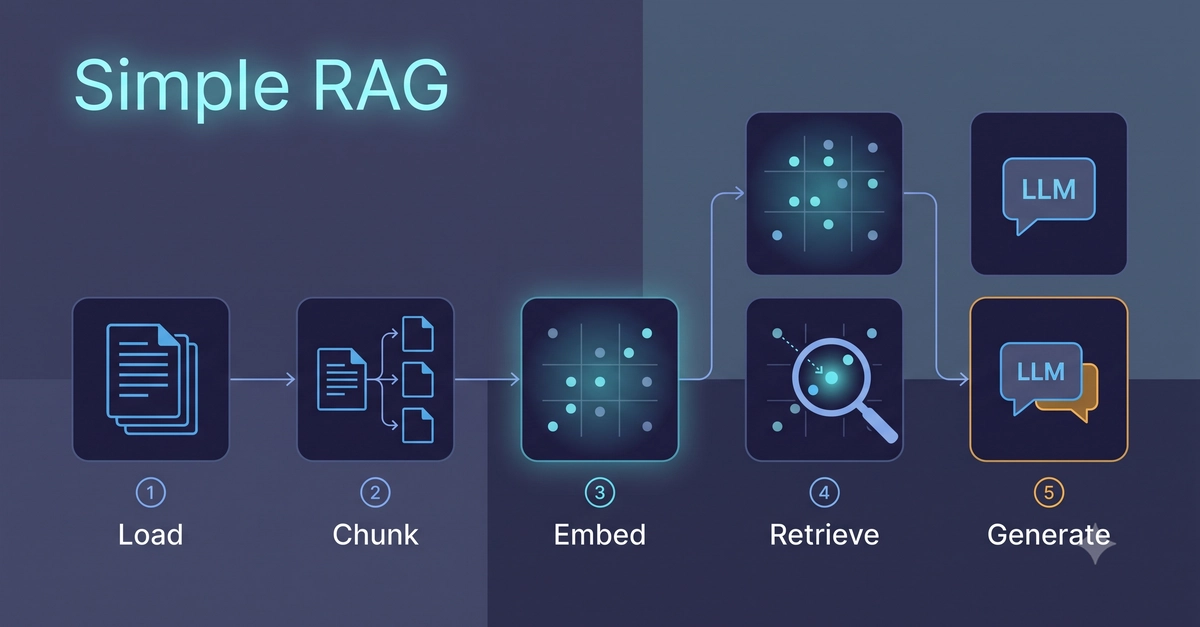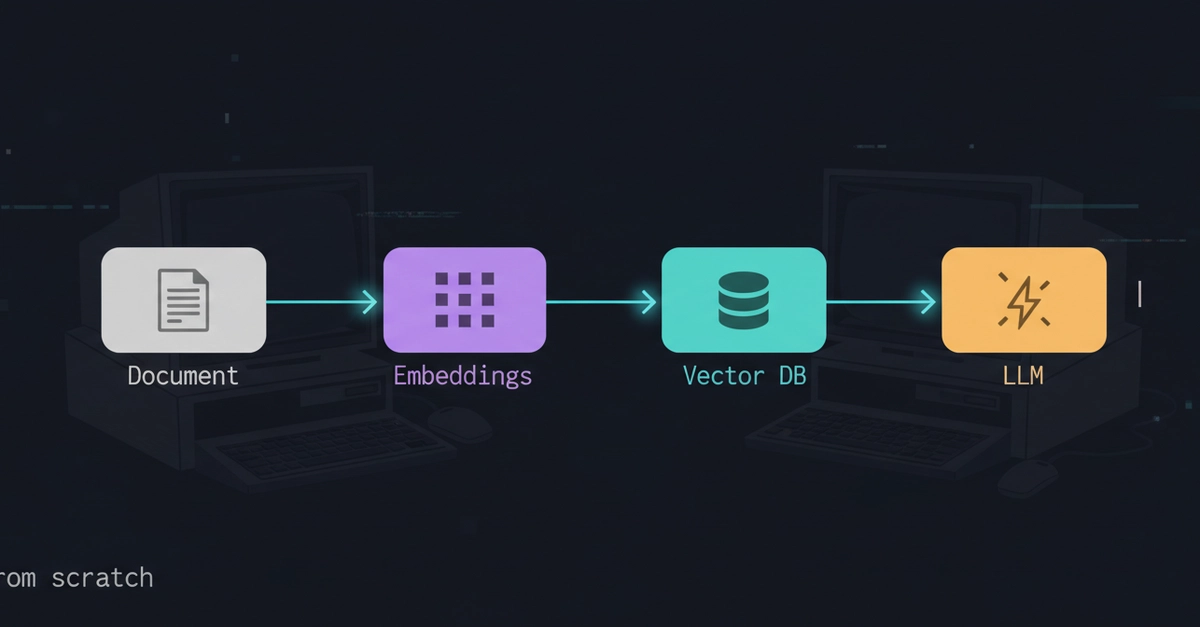
I'm a first-year undergraduate student in Artificial Intelligence Engineering, and this summer I'm building a small RAG (Retrieval-Augmented Generation) project from scratch to learn how these systems actually work under the hood — not just by calling an API, but by building the pipeline piece by piece. This is a log of the first three parts of that journey.
Part 1: Understanding the Building Blocks
Before writing any real project code, I spent time understanding the core ideas behind RAG:
Calling an LLM API: sending a prompt programmatically and getting a response back. I used the Gemini API for this. llm_test.py
Embeddings: the idea that text can be converted into numerical vectors, where semantically similar sentences end up close to each other in vector space. I tested this with a handful of sentences using sentence-transformers and computed cosine similarity between them — it was satisfying to see related sentences actually cluster together numerically. embedding_test.py