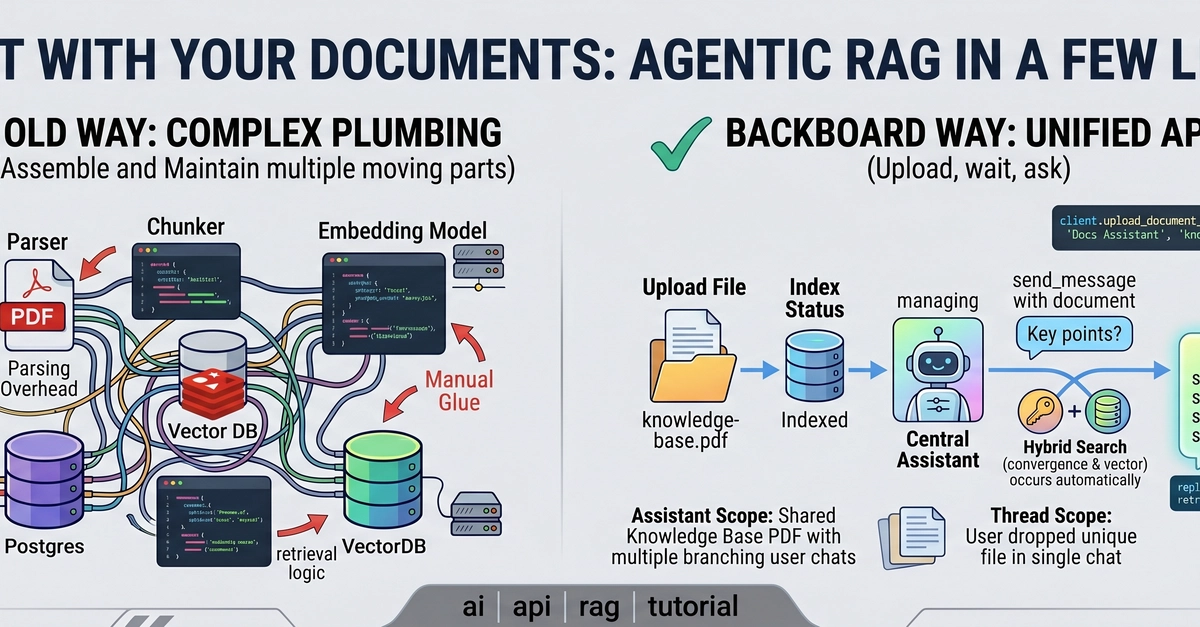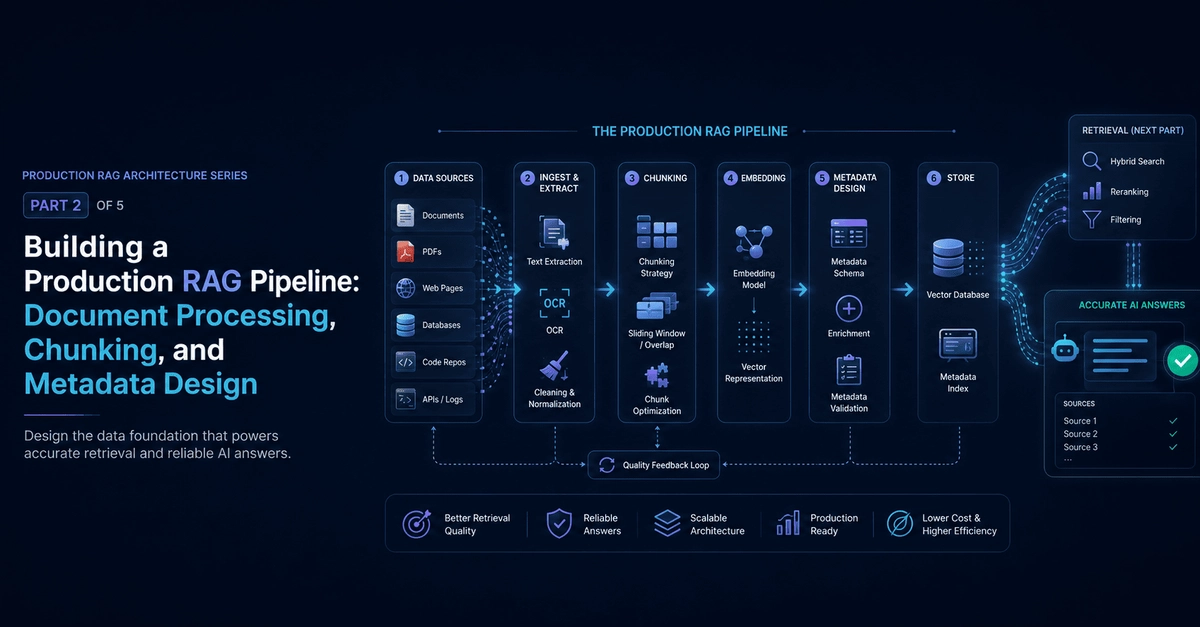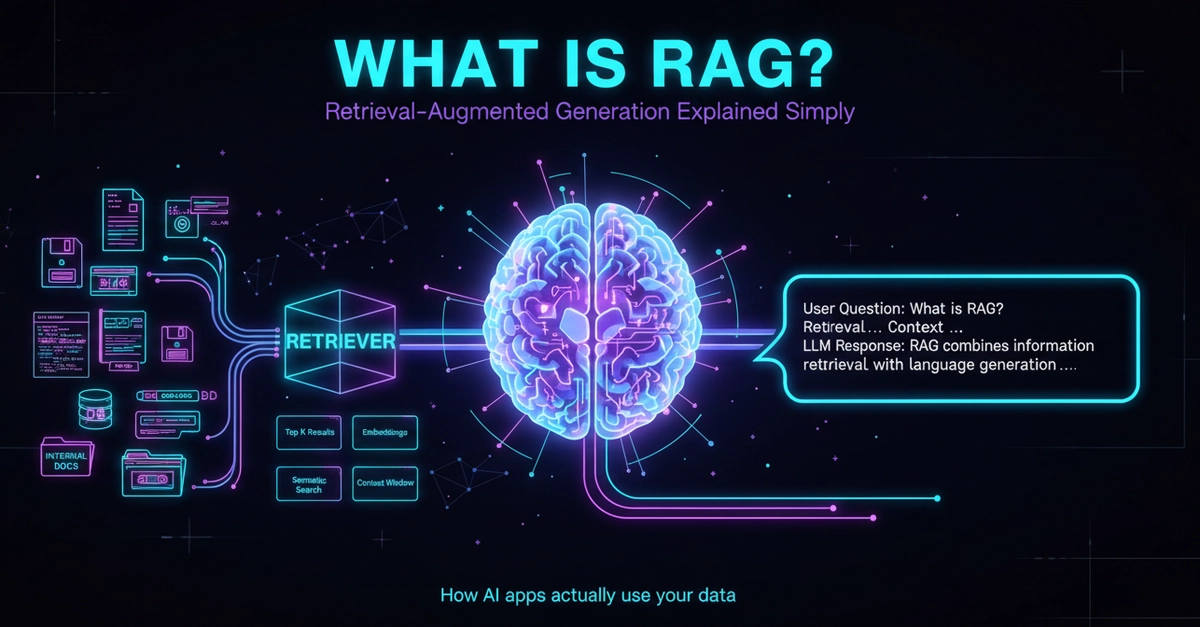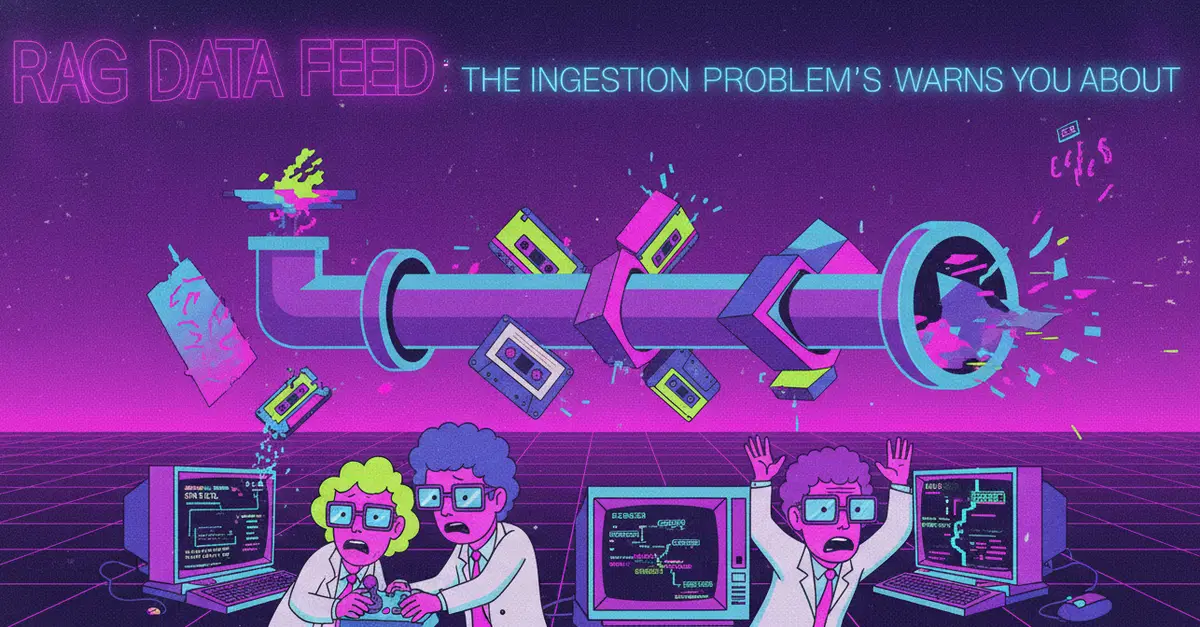
RAG projects often look simple when explained on a whiteboard. You collect documents, chunk the content, generate embeddings, store them in a vector database, connect retrieval to an LLM, and get answers grounded in your own data. The architecture sounds clean, and most tutorials make the ingestion layer feel like a setup task that happens once before the real AI work begins.
In practice, ingestion becomes one of the hardest parts of a production RAG system. The problem is not only getting content into a vector database. The real challenge is building a data feed that stays fresh, clean, deduplicated, structured, permission-aware, and useful enough for retrieval over time.
A RAG pipeline is only as good as the content it can retrieve. If the ingestion layer is weak, the model will still answer confidently, but the answer may be incomplete, outdated, duplicated, or based on the wrong version of the source. That is why RAG failures often look like model failures when they are actually data feed failures.
The First Ingestion Run Is Misleading
The first ingestion run usually gives teams a false sense of progress. You crawl a few pages, parse some HTML, extract text, create chunks, push embeddings into a vector store, and run a few test queries. The results may look good because the dataset is small, the questions are predictable, and someone is manually checking the output.