In September 2025, an attacker phished the credentials of a single npm maintainer and published booby-trapped versions of chalk, debug, and around a dozen other packages that are together downloaded more than 2 billion times a week. The code rewrote cryptocurrency wallet addresses inside any browser app that loaded it. The poisoned versions were live for roughly two hours before the community caught them and npm pulled them.
Two hours is a fast response. However, it is also more than enough time for an automated update tool to see the new version, open a pull request, and put it in front of your team, because version update tooling is built to grab the newest release the moment it lands.
That pattern sits behind a growing share of supply chain attacks. The malicious code rides in on a brand-new release, is published to a public registry, and gets pulled into build pipelines within minutes, before a human or a scanner has even looked at it.
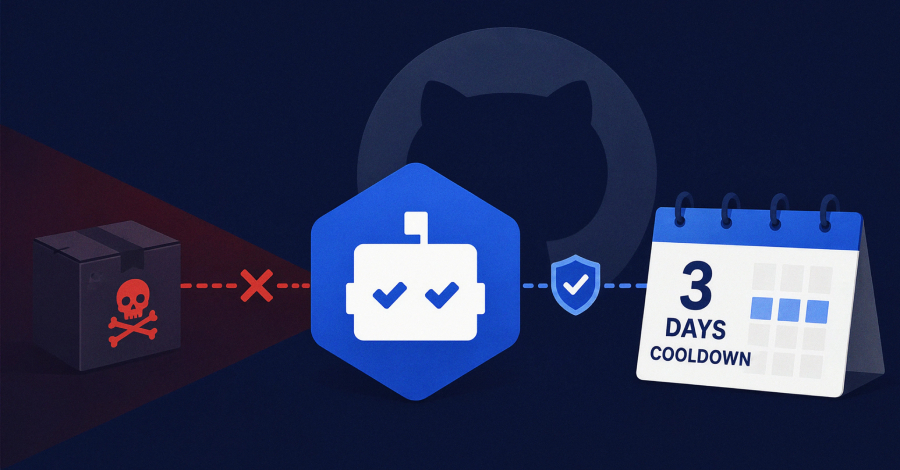
A cooldown changes that math. Waiting a few days before adopting a new release gives maintainers, security researchers, and automated scanners time to spot a malicious version and get it pulled before it ever reaches your pull requests.
For non-security version bumps, Dependabot now waits at least three days after a release is published before opening a pull request. The cooldown configuration option in the dependabot.yml still controls the behavior, though, so you can choose a different cooldown parameter that fits your project.