The move is expected to enable global e-commerce companies with foreign investment to procure, stock and export Indian-made products directly to overseas consumers.
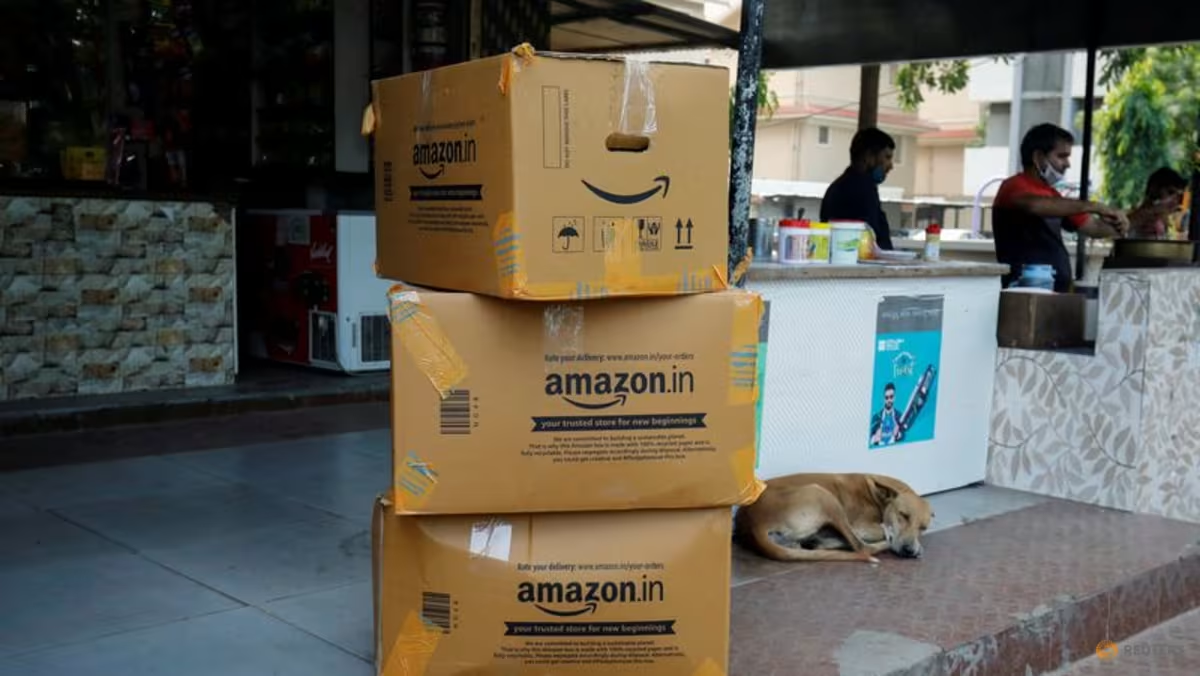
The government on Thursday relaxed foreign direct investment (FDI) rules for the e-commerce sector, allowing foreign-funded e-commerce entities to operate inventory-based models exclusively for exports of goods manufactured or produced in India, in a move aimed at expanding overseas market access for Indian sellers.“In order to facilitate greater exports through easier and increased access of global markets by Indian sellers, the extant FDI policy has been reviewed and it is decided that the restrictions on inventory-based model of e-commerce shall not apply in case of exports of domestically manufactured and/or produced goods/products,” according to Press Note 3 of 2026 notified by the Department for Promotion of Industry and Internal Trade (DPIIT) on Thursday.Revised policyThe move is expected to enable global e-commerce companies with foreign investment, including Amazon and Flipkart, to procure, stock and export Indian-made products directly to overseas consumers, a practice that was not permitted under the existing policy framework.The revised policy will come into effect from the date of notification under the Foreign Exchange Management Act (FEMA), the note added.Under India’s FDI policy, foreign investment is permitted in business-to-business (B2B) e-commerce and marketplace model of e-commerce. However, FDI is not permitted in business-to-consumer (B2C) e-commerce and inventory-based model of e-commerce where inventory of goods and services is owned by e- commerce entity and is sold to the consumers directly.Through Press Note 3 of 2026, the restrictions on inventory-based e-commerce and business-to-consumer (B2C) sales under the existing FDI policy will not apply when such platforms export domestically manufactured or produced goods, the press note highlighted.“The inventory-based e-commerce restriction was originally introduced to regulate domestic retail trading. However, questions had arisen on whether the same restrictions should extend to marketplace models facilitating export. By clarifying the position, the government has removed uncertainty, reinforced policy predictability for foreign investors, and aligned the FDI framework with India’s broader export promotion agenda, while preserving the safeguards applicable to domestic e-commerce,” said Sunil Kumar, Partner, Tax and Regulatory Services, EY India.Published on July 23, 2026