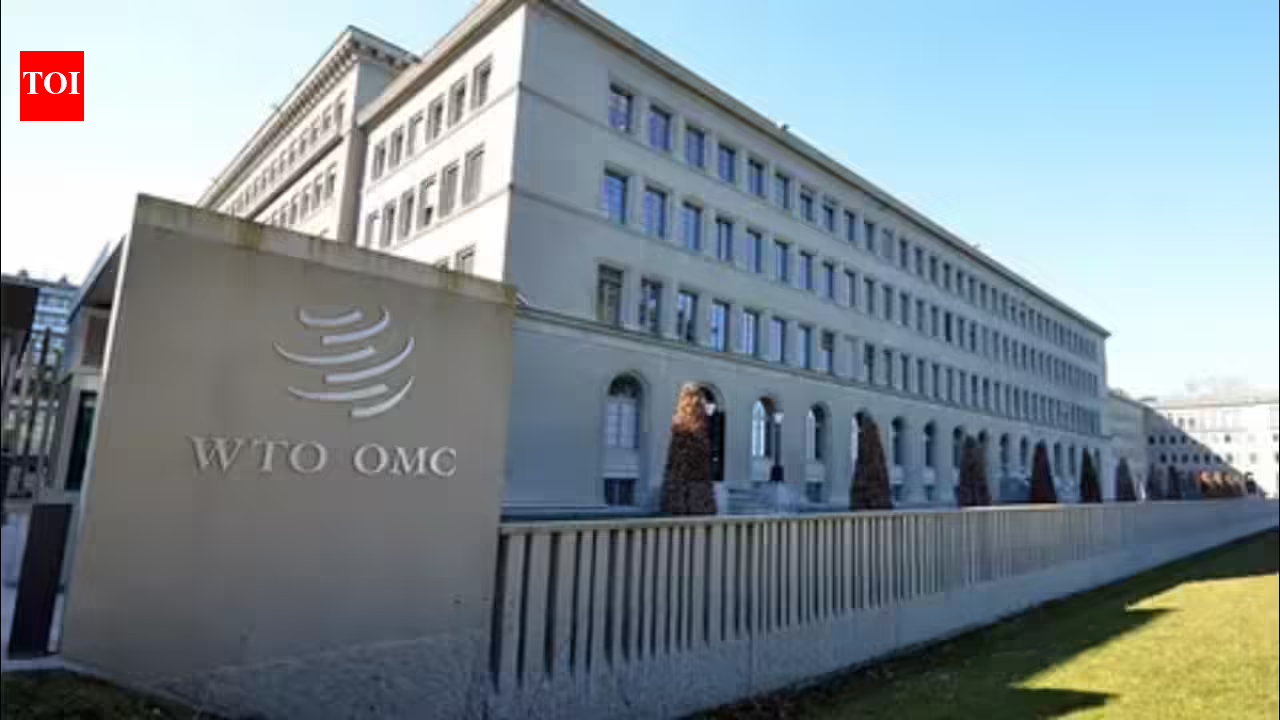
FILE PHOTO: A logo is pictured on the World Trade Organisation (WTO) building before a ministerial meeting to discuss a draft agreement on curbing subsidies for the fisheries industry in Geneva, Switzerland, July 15, 2021. REUTERS/Denis Balibouse/File Photo
| Photo Credit:
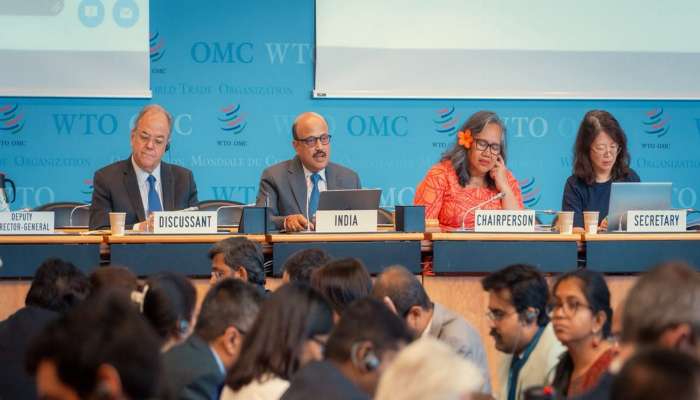
India came under sustained scrutiny from several WTO members during its eighth trade policy review (TPR), with countries raising concerns over “abrupt tariff changes”, quality control measures, agricultural restrictions, the MSP regime, industrial subsidies and New Delhi’s stance on key plurilateral initiatives.In concluding remarks issued on Thursday after the two-day review, Chairperson Ambassador Nella Pepe Tavita-Levy said transparency and predictability emerged as the foremost concerns raised by members, even as they acknowledged India’s growing importance in the global economy and supported its ambition of becoming a developed nation by 2047.The review attracted significant participation, with India receiving more than 1,090 written questions from 44 WTO members, over 700 of which were answered before the meeting. Representatives of 68 members spoke during the two-day review.“Foremost among members’ concerns, both expressed in prior questions and made in statements in the last two days, were predictability and transparency,” Tavita-Levy noted in her statement. Members flagged what they described as abrupt tariff changes, unexpected export restrictions, complex licensing procedures, lengthy investment approval processes and an overall lack of regulatory certainty. quality controlIndia’s expanding use of Quality Control Orders (QCOs) also drew extensive scrutiny. While countries acknowledged New Delhi’s efforts to improve product quality and consumer protection, they sought greater clarity on consultation procedures, delays in factory inspections, implementation timelines, conformity assessment requirements and recognition of foreign testing laboratories “Members highlighted the burden delays placed on their exporters and the importance of transparency, proportionality, and predictability,” Tavita Levy said.In the area of agriculture, concerns were raised on India’s minimum support price (MSP) regime, public stockholding programme, input subsidies, tariff administration and recurring export restrictions on commodities such as rice, wheat, sugar and onions. “Questions were directed at the transparency, predictability, WTO consistency and notification of these measures, as well as their potential trade-distorting effects. Members also highlighted concerns about sanitary and phytosanitary (SPS) measures, including relating to the availability of underlying risk assessments and related methodologies, food safety standards, pesticide maximum residue limits, and procedures for judging equivalence for SPS measures,” she said.PLI schemesIndia’s industrial policy, particularly Production-Linked Incentive (PLI) schemes, Make in India initiatives, semiconductor incentives and support for renewable energy manufacturing came under scrutiny. Participating delegations sought clarification on eligibility conditions, the use of local content requirements, compatibility with WTO subsidy disciplines and the impact of these programmes on trade and global value chains. Some delegations also expressed concern over public procurement preferences, import substitution policies and India’s frequent use of trade remedy measures.India’s digital public infrastructure was largely welcomed but some members sought greater clarity on cross-border data transfers, implementation of the Digital Personal Data Protection Act, data localisation requirements and emerging artificial intelligence regulations. “A large number of members also encouraged India to lift its objections to the incorporation of new plurilateral arrangements into WTO legal texts through Annex 4, in particular as regards the Investment Facilitation for Development Agreement,” the Chairperson said.Published on July 23, 2026