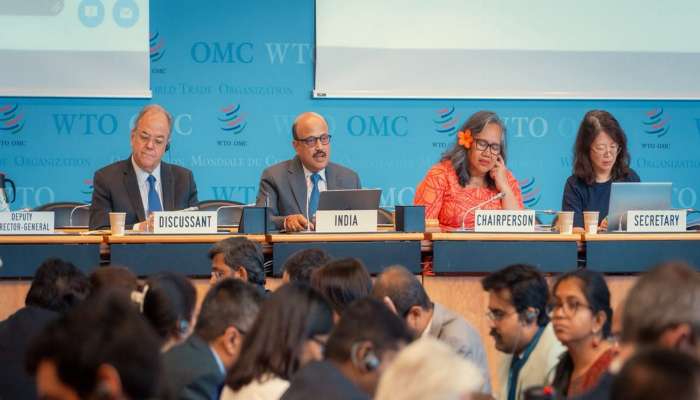
During India’s eighth Trade Policy Review, New Delhi acknowledged growing challenges from geopolitical tensions, supply chain disruptions and rising non-tariff barriers imposed by trading partners, which have constrained exports.
| Photo Credit:
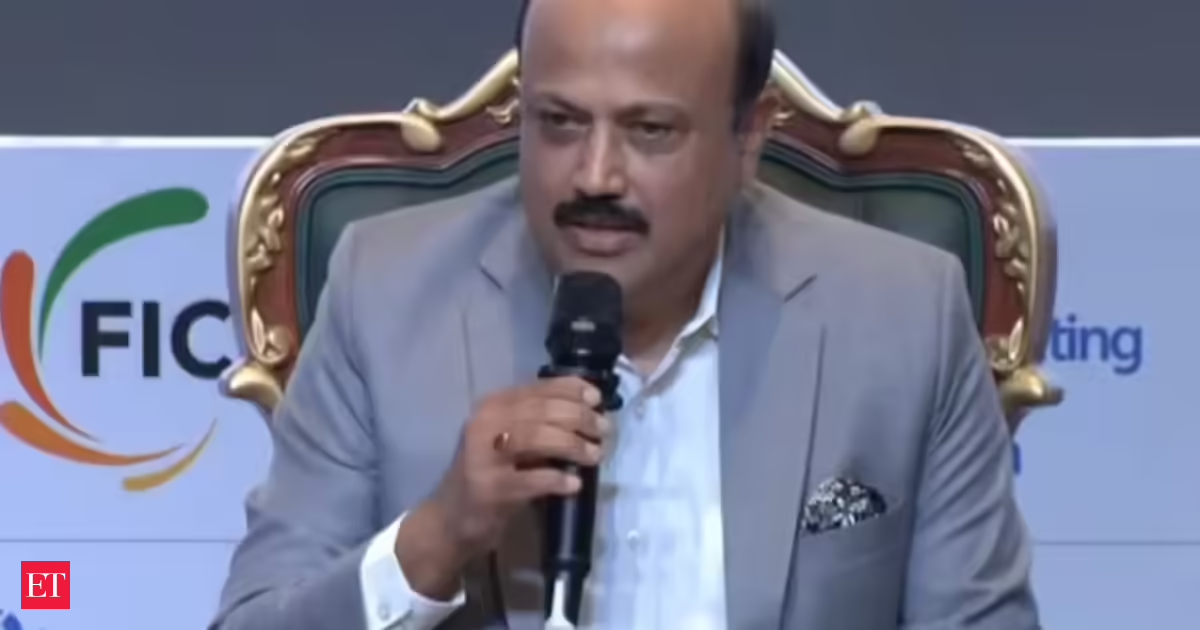
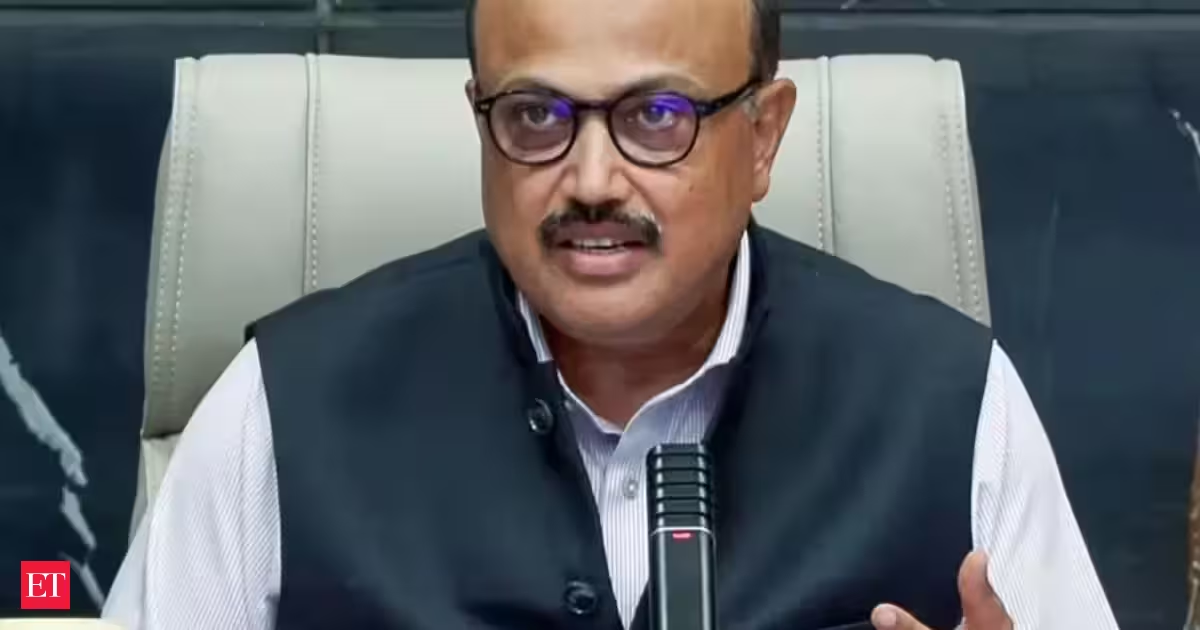
The World Trade Organisation (WTO) Secretariat has urged India to press ahead with reforms to lower trade costs, ease regulatory complexity and deepen its integration with the global economy, even as New Delhi maintains that rising geopolitical tensions and proliferating non-tariff barriers are increasingly limiting its export prospects, as the country’s eighth Trade Policy Review (TPR) began at the WTO on July 21.“..sustaining the strong economic performance needed to reach the Viksit Bharat vision of a developed India by 2047 will require addressing structural challenges, including high trade costs, regulatory complexity, infrastructure gaps, and barriers to deeper global integration,” the WTO Secretariat noted in its report.India flags external trade challengesIndia’s trade performance in recent years has been impacted by a range of external challenges, the country noted in a separate report.“India is also facing an increased use of non-tariff measures by some trading partners, including complex standards, conformity assessment procedures and regulatory requirements. These have resulted in constrained market access for Indian industry in foreign markets,” India’s report highlighted.Events such as global supply chain disruptions arising from geopolitical tensions, pandemic, climate-related events, and export controls by some countries have adversely affected the availability and cost of critical inputs. In addition, issues of excess capacity and overproduction in certain sectors have led to trade distortions and price fluctuations in international markets, India’s report added.“Despite a challenging global environment, India has remained the world’s fastest-growing major economy, achieved record exports, accelerated digital transformation, strengthened innovation, improved the ease of doing business, and expanded opportunities for trade and investment. The Trade Policy Review is an opportunity for Members to understand the broader developmental context of our policy choices and engage in constructive dialogue.,” according to Commerce Secretary Rajesh Agrawal who delivered India’s opening statement at the three-day review on Tuesday in Geneva.The review, conducted periodically for all WTO members (India’s last review was in 2021), comes as India remains the fastest-growing G20 economy and is pursuing its “Viksit Bharat 2047” vision of becoming a developed country. Over the next three days, WTO members will assess India’s trade performance from 2021 to 2025-end based on the WTO Secretariat’s report and the Indian government’s report.WTO notes progress but highlights policy concernsIn its report, the WTO Secretariat said India made notable progress during the review period by expanding regional trade agreements, further liberalising foreign direct investment (FDI), modernising customs procedures and digitalising trade processes. It also highlighted “unparalleled progress” in financial inclusion.However, it noted that India’s policy framework continues to rely on relatively high tariffs, import and export controls, state trading enterprises and extensive budgetary support programmes, particularly for food grains and fertilisers. While acknowledging that these policies support food security and rural livelihoods, the report suggested they continue to shape India’s trade regime.Structural reforms key to long-term growthLooking ahead, the Secretariat noted India’s GDP growth was projected at 6.8-7.2 per cent in FY2027-28 but said sustaining such growth over the longer term would require addressing structural constraints such as high trade costs, infrastructure gaps, regulatory complexity and barriers to deeper global integration.It said reforms aimed at improving the business environment, enhancing productivity and reducing reliance on trade-restrictive measures could strengthen competitiveness, attract more foreign investment and improve resource allocation. The report added that India’s future resilience would depend on striking the right balance between its self-reliance agenda and greater openness to international trade, while remaining engaged in reform of the multilateral trading system..Published on July 21, 2026