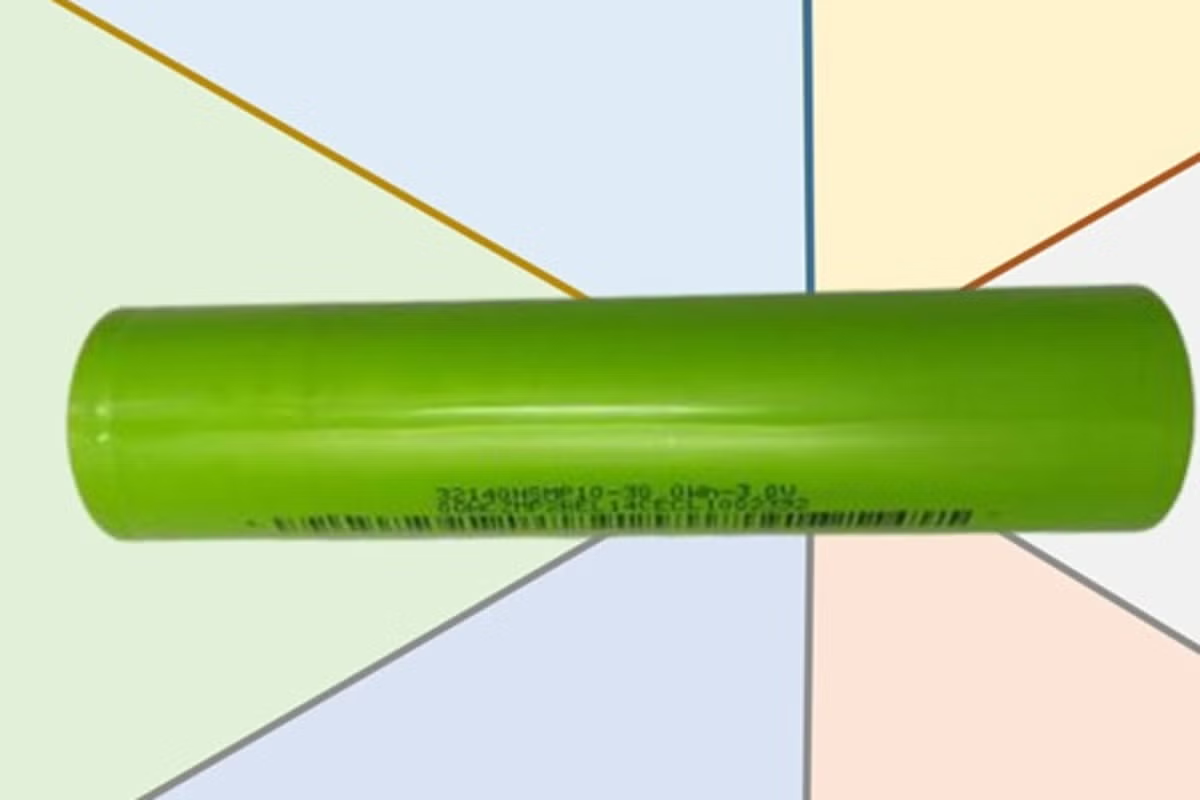
The reported issues include swollen battery cells, leaks, insulation faults, and range losses. In some cases, power losses during driving have also been reported. According to Automobilwoche, complaints have been rising since the beginning of the year, particularly in vehicles with mileages between 150,000 and 300,000km. This is particularly significant as the Aion S is frequently used as a taxi and by ride-hailing services in China, leading to rapid mileage accumulation.
According to CarNewsChina, 182 complaints were lodged on Chinese consumer platforms within a fortnight. Reports also indicate a relevant vehicle population of around 213,000 cars. However, it remains unclear how many of these vehicles actually have a battery defect. No official recall has been issued so far. GAC Aion and CALB have, however, introduced additional service measures. For affected vehicles, the battery warranty will be extended from eight years or 150,000km to eight years or 300,000km. GAC is offering free inspections and, if necessary, repairs or battery replacements. CALB has also announced free inspection and maintenance services. The new mileage limit is particularly relevant for commercially used vehicles, as the issues appear to occur frequently only beyond the previous warranty threshold.