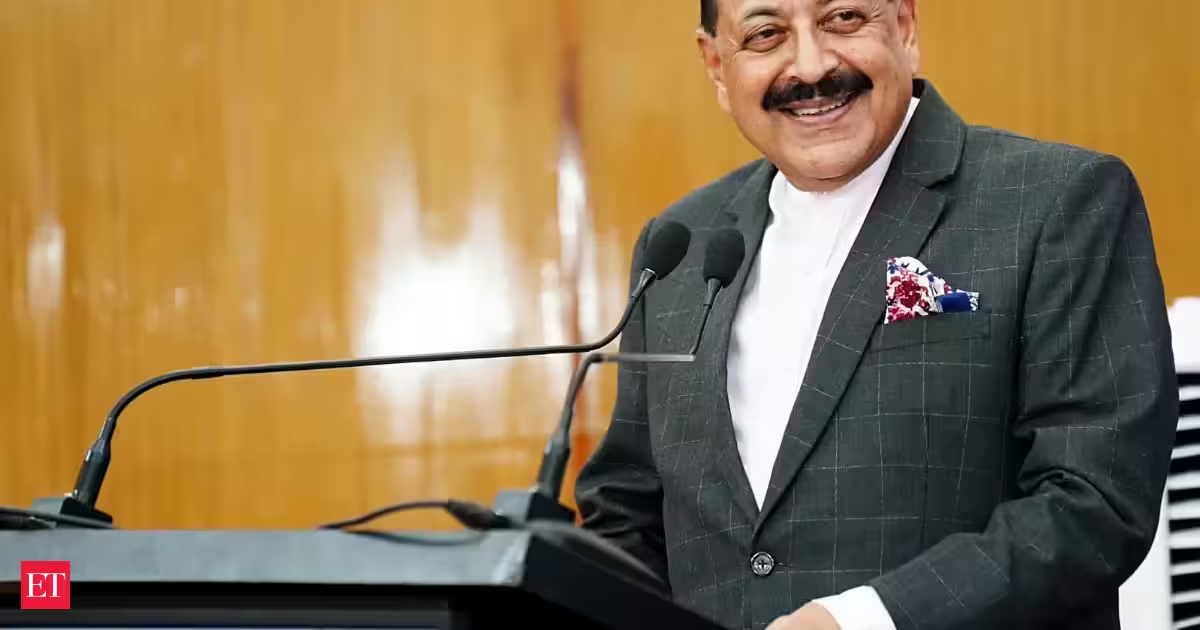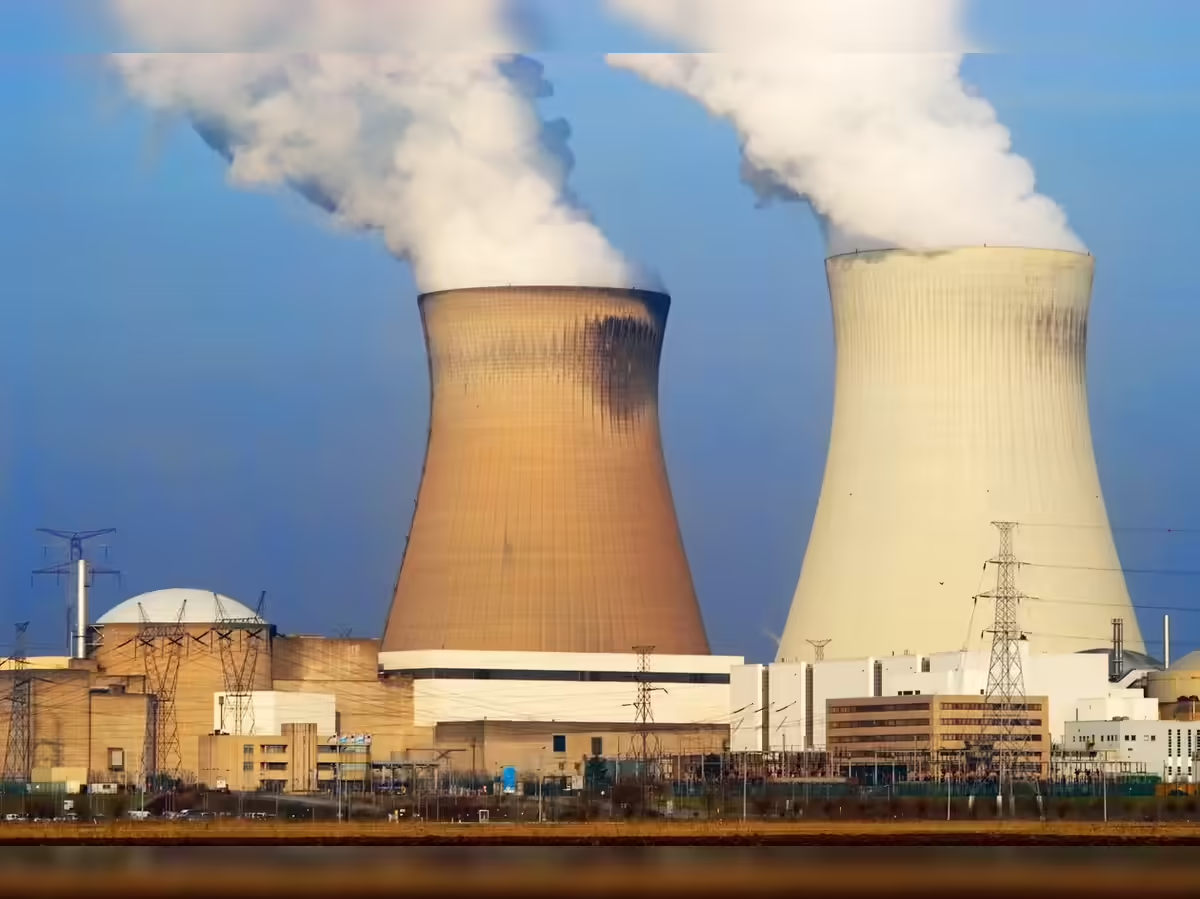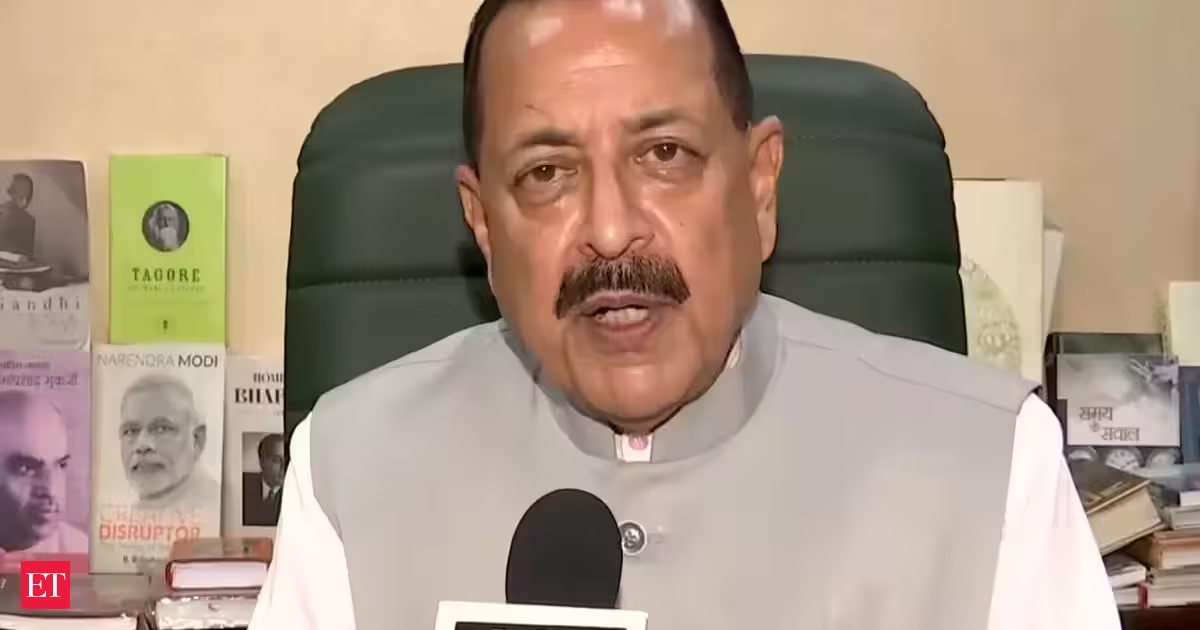
New Delhi: India has a plan to develop and operationalise at least five indigenously-designed small modular reactors (SMRs) by 2033, the government informed Parliament on Thursday.In a written reply to a question in the Rajya Sabha, Union minister Jitendra Singh said the Bhabha Atomic Research Centre (BARC) has, as of now, undertaken the design and development of three SMRs.These are "220-MWe Bharat Small Modular Reactor (BSMR-200), 55-MWe Small Modular Reactor (SMR-55) and up to 5-MWth High Temperature Gas Cooled Reactor (HTGCR)," the minister said.Also Read: Adani's nuclear power ambition hinges on a green lightThe BSMR-200 has a pressurised water reactor (PWR) design and will be built in Maharashtra's Tarapur.At the same location, the SMR-55, which is also based on a PWR design, is being developed, Singh said."Up to 5 MWth HTGCR is being designed and developed by BARC as a nuclear heat source and to be coupled with a suitable thermochemical cycle, such as the copper-chlorine cycle, for hydrogen production," he added.The proposed site for the reactor is Visakhapatnam, Andhra Pradesh.Also Read: Coal remains backbone of India's power supply despite renewable push, govt tells ParliamentThe minister highlighted that the SMRs will help in captive power generation for energy-intensive industries, such as steel, aluminium, cement and other metal industries.The SMRs will also help in re-purposing retiring fossil fuel-based thermal power plants and supplying reliable electricity to remote and off-grid locations."HTGCR can be coupled with a suitable thermochemical cycle for producing green hydrogen for the transport sector and process industries," Singh said.
India to develop 5 indigenously-designed small modular reactors by 2033: Government
India plans to develop and operate five indigenous small modular reactors by 2033. The Bhabha Atomic Research Centre is designing three different reactor types. These reactors will support energy-intensive industries and remote locations. One reactor will produce green hydrogen for transport and industry needs. This initiative aims to enhance India's energy independence and sustainability.
250 words~1 min read