Retrieval-augmented generation is often introduced with a compact diagram:
documents -> embeddings -> vector database -> LLM
Enter fullscreen mode
Exit fullscreen mode
That is a useful starting point, but it can make one part of the architecture
A practical RAG database design guide covering SQL, BM25, vector search, reranking, security, cost, and locality-aware context retrieval.
Retrieval-augmented generation is often introduced with a compact diagram:
documents -> embeddings -> vector database -> LLM
Enter fullscreen mode
Exit fullscreen mode
That is a useful starting point, but it can make one part of the architecture
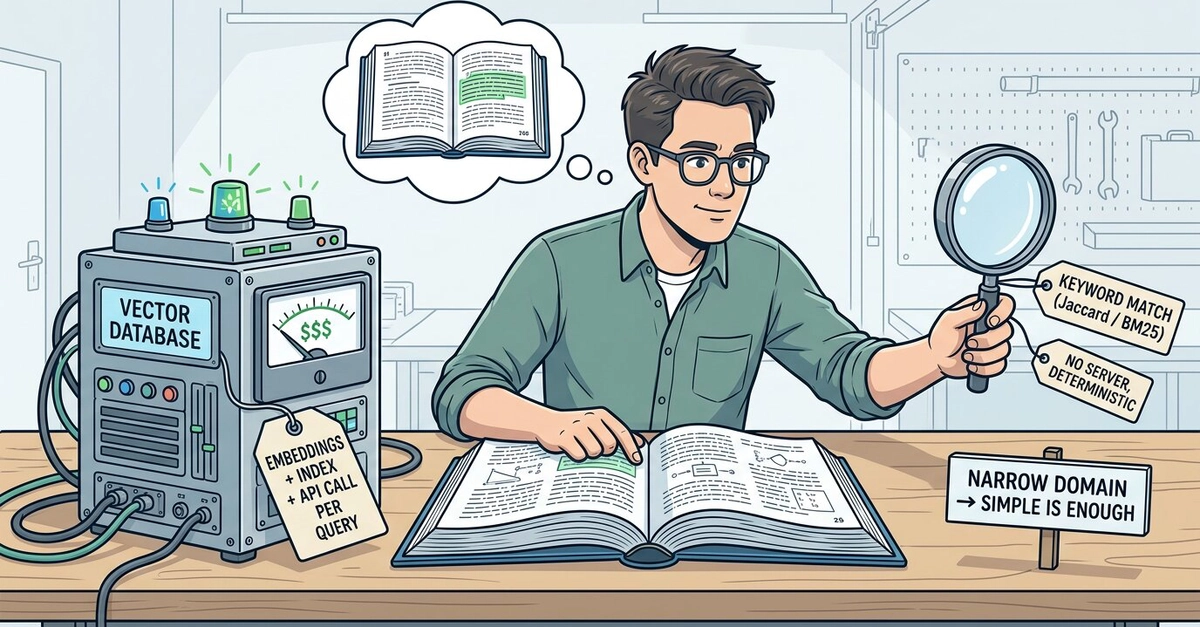
RAG retrieval strategies without a vector database: BM25, keyword indices, knowledge-in-bundle — and when embeddings earn their…
An architecture-focused comparison of Graph RAG and vector RAG: chunking, storage, retrieval behavior, trade-offs, and hybrid…
Retrieval-Augmented Generation (RAG) is a powerful pattern to build applications that can query,...
Learn how the RAG workflow works — from ingestion and embedding to retrieval, augmentation, and generation. Covers hybrid search,…
A comprehensive guide covering data ingestion, retrieval optimization, and evaluation strategies to take your RAG system from…
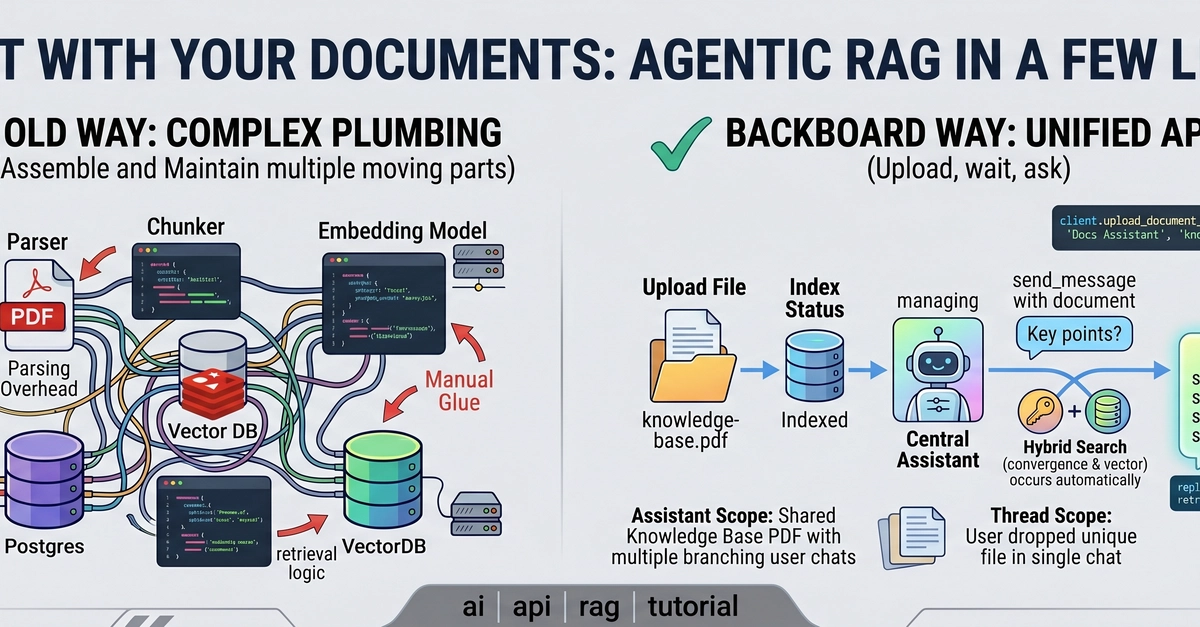
RAG is not new. Chunk a document, embed the chunks, store them in a vector database, run a retrieval...