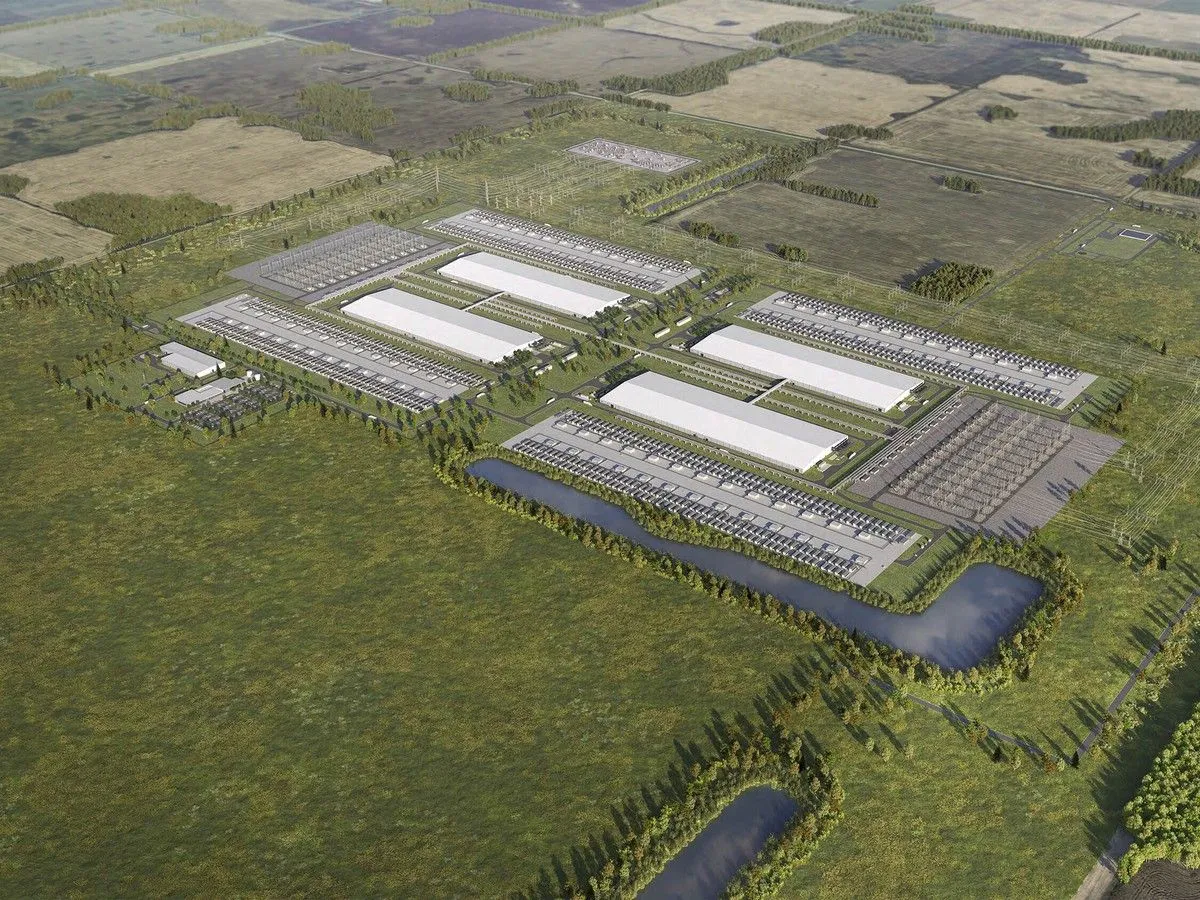
Skip to Content News Archives Economy Energy Oil & Gas Renewables Electric Vehicles Mining Commodities Agriculture Real Estate Mortgages Mortgage Rates Finance Banking Insurance Fintech Cryptocurrency Work Wealth Smart Money Wealth Management Investor Personal Finance Family Finance Retirement Taxes High Net Worth FP Comment Executive Women Puzzmo Newsletters Financial Times Business Essentials More Innovation Information Technology FP500 Podcasts Small Business Lives Told Tails Told Shopping Financial Post Store Obituaries Place a Notice Advertising Advertising With Us Advertising Solutions Postmedia Ad Manager Sponsorship Requests Classifieds Place a Classifieds ad Working Profile Settings My Subscriptions Saved Articles My Offers Newsletters Customer Service FAQ News Economy Energy Mining Real Estate Finance Work Wealth Investor FP Comment Executive Women Puzzmo Newsletters Financial Times Business Essentials HomeInnovationNewsHow Alberta won the data infrastructure race New York just lostDavid Knight Legg: Alberta chose preparation over prohibition You can save this article by registering for free here. Or sign-in if you have an account.Alberta Premier Danielle Smith shakes hands with Gary Demasi, vice president of Data Centre Strategy and Development for Meta following an announcement that Meta will invest $13 billion building a new data centre in Sturgeon County. The announcement took place in Calgary on July 8, 2026. Photo by Gavin Young/PostmediaIt wasn’t luck when Meta Platforms Inc. announced its $13-billion, one-gigawatt AI data centre in Sturgeon County, Alta., last week; it was the result of Alberta doing the hard policy work that New York and other jurisdictions have refused to do.Subscribe now to read the latest news in your city and across Canada.Exclusive articles from Barbara Shecter, Joe O'Connor, Gabriel Friedman, and others.Daily content from Financial Times, the world's leading global business publication.Unlimited online access to read articles from Financial Post, National Post and 15 news sites across Canada with one account.National Post ePaper, an electronic replica of the print edition to view on any device, share and comment on.Daily puzzles, including the New York Times Crossword.Subscribe now to read the latest news in your city and across Canada.Exclusive articles from Barbara Shecter, Joe O'Connor, Gabriel Friedman and others.Daily content from Financial Times, the world's leading global business publication.Unlimited online access to read articles from Financial Post, National Post and 15 news sites across Canada with one account.National Post ePaper, an electronic replica of the print edition to view on any device, share and comment on.Daily puzzles, including the New York Times Crossword.Create an account or sign in to continue with your reading experience.Access articles from across Canada with one account.Share your thoughts and join the conversation in the comments.Enjoy additional articles per month.Get email updates from your favourite authors.Create an account or sign in to continue with your reading experience.Access articles from across Canada with one accountShare your thoughts and join the conversation in the commentsEnjoy additional articles per monthGet email updates from your favourite authorsSign In or Create an AccountorNew York Governor Kathy Hochul has signed a one-year moratorium on new large data centres — the first statewide ban of its kind in the United States — while Alberta was closing one of the biggest private-sector technology investments in Canadian history. The contrast reveals who is actually winning the global race for data infrastructure.Opposition to data centres is understandable when governments show up unprepared. Residents are right to protest if a jurisdiction lacks the natural advantages or has failed to do the upfront work to make projects viable electrically, economically and environmentally.Breaking business news, incisive views, must-reads and market signals. Weekdays by 9 a.m.By signing up you consent to receive the above newsletter from Postmedia Network Inc.A welcome email is on its way. If you don't see it, please check your junk folder.The next issue of Posthaste will soon be in your inbox.We encountered an issue signing you up. Please try againArizona’s desert water shortages and power strains are real constraints. So are regions without ready industrial land, baseload power or cold-climate cooling efficiencies. Skepticism is rational when those gaps exist.New York’s moratorium reflects exactly that kind of unreadiness: rising bills, grid pressure and water concerns that could have been managed with proper planning instead of a blanket pause. Alberta chose preparation over prohibition.Three years ago, Invest Alberta began mapping what hyperscalers would need to scale AI compute. A continuous intelligence and policy operation — led by the agency, ministers, the premier’s office and staff — identified the precise requirements and then engineered a framework to meet them while protecting ratepayers and communities.The same disciplined approach had already landed Dow Chemical Co.’s multibillion-dollar expansion in the industrial heartland. This is not reactive politics; it is deliberate strategy.The framework rests on tangible policy development. Six years of tax reform lowered the corporate rate to eight per cent from 12 per cent, proving that lower rates can generate higher revenue while attracting capital.A six-sector economic development strategy added technology and data infrastructure as enabling sectors that multiply opportunity across every other industry: energy optimization, advanced manufacturing, health research, university labs and entrepreneurship.Most critically, the AI Data Centres Strategy delivered regulatory fast-tracks, a concierge service for complex projects and a bring-your-own-power model that lets developers fund new generation and grid upgrades rather than compete for existing supply.Meta’s project shows the payoff of that preparation. The company is funding its generation and grid improvements that strengthen reliability for everyone else. It is using closed-loop liquid cooling with dry coolers that require no operational water for servers, only minimal domestic and safety uses. It is locating on pre-zoned industrial land instead of converting farmland.These outcomes did not appear by accident. They required dozens of trips, site visits, policy drafts, late-night negotiations on power timelines, community benefit agreements and stakeholder structures. Dozens of people across Invest Alberta and politicians did the thankless, detailed work of aligning power generation, securing enforceable standards on noise and water, and balancing interests so the project could compete globally.That is the difference between saying we want the future and creating the conditions for it to arrive on terms the public will accept. New York’s pause and similar hesitations elsewhere have already blocked or delayed more than US$60 billion in data centre investment across the U.S.Capital and skilled trades do not wait for politicians to finish a year of review. Projects stalled in New York or Manitoba in 2026 will be operating in Alberta by 2029. The jurisdictions left behind will be told they were protected. In reality, they will have forfeited high-value construction and permanent operational jobs, stable tax revenue and the compute capacity that powers the next generation of universities, businesses and researchers.Alberta’s approach treats data centres as foundational infrastructure, the digital equivalent of pipelines and power plants. They run 24/7 for decades, create permanent high-value roles in operations, tech support and the trades and generate predictable revenue.More importantly, they enable every sector that depends on high-performance computing. More than 20 additional projects are already before municipal councils, with another 30 in active development. Several are under construction. You create the conditions for an entire ecosystem to flourish when you solve things for the largest and most sophisticated firms.Alberta already leads the country on every major economic metric and has accounted for nearly 80 per cent of all net new jobs created in Canada over the past year. Investors are investing because Alberta has delivered the lowest taxes, clearest regulations and structural advantages in energy, land and climate that make long-term commitments attractive.The same policy discipline that won the Meta deal will continue to win the next ones. Big deals like this do not happen because a jurisdiction gets lucky or simply says yes to everything. They happen because a province does the hard, detailed work of policy reform, global relationship building, cross-government teamwork and tailored execution, and then stays at it for years.While others pause or reject, Alberta is building the enduring digital backbone that will support scientific discovery, economic competitiveness and everyday life for generations. Capital, talent and opportunity go where they are welcome and stay where they are well-treated. Alberta is making sure it’s that place.David Knight Legg is the founder and former chief executive of Invest Alberta Corp. He is a venture capital executive and policy expert in energy, technology and capital markets. Join the Conversation This website uses cookies to personalize your content (including ads), and allows us to analyze our traffic. Read more about cookies here. By continuing to use our site, you agree to our Terms of Use and Privacy Policy.
How Alberta won the data infrastructure race New York just lost
David Knight Legg: It wasn’t luck when Meta announced its $13-billion AI data centre in Alberta, it was the result of policy work. Read on.
TL;DRAI
Meta commits $13B to Alberta's 1GW AI data centre amid New York's data centre moratorium—proactive infrastructure policy attracts hyperscale investment; restriction loses deals. For tech managers: AI compute scale requires tax incentives, regulatory fast-tracks, reliable power planning. Jurisdictions without this groundwork become uncompetitive.
1,404 words~6 min read