Harsh Verma is the Principal Software Engineer - AI at Palo Alto Networks.gettyA 2025 study of more than 129,000 GitHub repositories showed that AI coding agents had reached an adoption rate of 15.9% to 22.6% within months of becoming widely available. While this suggests organizations are rapidly experimenting with agentic workflows, I think many companies are still looking at AI agents the wrong way by assuming that deploying AI agents is the same as deploying software products.One pattern I've noticed, for example, is that organizations try to prove AI's value by making it autonomous too early. A marketing team doesn't ask a new intern to run the entire department on day one, but I've seen leadership teams expect an AI agent to manage campaigns, write content, analyze performance and publish changes almost immediately and with no meaningful oversight.Usually, this leads to the projects stalling because, unlike other software, AI agents need clear objectives and an environment that supports continuous learning to thrive.The “AI Employee” FallacyWhile many organizations frame agents as “digital employees," thinking of agents the same as human employees has become a dangerous narrative. Unlike humans, AI agents do not inherently understand context. This is important, as it is also the reason you can't treat agentic AI the same as deterministic software. Traditional applications either work, or they don't. With agentic AI, the same agent with the same objective can lead to different execution paths on different days based on subtle changes in context. That changes how leaders need to think about governance. You can't measure success on whether every output is identical, which is a mistake I commonly see, but on whether the agent consistently stays within acceptable operational boundaries.What Effective Deployment Looks LikeOne of the most instructive examples I've seen comes from Anthropic's Claude Code best practices, which explain how to configure your environment for agentic AI.Agentic coding tools shouldn't be deployed as an independent engineer. Instead, they should be assigned narrowly defined responsibilities, like reviewing pull requests, navigating large codebases, assisting with debugging and handling repetitive tasks.According to Claude Code contribution metrics, as internal usage increased, the company observed a 67% increase in pull requests merged per engineer per day, while 70% to 90% of code across many teams was written with Claude Code assistance.What stands out to me is how this process reflects how organizations supervise their junior employees. Many leadership teams frame the AI adoption conversation around replacement by asking, “Can this agent do the engineer's job?” A better question is: "Which parts of the engineer's workflow can this agent do well, consistently enough to free the engineer for higher-value work?"That shift in thinking changes how teams design workflows, how they manage risk and ultimately how quickly they build organizational trust in AI.Why Experimentation Matters More Than ScaleAfter early success with enterprise AI, organizations think scaling deployment is the next step. In reality, scaling too quickly often leads to issues caused by hidden weaknesses like inconsistent behavior, operational drift and various edge-case failures, all of which can lead to rising infrastructure costs and governance problems.Gartner has pointed to the complexity of integrating agents into legacy systems as a major reason why over 40% of agentic AI projects will be canceled by the end of 2027. This is why early experimentation is valuable to ensure future success. When deployments are small, they reveal friction in workflows, trust boundaries, reliability limitations and governance requirements before the system has scaled too far to scale it back.What The Future HoldsEarly AI adoption focused on what models could do. The next phase will focus on how well these agents work in real organizations, and this stage will reward experimentation with systems.Right now, many organizations are still treating AI agents like traditional software deployments. They install the system, automate tasks and measure workflow productivity. AI agents should be managed differently because they behave like evolving operational actors rather than predictable applications.My perspective is that by focusing on learning rather than speed or getting access to the best models, companies can build an environment where agentic AI lives up to its potential. Forbes Technology Council is an invitation-only community for world-class CIOs, CTOs and technology executives. Do I qualify?
Your First AI Agent Is An Experiment, Not A Product
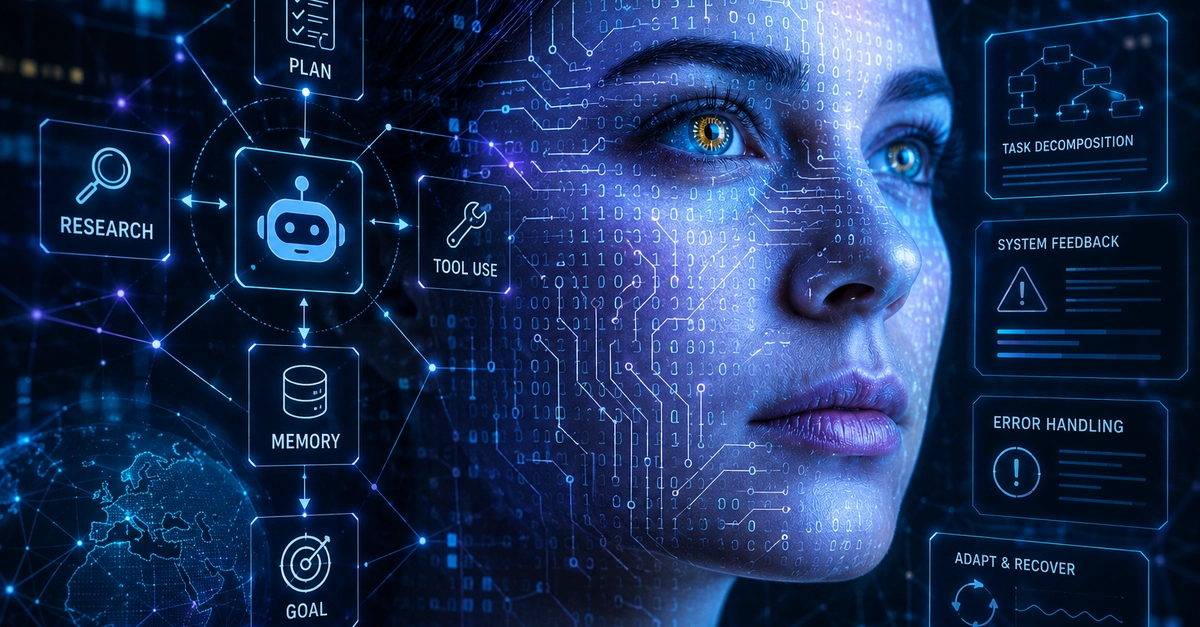
AI agents behave like evolving operational actors rather than predictable applications.
TL;DRAI
AI agents hit 15.9% adoption; Claude Code shows 67% higher PR merges per engineer when focused on narrow tasks (PR review, debugging) instead of autonomous execution. Premature scaling causes governance failures; Gartner projects 40% of agentic AI projects canceled by 2027, requiring experimentation with guardrails before production.
698 words~3 min read