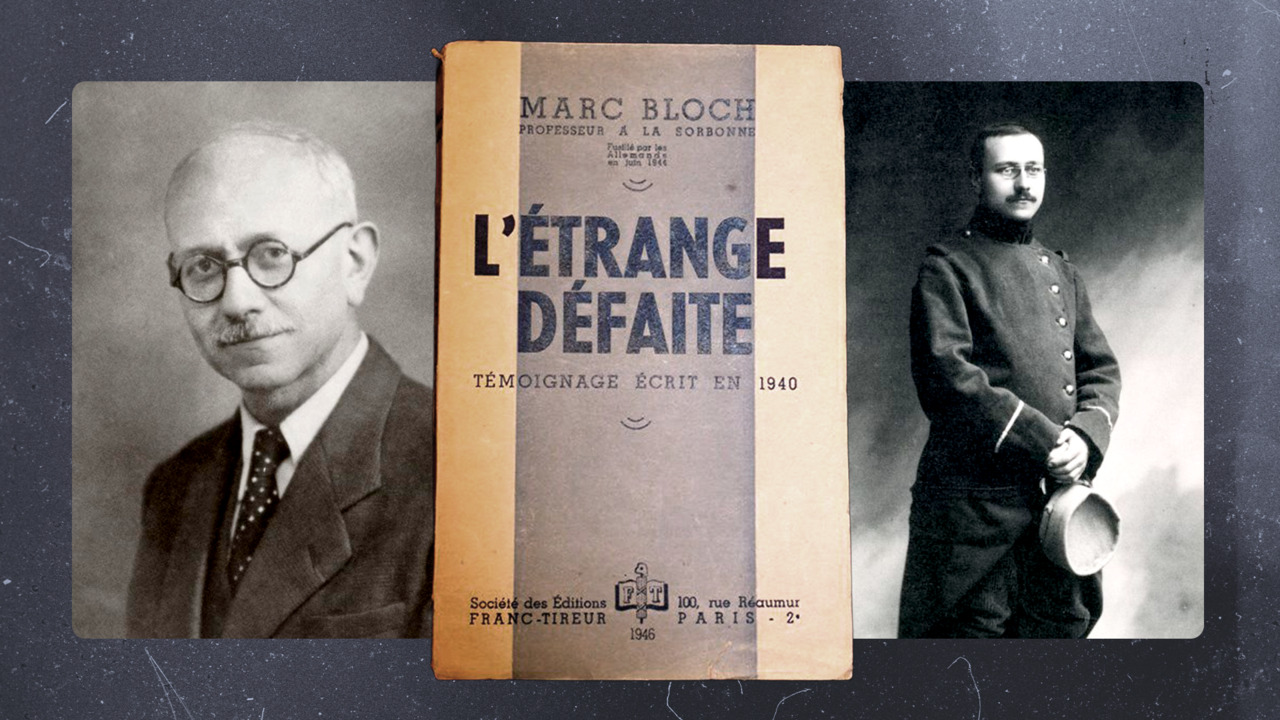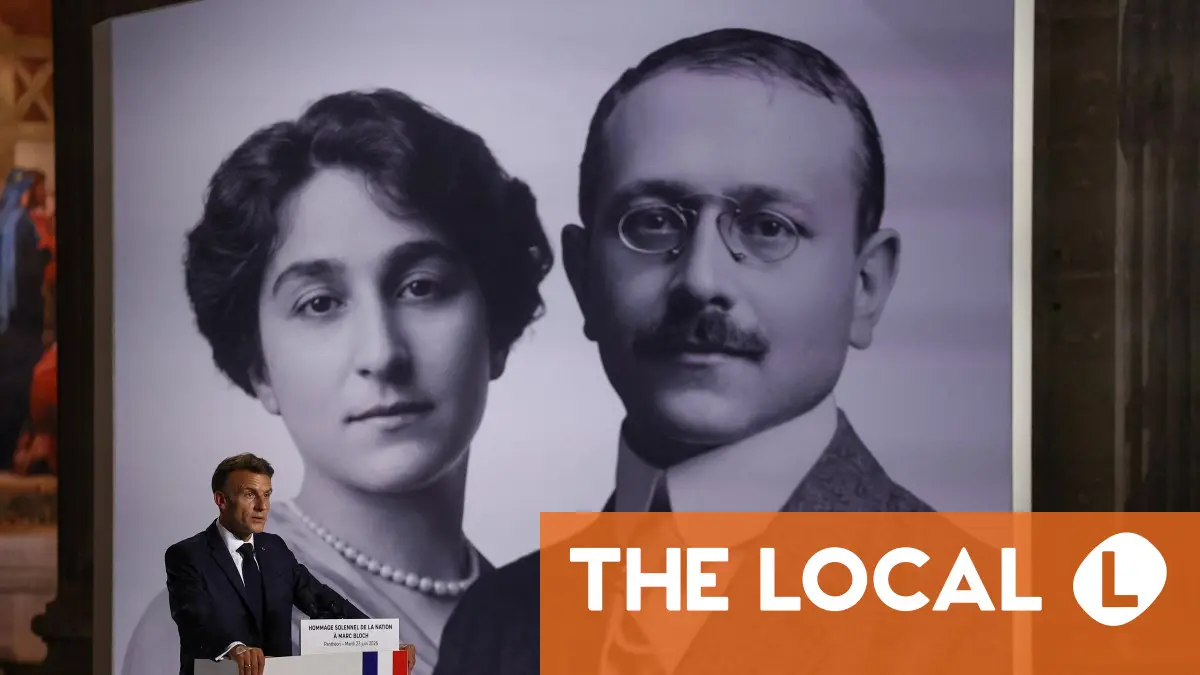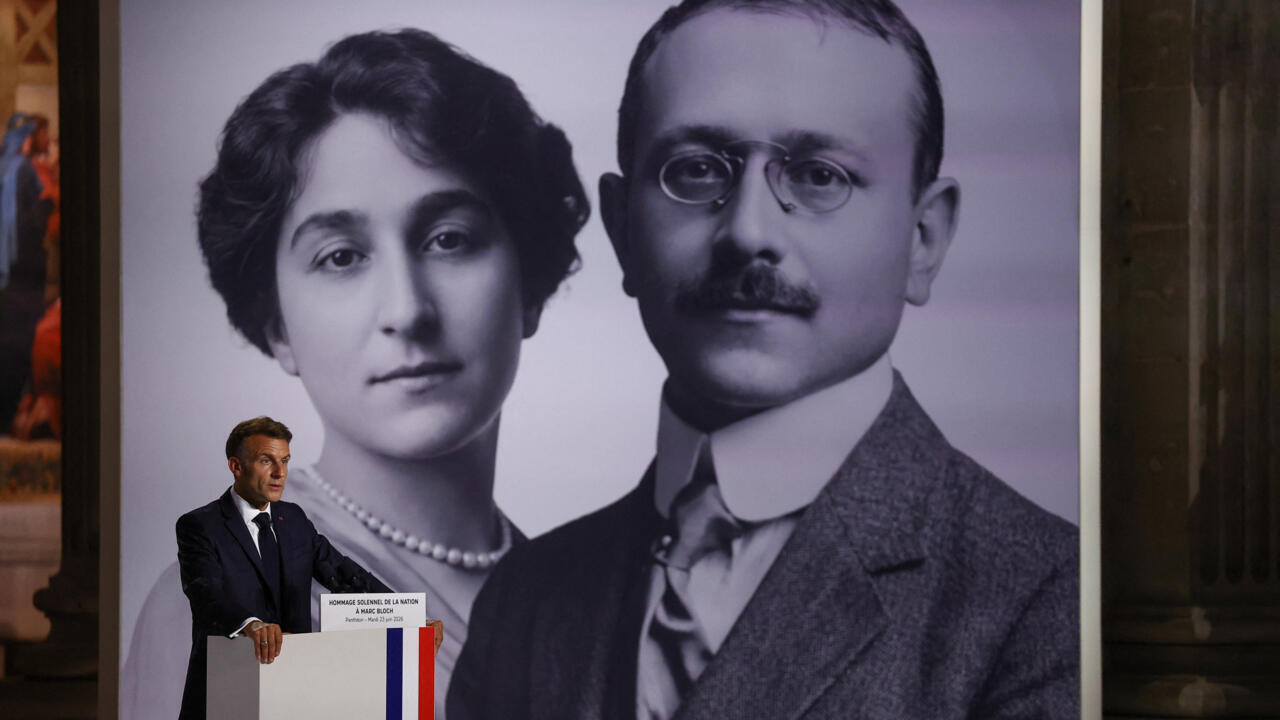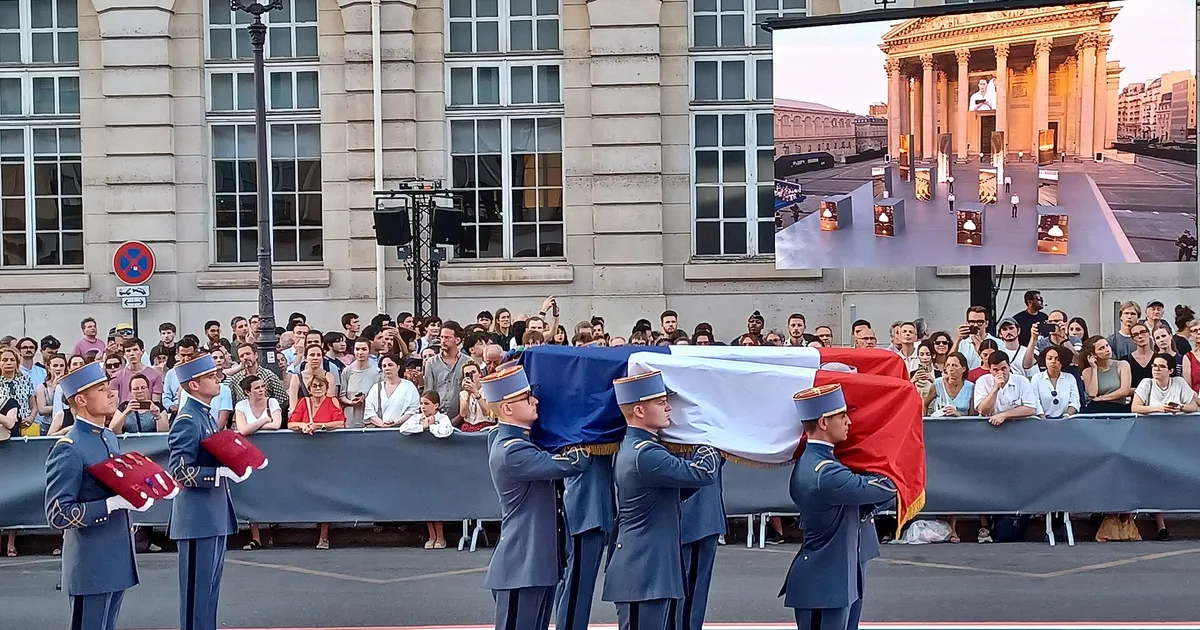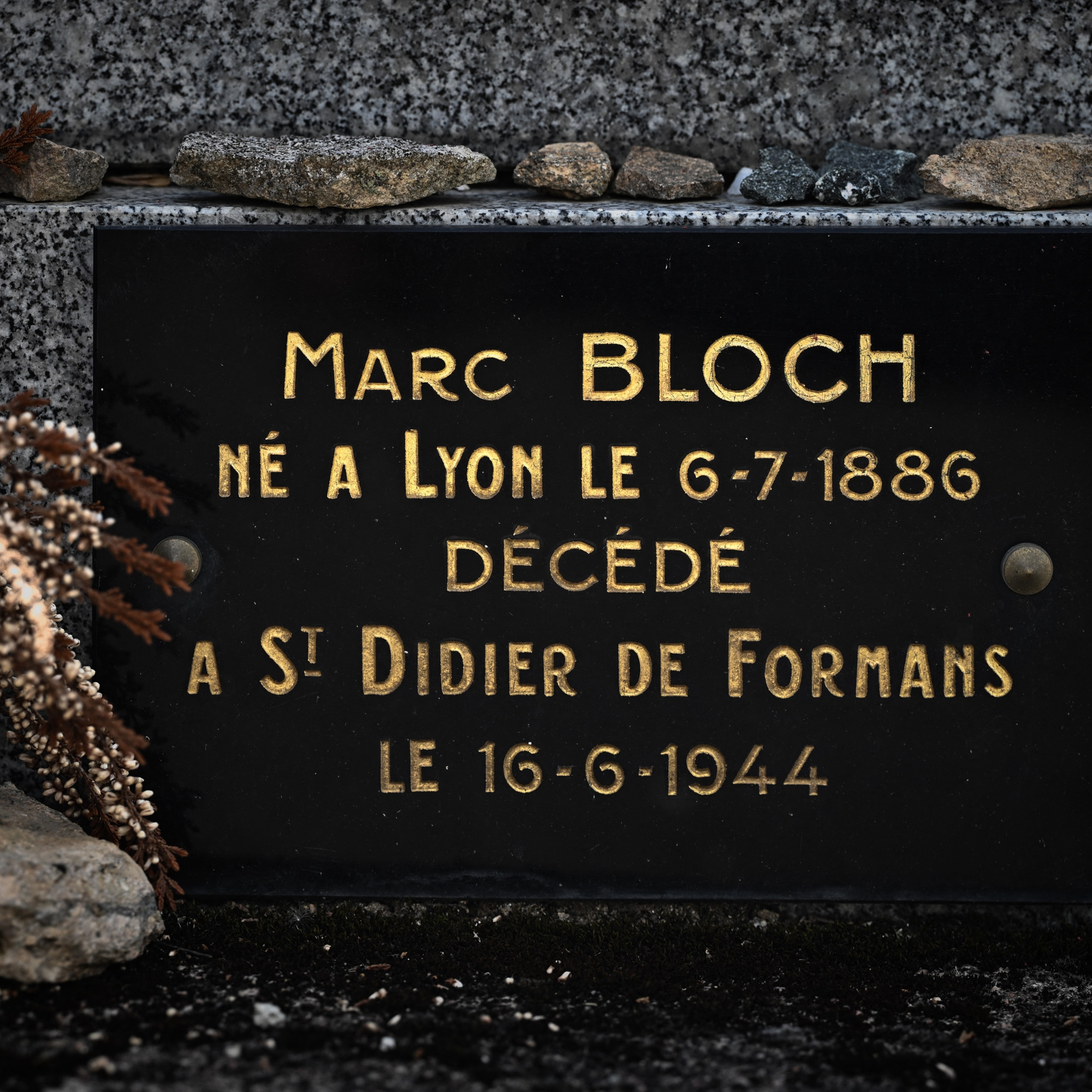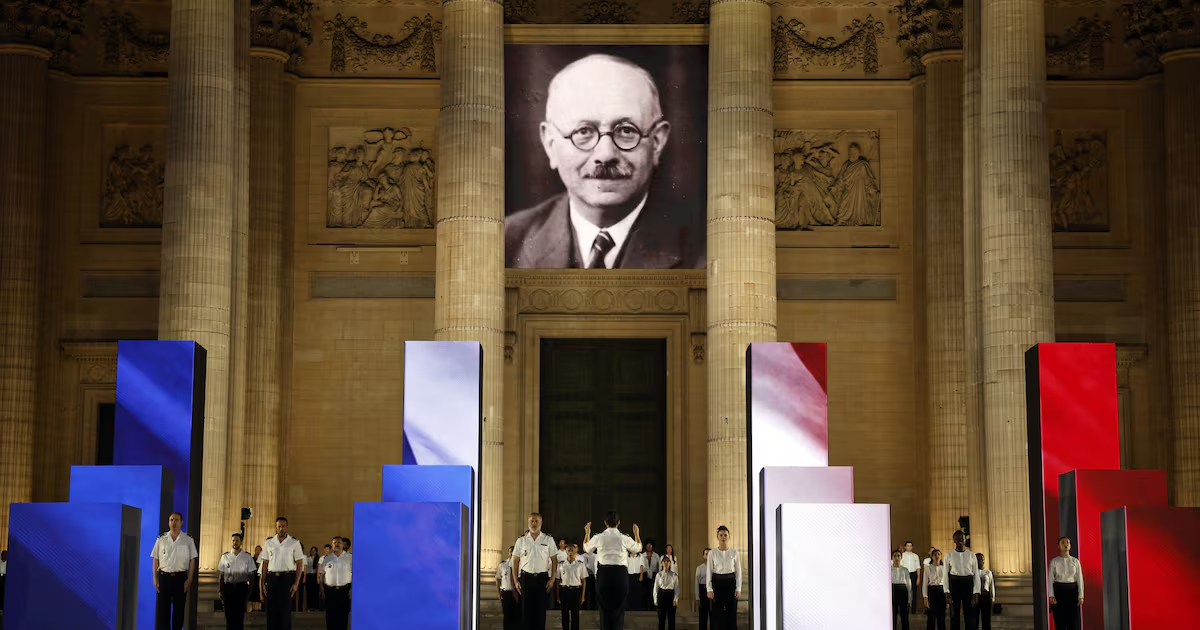
“I see again in memory that charming moment when 20-year-old Maurice, the youngest of our underground ‘group’, blushed with pleasure as he presented his ‘new recruit’,” the French resistance fighter Georges Altman recalled in a memoir.“A rosette in his buttonhole, a thin, refined face, silver-grey hair, and keen eyes behind a pair of spectacles … it was thus, with a smile, that Professor Marc Bloch joined the Resistance.”It was 1943, and the German army was occupying all of France. Bloch had already lost almost everything: dismissed from his university posts because he was Jewish; his Paris apartment requisitioned; his scholarly library, despite his pleas, seized and scattered.Now he shed his name, renting rooms as “Maurice Blanchard”. Altman, known to Bloch by the callsign Chabot, would signal his presence outside by whistling Ride of the Valkyries.“There was an element of sport about the zest with which he accepted the risks and outlawry of his new life,” Altman wrote. He recalled “at some street corner ... Marc Bloch, his coat collar turned up against the cold, his walking-stick in his hand, passing mysterious and compromising scraps of paper to young men in trappers’ coats or pullovers, as calmly as though he were handing back their essays”.German occupation of Paris in 1940, with the Nazi flag flying from the Arc de Triomphe. Photograph: Ann Ronan Pictures/Print Collector/Getty “If I get out of this alive, I shall go back to my teaching,” Bloch used to say.The historian had never abandoned his studies, and even then was writing The Historian’s Craft, a response to his son’s blunt question: “Tell me, Daddy. What is the use of history?”[ Going Undercover – Frank McNally on an exhibition about the Irish of the French RésistanceOpens in new window ]“The circumstances of my present life, the impossibility of reaching any large library, and the loss of my own books have made me dependent upon my notes and upon memory,” Bloch prefaced it, in apology.Marc Bloch (1886-1944). Photograph: Apic/Getty By then Bloch had already done much to transform the discipline itself. He believed that history was not a dry list of dates and names but should be seen as a “science in motion”, a constant “endeavour towards better understanding”.He saw every trace of the past as a potential source, however unintentionally it was created.“A land lease, a charter of privileges, an account book, a prayer book – or even the shards of crockery thrown into the nearby lake,” Bloch wrote, in an expression of an idea ahead of its time.He pioneered the incorporation of different disciplines within history - geography, economics, psychology, sociology – exemplified in his study of the widespread medieval belief that royalty had supernatural healing powers in his book The Royal Touch.His scholarly career had been punctuated by war. Bloch fought in the first World War and allowed himself to be drafted again in the second World War, declining the opportunity for an exemption that was available on the basis of his age and family (he then had six children with his wife Simonne Vidal).[ Fighters in the Shadows: A New History of the French Resistance, by Robert GildeaOpens in new window ]He found himself in charge of fuel supplies for part of the French army, and narrowly escaped the Nazi advance in 1940 as French forces collapsed.Evacuated in Dunkirk, no sooner had he reached safety in England than he returned to France, borrowing “a civilian jacket and tie” and counting on his greying hair to evade detection as a soldier as he went to find his family.A gravestone plaque bearing the name of French historian and Resistance fighter Marc Bloch at the cemetery of Le Bourg-d'Hem, France, June 1st, 2026. Bloch, born in Lyon on July 6th, 1886, was executed by the Gestapo at Saint-Didier-de-Formans on June 16th, 1944. Photograph:by Philippe Lopez/AFP/Getty Reunited with Vidal, a nurse who also worked as his research assistant, he wrote Strange Defeat, an account of ordinary heroism and senior incompetence in the French army laced with dark humour and written in the “white heat of rage”.As the German army closed in, his attempts to secure US visas for his family proved unsuccessful.It was March 1944. The Gestapo took the 57-year-old to Montluc prison. For weeks, he was tortured under the supervision of Klaus Barbie, the so-called ‘Butcher of Lyon’“By birth I am a Jew,” he wrote. “I feel neither pride nor shame in my origins. I am, I hope, a sufficiently good historian to know that racial qualities are a myth, and that the whole notion of race is an absurdity.“France, from which many would like to expel me today… will remain whatever happens the one country with which my deepest emotions are inextricably bound up. I was born in France," he wrote. “I have made her past my own. I breathe freely only in her climate, and I have done my best, with others, to defend her interests.”France's president Emmanuel Macron paying his respects to late historian and Resistance fighter Marc Bloch and his wife Simonne during a Panthéon induction ceremony in Paris last month. Photograph: Alice Sacco/AFP/Getty His activities within the Resistance were widely known - “known far too well”, Altman recalled.Bloch went through a succession of call signs - Arpajon, then Chevreuse, then Narbonne – as the enemy got wise to each.“It was as Narbonne,” Altman wrote, “that he was to direct the whole of the Lyon Resistance, until that tragic day when the trap closed”.[ Resistance: Marcel Marceau’s extraordinary early life helping Jewish children flee FranceOpens in new window ]It was March 1944. The Gestapo took the 57-year-old to Montluc prison. For weeks, he was tortured under the supervision of Klaus Barbie, the so-called “Butcher of Lyon”.On June 16th, 1944, Nazi forces brought out a group of prisoners to execute “at dusk, in a field near Lyon”, French president Emmanuel Macron recalled in a speech last month.“A carpenter, a trade unionist, a railway worker, Poles, members of the Resistance, communists, and among them, a history professor.”A screen on the facade of the Pantheon displays the inscription 'Dilexit Veritatem' ('He cherished truth'), a phrase Marc Bloch wished to have engraved on his tomb, in Paris, France, on June 24th, 2026. Photograph: Henrique Campos/Hans Lucas/AFP/Getty To friends and family, Bloch had simply disappeared. His wife ventured into Lyon under a false name to search for him.In late June, the bodies were dug up. “Some friends managed to get hold of the police photographs. We studied them anxiously,” Altman recalled.Among them: “the face of an old man with 10 days’ growth of white beard, a scrap of clothing marked with the initials MB, a set of false papers in the name of Maurice Blanchard ... Yes, it was Marc Bloch right enough.”His wife had fallen ill during her search. Hospitalised under her assumed name, she died on July 2nd, and was buried in a communal grave, probably never having discovered what had happened to her husband.The two would be reunited in death. They were jointly endowed with France’s highest honour last month: reburial in the Panthéon among France’s national heroes: Voltaire, Rousseau, the Curies.Bloch is the Panthéon’s first historian. He fought “two fronts in the same war for truth”, Macron told the internment ceremony. “Science and Resistance.”
From Resistance fighter to national hero: the long journey of Marc Bloch to the Panthéon
France honours Jewish scholar who transformed study of history before taking up second struggle against Nazi rule
1,208 words~5 min read