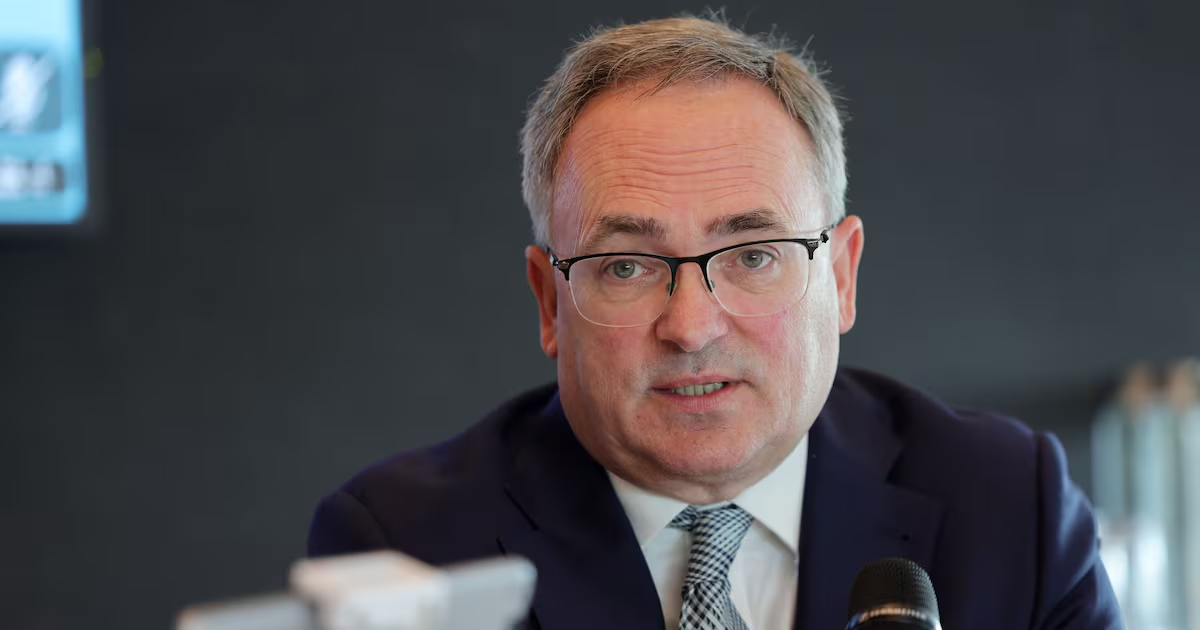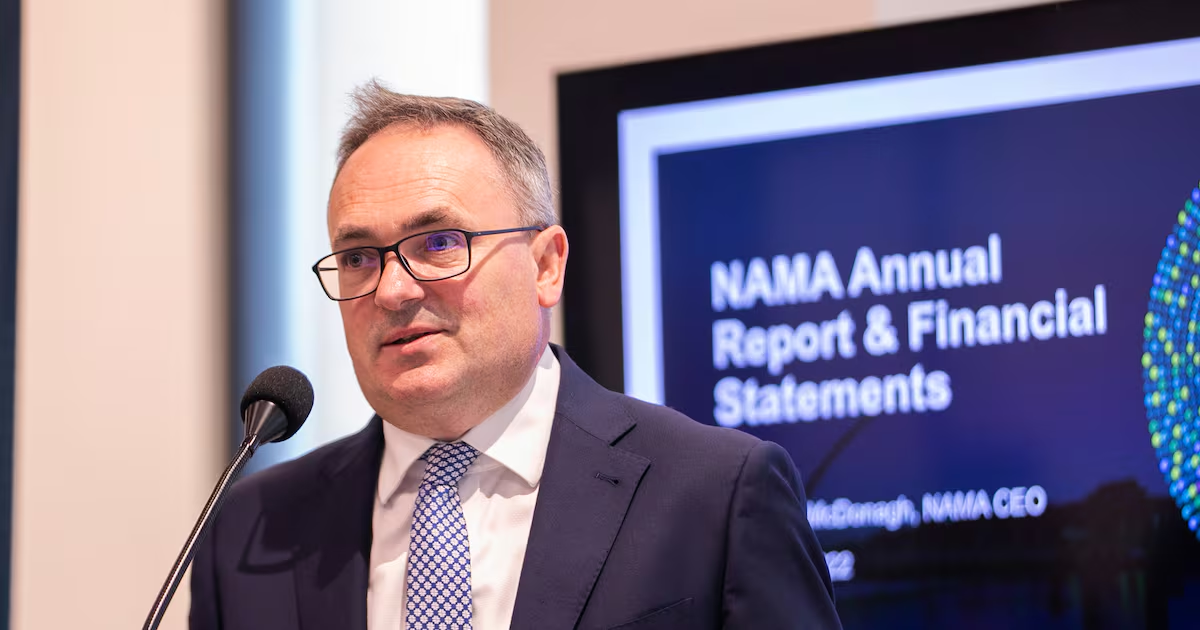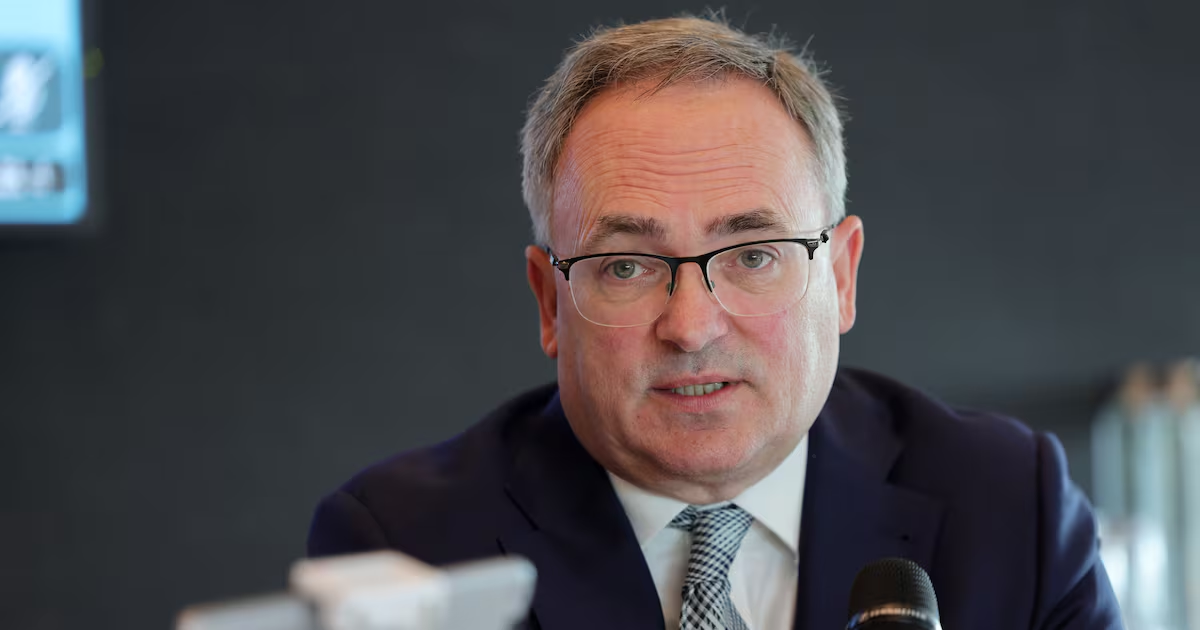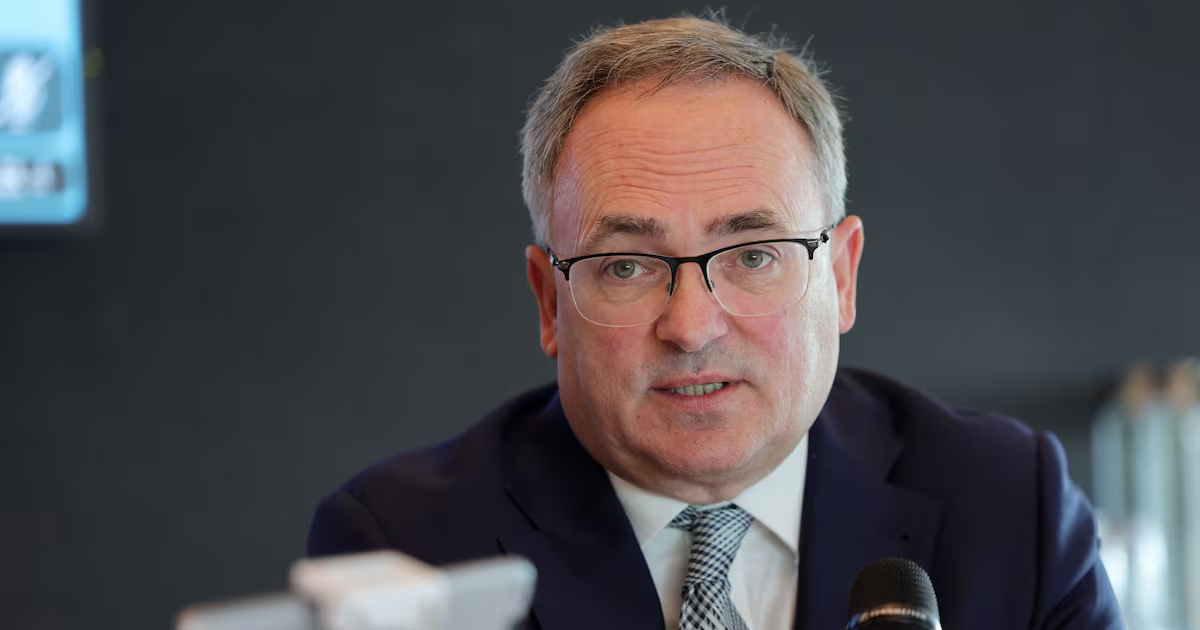
National Asset Management Agency (Nama) chief executive Brendan McDonagh is going back into the National Treasury Management Agency (NTMA) as head of the arm that advises State authorities on major public investment projects. The appointment will take effect from September 1st, staff in the NTMA were informed by email on Thursday. Nama’s remaining assets are due to move into a new resolution unit in the NTMA along with the remains of Irish Bank Resolution Corporation (IBRC). McDonagh, who joined the NTMA in 1994, was given the task of leading the agency in 2009 as it was set up to take over €72 billion of distressed commercial property loans at a discounted price of €32 billion from the Republic’s lenders. Nama was set up under the aegis of the NTMA, but had its own board and operated independently.McDonagh told the Oireachtas Finance Committee earlier this month that he had the right to go back at a level comparable to the grade he held in 2009, when he served as finance director. He also signalled at the time that it would be at a lower salary than his €430,000-a-year role at Nama. The appointment as director of the National Development Finance Agency puts him in charge of a body that advises State authorities on investment projects with a capital value of over €75 million, in order to ensure “the optimal financing of public investment projects in order to achieve value for money”, according to the agency’s website. Andrew O’Flanagan, who is currently director of the NDFA and NewEra, the NTMA unit that oversees semi-State companies from An Post to VHI, is set to become head of the State Claims Agency (SCA) next April, following the retirement of incumbent Ciarán Breen. O’Flanagan will continue to lead NewEra in the interim, with a recruitment process to find a successor set to commence in the coming months. The decision to split the NDMA and NewEra into units led by separate directors reflects the growing scale and strategic importance of both business units, staff at the wider NTMA were told in the email. McDonagh used his final appearance before the finance committee as Nama’s CEO earlier this month to defend the organisation’s record, rejecting claims that it had engaged in a fire sale of property-backed loans.He said that Nama “resisted the fire sale of assets” even as it came under pressure from the European Central Bank, part of the State’s crisis-era bailout troika, to dispose of loans between 2010 and 2011. He said that the International Monetary Fund and European Commission, the other members of the troika, “had much more understanding” that disposals needed to take place over an extended period.Having focused between 2011 and 2012 mainly on selling UK assets, McDonagh said it was the end of 2012 before Nama sold a large Irish portfolio of about €1 billion of loans. He said there was an onus on Nama “to get the [property] market moving” again and to help Ireland return to the bond markets by showing it could sell down its portfolio.People Before Profit-Solidarity TD Paul Murphy said that Nama “contributed to the housing crisis” in the State by selling loans backed by large parcels of land to “vulture funds” that have not developed the property. McDonagh said that Nama directly funded the construction of more than 14,000 homes, while it indirectly contributed to a further 30,000 being built, by funding infrastructure work and planning applications to develop land before associated loans were sold on or refinanced by the developers.He said that the State had an option around 2016-2017 to “repurpose Nama” to give it a greater housing mandate, but the decision was taken to set up the Land Development Agency.
Nama chief Brendan McDonagh to head NTMA’s development finance agency
McDonagh’s appointment to head the National Development Finance Agency will take effect from September 1st, NTMA staff have been told
617 words~3 min read