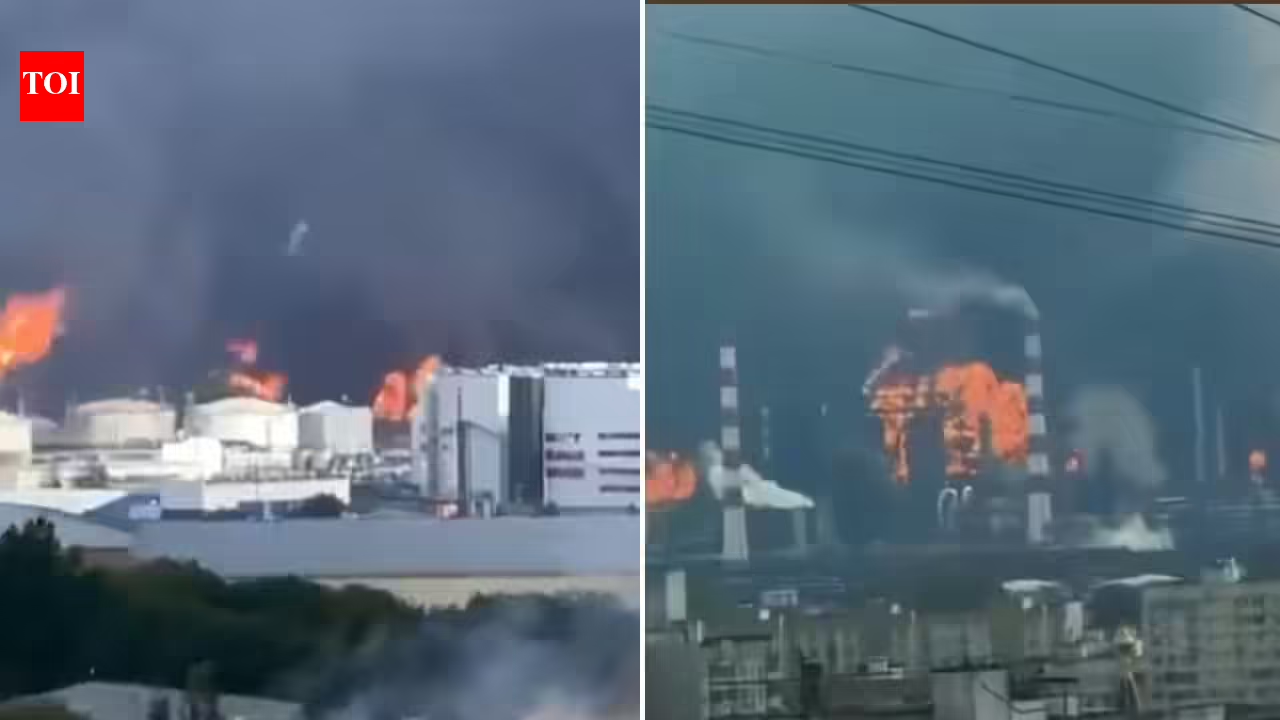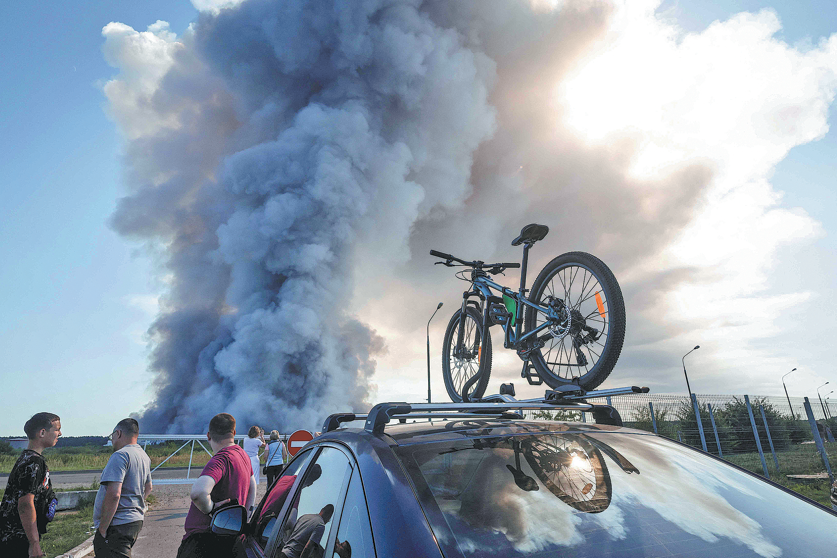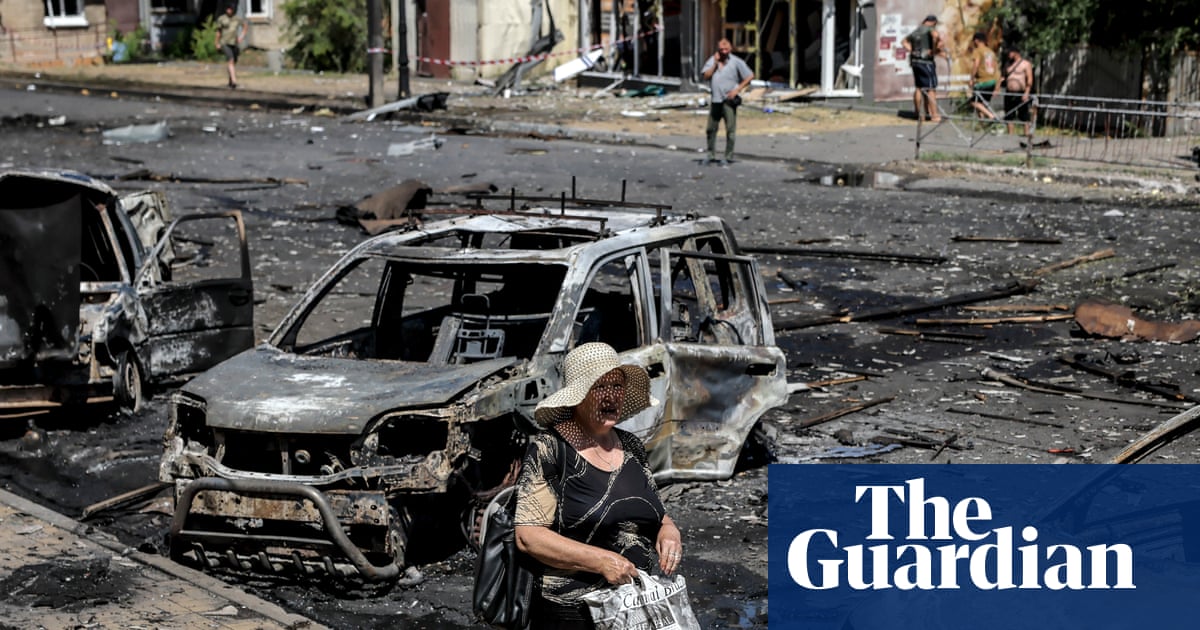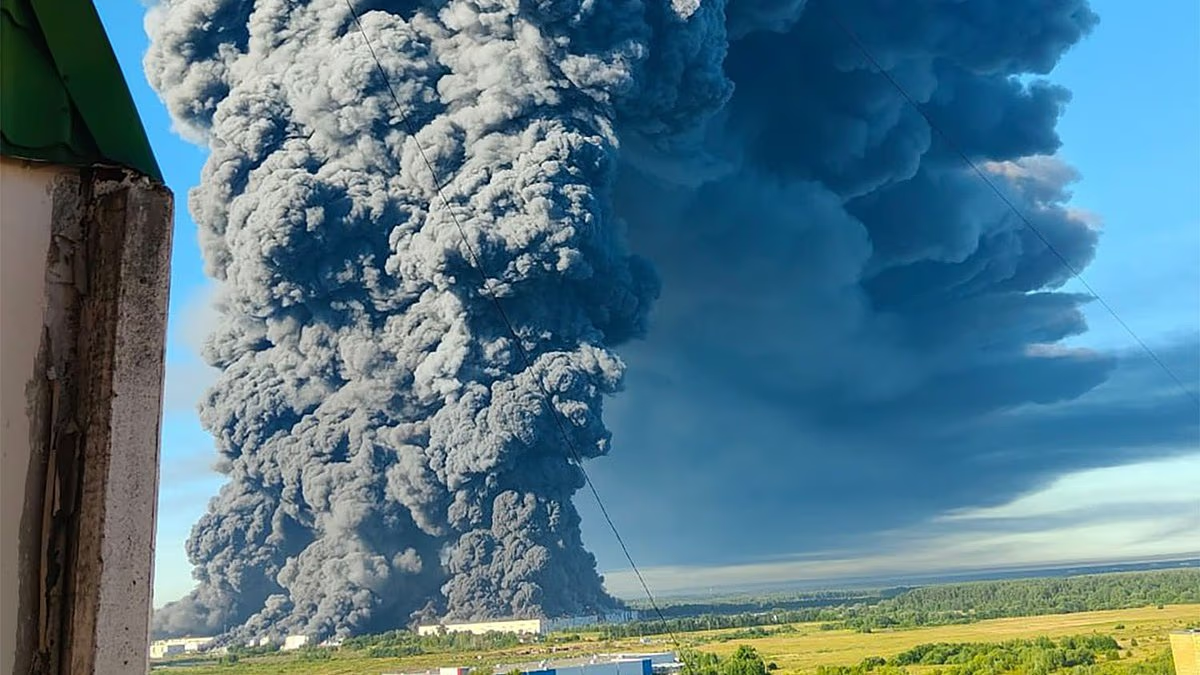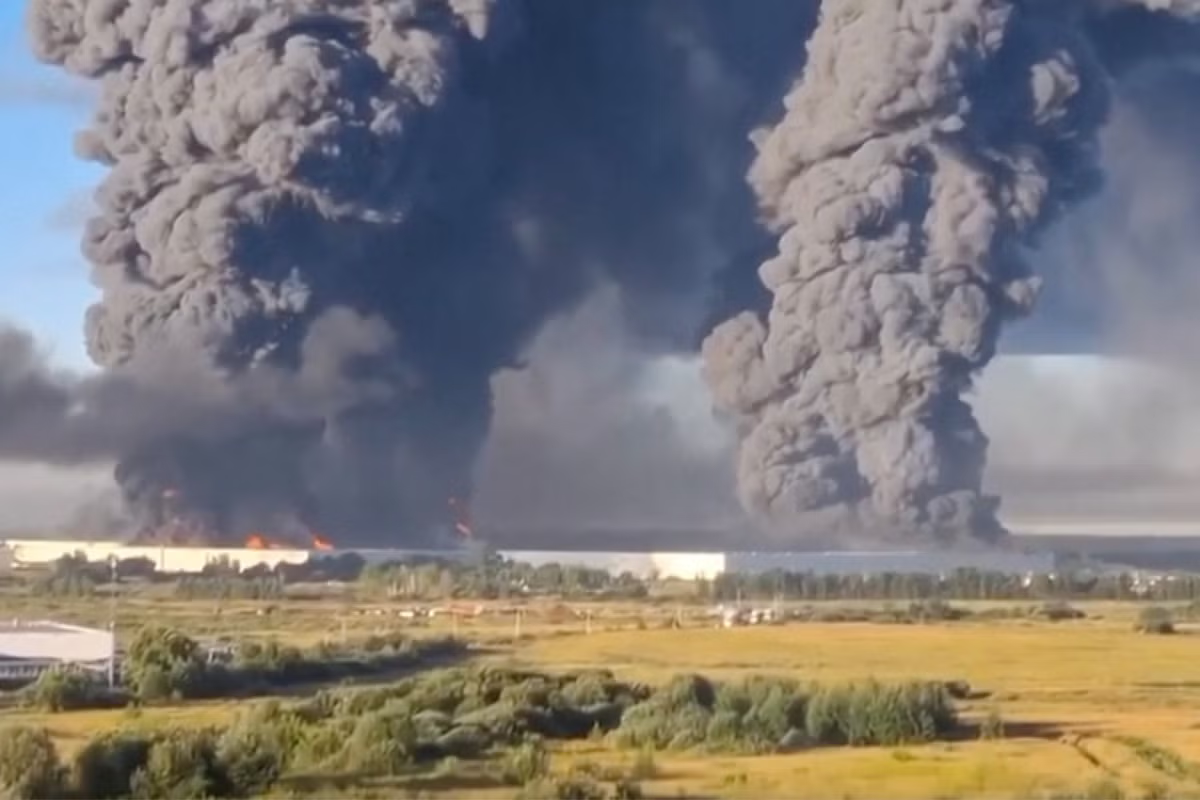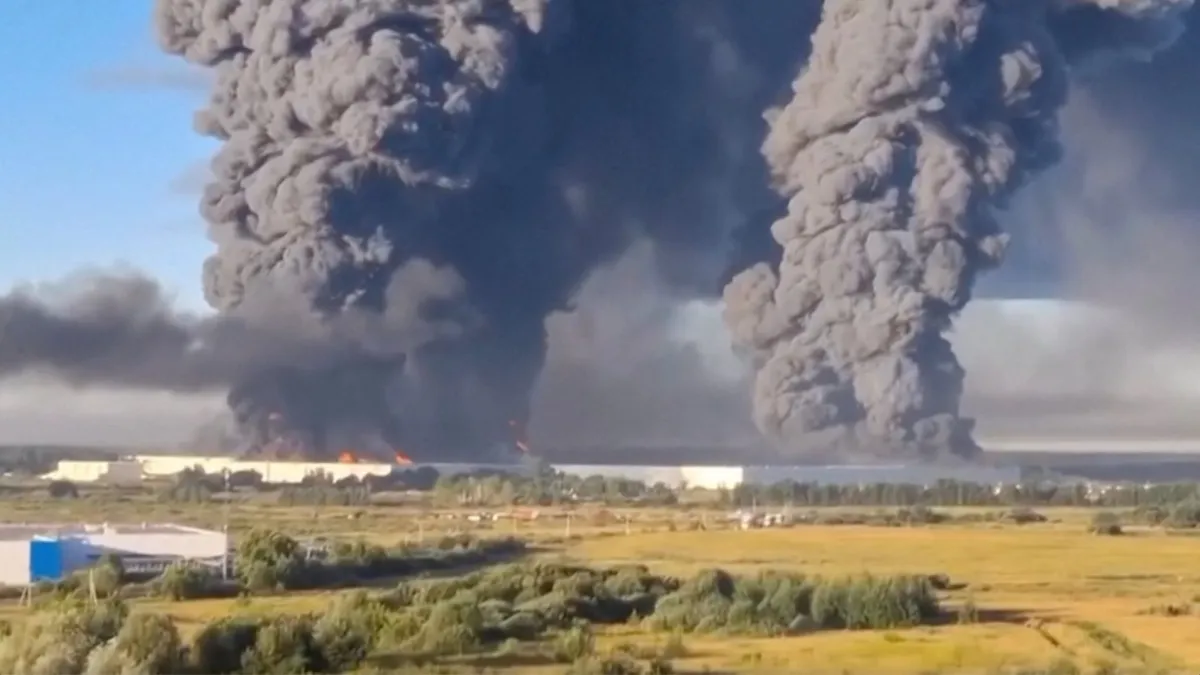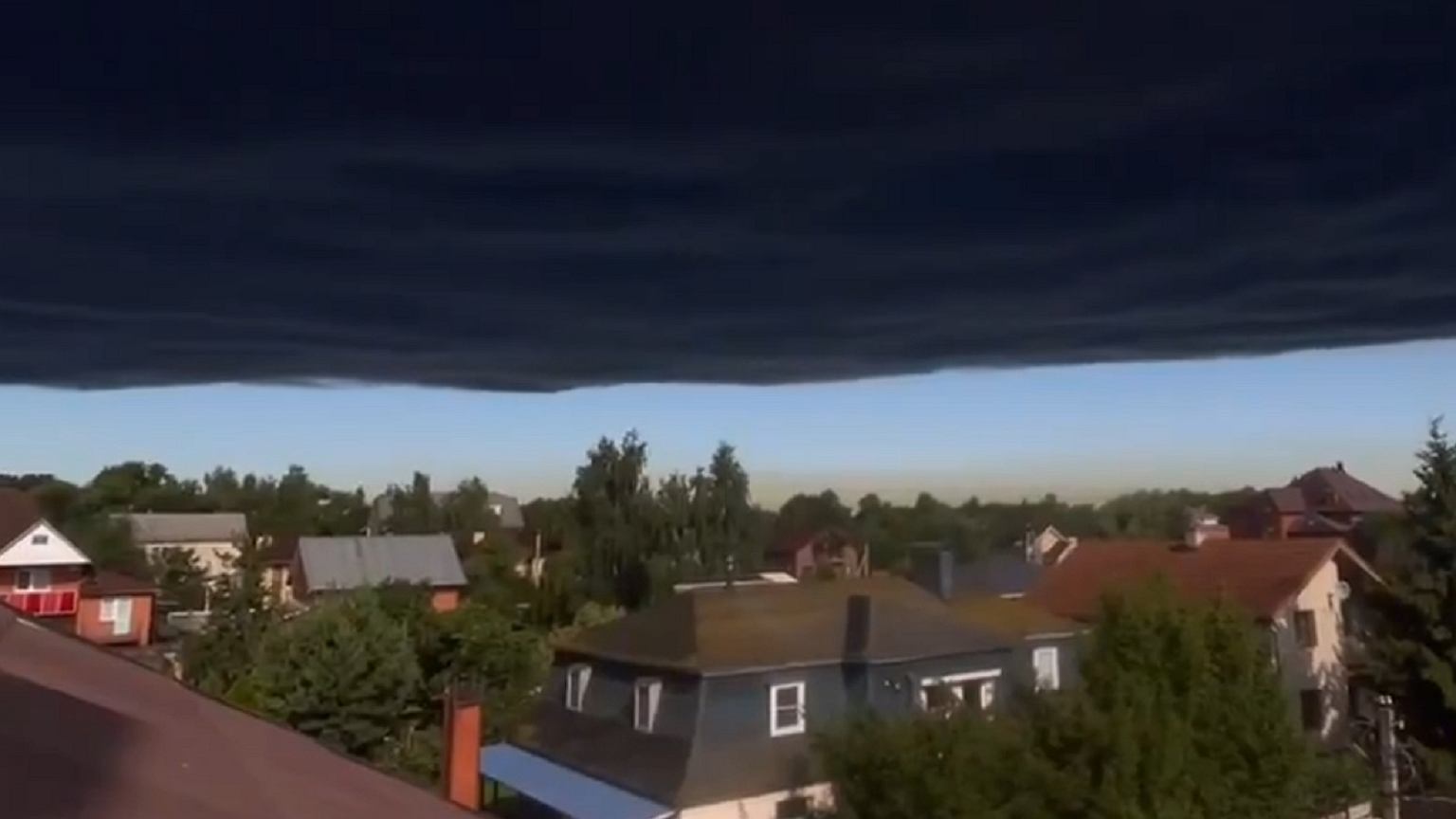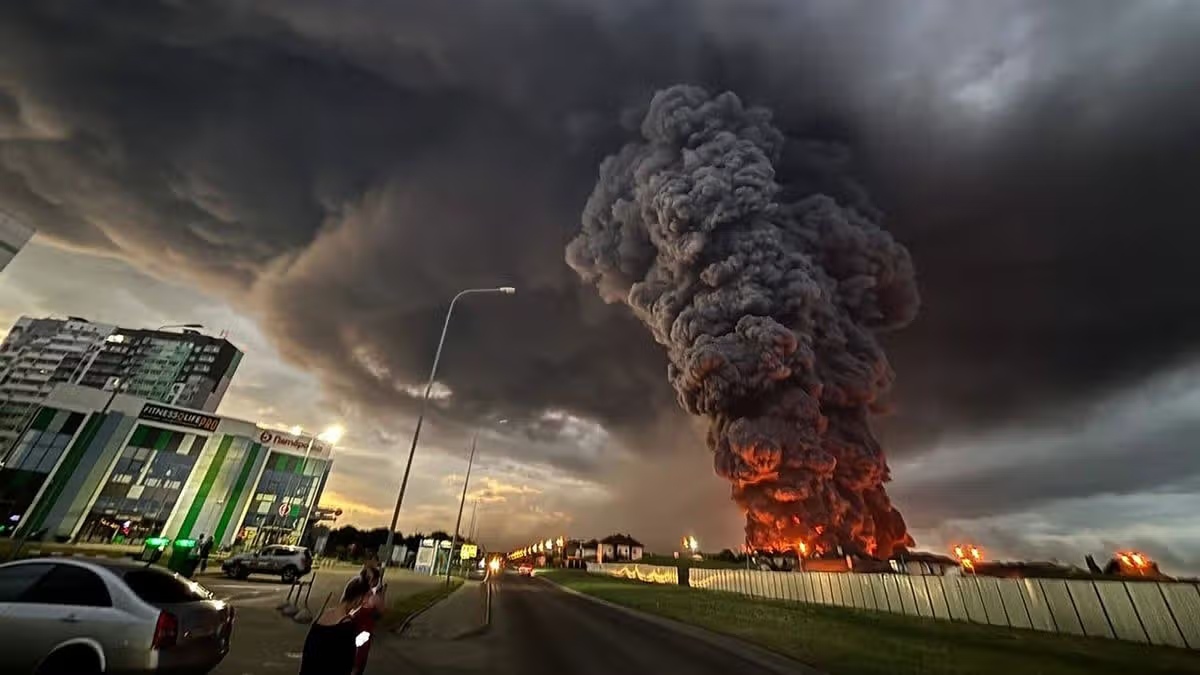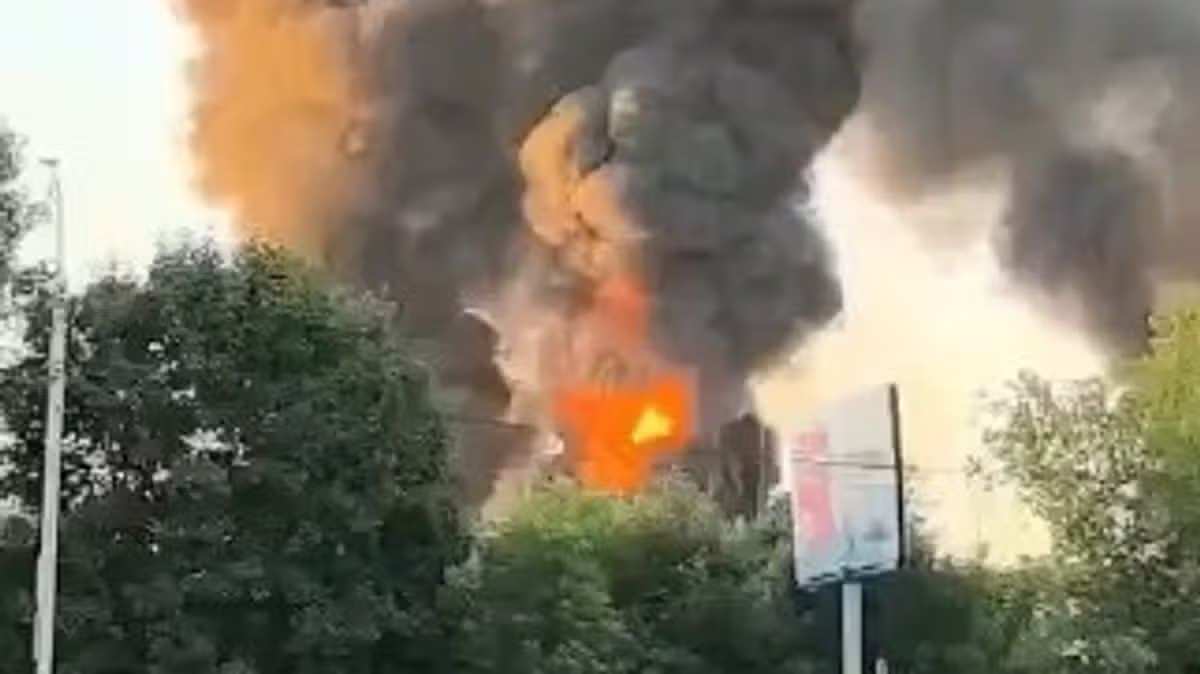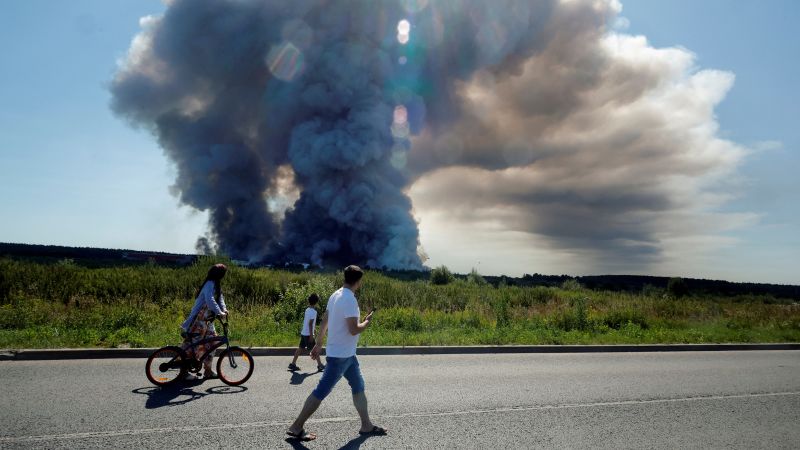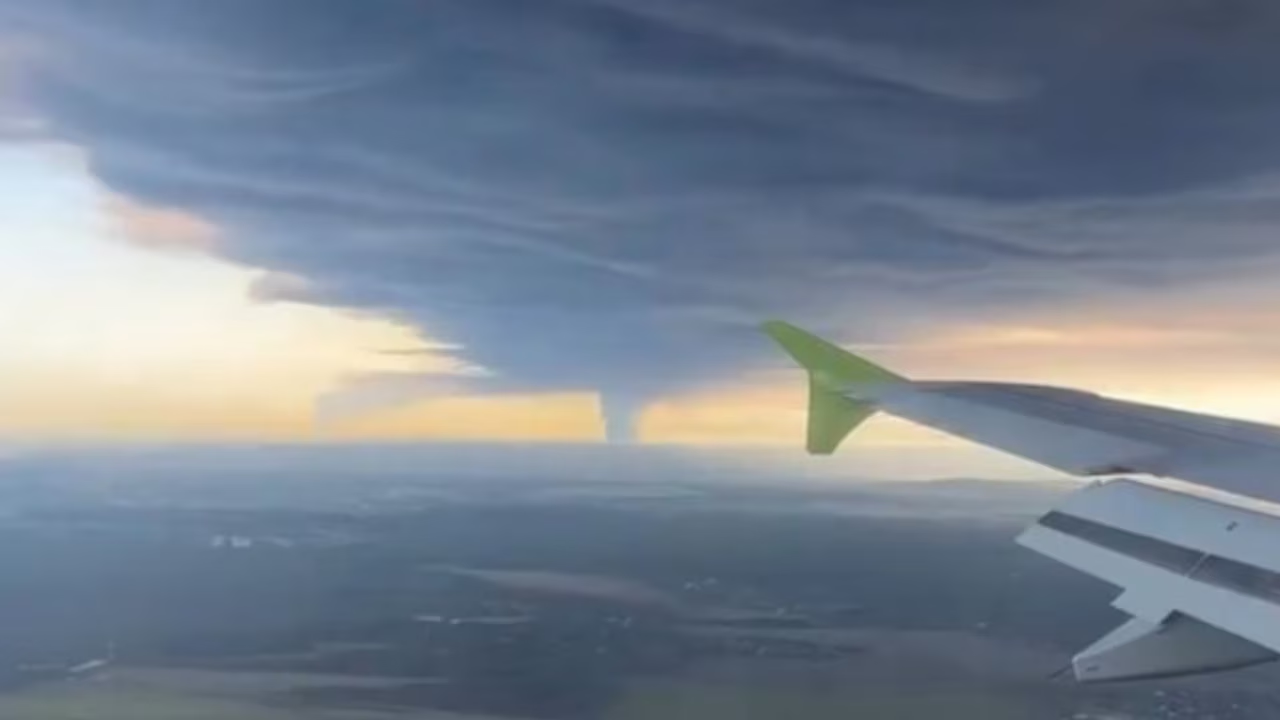
“Honestly, it is completely f*ed up. I have watched so many videos – there are bodies lying there, everything is exploding, and people are covered in blood,” a Russian warehouse worker exclaims. “For the second day now, I have been scared to go to the warehouse.”An enormous plume of black smoke hangs heavily over Moscow.It’s no longer an uncommon sight.This time, it’s from a massive online retailer’s warehouse: the Russian version of “Amazon”.Last time, it was an expansive oil processing and storage facility.And before that, it was a specialist satellite communications centre.It’s a highly visible rebuttal to Russian President Vladimir Putin’s assertions that his five-year-old three-day Special Operation to seize Ukraine isn’t going so well.Russian citizens are risking arrest for sharing videos of drones slamming into Moscow buildings, burning warehouses and long queues of cars banked up outside petrol stations.Their offence? Acting as “foreign agents” to undermine Kremlin power.“Our long-range ‘sanctions’ have produced results against logistics facilities and an oil depot,” Ukrainian President Volodymir Zelensky posted to social media platform X. “We are responding, justly, to every Russian strike against our cities and communities.”President Putin has been hitting back.He needs a highly visible response to broadcast to his own citizens.So he’s been releasing barrages of expensive ballistic missiles amid his drone swarms. And some of these have been falling on Ukrainian residential towers and suburbs.It’s an intensifying contest of wills.Whose people and political power structure will be the first to relent?Wildberry surprise“That’s it, guys. Many people will wake up bankrupt today because the warehouse in Krasnodar has burned down. It is still burning,” a small business distributor posted in dismay to social media.The Kyiv Post has been collecting Russian reactions to the attacks on Wildberry distribution centres to share with its besieged readers. The online distribution network works on a similar model to Amazon. Businesses supply their products to Wildberry warehouses. Wildberry warehouses have so far been hit in Elektrostal (near Moscow), Krasnodar and Nevinnomyssk. Newly-ascended Russian oligarch Tatyana Kim owns them.The self-made billionaire stepped into Mr Putin’s circle of enablers in 2024 after creating the “world’s largest ruble-based digital banking network and payment system”. This allows sanctions imposed by the international funds transfer system SWIFT to be bypassed. Ukraine has since accused the online retailer of using its international reach to purchase “dual-use” components from China and elsewhere, including drone parts, actuator chips, body armour and night vision goggles, for the Russian military.Ukraine first struck the facility on Saturday. Local reports suggest eight employees were killed.It followed up the attack with another wave of strikes on Wednesday. This set the warehouses fully alight.“There are no words to describe all the feelings and emotions caused by the attacks on ordinary people, on our employees, on all of us who are simply doing our jobs,” Ms Kim posted to the Telegram social media platform.Ukraine’s President Volodymyr Zelensky, whose citizens have had to endure five years of attacks on their energy, transport and residential infrastructure, is unrepentant.“We are, quite justly, bringing the war back home — to Russia,” he told local media earlier this week.“Peace is needed, and Ukraine has presented the Russian side with every proposal. They must be forced to turn to diplomacy. Glory to Ukraine!”Fuelling the flamesUkraine has launched hundreds of drones deep into Russian territory over the past week.They’ve been hitting oil depots, logistics facilities and military infrastructure up to 400km behind the border.Moscow mayor Sergei Sobyanin said more than 400 Ukrainian drones entered his district between Monday and Tuesday Australian time. He says 85 were shot down approaching the capital.Russia’s Defence Ministry reports 381 were destroyed across Russia’s western provinces.Kyiv has severely disrupted the flow of supplies to the battlefield this year. Oil production and export facilities have been destroyed. Fuel is being rationed among the broader Russian populace. Air defence systems are being pulled out of occupied Ukrainian territory to protect valuable commercial and industrial infrastructure.The Kremlin is struggling to adapt.“Its sustained strikes on Russia’s energy infrastructure are turning the war into a daily economic burden, forcing the Kremlin to choose between export revenues and domestic stability,” argue Royal United Services Institute (RUSI) analysts Petras Katinas and Natia Seskuria.“As the costs of the war become increasingly difficult for ordinary Russians to ignore, the Kremlin will find it harder to keep the conflict insulated from everyday life.”We know the formula, thanks to Iran’s chokehold on the Strait of Hormuz.Transport costs rise. Checkout prices rise. Producer costs rise.“Officials are calling for Russians to ‘be patient’, but these calls are not working, especially for those who live in non-urban settings who rely on gasoline to reach their work, medical care, and shops,” Russian analyst Vadim Shtepa argues in a Jamestown Foundation essay. “Several regions are complaining that they cannot harvest their crops due to fuel shortages.” It’s a bad look.Which is why President Putin is keen to show Kyiv is hurting more than Moscow.So he ordered one of Russia’s largest ballistic missile attacks of the war. More than 41 missiles were unleashed on the Ukrainian capital in just one night.Russia’s military is also finding new ways to evade Ukrainian defences. Its latest success is a wing-kit added to traditional free-fall bombs. Once dropped from an aircraft, these can then glide a considerable distance before being guided onto their targets.“Now the enemy is modernising these bombs and can strike deeper,” the chief of the Pavlohrad region posted to Telegram. “Unfortunately, this is a new reality for Pavlohrad. Therefore, I ask residents not to ignore air raid alerts.”Long shotsUkraine’s blows on Russian infrastructure have struck deep.Analysts suggest the Kremlin does not have the technical expertise to repair its oil refineries.Each refinery is unique. It must be tailored to process the particular chemistry of those oil wells that supply it. And that involves highly specialised chemistry, engineering and construction.“The refrigerator may finally triumph over the television as material reality increasingly undermines Kremlin narratives,” Mr Shtepa states. “The ‘social contract’ of early Putinism was that citizens stayed out of politics and, in exchange, the government would provide Russians with a more or less tolerable standard of living.“Today, hundreds of thousands of dead Russians make Putin’s politics impossible to ignore.”But bombing campaigns have rarely caused populations to turn on their leaders.London. Berlin. Vietnam. All attest to civilian resilience in the face of bombing.But President Putin also has to contend with oligarchs keen to protect their wealth and status.And President Zelensky has his own political problems.He’s facing public protests over firing his young and highly popular Defence Minister, Mykhailo Fedorov, after just six months in the job. Widely credited as being behind Ukraine’s drone war success, the working relationship between Mr Fedorov and Commander-in-Chief Oleksandr Syrskyi had reportedly collapsed.Mr Zelensky has responded to the public outcry by sacking Mr Syrskyi as well.What’s different with Russia, however, is that its civilians are now experiencing the war for the first time.“For four years Russians in major cities have been able to treat this war as something that happens to other people, somewhere else, paid for with other people’s sons,” King’s College London Russia analyst Jade McGlynn told the Kyiv Independent. “Fuel rationing across Russia ends that.”But it won’t likely win the war for Ukraine.The impact on President Putin will be “corrosive” rather than “explosive,” Ms McLynn believes.“It wears people down, it hands the Kremlin one more fire to fight, and it widens the space in which something unexpected might eventually happen. A Russian society organising to stop the war is a different proposition, and I see little sign it is capable of it.”Jamie Seidel is a freelance writerRead related topics:Amazon
Sky turns black as Ukraine unleashes hell
“Honestly, it is completely f*ed up. I have watched so many videos – there are bodies lying there, everything is exploding, and people are covered in blood,” a Russian warehouse worker exclaims.
1,263 words~6 min read