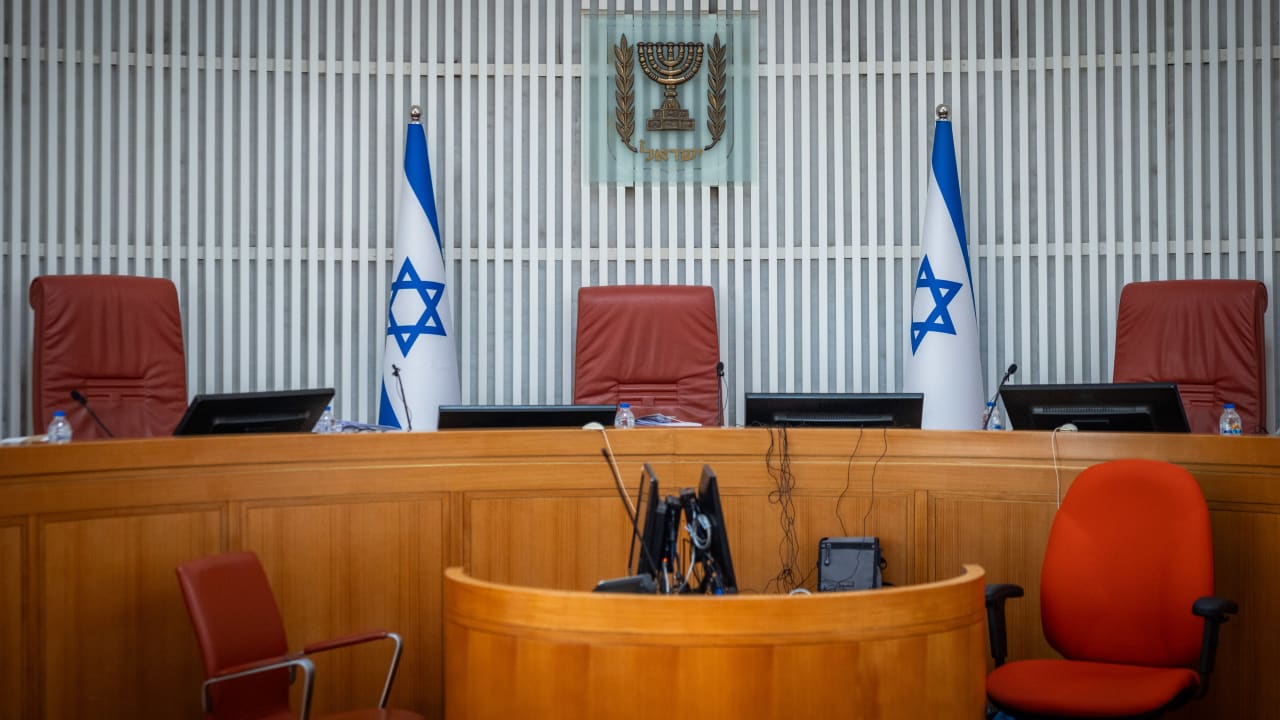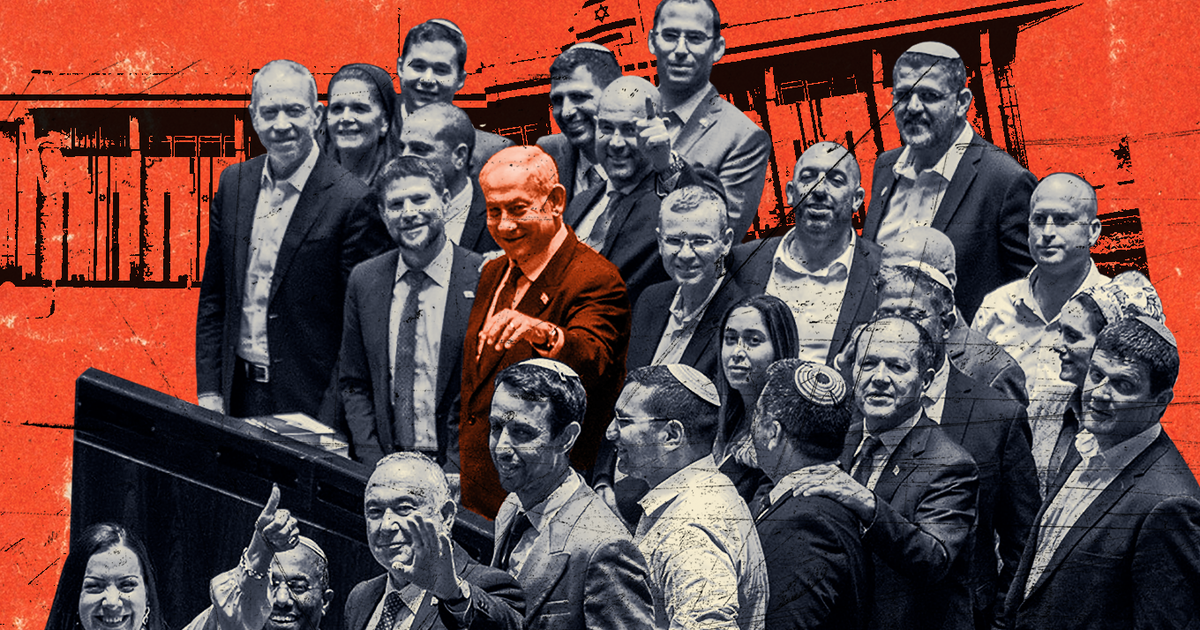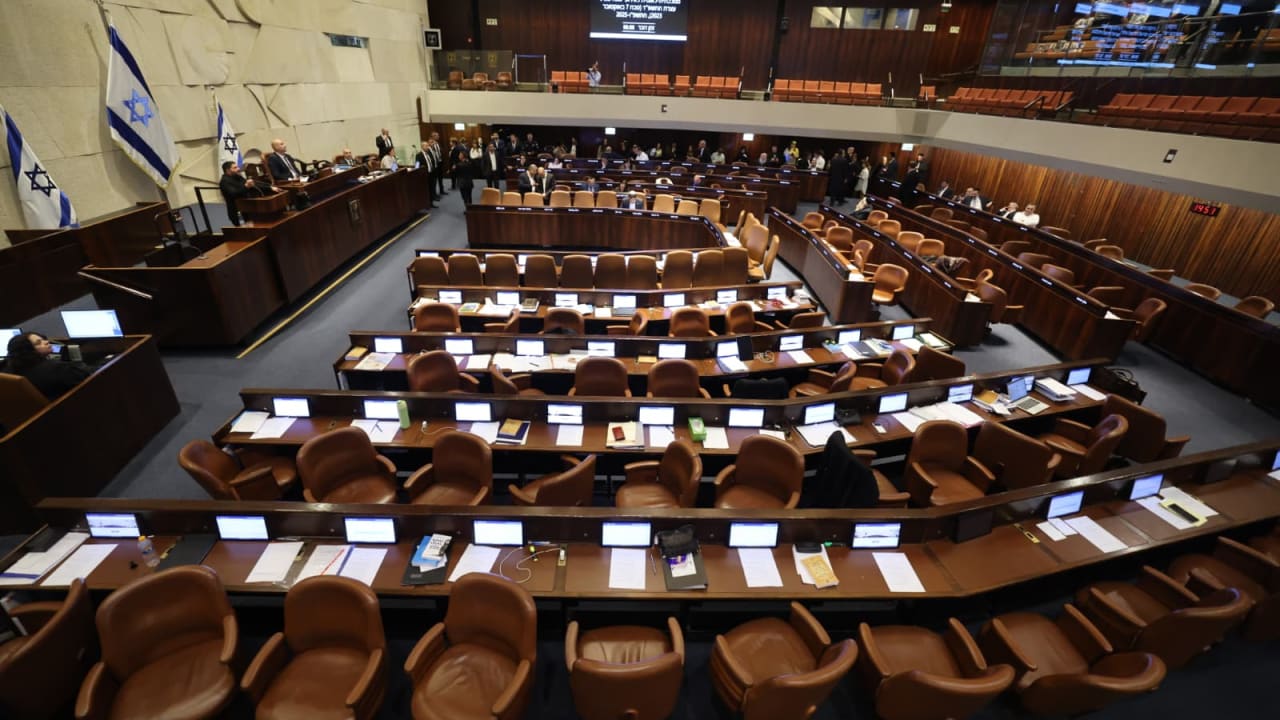
Justice minister failed to enact much of his original plan, but battles over judicial appointments, the attorney general and court powers have left Israel’s legal system strained, its institutions divided and the next election poised to determine what comes nextDuring Israel’s 2022 election campaign, Likud issued promises on nearly every major public concern: the cost of living, security, governance and free education from birth. Detailed plans were presented, though many were never implemented. One major plan, however, was held back until after the election. It was the plan that would produce one of the deepest ruptures in Israeli society: the judicial overhaul.“It is reasonable that one of the reasons for the massacre was Hamas’ perception of the division within the nation and the military’s readiness,” an IDF spokesperson later said of the circumstances preceding Yahya Sinwar’s decision that the time had come to launch the attack.Gallery(Photo: Tal Shachar, Avi Moalem)On January 4, 2023, days after the government was sworn in, newly appointed Justice Minister Yariv Levin held a news conference and announced sweeping changes to the judicial system. He proposed changing the composition of the Judicial Selection Committee, abolishing the reasonableness doctrine, redefining the role of the attorney general, passing an override clause, eliminating the High Court of Justice’s authority to strike down Basic Laws and sharply limiting its power to invalidate ordinary legislation.Levin had spent years developing the plan, but when the moment arrived, he discovered a major flaw: He was not facing an open goal. Critics quickly argued that the program amounted to the systematic destruction of Israel’s governmental checks and balances. They warned that it would concentrate unprecedented power in the hands of the government, which already controls the Knesset, and allow the executive branch to act without effective oversight.Some have argued that Levin acted without Prime Minister Benjamin Netanyahu’s approval. The facts point to a more complicated picture. After the 2020 election, Netanyahu offered Levin the Justice Ministry, but Levin declined and accepted the Tourism Ministry instead. The decision surprised many, since Levin had devoted much of his political career to demanding changes in the legal system. The reason, according to this account, was that he had not been given permission at the time to implement his plans. By late 2022, Netanyahu’s corruption trial was already underway, and the restrictions placed on Levin had been lifted.“The first issue we will regulate is the composition of the Judicial Selection Committee,” Levin declared on January 4, 2023. “No longer will judges select themselves behind closed doors and without minutes. Instead, the three branches of government will have equal representation on the committee, two public representatives appointed by the justice minister will replace the sectoral representatives of the Israel Bar Association, and full transparency will be ensured through public hearings before the Knesset Constitution, Law and Justice Committee for candidates to the Supreme Court.”In practice, Levin failed to secure the change he originally wanted. But he also refused to operate under the existing rules, under which the Supreme Court justices on the committee vetoed his two preferred candidates, Dr. Aviad Bakshi and Dr. Rafi Biton. The justices argued that the two legal scholars, neither of whom had previously served as a judge, did not meet the professional standard required for the Supreme Court.As a result, no Supreme Court justice was appointed during Levin’s tenure, and the court is now missing roughly one-third of its full bench. The burden falls first on citizens whose cases are delayed before the court. Levin eventually joined Gideon Sa’ar in passing legislation changing the committee, though the law will take effect only after the next Knesset election, assuming the High Court does not strike it down.The law removes the Israel Bar Association’s representatives and replaces them with an additional coalition representative and an additional opposition representative. It allows Supreme Court justices to be appointed by a regular majority of five of the committee’s nine members, but requires the support of at least one coalition representative and one opposition representative.If no agreement is reached, two seats remain vacant and a year has passed, the coalition and opposition will each draw up a list of three candidates, and the other side will choose one appointee from that list. Appointments to lower courts will also require a five-member majority, including the support of one opposition representative, one coalition representative and one judge.Chief Justice Yitzhak Amit and Justice Minister Yariv Levin (Photo: Alex Kolomoisky)The prolonged stalemate eventually led the High Court to order Levin to convene the committee to select a new chief justice. Knowing that he would lose the vote, Levin refused to attend the meeting. For the first time since Israel’s establishment, a Supreme Court president was chosen whom the justice minister and much of the coalition refuse to recognize.Levin also boycotts Yitzhak Amit in his role as one of the heads of the legal system, and working meetings intended to improve the system’s operations are not taking place. Once again, the principal victims are ordinary Israelis.People close to Levin say he proposed a detailed compromise to fill the Supreme Court vacancies, including accepting Amit as president and appointing another liberal justice in exchange for selecting either Bakshi or Biton. They argue that the Supreme Court justices consistently rejected that offer and that the responsibility for the crisis does not rest with Levin.Levin achieved greater success in appointing magistrates’ and district court judges. These appointments require a simple majority on the committee, which he did not initially possess. Shortly after the war began, he announced that judges would be appointed only by the “full agreement” of all committee members. Under that arrangement, 290 judges were selected, dozens of them Levin’s preferred candidates.In private conversations, judges acknowledge that compromises were required to allow those appointments to proceed. Even so, dozens of judicial positions remain vacant. Levin refuses to convene the committee to fill them, apparently hoping to do so under the new law after the next election.“No more court hearings on Basic Laws,” Levin promised in January 2023. “No more invalidation of Knesset laws without authorization. Instead, the court will act under the Basic Laws and will not stand above them. Attorney Alan Dershowitz discusses the importance of the Supreme Court’s power and the override clauseLaws may be struck down by the Supreme Court sitting as a full bench and by a special majority. A balanced override clause will be enacted with a majority of 61. On the other hand, the same Knesset will not be able to override a decision if the court struck down the law unanimously.”In practice, the proposed Basic Law: Legislation was never enacted, first because of the mass protests against the overhaul and later because of the war. Even so, the effort created a deterrent effect. The Supreme Court, now largely conservative, appears reluctant to enter into direct confrontation with the political leadership and has exercised great caution in invalidating government decisions, including its refusal to block the appointment of Mossad chief Roman Gofman.One concrete and relatively consensual Levin achievement in this area was the abolition of the Aprofim doctrine, a move intended to restore greater legal certainty to contract law and reduce reliance on expansive judicial interpretation.“No more overturning completely legal government decisions on the pretext that they appear unreasonable to a judge,” Levin said in January 2023. “Instead, the reasonableness doctrine will be abolished and decision-making power returned to those elected to govern. In my words, there is no such thing as the reasonableness doctrine.”The law abolishing the doctrine was advanced by Constitution Committee Chairman Simcha Rothman and passed by the Knesset after last-minute compromise talks with the opposition collapsed. Yoav Gallant and Yariv Levin argue in the Knesset plenum ahead of a vote on abolishing the reasonableness doctrine (Video: Sivan Hilai/Knesset Channel)It passed despite strong opposition from then-Defense Minister Yoav Gallant and despite warnings delivered to the government by the IDF chief of staff and Shin Bet director that the widening social rift was damaging Israel’s deterrence against its enemies.Roughly a year later, the High Court struck down the law by a one-vote majority. Since then, however, the court has largely avoided relying on unreasonableness when ruling against the political leadership.“Legal advisers are exactly what their name suggests: advisers, not decision-makers,” Levin said at the same landmark news conference. “They must represent the government, not their own personal views.”After Netanyahu loosened the restraints on Levin amid the lack of progress in his trial, and following repeated clashes with Attorney General Gali Baharav-Miara, Levin initiated proceedings to remove her. The High Court canceled the process because it had been specially devised for her and contradicted the existing law.Levin and Rothman are now advancing an alternative: legislation to divide the attorney general’s position. The proposal is intended to sever the professional subordination of legal advisers in government ministries to the attorney general and allow each minister to appoint a legal adviser considered personally loyal to them.One part of the legislation has already been approved. Critics say it dramatically weakens the role and allows the government to interpret the law as it wishes. That legislation is also expected to reach the High Court.The defining feature of Levin’s tenure has been his consistent preference for confrontation over compromise on his core principles. At nearly every critical juncture, he chose a direct clash over efforts to reach broad agreements.That was true when he refused to convene the Judicial Selection Committee until ordered to do so by the High Court. It was true when he made the unprecedented decision to boycott incoming Supreme Court President Isaac Amit, paralyzing professional working meetings. It was also true in his aggressive and uncompromising campaign against the attorney general.Levin argues that it was the other side that refused to compromise, pointing, for example, to the Supreme Court justices’ refusal to support the appointment of Bakshi or Biton. Instead of moderating his program and building broad support that could have produced lasting achievements, Levin repeatedly adopted a confrontational approach.Kaplan Street protest against the judicial overhaul (Photo: JACK GUEZ / AFP)That strategy may have delivered some results, but it is possible that within months they will prove to have been only temporary. The consequences of this policy went beyond fueling mass protests and deepening the divisions in Israeli society. It also created a legal and political tangle that paralyzed the Justice Ministry’s work and caused direct, tangible harm to citizens waiting for their cases to be resolved.After four years of confrontation, Levin believes, with considerable justification, that the coming election will also be a referendum on the judicial overhaul. The central questions will include the composition of the Supreme Court, the appointment of conservative judges throughout the system, the removal of the attorney general and the division of her role.Should Likud form the next government, Levin’s plans are clear: pass additional overhaul legislation, appoint nine new Supreme Court justices, select a new attorney general and deputies, and replace the state attorney and that office’s senior officials.From Levin’s perspective, he has succeeded beyond expectations, even though his progress was sometimes halted by Netanyahu, the war or High Court rulings. He fundamentally changed and sharpened public consciousness regarding the place of the judiciary in Israeli politics and society.He began a counterrevolution against the “constitutional revolution” led by Aharon Barak in the 1980s and 1990s and further hardened the positions of both his supporters and opponents. For his critics, who call him “Levin the destroyer,” his success amounts to the systematic demolition of Israel’s liberal democracy and the politicization of an independent judicial system.On one point, both sides agree: Everything that has happened so far was only the opening act.
Four years on, Levin’s judicial overhaul leaves Israel divided and facing a reckoning
Justice minister failed to enact much of his original plan, but battles over judicial appointments, the attorney general and court powers have left Israel’s legal system strained, its institutions divided and the next election poised to determine what comes next
1,936 words~9 min read