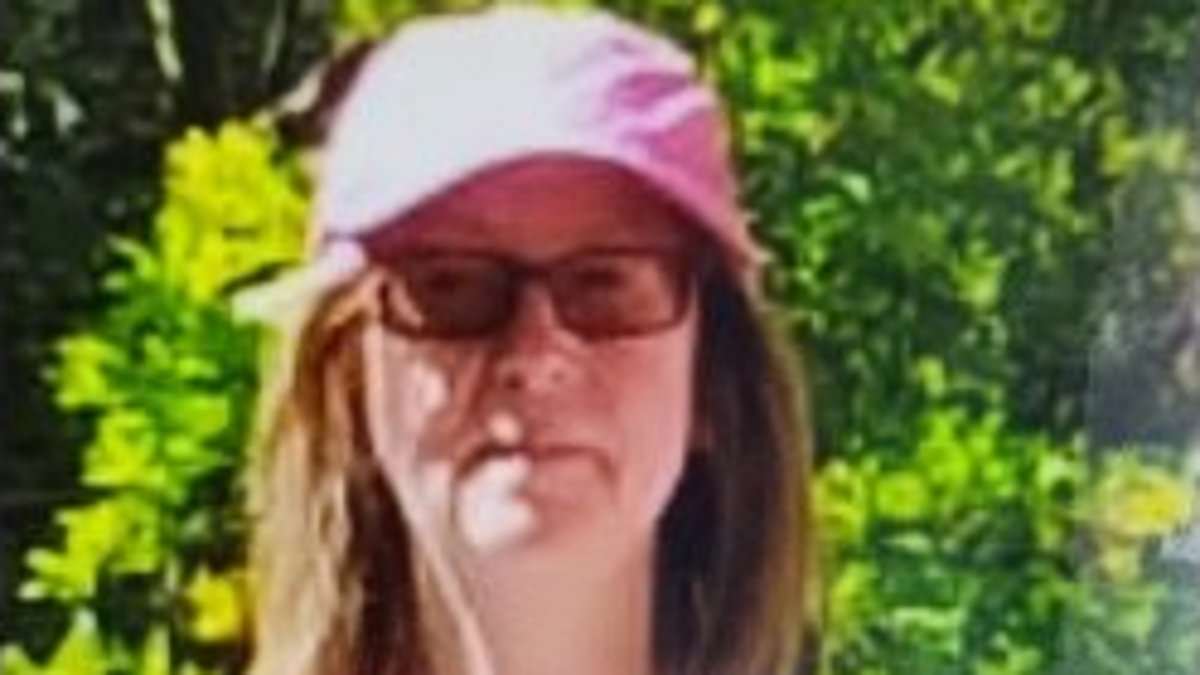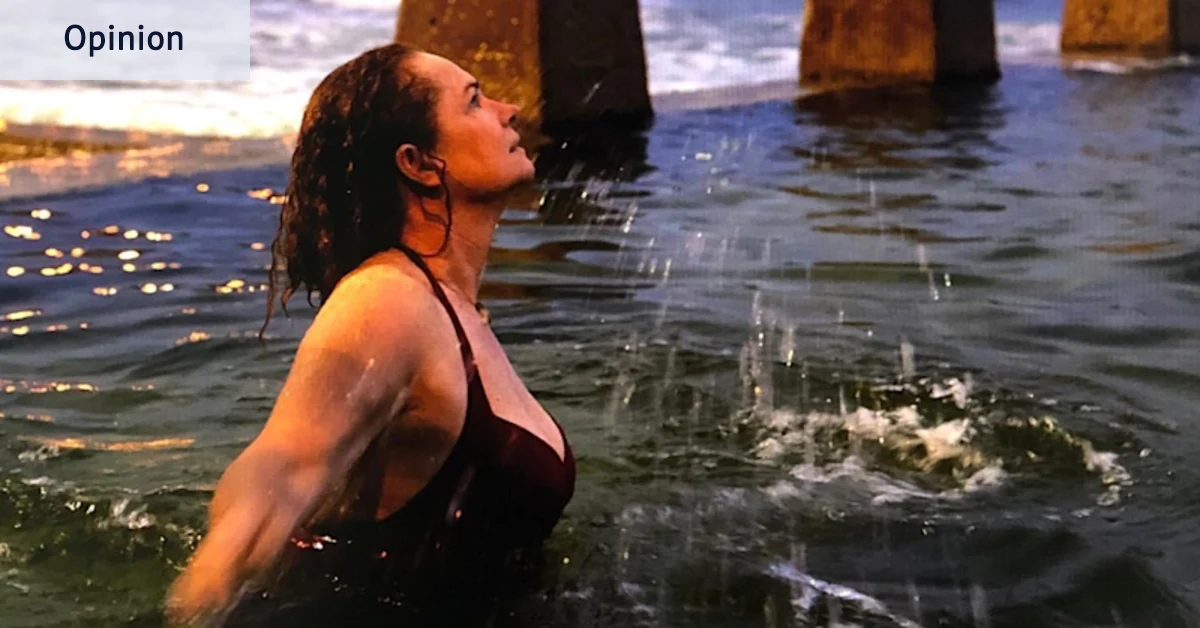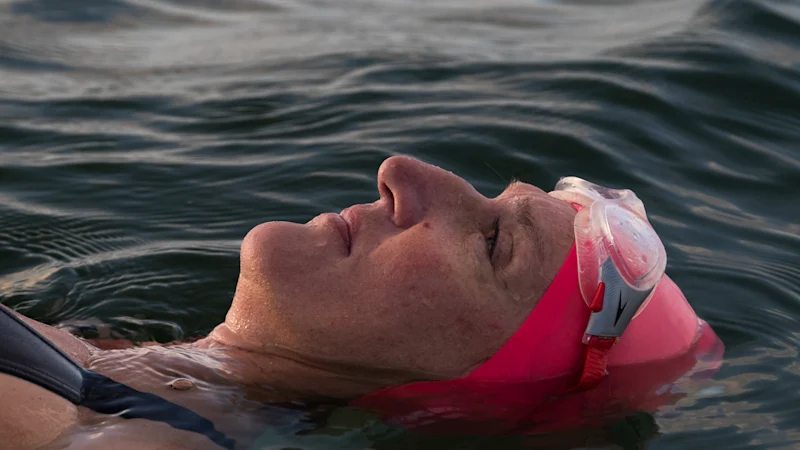
Marianne Bonnay’s pale blue eyes sparkle. She’s talking about her six-days-a-week swimming ritual at Newcastle’s Merewether Ocean Baths, which shimmer just metres away in midday sunshine.Autumn is almost gone, and Bonnay, 55, is exhilarated that the ocean and air temperatures are dropping – alongside the number of fair-weather swimmers. The frigid water, which might seem foreboding to some, is hypnotically alluring to her, swelling and splashing in a come-hither way. If not for the piping takeaway coffee and toasted sandwich in her hand, you get the sense she would abandon you for the cold sea at any second.“Winter is my favourite season,” says the petite geologist in her thick French accent. “I love to feel the brain freeze that makes you forget everything and forces you to be in the moment. Then, when getting out, the recovery time: your toes white, and fingers that need a bit of warmth to resuscitate. Hot shower, hot car and hot drink. You feel so energised.”Like most sporty folk, Bonnay’s rigid swimming regimen is her “me” time, a necessary escape from the mother load and life’s stresses. “I am brutally reminded of the reality when I come back home,” she says, rummaging through her handbag to retrieve her phone which has, as if on cue, pinged with a text message from her daughter, who shares her mother’s attention with five brothers.“The ocean is my happy place,” Bonnay concludes, between rushed mouthfuls of lunch, “but it took a lot of work to forgive. The ocean took the one I loved. Everything went wrong at the same time.”A long time prior, young Bonnay was one of three children to farmers Nicole and Louis-Joseph, growing up in a small village close to Villers-Bretonneux in northern France. “Living on a farm meant living to the rhythm of nature and hard working around harvest,” she recalls.Landlocked in her early childhood, it took three attempts for her to learn to swim, the first time in the cloying confines of a chlorinated indoor pool. “I was 10 when, on a trip to the city to see my cousins, we went to the swimming pool,” Bonnay says. “I had my first experience of swimming in floaties, and I mean the big fat one you put around your waist. I just loved the feel of the water.”About a decade later, she was working in a summer holiday job at a bank and was briefly offered adult swimming lessons, which allowed her to nail the basics of breaststroke. Her final and most successful attempt came at the age of 28 in Quebec, Canada, thanks to the patience of her Australian-born husband, fellow geologist Stephen Dick.Bonnay with her husband and soulmate Stephen Dick in 2002. She was drawn to swimming when pregnant with her first child.Courtesy of Marianne BonnayThree years earlier, while researching her PhD in mineral resources, Bonnay had met him in his home town of Newcastle at a dinner party, an encounter she recalls as largely humorous. (He could barely understand the conversation due to her accent.) “He offered me an Australian bottle of wine, which was a nice surprise,” she says. “I took it with me back to Canada the next day.”The pair reconnected two years later when Bonnay arrived in Alice Springs to collect more field data as part of her PhD, for which she was trying to gain an understanding of “felsic magma in the continental crust”. Dick was assigned by their employer as her helper, sharing opinions and insight but also manning a jackhammer to sample metamorphosed rock specimens.A year later, they wed by the ocean in Newcastle before Bonnay, by then pregnant, returned to Quebec to write up her doctorate. “I got pregnant during our honeymoon, but I had to write my PhD,” she says. “Stephen joined me after three months, then we decided to come back to Australia to have the baby.”Before then, though, notwithstanding the bitter winter, the couple used to visit the public swimming pool near their Quebec house. “Stephen liked swimming every night and he patiently taught me freestyle,” Bonnay recalls. “It was slow progress because I was pregnant, but soon enough I was able to swim 50 metres. When we got back to Australia, he carried on teaching me in our local Olympic pool. Swimming outside was liberating for me. I was nine months pregnant then, but I felt no weight in the water.”After the arrival of her first-born, Bonnay was drawn to the pool to get fit, and continued to swim as she and Stephen added five more children to their brood. “I swam three days a week to start with and more in summer,” she says. “It was an activity we all enjoyed as a family. We took the kids very early on in the water. We signed on for a family pass which was overused. I particularly loved swimming when I was pregnant, as you feel the weightlessness.”On April 12, 2016, Bonnay and her husband and their large clan were enjoying a seaside holiday at ruggedly beautiful Boomerang Beach, a favourite holiday spot for generations of Novocastrians, when life took a tragic turn. On an overcast day, Bonnay recalls that the ocean at the unpatrolled beach looked mercilessly choppy, but the waves weren’t particularly big.Standing on the shore, 53-year-old Stephen saw his 13-year-old son get swept into a rip, and immediately went to his aid. The couple’s 14-year-old son leapt in to help, only to get carried away by the current, too.The younger son later told a television reporter that his father found him in the water and pushed him back to shore – “Swim,” he said, “go to Mum” – and then he was gone. “I didn’t get to say thank you,” the boy told media. “He saved [us], he’s my hero.”Ten years on, Bonnay wears her grief like her necklace, bearing a French gold coin featuring the bust of Marianne – her name, but also a figure representing liberty and the French republic. Her father gifted her the necklace when she was 20 and, when Bonnay lost it two decades later, Stephen replaced it.“It seems like yesterday and like a million years ago,” she says now. “I still feel the pain and the tragedy. I saw the three of them being taken by the sea and struggling. No one at the beach. No phone. Just me and three kids holding hands, screaming for help.“When the two boys got out, helped by Stephen, I felt relieved, but Stephen did not seem to be able to come out. He was floating away with his face down. Then a surfer came to get him out, but it was too late. He was exhausted from saving the boys and had drowned,” she says. “I was robbed of my life and my happy family.”At 45, Bonnay felt traumatised, her world torn apart. “Stephen was, first of all, my best friend and my soulmate,” she says. “Together, the world seemed liveable and simple. We supported each other by unconditional love.”An earnest man and a loyal friend, his nickname was “BP” (for the global fuel giant’s slogan: “The quiet achiever”). “He was an amazing and dedicated father and I always felt safe in his presence,” Bonnay says. “He had a powerful presence or charisma with a quiet nature, a sarcastic humour, and was always looking after others.”The couple’s workplace, friends, community and Surf Life Saving Australia threw their support behind Bonnay and her six children. A commercial television program even renovated her backyard after being contacted by a friend, among many random acts of kindness (work colleagues and friends also organised a food roster for six months).But the ensuing years were a blur of fatigue and tearing grief that threatened to overwhelm her daily. Prescribed antidepressants by her GP, Bonnay instead found her own way, mixing meditation with swimming to counter perpetual physical pain and hurt.‘I felt like myself again after all these years of feeling lost after my husband’s death. I felt freed.’Marianne Bonnay“Swimming was my only coping mechanism, a place where I could scream underwater, cry and fight the vision of Stephen dying in front of all of us,” she says. “I increased my pool swimming to five days a week to survive. Swimming indoors or outdoors, it did not matter as long as I had childcare available.”It’s almost inconceivable that Bonnay would return to the ocean, let alone make a beeline for it every day, but the arrival of COVID-19 upended all logic. The Olympic pools suddenly closed, leaving the ocean baths as the only option. Sliding into the sea six days a week was a visceral revelation. “I felt like myself again after all these years of feeling lost after my husband’s death,” she says. “I felt freed.”While her children found the mere sound of the surf distressing enough, Bonnay helped them confront the “cruel reality” in her own methodical, pragmatic way.“The ocean and beach life are part of living in Australia. There was no escape,” she says. “It took small steps, each weekend: first driving past the ocean, then parking and getting out of the car, then walking along the foreshore on concrete, then a longer walk to the breakwater.”Eventually, she took them back to the beach, always setting up between the flags and beside the lifeguards. “It was excruciating for me, my heart was pounding each time they were going in the water,” she recalls. “Each time they were going a bit far, I screamed for them to come back.” Her reactions eventually deterred them from going to the beach with her, so she made them promise to always swim near the lifeguards.Meanwhile, on her mornings alone in the Merewether Ocean Baths, Bonnay learnt to conquer her own trauma and overpowering anxiety of the ocean by swimming in the ever-changing conditions: choppy, windy, wavy, high tide, low tide, currents, and all the different water temperatures.Bonnay in a place that always brings rejuvenation and discovery: the ocean baths.Penelope Green“Swimming is my morning pill,” she says. “I never question myself, I wake up, put my swimmers on, drive to the baths, watch the sunrise or jump in the water – or vice versa, depending on the time of the year. If I don’t swim, my day is missing something.”A keen rock-climber, runner and biker in years gone by, swimming trumps them all in her 50s, first because it’s non-impact – apart from a scratch or two if she’s washed out of the concrete confines there by a rogue wave – but also because her daily ocean obsession feels keenly now like a metaphor for life. “Like a box of chocolates, you never know which flavour you’re going to pick,” she says. “Every day is different at the beach.”Every swim, however, begins with that same sense of rejuvenation and discovery. “Remember, I leave home early, I have not talked to any of the teenagers or young adults at home, so when I get to the baths the day is still new!” she says, laughing. The scent and sound of the water rouses her before she plunges in. “I feel like I am at home,” she says, inhaling loudly.Assessing the conditions, she adjusts her swim stroke accordingly, negotiating the roll of the ocean at high tide (when the waves crash in and getting out of the water can be tricky), or gliding across the generally flatter surface at low tide, depending on the wind.Now repartnered with Dan, her “lifeline and my sunshine”, Bonnay enjoys the magnanimous temperament of ocean swimmers who unwittingly played a core role in her recovery. “We all swim or dip at the baths, no matter if you are CEO, professor, tradie, 20 years old or 90, unemployed and finding your own way in life,” she notes. “The baths are free and for everyone, without discrimination and with acceptance. There is a social tacit bond, and you see people at a specific time.“When I get to the baths, the day is still new,” Bonnay says of her early-morning start at the ocean pool.Penelope Green“I have the privilege to know the 4am shift, the 5am shift and the 6am shift. You swim next to each other, look after each other and have a chat about the ocean or the beach. Nothing more. The magical start of the day is to be protected and cherished. You respect the fact that people do not want to talk about their jobs, but you listen if they want to talk about what is important to them. You do connect more with some people, and it sometimes leads into friendships.”Winter looms large as we speak, but Bonnay is a fan of what Danish scientist Dr Susanna Søberg describes as the “cold-shock response” – the rush of endorphins that fill a swimmer as their body reacts to the cooler seasonal temperature, “that cold snap every time you jump in”, before the brain and body start to adjust and relax.Bonnay says she sometimes swims “in survival mode” when the ocean baths are rough and her adrenaline is high. “You get out completely energised and exhausted by the battle,” she says.On one recent morning there, the sky was aglow with red and pink, and the beach packed with people capturing the moment on their phones. “I had the privilege to be in the water, and it felt like swimming in the pink-reddish clouds. Unforgettable,” she says. “Every conversation was about how stunning the sunrise was. The connection between people was palpable.”Her close friends know she swims, too, and so often she goes through her morning fielding questions – “How was your swim today?” or “Did you swim in that cold?” – which is a nice way to start any interaction.Bonnay looks up and apologises – she has errands to run, including a dash to the supermarket and collecting her youngest son from school for a dental appointment.“I do love my children unconditionally and will always be there for them, but they are beautifully emotionally consuming,” she says in her matter-of-fact way. As a primary carer myself, drawn to the ocean every day to find peace from my tween and teen, I tell Bonnay that I am staggered by her resilience in dealing with tragedy, then raising six children alone.“I am not sure about resilience, I just take one day at a time and, when a problem arises, I try to dismantle it into small, manageable issues that I can tackle better,” she counters, adding that she sees a psychologist who “brings a different light on myself and is the best”.‘It’s important to make sure you take time to do things that you love, as you need to feed that energy back to others.’Marianne BonnayIn times of crisis, she prioritises mindfulness, and focusing on her breathing. Grateful for her partner, a reliable network of friends, and her children for navigating grief with her, she actively tries to find joy in her surrounds: be that a peaceful sunset or a tasty meal or a shared conversation.“It’s important to make sure you take time to do things that you love, as you need to feed that energy back to others: children, people having difficulties or even happy people,” she says. “Enjoy the little thing. Most of all, enjoy the time with the people you love. Be nice to each other and at the same time honest and truthful. Listen.”As Bonnay flits off, high tide hits the baths and I watch some teenagers leap onto a concrete seat to narrowly avoid being washed into the brine. Their faces light up just like Bonnay’s when she is near this magical place.A few days later, we cross paths at Merewether Ocean Baths again. I can see her trademark hot-pink cap across from my lane and later, in the primitive change room, we are whipped by gusts of cold wind as we shower and fumble our way back into clothing.When I thank her for her candour, Bonnay flashes a warm smile. “Hopefully it will help someone!” she says, cheerily. “Or convince someone that swimming could be their solution or respite.”Get the best of Good Weekend delivered to your inbox every Saturday morning. Sign up for our newsletter.Read more from Good Weekend:Why is Christopher Nolan such a good director? We asked him (and Matt Damon, and Anne Hathaway, and Michael Caine...)He keeps ex-PMs on retainer, parties with Trump and dines with King Charles: this is Anthony PrattHow Luke Bateman became Australia’s most unlikely book influencer
The ocean took her husband while he was saving their kids. Now she finds peace in the water
For Marianne Bonnay, the ocean is both a brutal reminder of a personal tragedy – and the source of her salvation.
2,738 words~12 min read