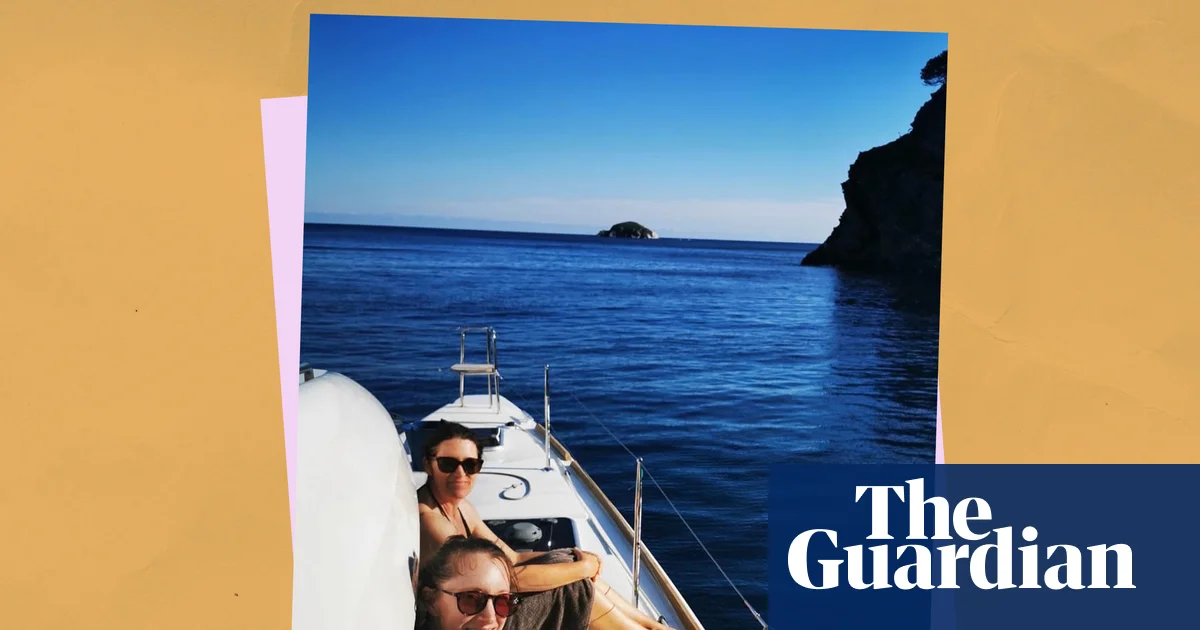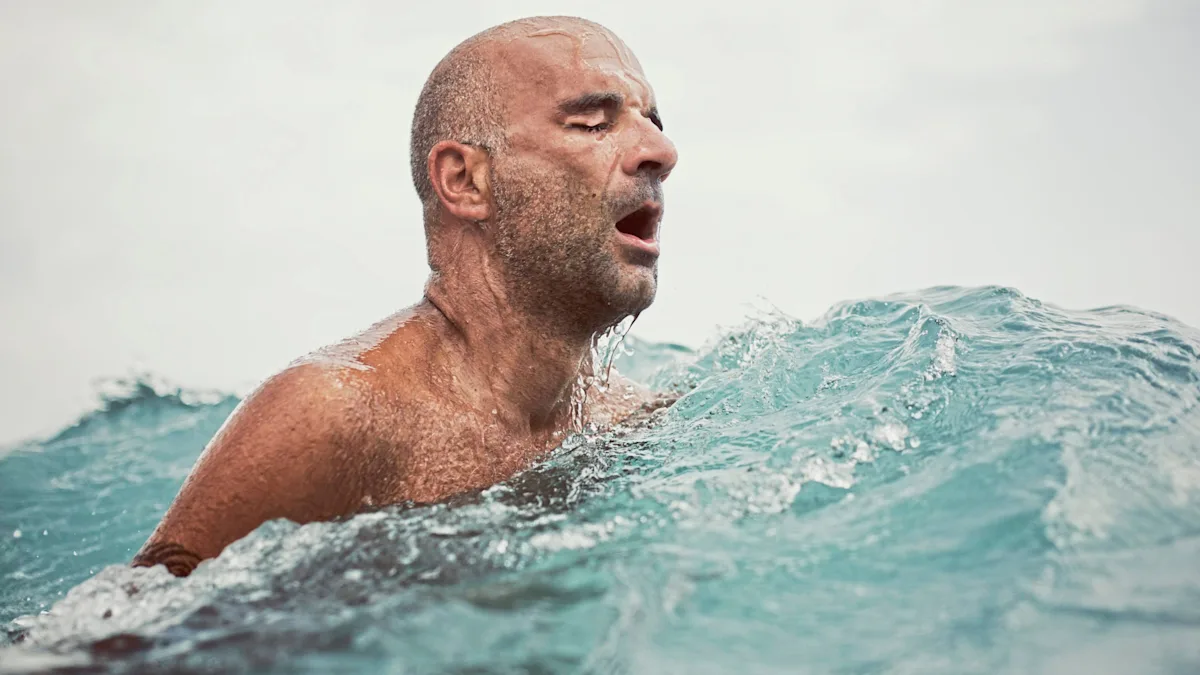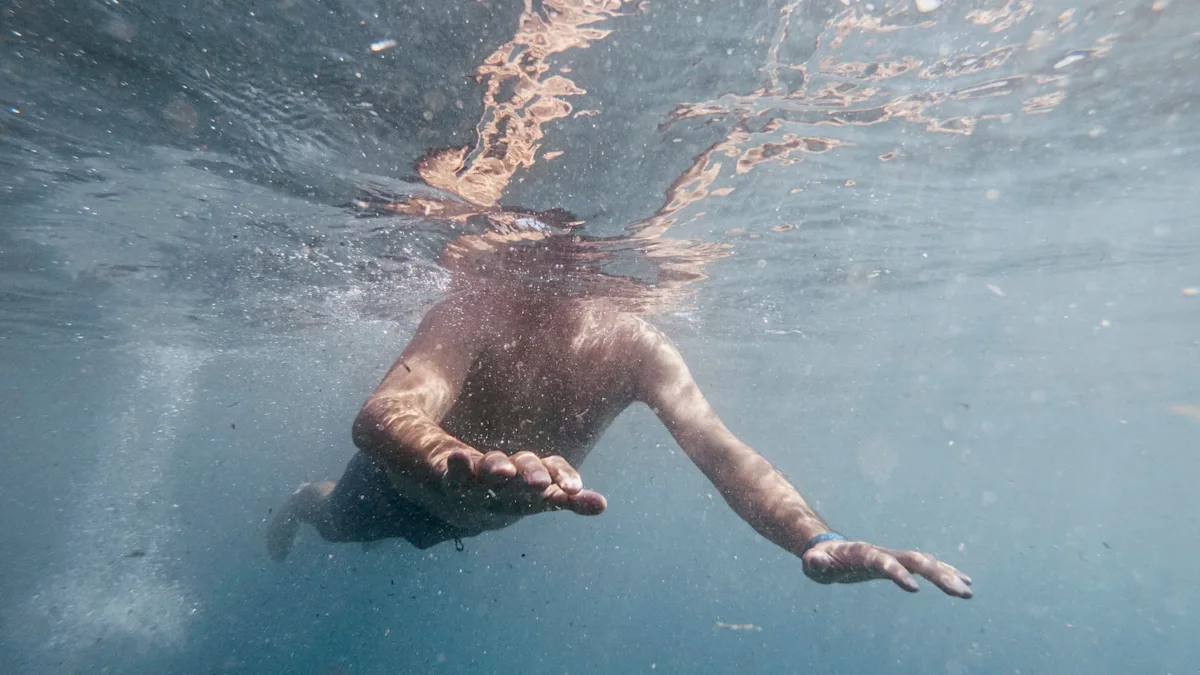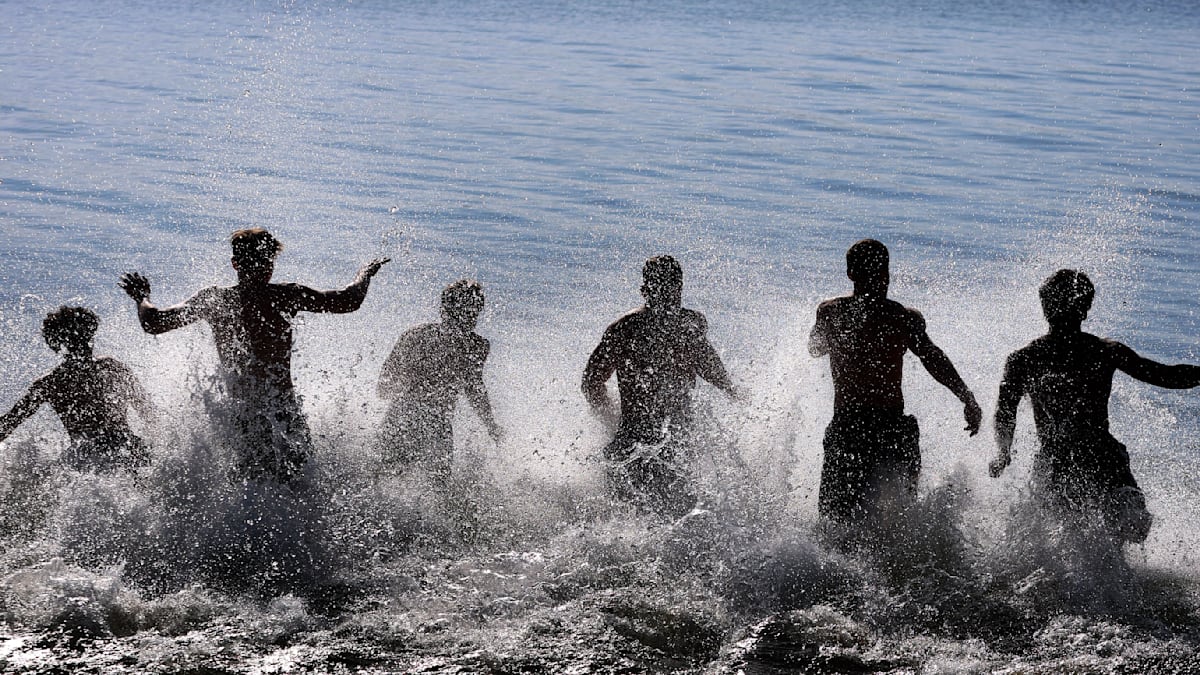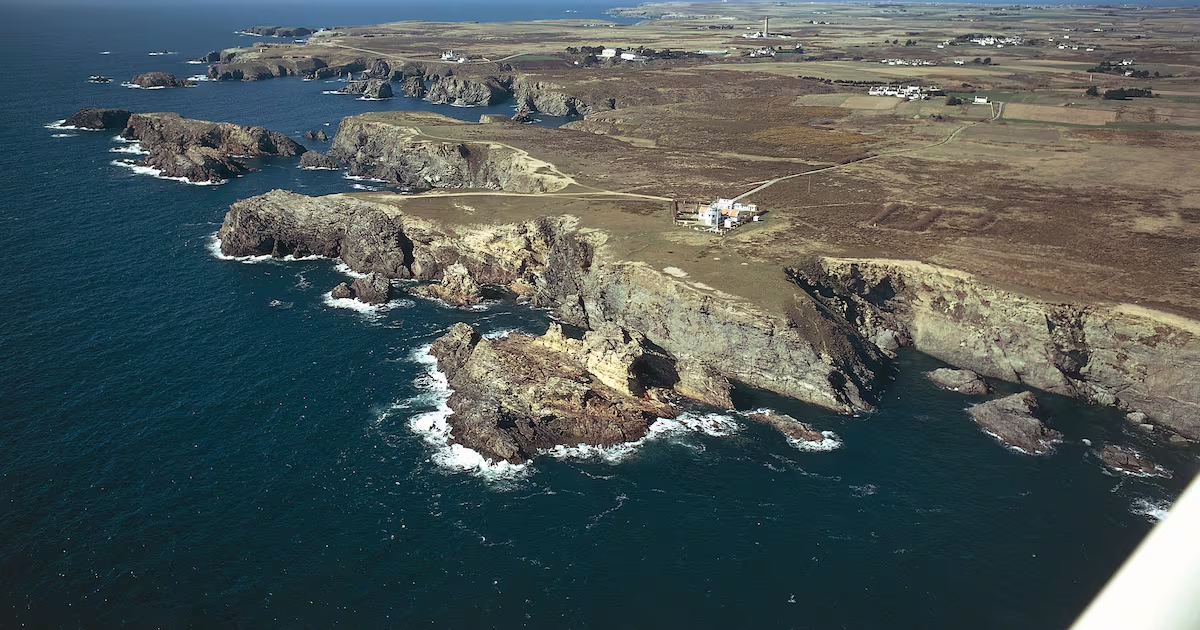
I’ve had close calls in 45 years of journalism, but a brief holiday on Belle Isle, off the coast of Brittany, nearly killed me. The holiday mood and idyllic surroundings led me to forget how fierce the sea is, that no matter one’s age or experience as a swimmer, the risk of drowning is always present.July 4th was a perfect summer morning. I wanted to forget Donald Trump and remember good things about the United States on its 250th birthday. My host, Laure Debreuil – like me a semi-retired, freelance journalist – and I planned a hot dogs and cheeseburger dinner with her son and favourite neighbours.I must have tempted fate by declaring how happy I was as we walked to the beach near Laure’s house for a swim. The narrow bay is flanked by granite cliffs. A mutual acquaintance had boasted of swimming daily to the craggy outcrops at the entrance to the bay. “That’s not very far,” I said, deciding I would match him. “It’s farther than it looks,” Laure said.I plunged into the cold, blue waters of the north Atlantic. When I reached the outcrops and turned back towards shore, I discovered I had misjudged the distance. I saw no people and the beach was barely visible. Don’t panic, I told myself. If you panic, you will never make it.I swam furiously but realised I was not advancing. The current was carrying me out to sea. Strength seeped from my arms and legs. I spent my last energy waving frantically. The phrase “not waving but drowning” passed through my mind. It is the title of a poem by Stevie Smith, I remembered later. My only chance of survival was to float on my back with my nose in the air and hope for rescue. I half-expected my life to unfurl before me like a movie, to receive an extraordinary revelation. Wasn’t death supposed to be life’s last great adventure? Instead, I thought what a stupid way this was to die, and focused on quotidian things. The prepaid dinner cruise on the Seine I would miss on Wednesday. The book festivals I’d promised to attend. Who would take care of my beloved cat Molly? Could my Californian siblings navigate French inheritance law?If there was a supernatural moment, it was the undulating gold and coloured light I saw through closed eyelids. I’ve had an interesting life, I thought, though I would have liked a few more years. I accepted it. Then I passed out.Back on shore, Laure sensed something was wrong. It was, she told me later, a mysterious, imperative intuition. “I didn’t hesitate a second. I had to do it.” I recall only fragments of the hours that followed: Laure’s arm around my torso, pulling me through the water “like a rag doll”, she said. Fortunately, TF1 television, her long-time employer, gave free rescue courses to staff.[ Julia is kind, sweet and plans to raise two kids with her partner. There’s just one catchOpens in new window ]Laure dragged me on to sharp rocks covered in slimy algae. My feet were still in the water and she was terrified I would slide back in. She slapped my face and arms. Move your feet. Sit up. I couldn’t.I don’t remember being winched up to the helicopter and given first aid on the clifftop while the chopper went back for Laure. Nor was I aware of the short helicopter flight to hospital in Vannes. The only thing which registered were the words: “You’ve been saved. Your friend saved you.” The medics said they almost lost me twice.The emergency room was a frenetic place packed with troubled people and heroic nurses. An old woman wailed on a trolley about Jesus and Mary. The most difficult patient was a psychiatric case, a bare-chested man whose ankles were cuffed to the metal trolley. He roared constantly for help and recounted hallucinations in an incoherent monologue.I spent hours attached to a drip and swathed in hypothermia foil blankets. Most of the other patients’ injuries were to feet and legs. The woman next to me had swerved in gravel on an electric bicycle and broken her kneecap, also on Belle Isle. About half the patients were grey-haired baby-boomers. Was it time for my generation to slow down? An act of heroism by Laure, a 74-year-old grandmother, seemed to contradict that.I was eventually moved to a private room for the night. Without a smartphone or glasses, I could do nothing but contemplate my own experience. It seemed deliciously ironic that my Paris book group had agreed on William Faulkner’s As I Lay Dying for our summer read. I thought of John Everett Millais’s painting of the drowned Ophelia and knew I would not have made such a beautiful corpse. I tried to recall TS Eliot’s Death by Water: “A current under sea/Picked his bones in whispers.”[ Ireland can’t decide whether to protect the environment or undermine itOpens in new window ]If this had to happen to me, I was lucky that it happened in France, where rescue services and state-of-the-art public hospitals are a high priority. My misadventure would surely have cost a fortune in the US, where Trump has gutted emergency services. And I’ve heard poor reports of hospital emergency rooms in Ireland.I write this column as a cautionary tale, because most of us forget how easy it is to die. Heather Young (19) and Janet Nicholson (21), students from Dublin, drowned at Biarritz 23 years ago this month; like me, carried out by a strong current. I was lucky.Eighty people drowned in Ireland last year; another 33 in the first six months of 2026. One hundred and thirty one people drowned in France since June 19th, most while seeking relief from the heatwave in outdoor bodies of water.I am eternally grateful to Laure and to French rescue services for saving me. I don’t think this will change my already rich life, but I will be more cautious and perhaps more optimistic.
Lara Marlowe: I’ve had near misses as a journalist. But a holiday swim was the closest I came to dying
I write this column as a cautionary tale, because most of us forget how easy it is to die
997 words~5 min read