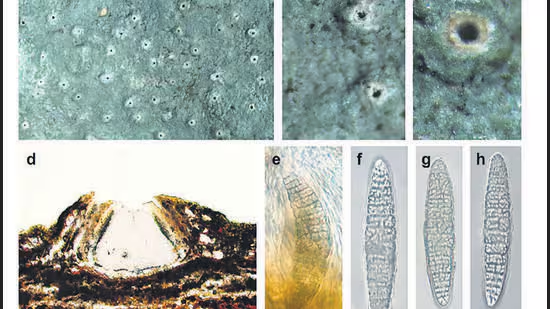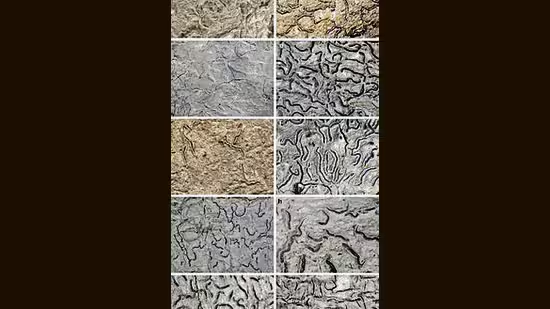
Scientists at the MACS Agharkar Research Institute (ARI), Pune, have discovered five new species of lichen-forming fungi from the biodiversity-rich Western Ghats, a finding that strengthens scientific understanding of one of the world’s most important biodiversity hotspots and could support future conservation and environmental monitoring efforts.Scientists say documenting lichen diversity can help identify ecologically sensitive areas. (HT)The study, published in the peer-reviewed journal Mycological Progress, on May 8 2026 marks the first comprehensive molecular phylogenetic investigation of the genus Allographa from the Western Ghats.Researcher Rajeshkumar said “the findings provide crucial genetic data that will help improve species identification and deepen understanding of the evolutionary history of these ecologically significant organisms.”The newly identified species are Allographa keralensis, named after Kerala; A. nayakae, named in honour of Indian lichenologist Sanjeeva Nayaka; A. paraconsanguinea; A. persistinspersa; and A. semicarbonisata.Lichens are symbiotic organisms formed through an association between fungi and algae or cyanobacteria. They are considered important indicators of forest health and environmental quality because they are highly sensitive to pollution, climate change and habitat disturbances.Scientists say documenting lichen diversity can help identify ecologically sensitive areas, strengthen long-term environmental monitoring and support evidence-based conservation policies.The research was carried out by a team led by Rajeshkumar K. C., principal investigator at ARI, along with doctoral researcher Ansil P. A. and technical officer Bharati Sharma. The team conducted extensive field surveys across tropical forests in the Western Ghats, collecting specimens that were analysed using both traditional taxonomy and modern molecular techniques.Researchers examined the lichens’ morphology and chemistry while also analysing DNA using three genetic markers mtSSU, nrLSU and RPB2 to accurately determine species boundaries and reconstruct their evolutionary relationships.The molecular analysis revealed that several species with similar external characteristics are not necessarily closely related evolutionarily, highlighting the limitations of relying solely on morphology for species identification. The study also generated new molecular data for several previously known Allographa species, including A. calcea, A. macella, A. aquilonia, A. rimulosa and A. effusosoredica.According to the researchers, integrating molecular evidence with classical taxonomy provides a more reliable framework for understanding biodiversity within the lichen family Graphidaceae and underscores the need for broader molecular sampling of tropical lichens.The team has also compiled an updated checklist of Allographa species reported from the Western Ghats, along with information on available molecular sequence data. Researcher said “ this will serve as an important baseline for future biodiversity assessments, systematic studies and conservation planning in India.The discovery further reinforces the Western Ghats’ status as a global biodiversity hotspot, with many species that remain scientifically undocumented.”
5 new lichen species discovered in Western Ghats, offering fresh insights into biodiversity
Scientists at the MACS Agharkar Research Institute (ARI), Pune, have discovered five new species of lichen-forming fungi from the biodiversity-rich Western Ghats, a finding that strengthens scientific understanding of one of the world’s most important biodiversity hotspots and could support future conservation and environmental monitoring efforts
421 words~2 min read