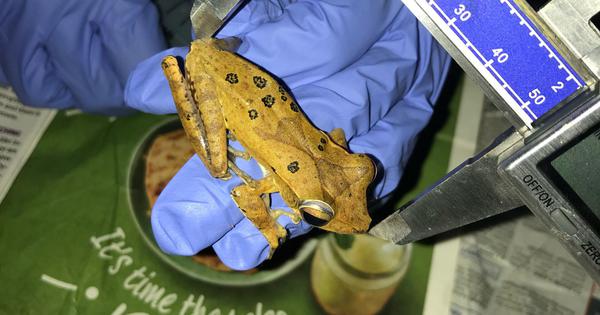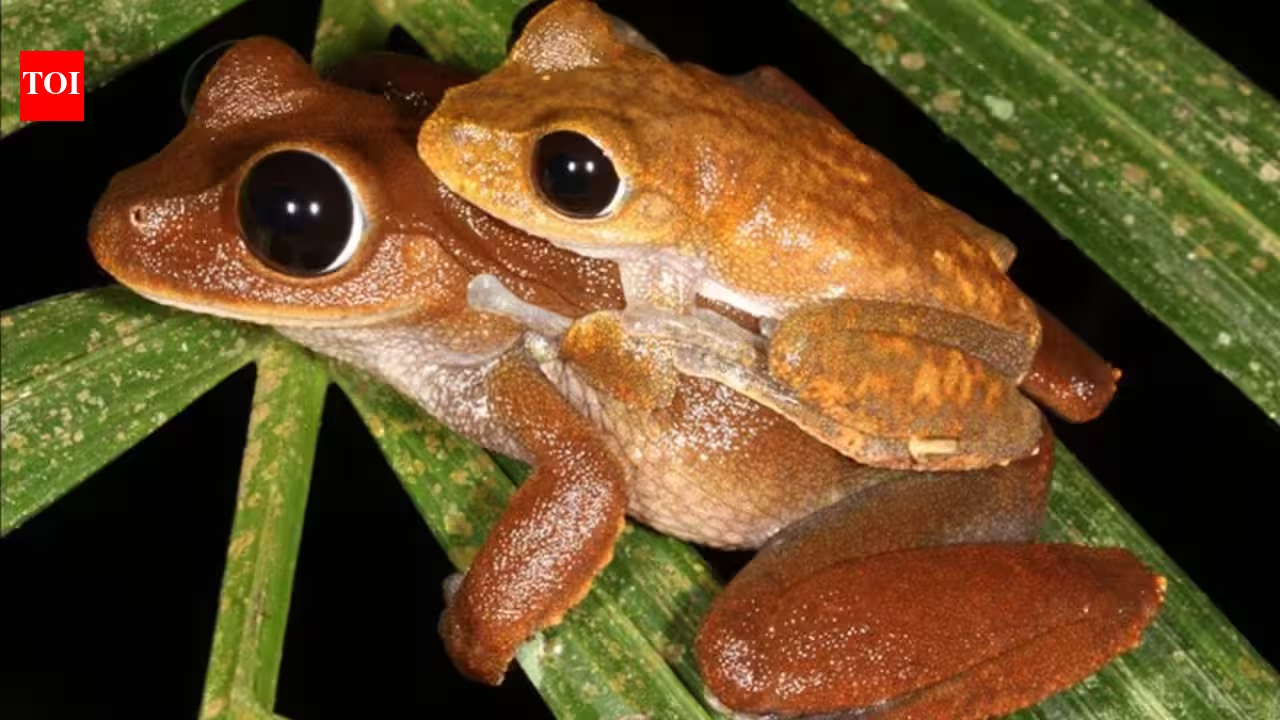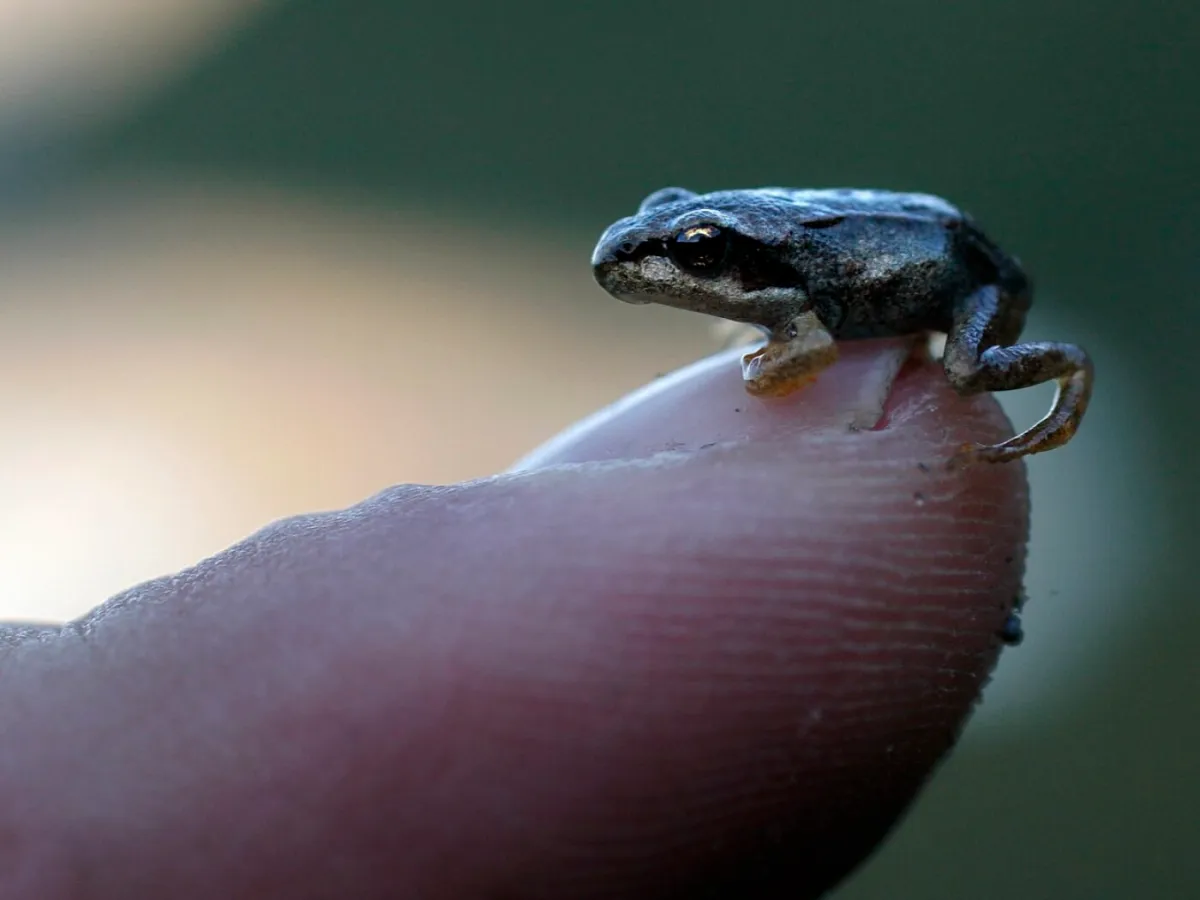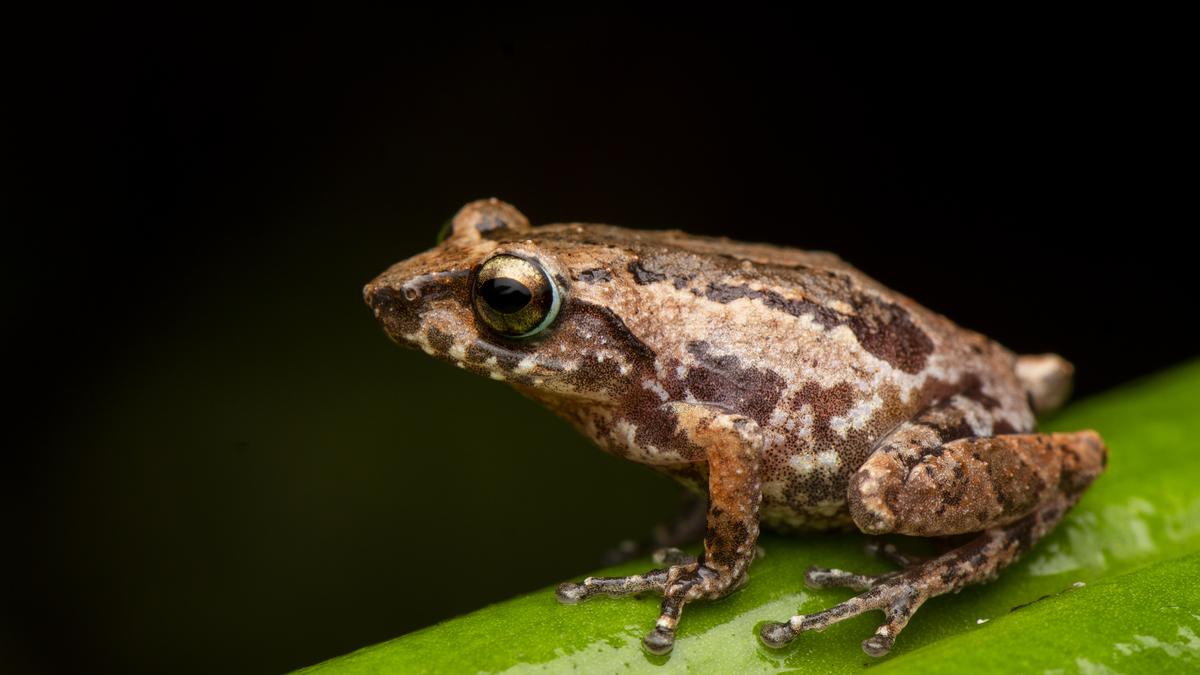
A recent study published in the journal Reptiles & Amphibians has revealed that the Agasthyamalai Bushfrog (Raorchestes agasthyaensis) has a wider distribution in the Western Ghats than previously known. The finding challenges long-held assumptions about the species’ geographic range.A research team has discovered the Agasthyamalai Bushfrog in the high-elevation shola forests of Devikulam, near Munnar, extending the species’ known distribution by more than 120 km northwards.Until now, the species was thought to be confined to the Agasthyamalai Hills south of the Shencottah Gap. This is the first confirmed record of the species from the Munnar landscape.Wider rangesThe discovery is significant because the Shencottah Gap, a major geographical break in the southern Western Ghats, has long been considered a key factor shaping the evolution and distribution of many endemic species, especially amphibians. Finding the Agasthyamalai Bushfrog north of this gap challenges earlier understanding and suggests that some amphibian species may have wider ranges than previously known.
Agasthyamalai Bushfrog
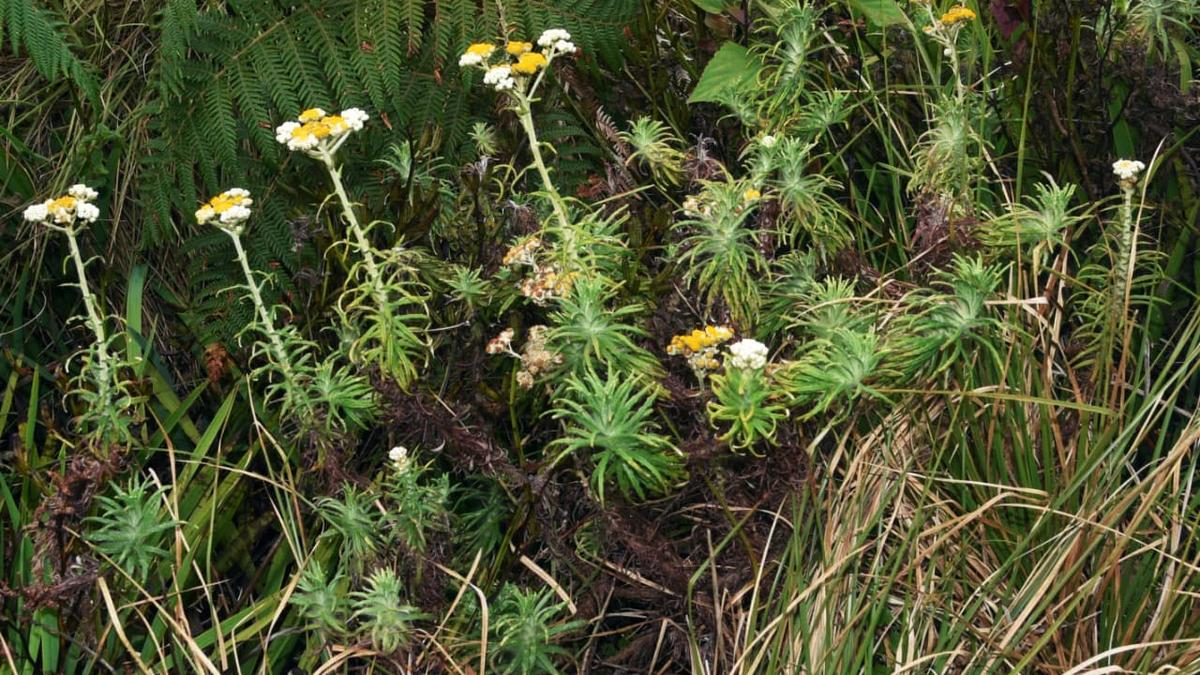
“Genetic analysis showed that the frogs from Devikulam are genetically identical to those from the Agasthyamalai Hills,” said Sujith V. Gopalan from the Department of Zoology, University College, Thiruvananthapuram, the lead author of the study.He said the lack of genetic differences between the geographically separated populations was unexpected and suggests that the Shencottah Gap may not be an absolute barrier for all species.The frog was first encountered during night surveys in July 2019, when Dr. Gopalan observed a calling male perched on a shrub about 45 cm above the ground in a shola forest at an elevation of approximately 1,570 metres. Follow-up surveys by Renjith Jacob Mathews, scientist and former secretary of the Society for Odonate Studies, the next year confirmed the continued presence of the species at the same location.Highly localisedAlthough the discovery expands the known range of the species, D.A. Evans from the Department of Zoology, University College, Thiruvananthapuram, who guided the research, cautioned that the frog appears to remain highly localised.Despite extensive surveys across the Munnar landscape, no additional populations were located, suggesting that the species may be confined to isolated patches of suitable high-elevation habitat.Such small and fragmented populations are particularly vulnerable to habitat degradation, tourism-related development, forest fragmentation, and climate change, said Dr. Gopalan.The researchers said the discovery underscores the gaps in understanding the biodiversity of the Western Ghats. “Even in one of the world’s most important biodiversity hotspots, many high-elevation forests remain poorly explored. Continued field surveys are essential to uncover hidden populations and generate information for effective conservation,” said Laladhas K.P. from the Department of Computational Biology, University of Kerala, who co-guided the study. Published - July 19, 2026 08:02 pm IST