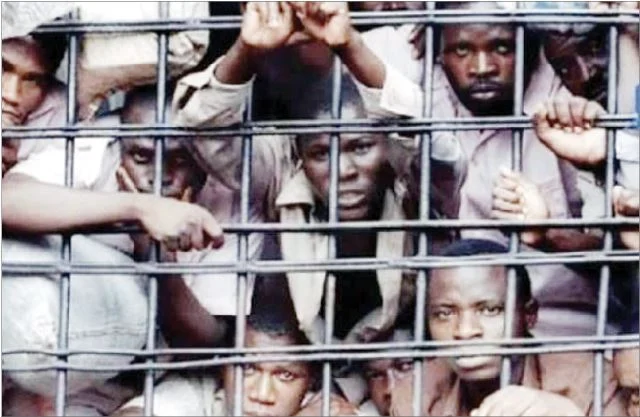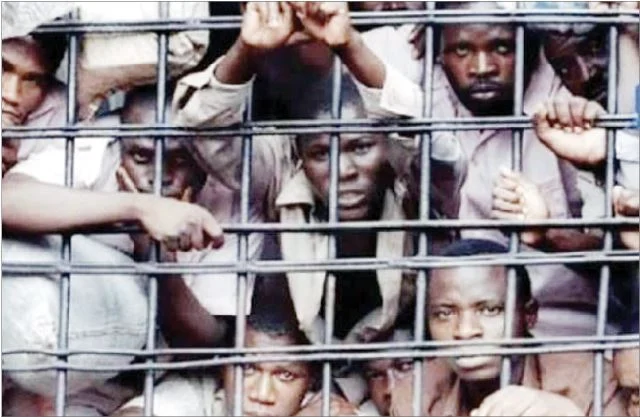
Nigeria’s correctional centres remain severely overcrowded, with tens of thousands of inmates awaiting trial despite repeated government efforts to decongest custodial facilities. While officials point to recent reforms and inmate releases as evidence of progress, fresh statistics and first-hand accounts suggest that prolonged pretrial detention, stringent bail conditions and systemic delays continue to keep many Nigerians behind bars without conviction, NATHANIEL SHAIBU reports
Over the past two years, the Nigerian Correctional Service has repeatedly raised concerns about overcrowding in the country’s custodial centres and the broader challenges confronting the criminal justice system.
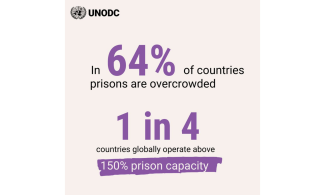
In February 2026, while presenting the Service’s 2025 budget performance and 2026 estimates before the House of Representatives Committee on Reformatory Institutions, the Comptroller-General of Prisons, Sylvester Nwakuche, disclosed that inmates awaiting trial accounted for about 64 per cent of the country’s custodial population, which exceeded 80,000.
According to Nwakuche, as of February 9, 2026, Nigeria’s custodial centres housed 80,812 inmates, comprising 51,955 awaiting-trial inmates, 24,913 convicted inmates and 3,850 others under different detention categories. The number of awaiting-trial inmates represented an increase of 1,252 from the 50,703 recorded in December 2025.