Support CleanTechnica's work through a Substack subscription, on Patreon, or on Stripe. Help us produce all of the high-quality, original content we publish week after week despite the challenges of content-scraping AI, antisocial media, inflation, and other hurdles.
Distributed renewables offer far greater resilience to the power system during extreme climate events than fossil fuel systems.
Jakarta — Distributed renewable energy networks are far more resilient to climate shocks and natural disasters than the centralised fossil fuel systems that still dominate Southeast Asia’s power supply, according to a new report by global energy think tank Ember. Solar, wind and battery storage, paired with stronger grid interconnection, can isolate damage when disaster strikes and recover faster than fossil fuel plants, while also losing far less output from long-term climate stress.
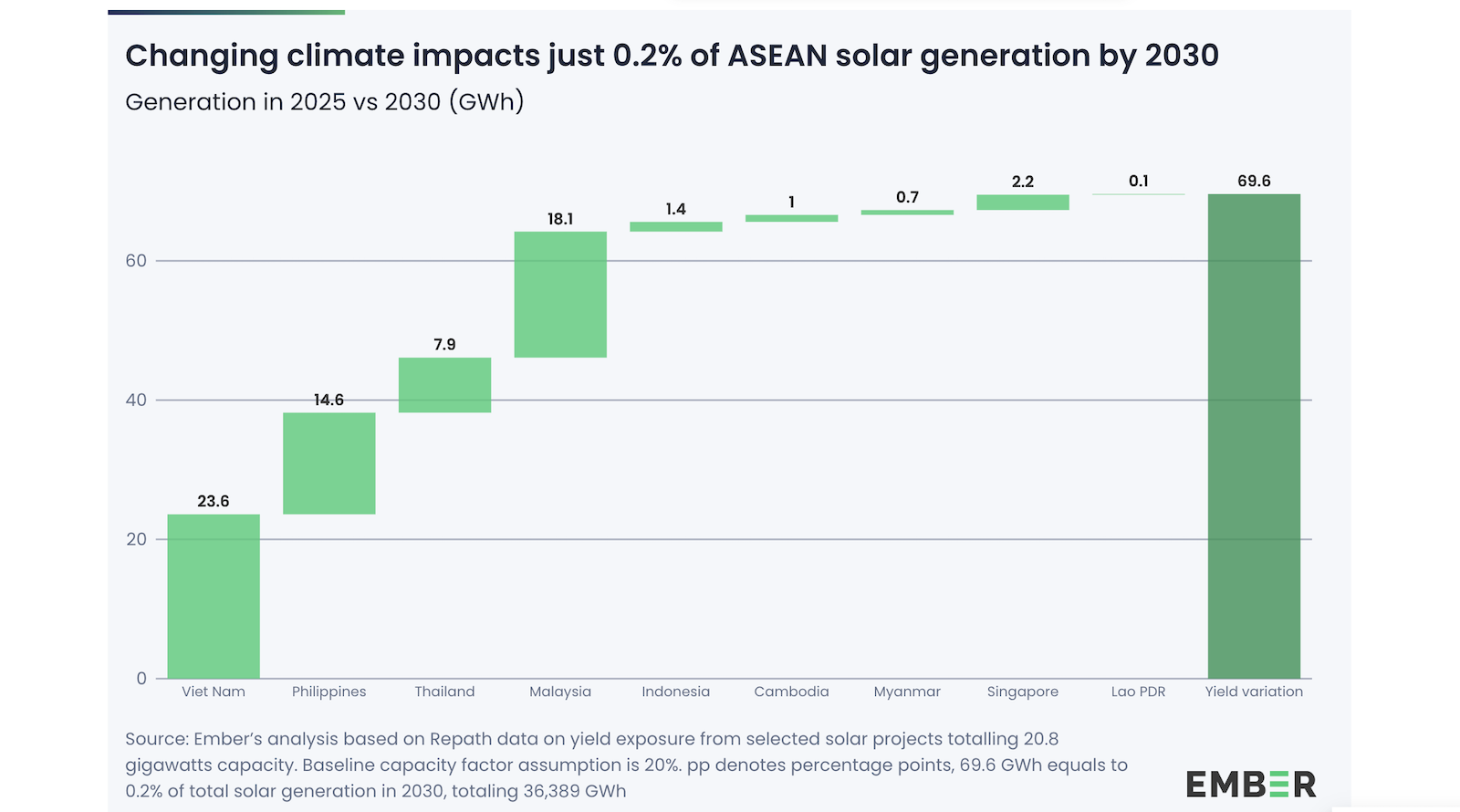
Ember’s analysis found that around 64% of ASEAN’s installed power capacity still comes from fossil fuels, leaving them exposed to disruption in one of the most disaster-prone regions in the world. It finds that even under the most extreme weather scenarios in 2030, wind and solar generation will vary by less than 1% from normal output, far less than the losses thermal and nuclear plants will face under milder warming.