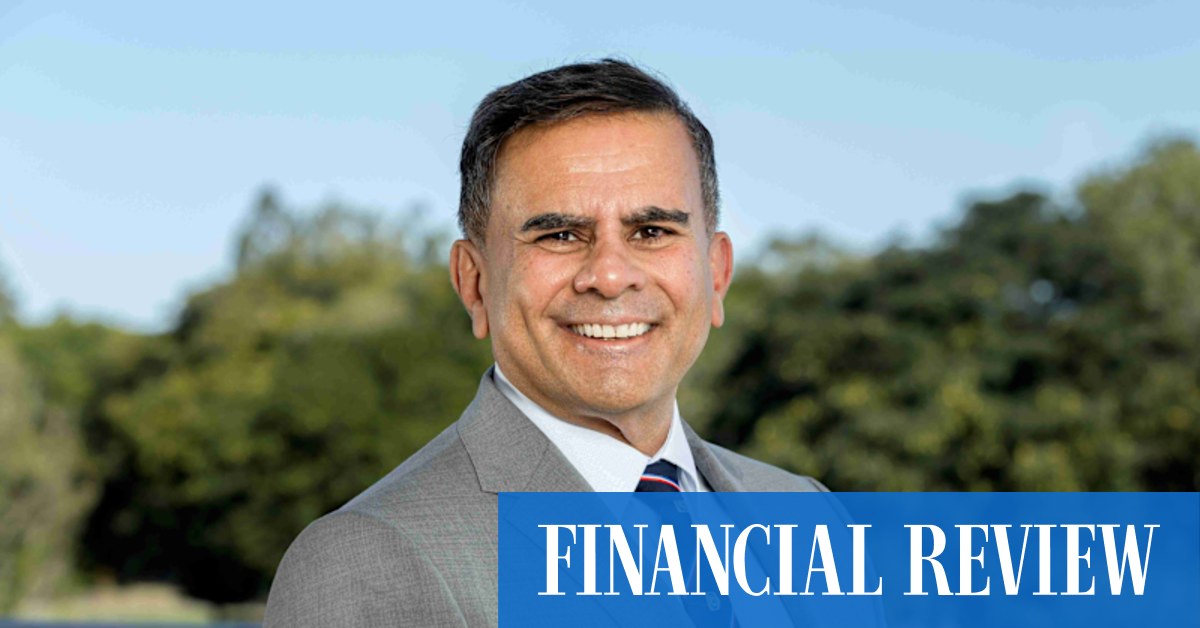
Headlines have also focused on key levers such as mandatory national standards, obligations for data centres to generate more power than they consume, and an insistence that Australian creative works are “not up for grabs” as free training data.Critical national infrastructureOne unanswered question is whether Canberra’s new AI framework will also treat the people who build and govern AI with respect, says Dr Prins Ralston, chief executive of the Australian Computer Society (ACS), Australia’s peak body for IT professionals.“Every obligation the prime minister now wants to impose – from copyright protection and social licence, to grid resilience and national security – will ultimately live or die in the hands of the workforce that designs, procures, deploys, audits and maintains AI systems,” Ralston says.“Treating workforce capability, professional recognition and sovereign credentialing as a downstream execution detail would be a fundamental error. In the AI era, they are critical national infrastructure.”The ACS Australia’s Digital Pulse 2026 report, produced by Deloitte Access Economics, highlights that digital skills contributed an estimated $476 billion to the economy in 2025, more than many traditional sectors. The tech sector itself added $142 billion, with exports exceeding $12 billion.Technology workers are at the forefront of AI disruption. On average, 70 per cent of their work time is now affected by AI, through automation, augmentation or entirely new responsibilities. Digital Pulse reveals that the pipeline into this workforce is more diverse and complex than ever.Forty per cent of new tech workers over the past five years have entered via non-traditional routes: workplace training, industry-recognised credentials and self-starter pathways with no formal technology qualifications. University and VET studies remain important, but they are no longer the sole gatekeepers.The report highlights that this diversity is a strength. It helps address long-standing shortages and improves gender diversity, with women outnumbering men in some alternative pathways.This shift in pathways also creates a more difficult policy problem, Ralston says. In a world of multiple routes into the workforce, how do employers, regulators and investors know who is actually capable of doing high-trust AI work?“The answer is ‘professionalisation’, which means much more than possessing technical know-how,” he says. “Professionalisation requires someone who looks at technology from a business perspective and a security perspective, not just from an IT perspective.“The result is someone who understands the big picture and is focused on delivering business outcomes, not just deploying technology.”Policy execution ‘means people’ Analysis contained in the Digital Pulse report finds that accredited training mapped against common skills frameworks – such as the Skills for the Information Age (SFIA) – is associated with a wage premium of around 7.3 per cent, or $8600 per year for the average technology worker.In AI-exposed domains such as cybersecurity, data and machine learning, the report argues that consistent ways to assess capability, ongoing professional development and frameworks such as SFIA are even more important to the workplace.This focus on people is the missing layer in the current national AI debate, according to Ralston. Business and technology leaders have supported the prime minister’s ambition, while warning that “flawed policy execution” could jeopardise the foreign investment required to deliver it.“Policy execution, in this context, means people,” Ralston says. “If the AI framework does not build a coherent system for recognising, credentialing and mobilising domestic capability, Canberra will find itself with beautifully drafted rules and too few trusted professionals to implement them.”Digital Pulse identifies cyber, data and AI as sectors where professionalisation can strengthen trust and mobility, which the AI framework should reflect.However, there will be a familiar temptation in Canberra to treat skills policy as something that happens elsewhere, Ralston says, such as in education portfolios, generic workforce programs or discrete skills compacts.The decision to centralise AI policy within the prime minister’s own department offers an opportunity to break that pattern.“If the Office of AI is serious about delivering the economic and productivity gains it has been tasked with, it must build workforce capability, professional recognition and sovereign credentialing into the framework from the start,” Ralston says.“Otherwise, Australia risks becoming exactly what the prime minister warns against: a ‘data warehouse’ for AI products made elsewhere, serviced by a thin layer of domestic implementation capacity.”In such a world, the most important AI infrastructure is not in Australia’s grid or data centres, but in the foreign firms deciding how, where and under what conditions their systems operate in Australia.“It is often argued that capital follows clarity,” Ralston says. “In the age of AI, clarity about human capability will be as important as clarity about standards and regulation.”
Workforce capability holds the key to Australia’s AI success
Installing an Office of AI inside the prime minister’s own department is a clear signal that AI has moved from a niche issue to a whole-of-economy agenda
752 words~3 min read