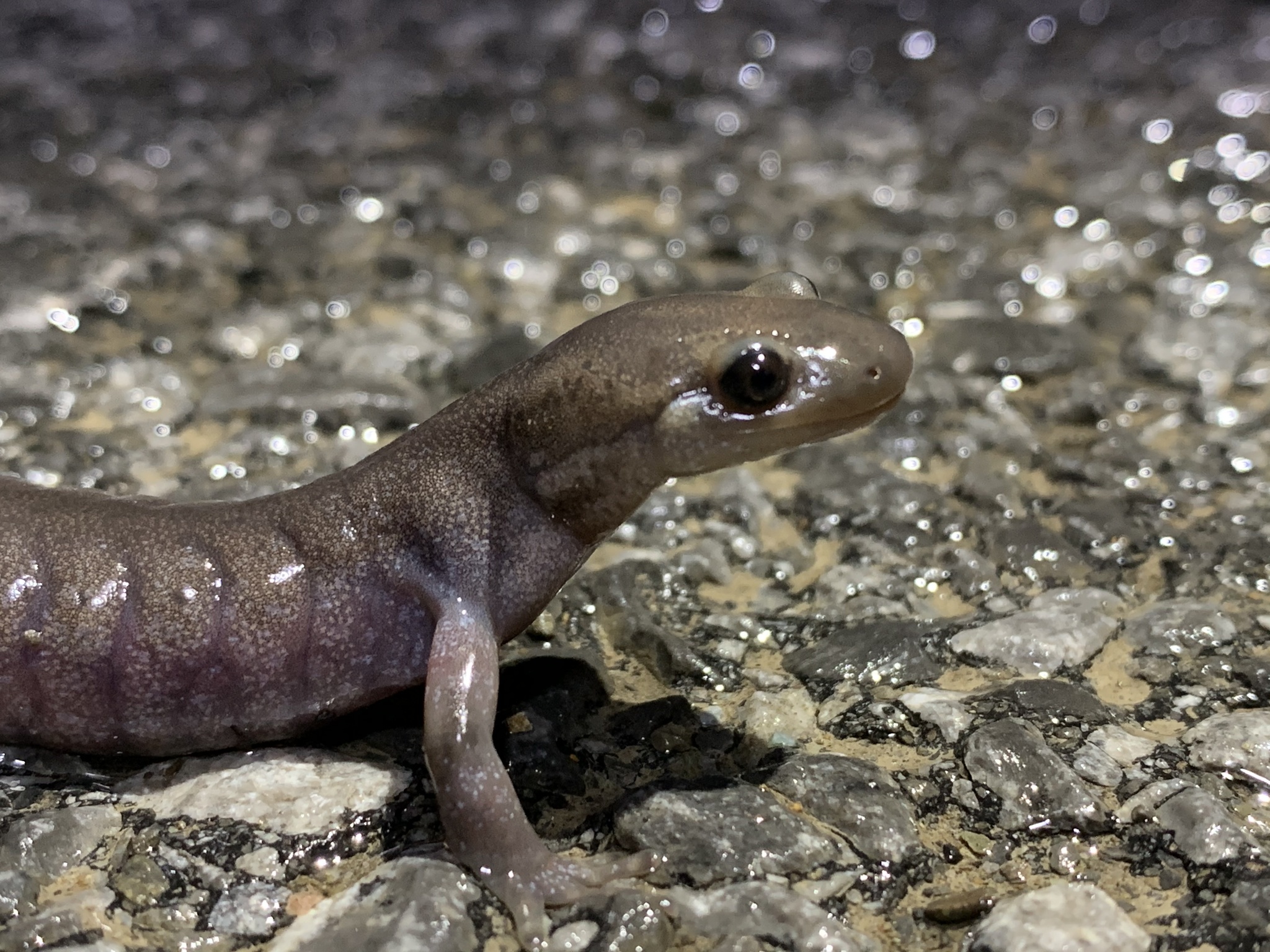
In the U.S. town of Keene, New Hampshire, plans are underway to build small underpasses to help amphibians safely cross a road, including hybrid Jefferson/blue-spotted salamanders, an imperiled species complex.In the neighboring state of Vermont, salamander crossings constructed in 2015 have reduced the number of amphibian deaths at that site by 80%.Habitat connectivity is crucial: Animals need to move to find water and food, to mate or to escape extreme, climate-change-driven weather events.With growing human populations, wild lands are increasingly fragmented and relinking habitat with wildlife crossings has become an important conservation tool.
NEW HAMPSHIRE, U.S. — It’s a mild March night in Keene, New Hampshire, and the salamander brigade is out in full force.
A constellation of flashlight beams wink and flash along a dark street, as rain falls onto the jackets and reflective vests of the assembled crew. Tonight, a veritable army of amphibians is trekking from the upland forests, where they spend the winter, toward the wetlands where they breed. In their path lies a two-lane asphalt road, North Lincoln Street.
Animals need to move for a variety of reasons, but in a world crosshatched by motorways, that’s not an easy task. Each spring in Keene, wood frogs (Lithobates sylvaticus), spring peepers (Pseudacris crucifer), red-backed salamanders (Plethodon cinereus) and spotted salamanders (Ambystoma maculatum) must navigate roads to reach their natal spawning grounds.