This article has been supplied and will be available for a limited time only on this website. By Anita Hermaans, Product Manager at the Elvey Group
Modern commercial buildings are becoming increasingly intelligent, connected, and automated. Yet despite advances in building management systems, surveillance, and access control, many developments still rely on fragmented life safety infrastructure where fire detection and access control systems operate independently. That separation creates growing operational and safety risks.
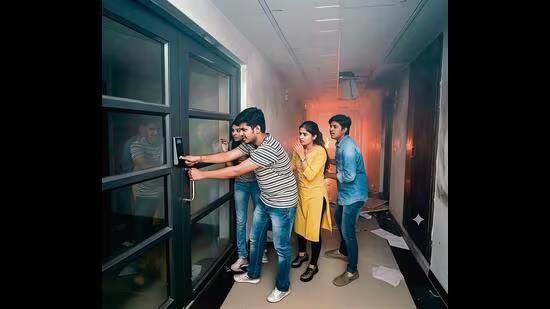
In large commercial developments, mixed-use precincts, campuses, healthcare environments, logistics facilities, and industrial sites, emergency response depends on systems working together seamlessly. When life safety technologies operate in isolation, delays, conflicting actions, and human error become more likely precisely when rapid, coordinated response matters most.
The challenge is no longer simply installing compliant systems. It is designing integrated environments where fire detection, access control, evacuation logic, and operational management support one another under real-world emergency conditions.
Why siloed life safety systems still exist