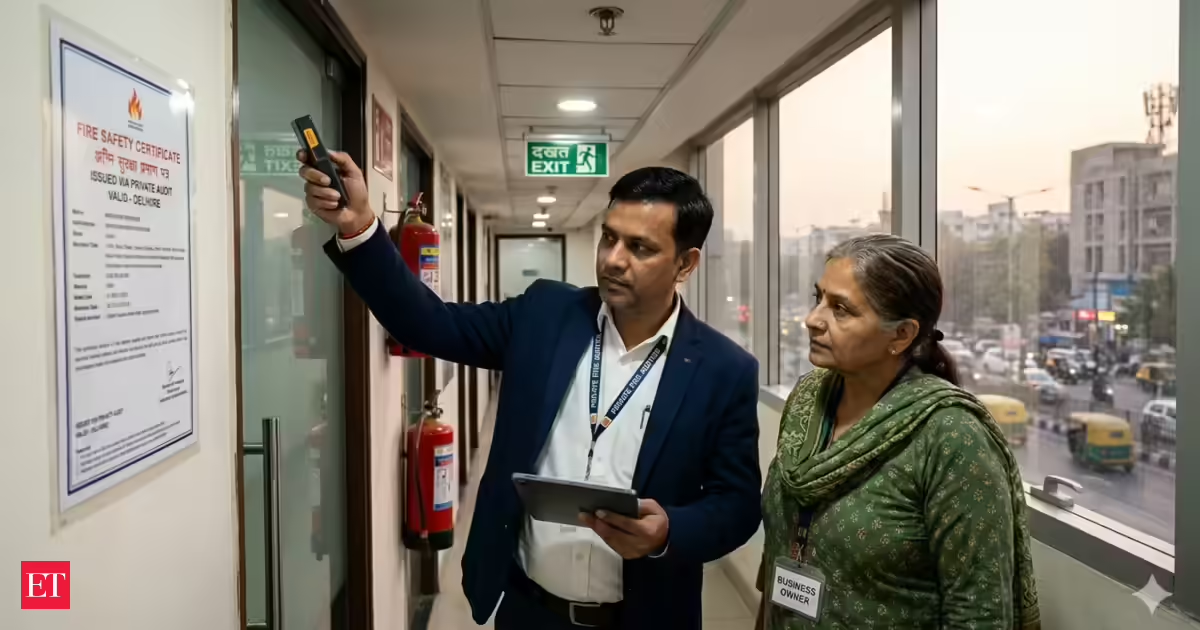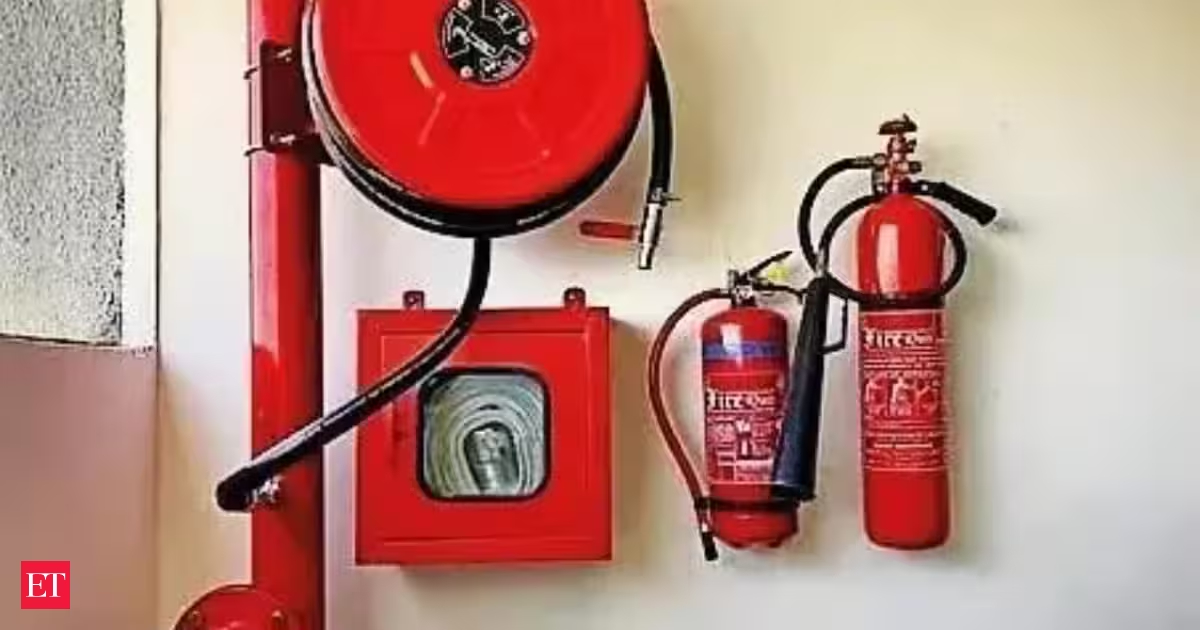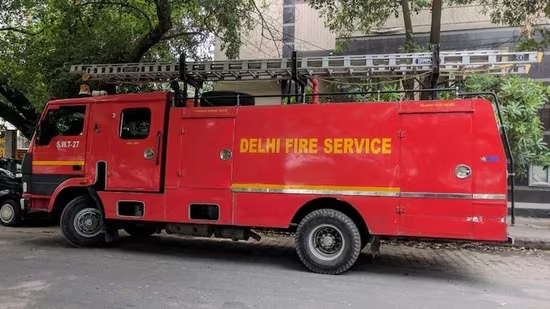
The Delhi government has introduced an automated continuous monitoring system (ACMS) under the newly notified Delhi Fire Service (Amendment) Rules, marking a shift towards real-time digital monitoring of firefighting systems in buildings across the capital.Under the new rules, specified buildings and occupancies will have to install an Internet of Things (IoT)-based monitoring system to ensure firefighting and fire safety equipment remain functional at all times. (Representative photo)Under the new rules, specified buildings and occupancies will have to install an Internet of Things (IoT)-based monitoring system to ensure firefighting and fire safety equipment remain functional at all times.The system will continuously track the status of key firefighting infrastructure such as hydrant and sprinkler pumps, diesel tanks, water levels, smoke detectors, manual alarm systems, public address systems, stairwell pressurisation fans and basement ventilation systems.According to the notification, the system will collect data through an IoT gateway and upload it to a cloud server, enabling real-time alerts and updates to building owners, occupiers and system installers through SMS, email or mobile applications.The rollout will take place in two phases. In the first phase, alerts and system status updates will be available to building owners, occupiers and fire safety auditors. In the second phase, critical alarms will also be directly linked to the Delhi Fire Service.The notification states that Phase 1 will come into effect immediately, while Phase 2 will be implemented later.The rules also prescribe technical standards for the system, including real-time connectivity through 4G, 5G, Wi-Fi or Ethernet networks, along with backup power support and storage of at least 10,000 event logs.Explaining the system, a fire department official said establishments such as restaurants that require fire safety clearance will now be digitally monitored even after certification is granted.“For instance, if a restaurant fails to renew or certify that its firefighting systems are functional after a year, alerts will automatically go to the restaurant management, the third-party auditor and the fire department. An interface for this is being developed,” the official said.Officials clarified that the ACMS requirement currently applies only to buildings that already need fire clearance certificates. However, its scope may be expanded later after Delhi adopts the National Building Construction Standards 2026 in line with the city’s requirements.Officials said the move is intended to ensure firefighting systems in high-rises and other vulnerable buildings remain operational at all times instead of being checked only during periodic inspections or certificate renewals.
Delhi introduces real-time digital fire safety monitoring system
Delhi's government launches an automated monitoring system for firefighting equipment, ensuring real-time updates and alerts in buildings for enhanced safety. | Latest News Delhi
398 words~2 min read