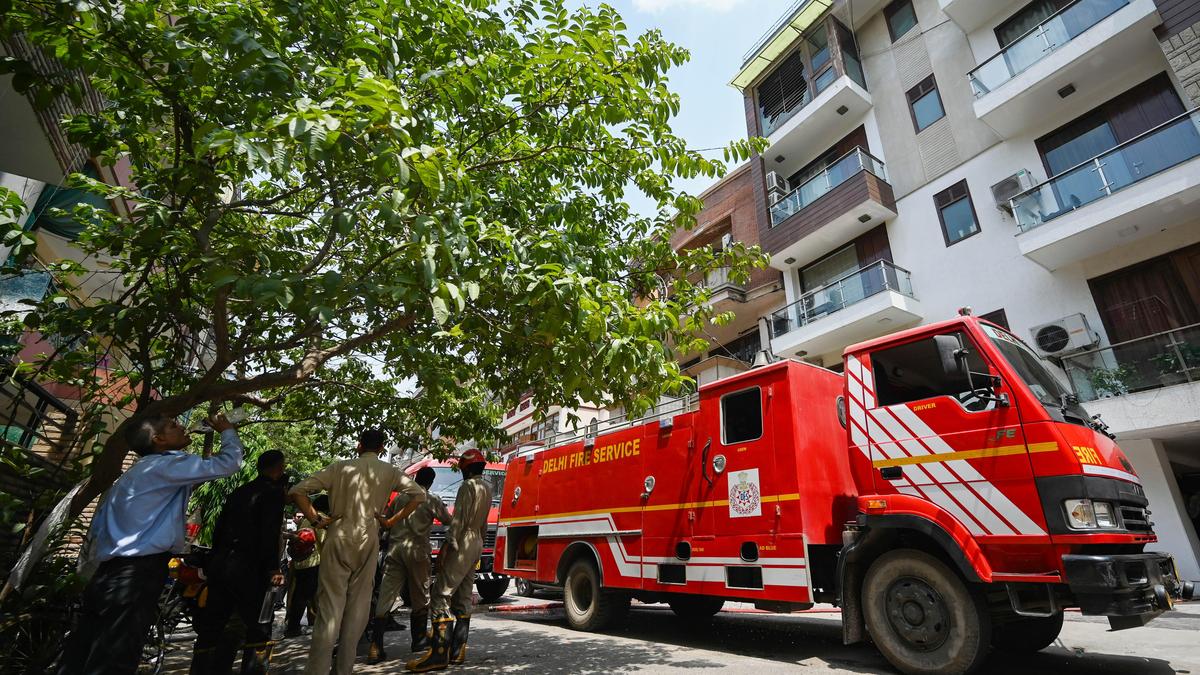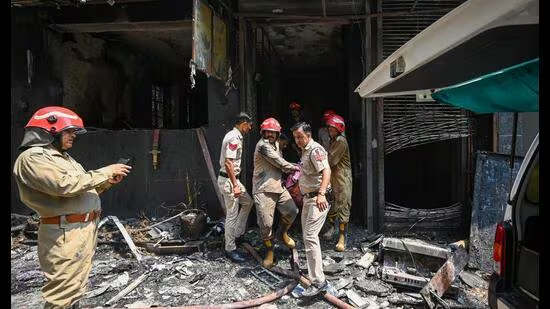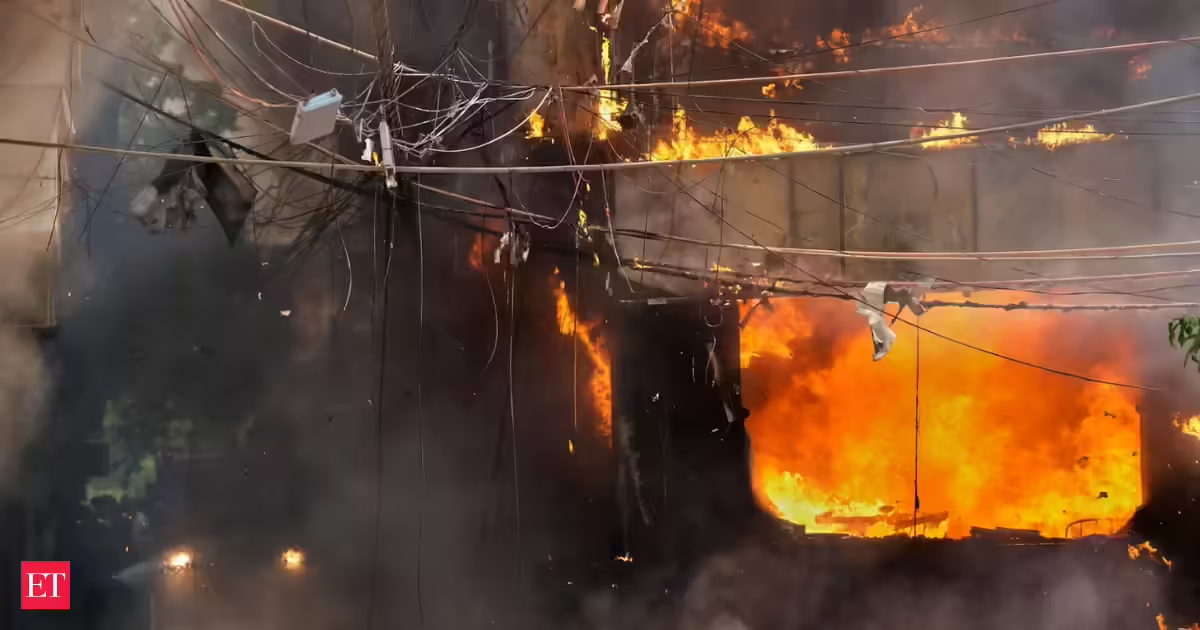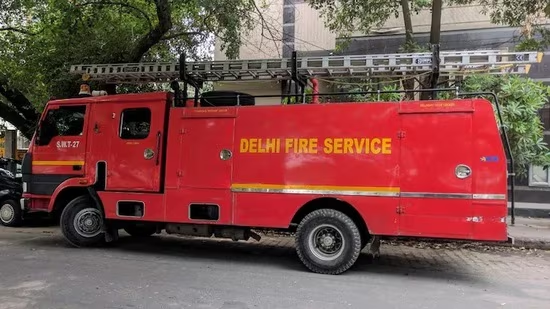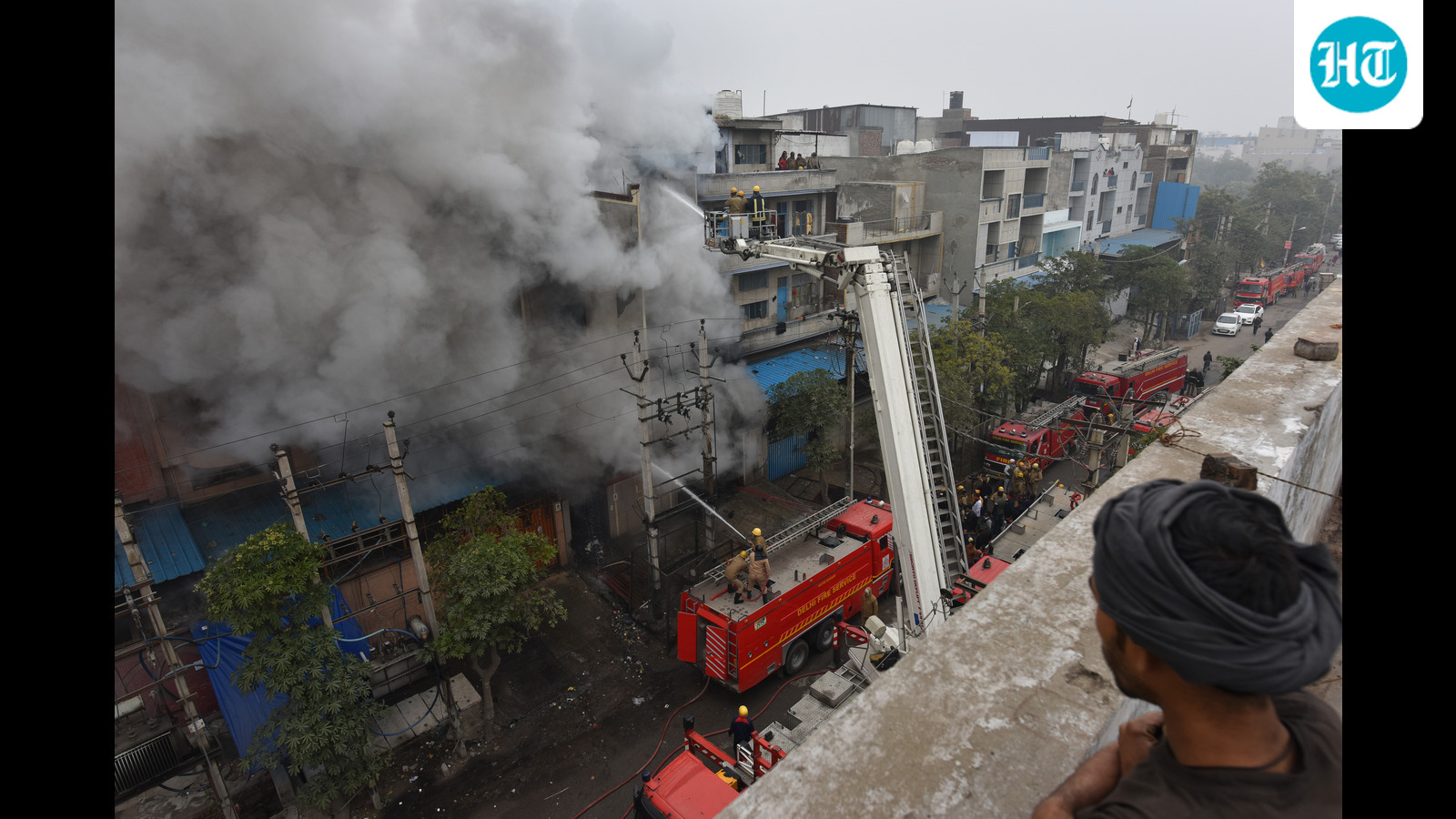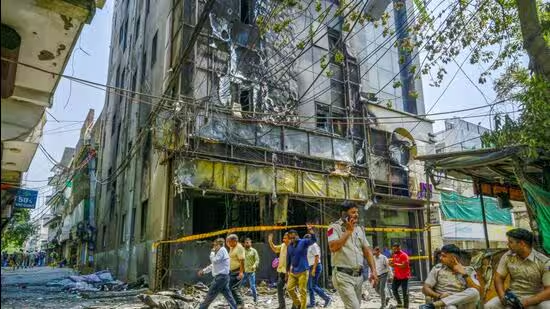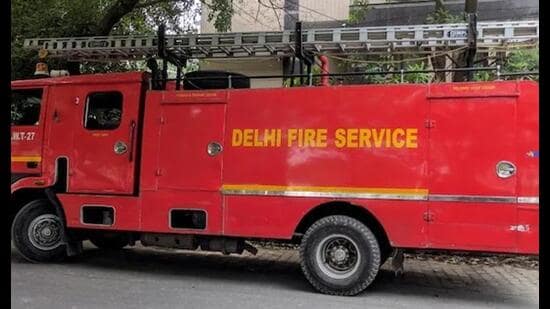
The Delhi Fire Service (DFS) plans to nearly triple its fire station network, expand its firefighting workforce almost tenfold, and deploy AI-assisted dispatch systems, drones and predictive analytics under a 25-year overhaul of the Capital’s emergency response system.Delhi currently has 71 fire stations, achieving the long-pending target of 70 stations only this year. (HT)The official roadmap, reviewed by HT, notes that, with the city’s emergency incident calls nearly doubling over the last two decades, emergency response infrastructure has failed to keep pace with rapid urbanisation. The primary objective, therefore, is to sharply reduce emergency response time, at least from 12-15 minutes to under 7 minutes in congested areas by around 2030.Towards this, it proposes increasing fire stations from the current 71 to 120 by 2032, 136 by 2036, 156 by 2041 and 196 by 2051.Delhi currently has 71 fire stations, achieving the long-pending target of 70 stations only this year.Recommendations from a 2011 RMSI (Risk Management Services India) Fire Hazard and Risk Analysis study and the 2041 Master Plan for Delhi, on which basis the plan has been prepared, had estimated that Delhi required 107 and 120 fire stations, respectively.To meet the target, DFS proposes adding roughly eight stations annually until 2032 and four each year thereafter.DFS proposes bridging the immediate manpower gap by expanding the workforce from 3,051 personnel to 12,274 within three years and operationalise the existing 1+1 duty system — in which officials are on duty for 24 hours and then take rest for 24 hours. This includes the recruitment of 7,186 fire operators, 1,449 leading firemen, 365 sub-officers and 223 station officers.In the longer term, the DFS plans to transition to a professional three-shift, eight-hour duty system between 2041 and 2051, eventually taking total manpower to 28,783 personnel.Among the most significant structural reforms proposed is the creation of a decentralised command-and-control architecture with one Main Fire Control Room, five Zonal Fire Control Rooms, and one standby Disaster Control Room. This will be implemented in phases over the next decade.Eventually, the control rooms will be integrated with the Emergency Response Support System (ERSS-112), digital radio networks, fibre-optic communication systems and satellite-based communication platforms, says the document.Technology occupies a central role throughout the plan. “The existing communication infrastructure of the Delhi Fire Service is primarily based on Very High Frequency (VHF) technology,” notes the document, adding that it is “no longer adequate to meet the demands of a rapidly urbanising city.”The roadmap envisions a future in which fire alarms, hydrants and sprinkler systems are connected directly to fire control rooms through a smart network. It also proposes Artificial Intelligence-assisted Computer Aided Dispatch systems, GIS-based deployment planning, and predictive analytics.“DFS should shift from connected response to predictive operations, using machine learning for demand forecasting, appliance pre-positioning, maintenance planning, and community risk reduction,” the document states.The service also plans to embrace emerging technologies such as drones, thermal imaging systems and smart wearables. In the near term, drones would be used for reconnaissance and situational awareness. By 2036, the roadmap envisions technology-assisted fire prediction models and payload-delivery drones capable of carrying breathing apparatus sets and first-aid kits. By 2041, drones could support active fire suppression, while by 2051 the service envisions autonomous firefighting systems.“Live aerial feeds from these drones will be transmitted directly to the Fire Control Room, thereby enhancing situational awareness and significantly strengthening the decision-making process during emergency operations,” the roadmap notes.In terms of fleet expansion, the aim is to operate 720 pumping units, 240 special appliances and 200 Quick Response Vehicles (QRVs) by 2032, which will be raised to 1,176 pumping units and 392 special appliances, alongside 390 QRVs and around 225 firefighting motorcycles and e-motorcycles by 2051.“Most fire-related casualties occur due to smoke inhalation within the first 03-05 minutes of a fire incident,” notes the document, adding that modern construction materials and building designs also play a huge role in this limited survival time. The document repeatedly emphasises that the future effectiveness of DFS depends on simultaneously strengthening all components of the organisation.To respond to these incidents within the shortest time frame possible to ensure maximum survival, while also dealing with Delhi’s growing population, expanding urban footprint, and increasing risk profile, a fundamental transformation of the Capital’s fire service over the next quarter century is required. The roadmap looks at creating a “resilient, technologically advanced, and globally benchmarked fire and emergency response system”.
DFS aims to triple stn network, use tech in 25-yr vision
Delhi Fire Service plans major upgrades: tripling fire stations, expanding workforce tenfold, and using AI and drones to improve response times by 2030. | Latest News Delhi
726 words~3 min read