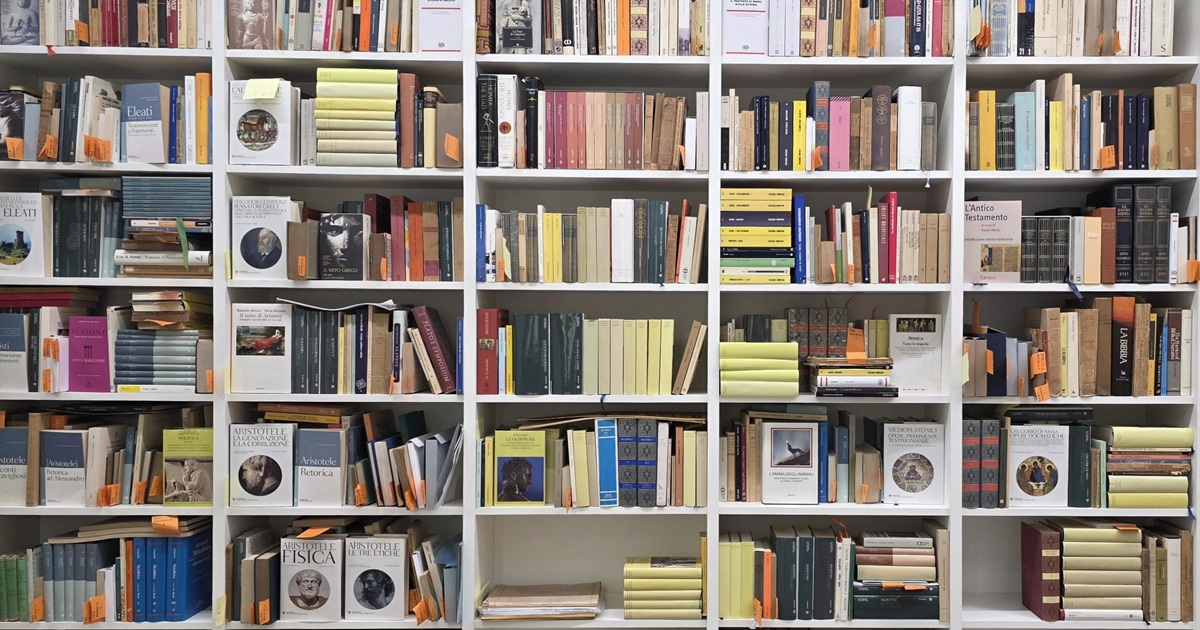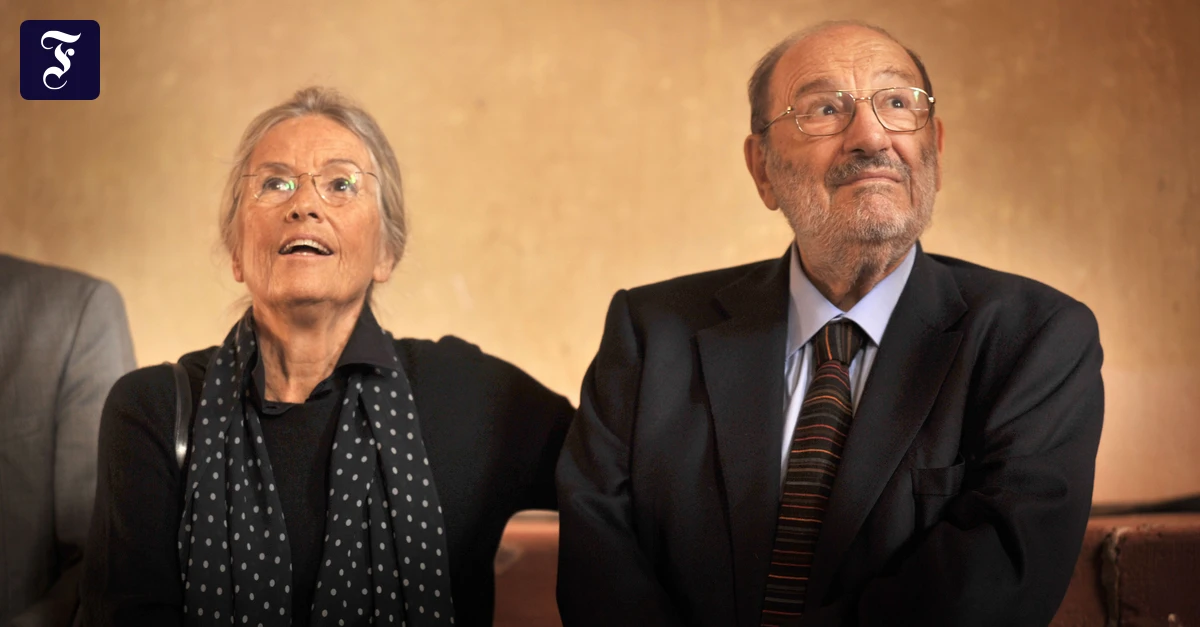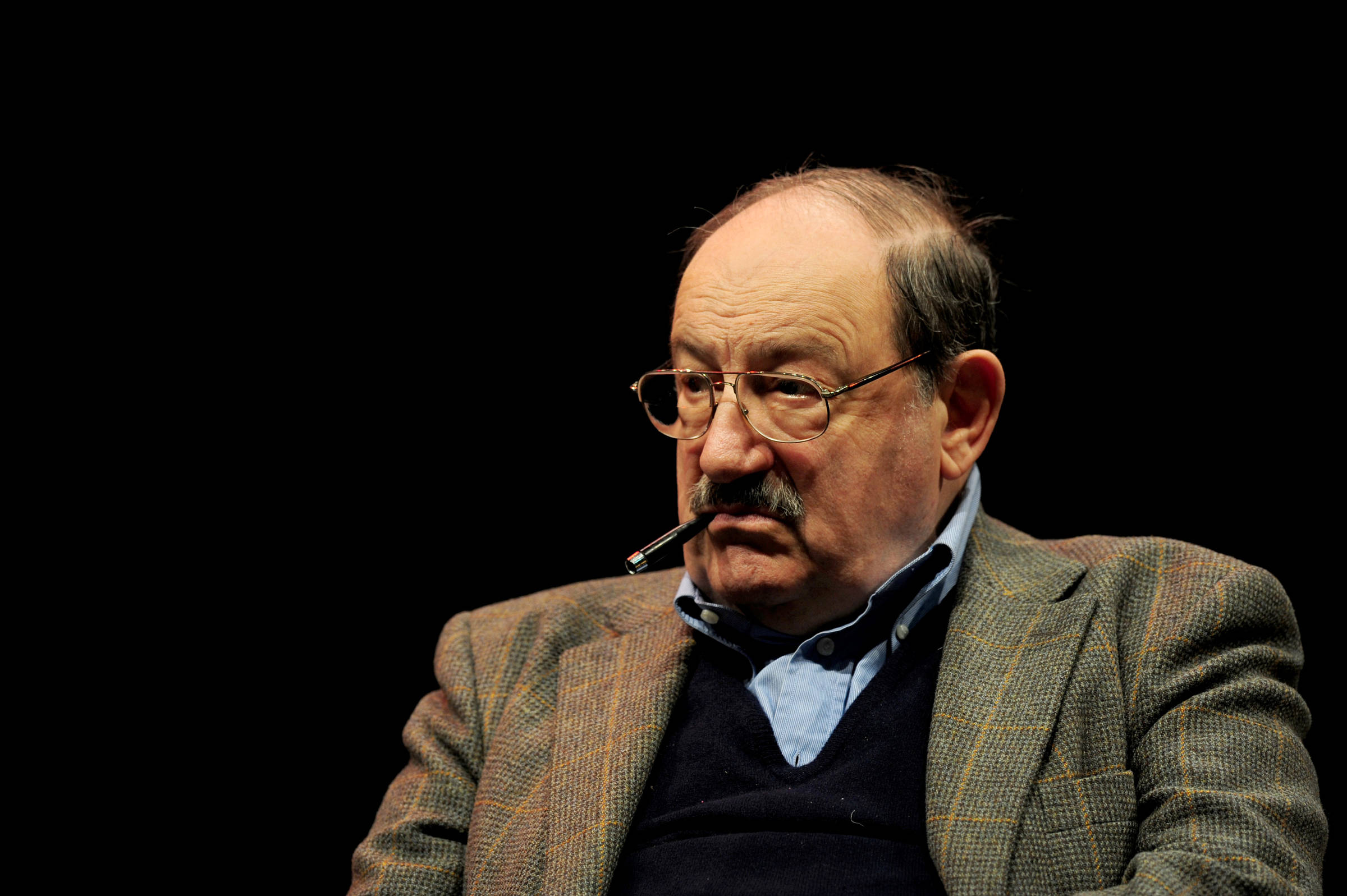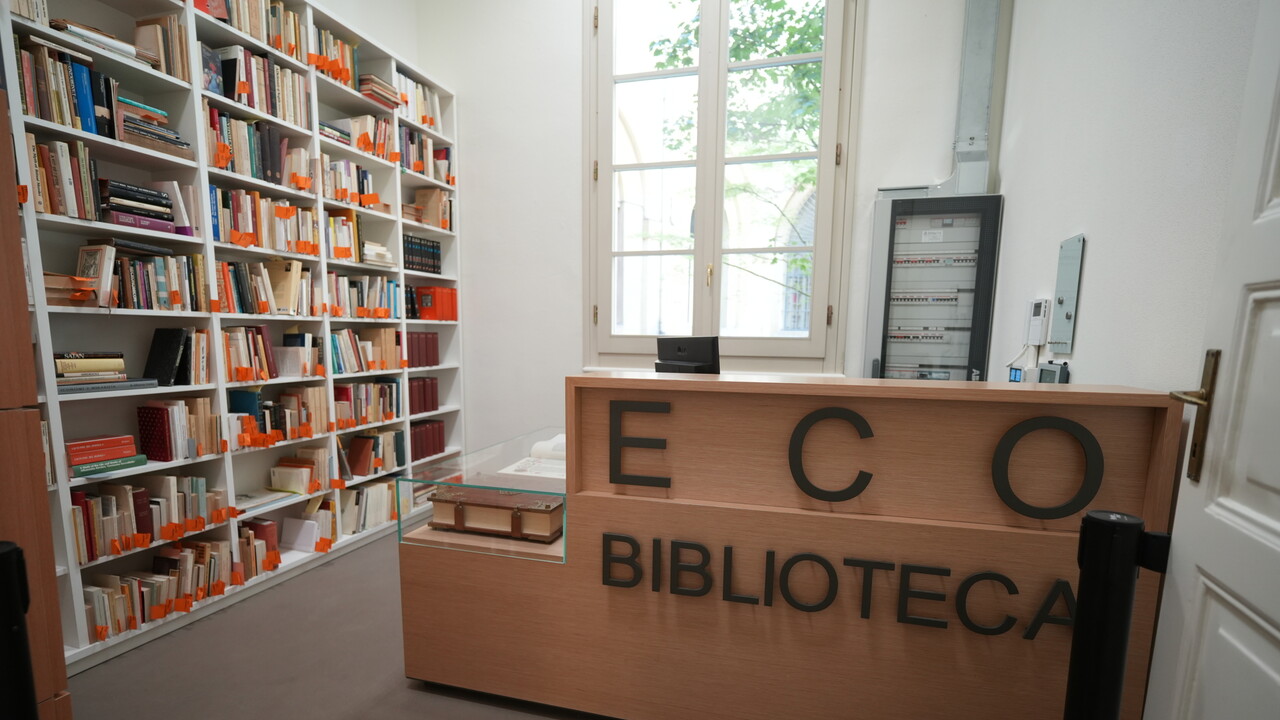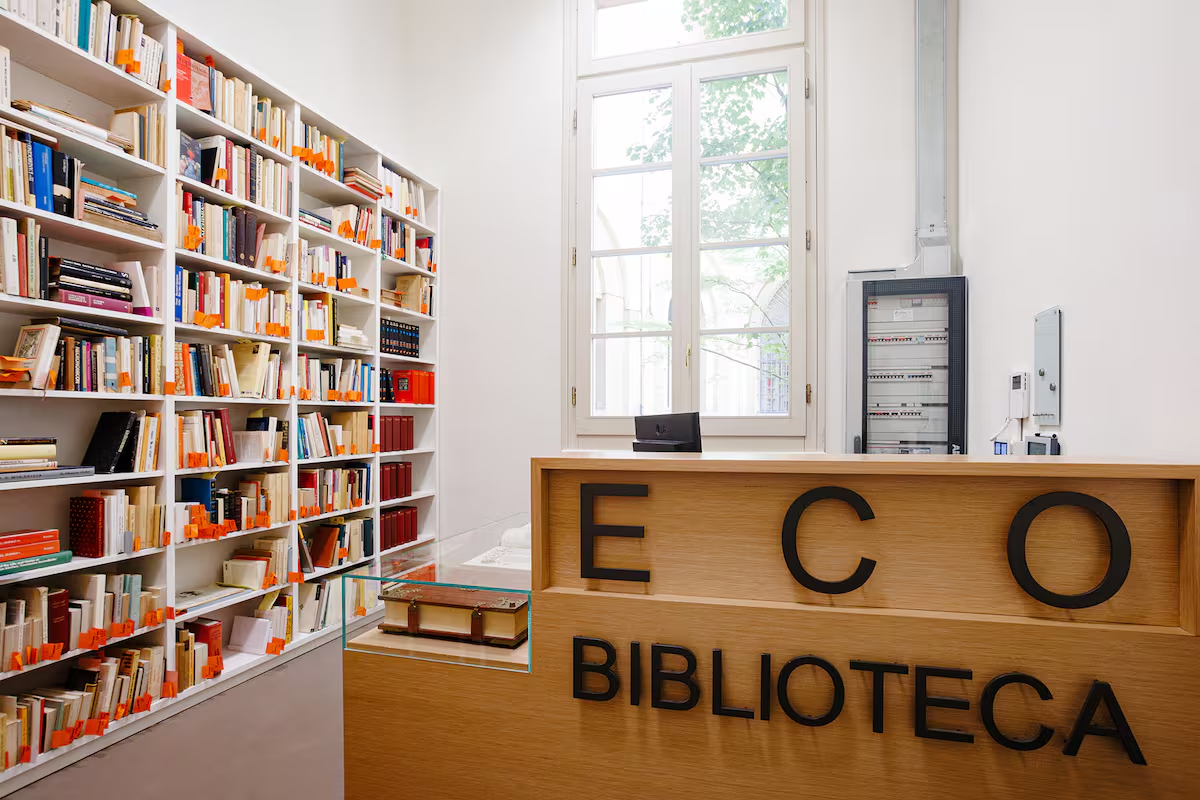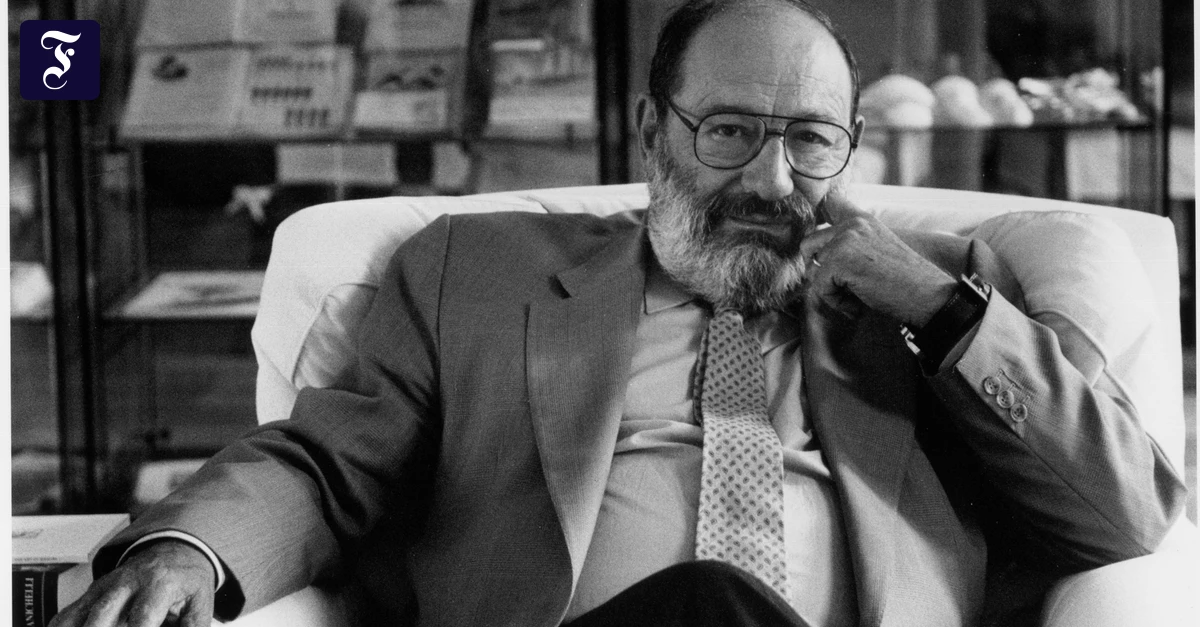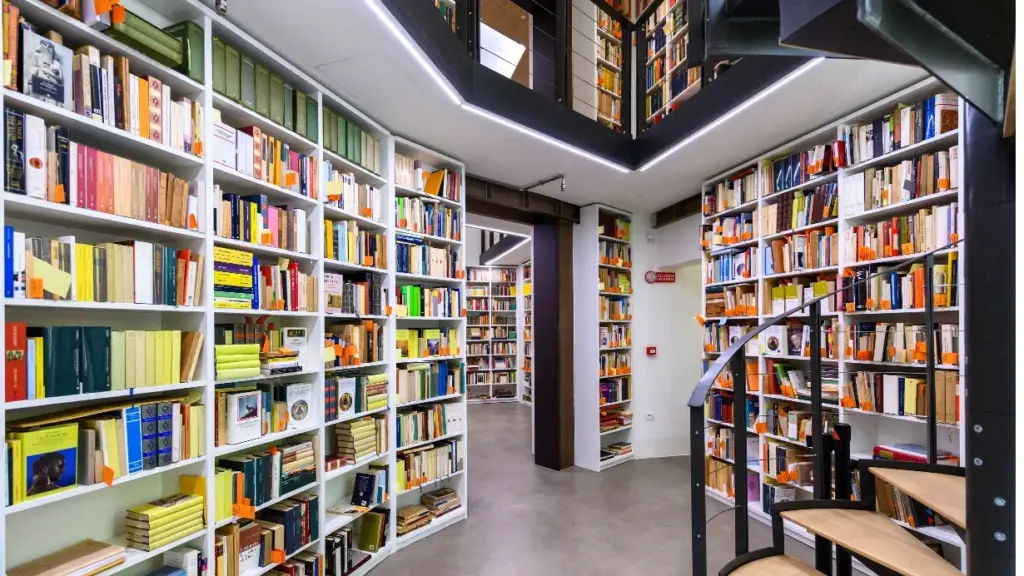
Umberto Eco’s The Name of the Rose sold so well that its English translator William Weaver could add an extension onto his Tuscan villa, which he called the “Eco Chamber.” The Biblioteca Eco, or Eco Library, whose ribbon-cutting earlier this month you can see in the Italian news clip just above, may not be as wittily named, but it’s a much more ambitious project. It was opened this year, the tenth anniversary of the famed philosopher, semiotician, novelist, and critic’s death, at the University of Bologna, where he was a professor from 1971 to 2007. Housing more than 32,000 books from his personal library in Milan (previously featured here on Open Culture, and the subject of its own feature-length documentary), it stands as an explorable concrete representation of his capacious mind.
So capacious was that mind, in fact, that the Eco Library actually comprises several libraries, chiefly the Rare Book Library and the much-subdivided Working Library. In them, one encounters sections “dedicated to literary genres, comics and popular culture, works by and about Umberto Eco” — including more than 2,000 editions and translations of his own books — “ancient and medieval philosophy, the history of ideas, semiotics, translation and theories of language,” says the University of Bologna’s magazine Unibo.