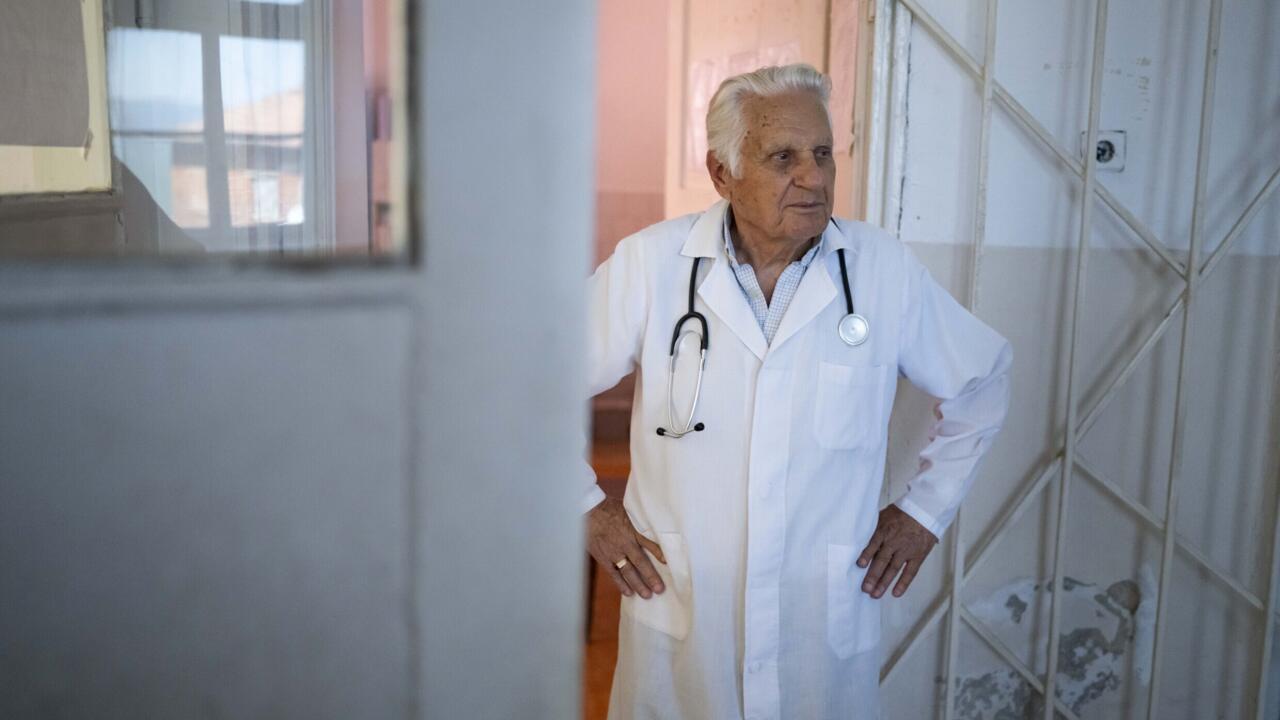
Kiril Apostolov shows no sign of being short of breath as he climbs a steep street in the mountain village of Skrat in southwestern Bulgaria, medical briefcase in hand, despite his advanced age.Apostolov turned 90 in May, but still scales the same hill almost every day to visit his patients at the foot of the Belasitsa mountain range, near the border with Greece and North Macedonia.His case is far from unusual in Bulgaria, where many general practitioners continue to work well past retirement age because there is no one to replace them, especially in rural areas.
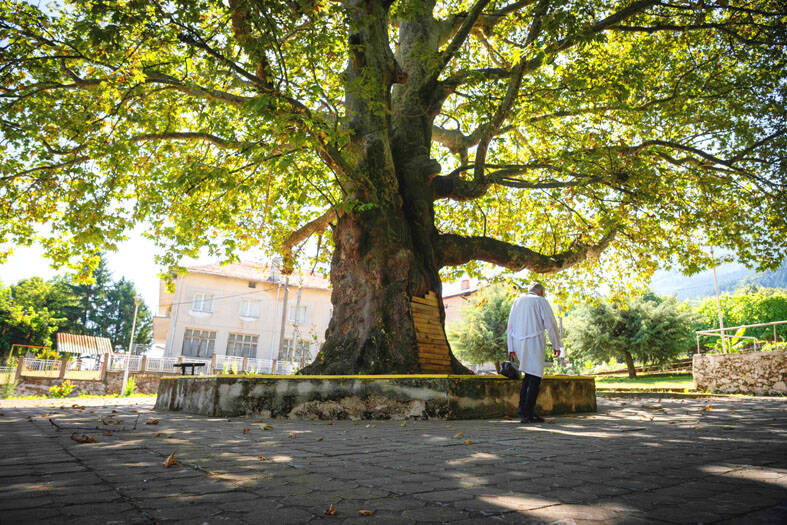
Kiril Apostolov, 90, a general practitioner, walks under a 100-year-old tree in Skrat, Bulgaria, on Wednesday last week.
In 2023, 54.5 percent of doctors in the EU’s poorest country were 55 or older — the highest proportion of any country in the bloc, according to Eurostat.For general practitioners like Apostolov, the average age is more than 61.
Bulgaria also has the lowest life expectancy in the EU — 75.8 years in 2024, compared with a bloc-wide average of 81.5 years — and one of the highest rates of preventable mortality, according to the Organisation for Economic Co-operation and Development.
Kiril Apostolov, 90, a general practitioner, walks with a patient during a house call in Skrat, Bulgaria, on Wednesday last week.