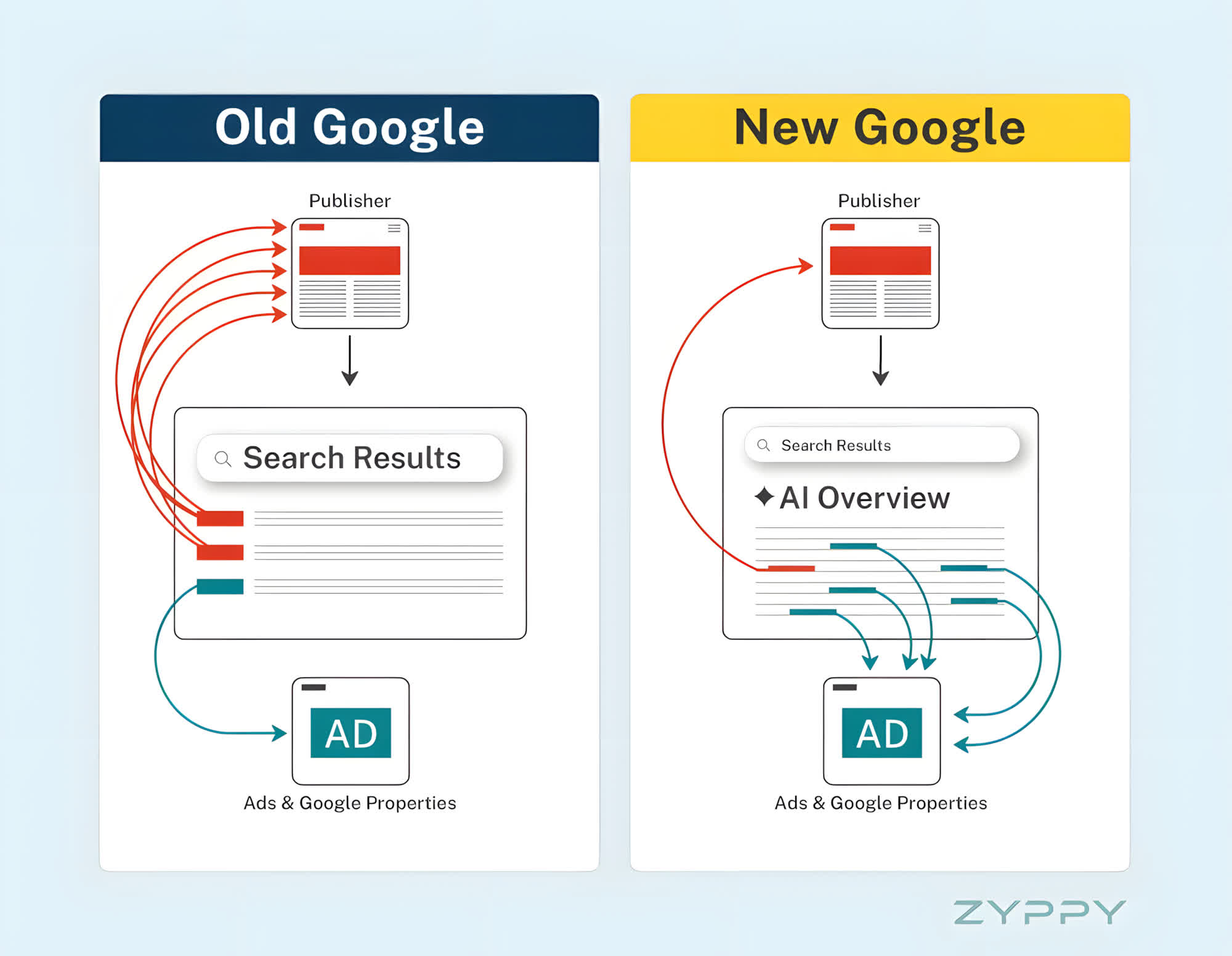
One of the richest sources of online information is re-evaluating its relationship with Google.Reddit struck a $60 million-a-year deal in 2024 that allowed Google to use its material to train AI models.Reddit, the online message board that powers a swath of Google search results, has discussed shutting off the technology giant’s access to its content for AI use, according to people familiar with the matter.It is part of a growing chorus of online media companies expressing frustration with the tech giant as AI changes the way people ask questions, siphons off search traffic and upends publishers’ revenue models. They say the search engine is no longer a reliable source of visitors, especially after Alphabet’s Google expanded its AI search features in recent months. USA Today, Politico, the Economist, People Inc. and Reuters are all evaluating how, or even if, they will continue to work with Google.Reddit struck a $60 million-a-year deal in 2024 that allowed Google to use its material to train AI models. But with AI-generated answers to queries reducing clicks to outside websites, Reddit executives are assessing what the upside is of continuing to feed its content to Google, said the people familiar with the matter. The companies are in talks about potentially renewing their deal, which is ending soon.“This is existential for some categories of publishers,” said David Buttle, CEO of media consulting firm DJB Strategies. “They are looking at more radical things.”Bots now make up more than half of all web traffic, according to Cloudflare. Some scrape publishers’ content to train their own AI models, others crawl sites to help answer user queries quickly or sell the content to other companies. Efforts to block bots have turned into games of whack-a-mole as the technology grows more sophisticated. Publishers still allow Google’s bot—which feeds both its AI tools and its search function—because for now, they generally can’t shut off one element without also canceling the other.USA Today Co., which owns the namesake national publication and hundreds of local titles, is weighing blocking Google’s crawler, meaning its content wouldn’t end up in Google’s AI summaries—or in its blue-linked search results. For USA Today’s national paper, organic Google search traffic from U.S. users fell by nearly half between June 2025 and June 2026, according to search measurement firm Semrush.“It’s time to take a stand and say enough is enough,” said USA Today Co. Chief Executive Mike Reed.The company is willing to turn off Google’s access if the downward trend in search activity continues, he said. It has already been preparing for a future without revenue from Google traffic.USA Today has a lawsuit pending against Google, alleging it holds a monopoly in ad tech that hurts the publisher’s ad revenue.Google search traffic from U.S. users fell by 23% between June 2025 and June 2026 for Politico’s website, about 25% for CNN, and more than 85% for Business Insider.Google says its AI search features “send billions of clicks to the web every week,” and are meeting users’ evolving needs. “Our AI features highlight links to the web and help creators and publishers grow their audiences, and we offer clear controls for website owners to manage their content,” a spokesman said.Variety and Rolling Stone owner Penske Media sued Google in September on antitrust grounds, alleging that its AI summaries illegally use the publisher’s reporting and depress online traffic.Employees at Axel Springer’s Politico have talked about limiting Google’s and other bots’ access to its free articles. Those people have floated adding a registration wall that requires humans to log in to view content, according to people familiar with the matter.Reuters, which like Politico derives much of its revenue from business-to-business offerings, said it is also weighing whether to block Google’s bot for its consumer-facing news product as traffic declines.“We are certainly looking at the economic trade-offs between search and AI summaries,” said Reuters President Paul Bascobert.Google said in June that it will comply with a ruling from a U.K. regulatory authority allowing publishers to determine whether to participate in AI features without sacrificing their presence in traditional search results. Google said it would test the features in the U.K. before rolling them out to website owners globally, but it didn’t offer a specific timeline.The Economist has been actively discussing the possibility of opting out of AI search features since the U.K. ruling.“The question was, should we do this, and what are the implications of doing it or not?” said Josh Muncke, vice president of generative AI at the Economist, adding that exiting Google entirely isn’t currently part of that discussion. “Google is a powerful force to be reckoned with,” he said. “Traffic can be choppy and declining, but traffic is still traffic.”Google has made some overtures to news outlets, including launching a program paying more than 200 publishers for access to their content for AI use. And it now allows users to select preferred news sources to personalize top stories that appear in search results, potentially driving more traffic to those sites.People Inc., formerly known as IAC, has managed to boost revenue through events, social-media referrals and expanded apps—even though Google contributed just 25% of its traffic in the first quarter of this year, compared with more than half two years ago. The company, whose portfolio includes People, Better Homes & Gardens and Travel + Leisure, is exploring ways to make its content more digestible for permitted bots and continues to allow Google to scrape its content while weighing the future of that relationship.“Turning them off and blocking them entirely is 100% on the table,” said People Inc. Chief Executive Neil Vogel.Meanwhile, Time is helping advertisers get their messages in front of bots, using a sort of Trojan horse approach—creating text-based ads that regular readers never see but that AI crawlers might find. The hope is that Google’s AI Overviews and other chatbots that hoover up editorial content might reference information from that material when responding to user queries. That, in turn, could help brands reach potential customers.“There are now two audiences,” said Mark Howard, Time’s chief operating officer. “We’re thinking about, How do we superserve the humans when they do come, and how do we think about the bots as a secondary audience?”Write to Alexandra Bruell at alexandra.bruell@wsj.com
Google Was a Lifeline for Publishers. Now Some Are Thinking of Cutting It Off.
Reddit, Politico and others are weighing how—or even if—they can work with the tech company as AI tools supplant traditional searches. | Business News
1,036 words~5 min read