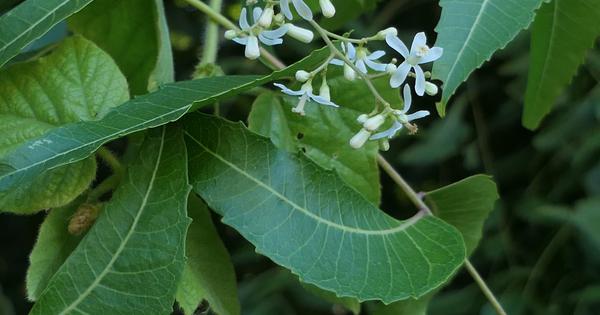
In 1994, a US company and the United States Department of Agriculture secured a European patent for a method of using neem extracts to control fungi. The neem tree, however, was not a discovery. Across the Indian subcontinent, it had long been used in traditional medicine, agriculture, and furniture making, with its pesticidal properties documented in Sanskrit texts and embedded in everyday agricultural practice. After a six-year legal challenge led by an Indian organisation named the Research Foundation for Science, Technology, and Ecology, supported by international allies, the patent was revoked in 2000. Five years after that, the decision was upheld on appeal, with the board ruling that the method lacked novelty and an inventive step, given its long-documented use in India.Now, three decades later, the neem case looks less like an aberration than a template. The frontier has moved from isolated plant compounds to the systems-level ecological knowledge that smallholder and Adivasi communities have developed over generations. The next dispute may involve a soil microbiome product, an agroecological decision-support tool, or a machine-learning model trained on data from traditional preparations. India’s current legal architecture is not designed to respond to it.Why is this knowledge different?Most public discussion of biopiracy still focuses on the misappropriation of specific biological resources: a plant compound, a seed variety, or a fermentation culture. The legal response has focused correspondingly on access and benefit-sharing rules, prior art databases, and geographical indication protections. These instruments work, imperfectly, for that kind of theft.The most valuable ecological knowledge in contemporary India is not of this type. It is systems knowledge: an understanding of how multiple biological, climatic, and social variables interact in a particular landscape.The Odisha Millets Mission has identified 163 millet landraces (a locally adapted, traditional variety of a domesticated plant, etc) from across the state. After participatory varietal trials with farmers, 14 were shortlisted, and four were officially released. They were selected for traits such as drought tolerance, waterlogging response, and pest behaviour that no formal plant breeding programme has matched at comparable cost.Similarly, farmers practising natural farming across Karnataka and Andhra Pradesh have refined soil inoculant preparations over generations. Scientists are now studying the microbial communities in these preparations to better understand how they work.None of this knowledge is secret. It is observable and accessible to any researcher willing to spend time in the field. That is precisely why it cannot be protected under the current law.
India’s ecological knowledge is still vulnerable two decades after legal win against US neem patent
The country’s current legal architecture is not designed to respond to new technology harnessing traditional methods.
1,840 words~8 min read