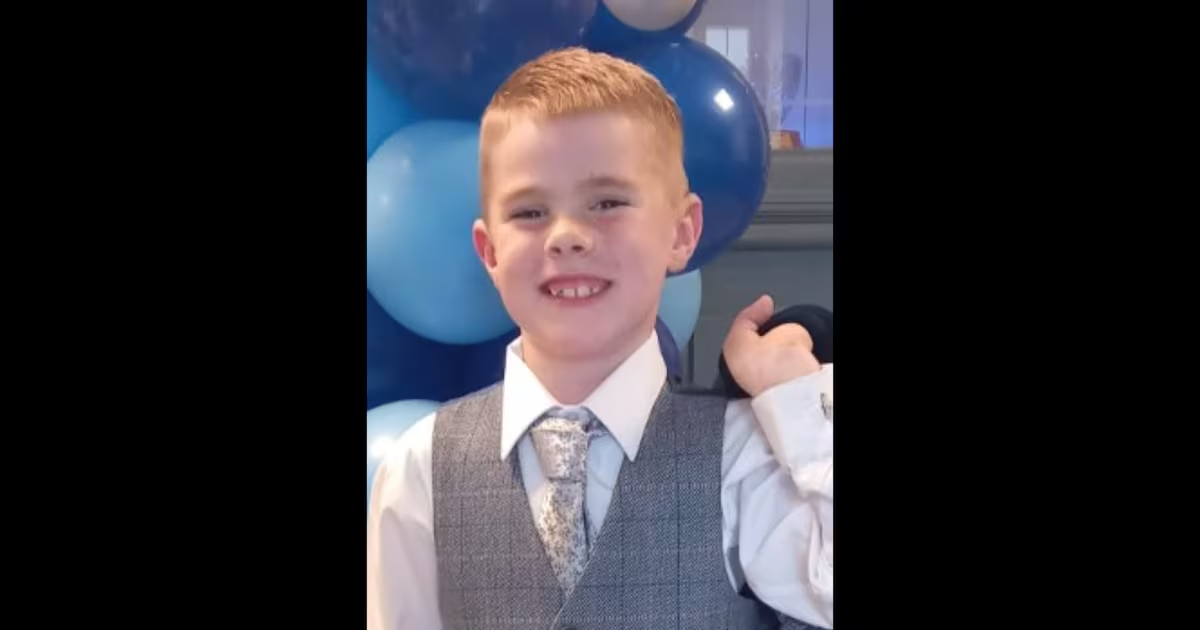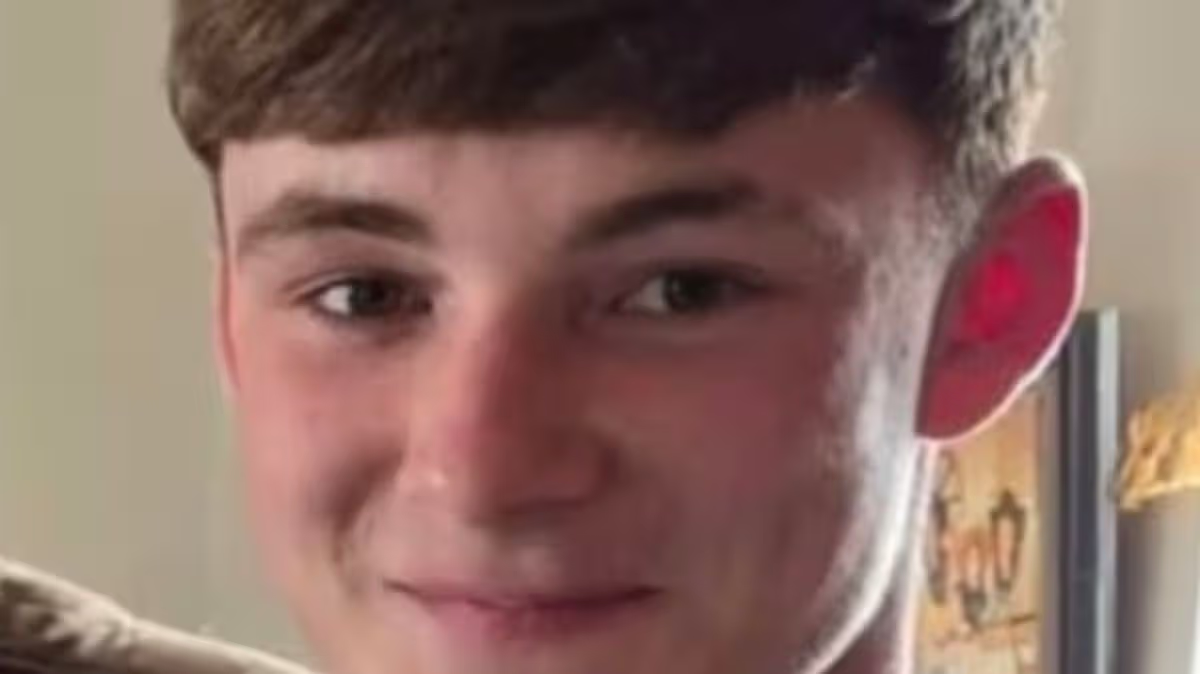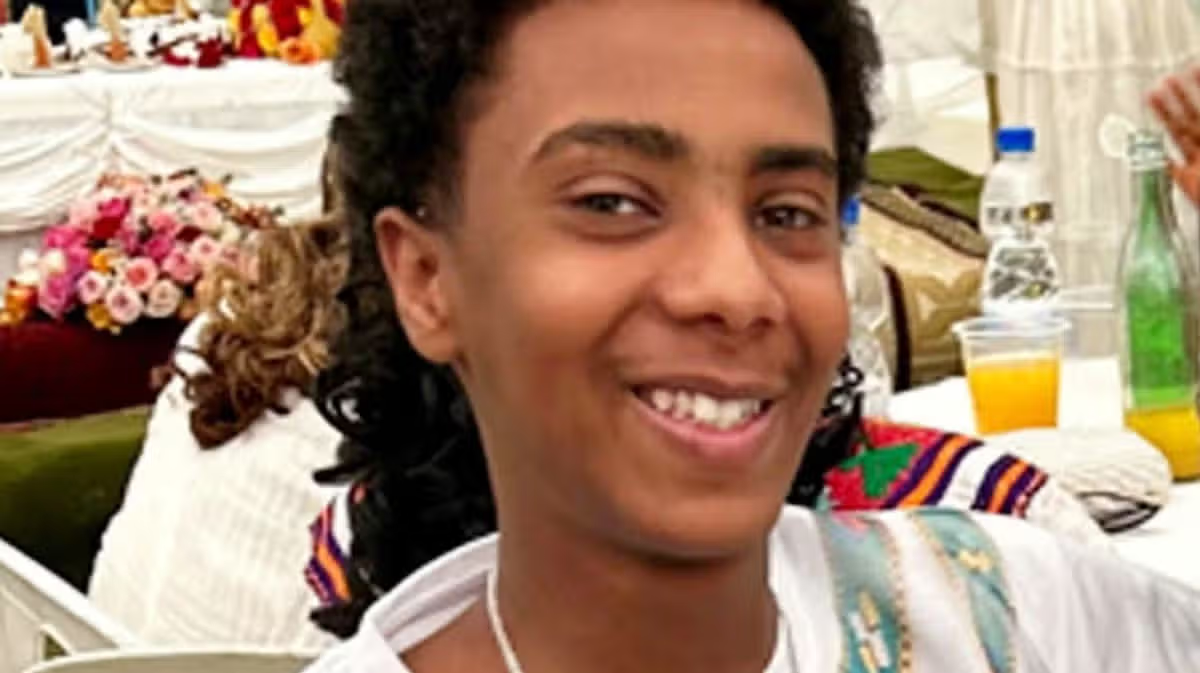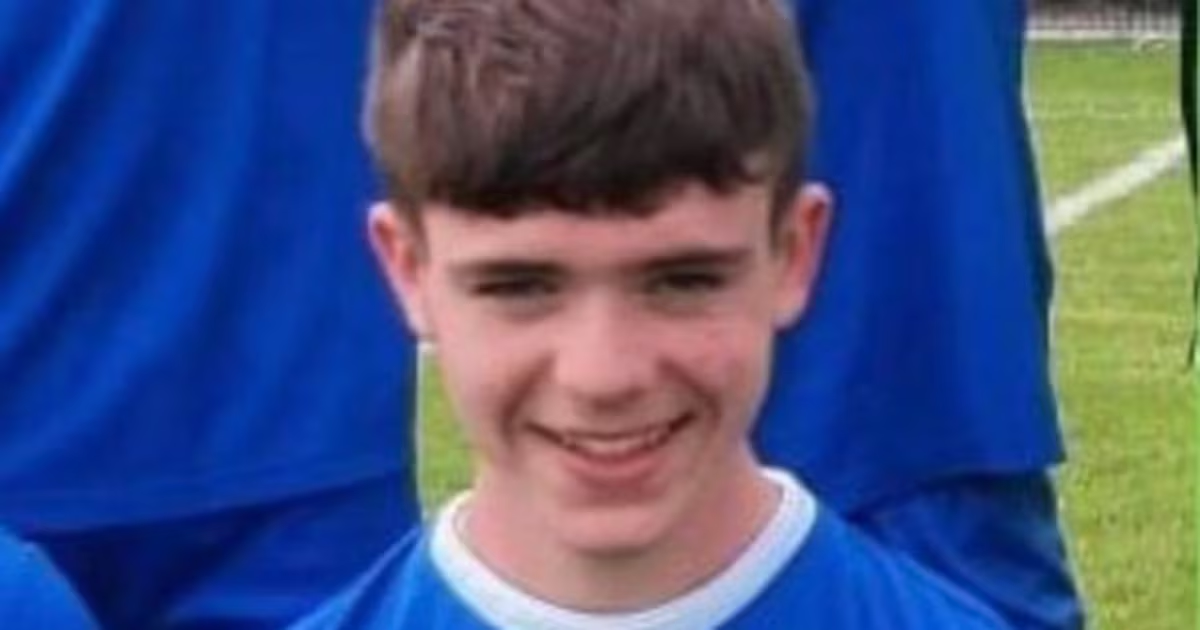
An inquest into the death in Killarney five years ago of the 14-year-old driver of a car being pursued by a Garda van has returned a verdict of accidental death.Contradictory evidence was heard at the inquest into the death of Thomas Healy, of the Gap of Dunloe, Co Kerry. Healy’s best friend Alfie Barrett, who was 15 at the time and who was severely injured in the incident, said Healy had panicked after a Garda van, with its blue lights flashing, had pursued them down Ross Road in Killarney. The last thing Barrett said he recalled was the van coming right up behind them, its lights shining into the car, and Healy panicking. They had been trying to calm each other down. “He was a bit panicked ... He was nervous and shaking,” he told Dan O’Connor, solicitor for the Healy family.However, the driver of the van, Garda Seán O’Sullivan, said he had lost sight of the car as it rounded a bend and sped down Ross Road away from him. He had expected to come across the car parked and abandoned; instead he found it crashed against a tree. Barrett was “mistaken” in thinking the Garda vehicle was right behind them at the time of the crash, O’Sullivan replied to the family’s solicitor.The inquest heard how shortly before midnight on July 7th, 2021, Healy collected his friend Barrett and the pair drove to the Tesco car park in Killarney. The car was usually used only on the family farm at the Gap of Dunloe. The teenagers had not been wearing safety belts.The garda told how, at around 1.05am, he had been approaching the Park Road roundabout and observed an old Toyota Corolla. The front-seat passenger was looking back regularly at the Garda van and the digits on the registration plate appeared deliberately obscured. He activated the blue flashing light and the Corolla took off at speed through the Muckross Road roundabout.He said he followed and thought it might have turned into one of the housing estates on the road. The speed was not excessive but the Garda van would have been more slow moving than the car and the car was trying to get away, O’Sullivan told the jury.The inquest was addressed by senior Fiosrú investigating officer Nick Harden. An investigation by Fiosrú, then the Garda Síochána Ombudsman Commission, was launched immediately after the incident; it cleared O’Sullivan of any responsibility in 2022, the inquest heard.Evidence from Garda public service vehicle (PSV) and scenes of crime investigators indicated the car’s NCT had expired in 2018 and 6,751 miles had been added to its odometer since the test.The car was in good mechanical order - its brakes and steering were good - but one of its tyres was 15 years old. “A mechanical defect did not cause the collision,” PSV inspector Garda Thomas Brosnan said. Sergeant Mark O’Connor, a forensic vehicle inspector, told the inquest the weather had been wet but the road surface had been good. There was no street lighting and the lights of the car were probably off at the time, he said.The driver failed to negotiate a bend, mounted a footpath and hit a large tree. There was no evidence of braking. Healy had been pronounced dead at the scene. Thomas Healy’s father Gerard had last seen his son that evening.State Pathologist Dr Margot Bolster said the cause of death was injuries in a road traffic accident. O’Connor told the jury they had heard conflicting evidence. These were young men and a member of An Garda Síochána was in pursuit “to some degree”, the solicitor said. However, Coroner Aisling Quilter objected when O’Connor attempted to address the verdicts the jury might consider. This was not appropriate, she told the solicitor.Addressing the jury, the coroner said verdicts of misadventure, accidental, narrative or an open verdict were their options. After retiring, the jury of three women and three men brought in a unanimous verdict of accidental death.Sympathy was extended to the family by the jury, the coroner and the investigator on behalf of Fiosrú.
Death of boy (14) in car crash after pursuit by Garda van ruled accidental
Inquest into death of Thomas Healy in Killarney heard contradictory evidence
676 words~3 min read