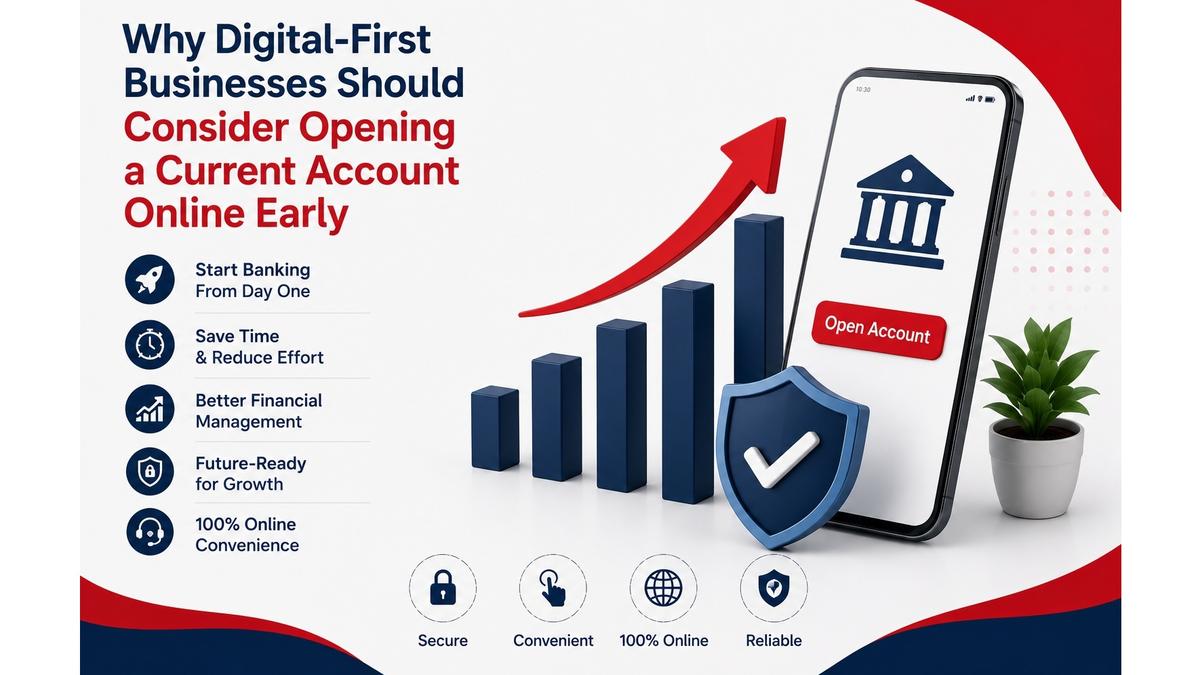
Most digital founders spend months perfecting their product, their pitch, their logo — and then realise, often too late, that they have no clean financial trail to show for it. Payments are coming in through a personal UPI handle. GST filings are a mess. An investor asks for six months of bank statements, and there’s nothing useful to share. It’s a surprisingly common situation, and one that a current account opened early could have entirely prevented.The Financial Identity Problem Starts Sooner Than You ThinkDigital-first businesses — whether a D2C brand selling on Instagram, a SaaS product with a few paying users, or a freelance agency that registered last year — tend to run lean. And running lean often means mixing personal and business money out of convenience. But this shortcut creates a financial identity problem that compounds over time.A current account is how a business establishes a clear, auditable financial identity. Every payment received, every vendor paid, every subscription debited — it all sits in one place, attributed to the business, not the founder. This isn’t just about accounting hygiene. It matters for GST reconciliation, tax filings, and any future credit or funding conversation.Why Early Matters More for Digital BusinessesThere’s a specific timing advantage that many founders miss. Banks assess creditworthiness partly through the age and activity of a business’s current account. A company that has operated a well-maintained account for 18 months looks very different from one that opens a current account two weeks before applying for a working capital facility.Digital businesses also tend to scale unpredictably — one viral moment, one successful campaign, and suddenly you’re processing ₹5–6 lakh in a month through a platform that wasn’t designed for it. High transaction volumes through a personal savings account attract scrutiny and can trigger compliance issues. A current account, built for unlimited transactions, handles this volume without friction.Online Opening Has Removed the Biggest BarrierThe old hesitation around opening a current account — the paperwork, the branch visits, the waiting — is largely outdated now. Current account opening online is genuinely straightforward for most registered businesses. You need your business registration certificate, PAN, address proof, and in some cases a video KYC call. The process can be completed in under a day.The ability to open a current account online means there’s no practical reason to delay. A founder who registered their business three months ago can open one this week.What Changes After You Open OneThe operational shift is immediate and tangible. Receiving payments from payment gateways, marketplaces, and B2B clients becomes cleaner. Vendor payments — tools, subscriptions, freelancer fees — are trackable and attributed to the business. Bulk payment features available through business net banking save significant time for businesses processing multiple payouts monthly.For startups specifically, a current account also unlocks access to the banking relationship itself — business debit cards, overdraft facilities when cash flow gets tight, and eventually, credit products tied to your account history. None of that builds without a starting point.Choosing the Right Account TypeNot all current accounts are structured the same. Look at minimum balance requirements before committing — the gap between accounts can be significant, and for an early-stage business watching every rupee, a ₹25,000 locked balance is a real cost. Some banks offer lower-balance or zero-balance variants for early-stage and registered startups, which may be worth exploring.The bigger point stands: waiting to open a current account is a habit that almost every founder regrets. The financial record you build from day one is the same record a lender, investor, or auditor will eventually want to see.“This article is part of the sponsored content programme.” Published - July 22, 2026 06:13 pm IST
Why Digital-First Businesses Should Consider Opening a Current Account Online Early
Why Digital-First Businesses Should Consider Opening a Current Account Online Early
609 words~3 min read