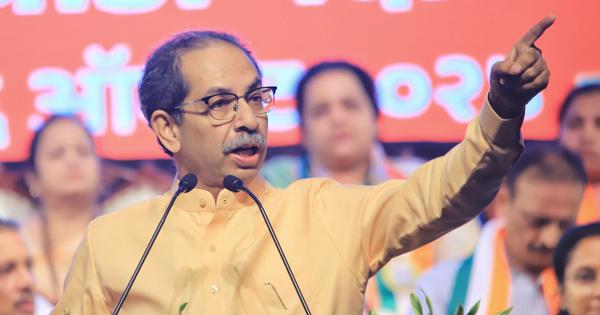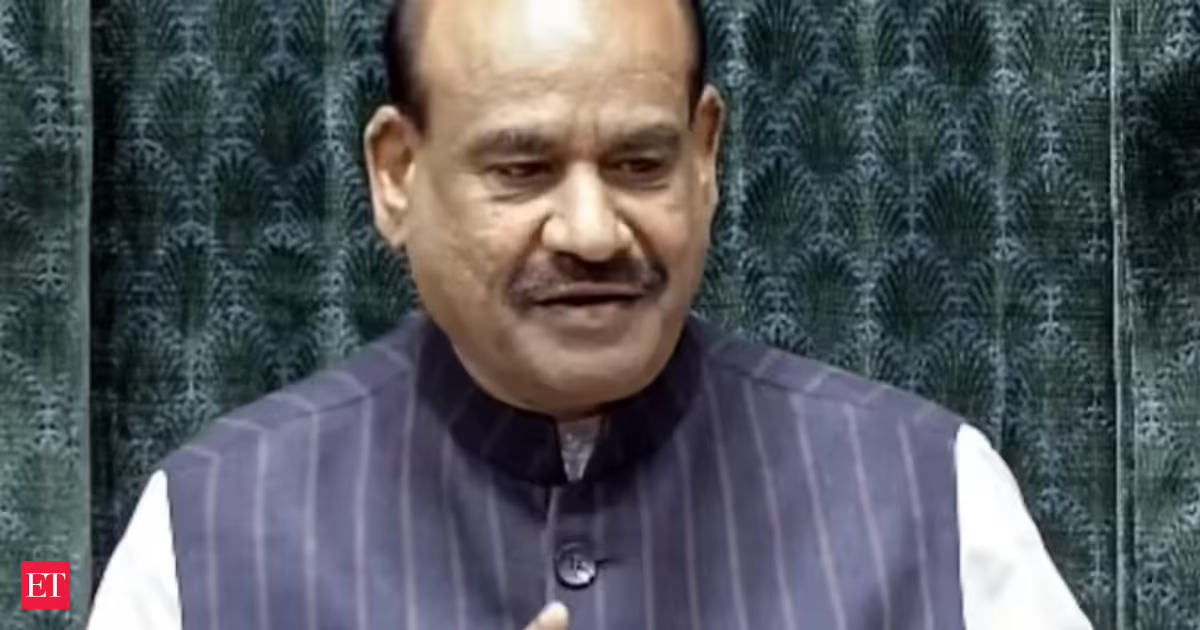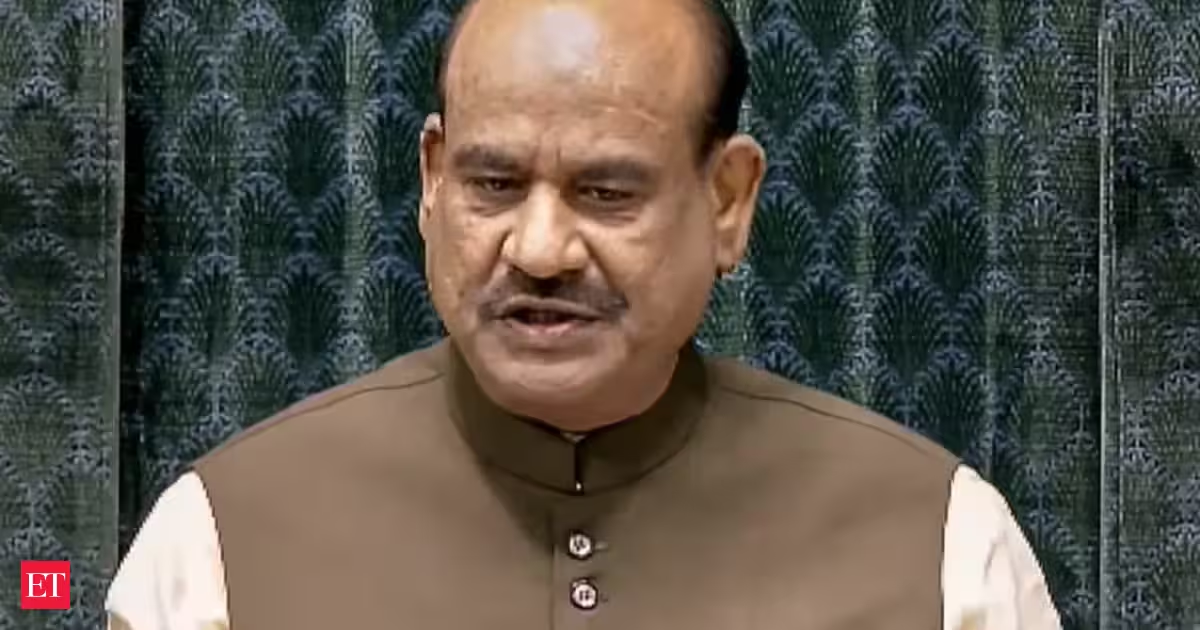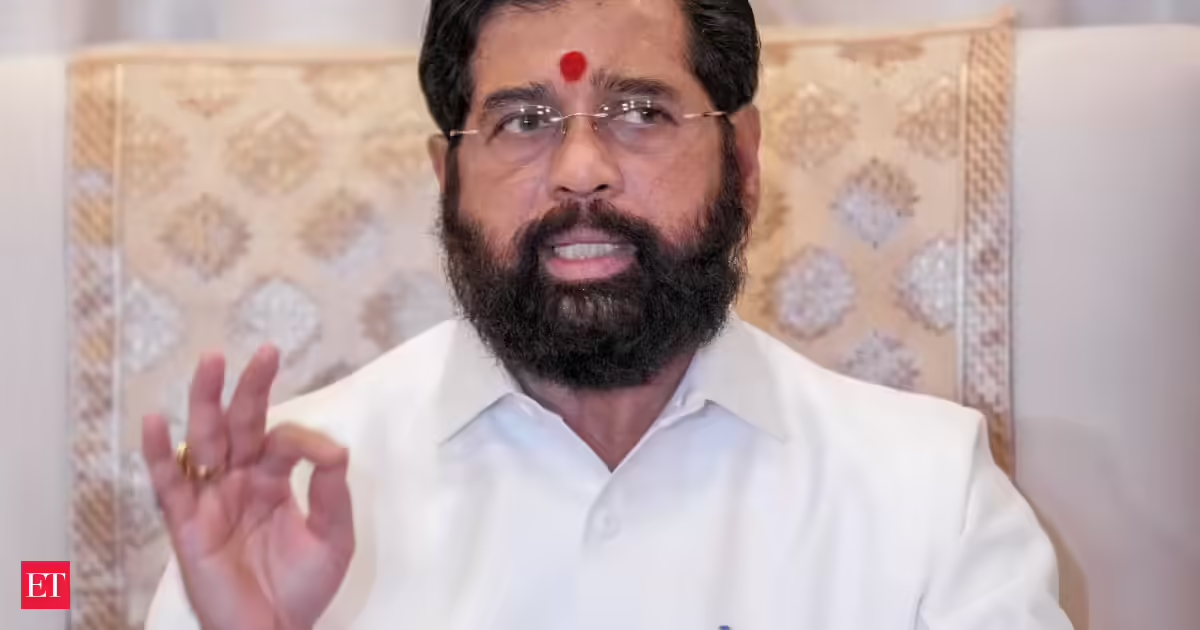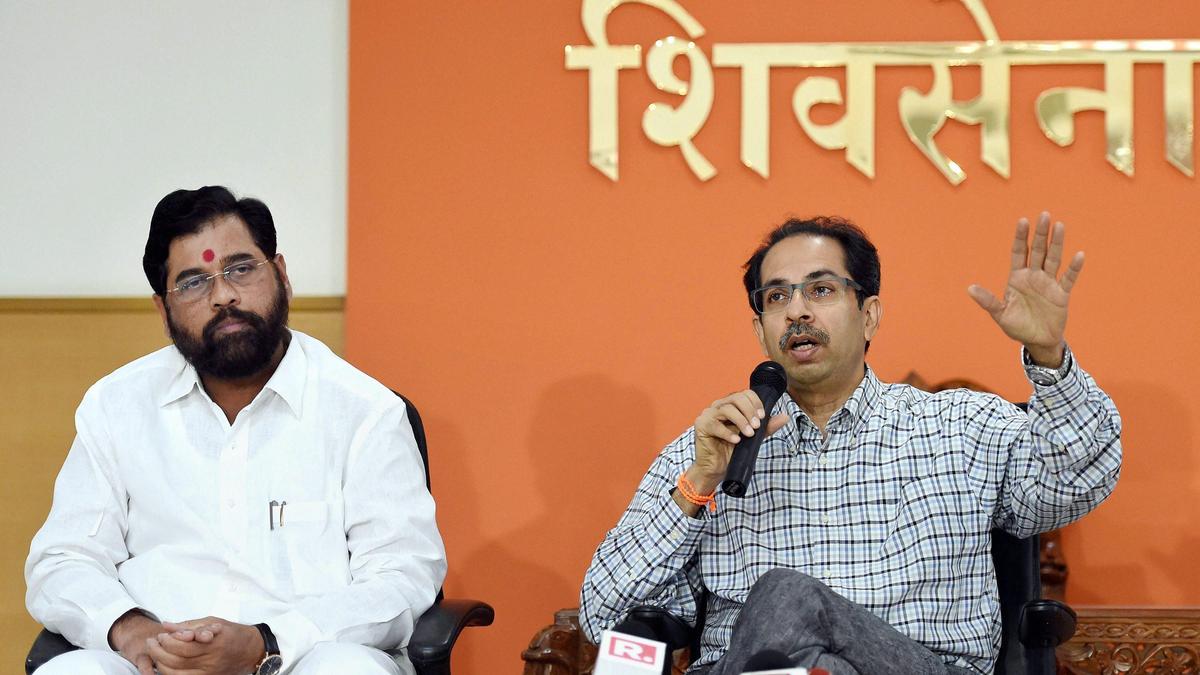
The Supreme Court on Wednesday (July 22, 2026) refused to grant an interim stay on Lok Sabha Speaker Om Birla’s decision recognising the “merger” of six of the nine Shiv Sena (Uddhav Bal Thackeray) MPs with the rival Shiv Sena faction led by Maharashtra Deputy Chief Minister Eknath Shinde ahead of Parliament’s Monsoon Session. However, the court agreed to hear the challenge to the Speaker’s decision after two weeks.A Bench of Justices P.S. Narasimha and Alok Aradhe sought the Lok Sabha Speaker’s response on a petition filed by Shiv Sena (UBT) parliamentary party leader Arvind Sawant, who challenged as “ex facie unconstitutional, illegal and perverse” the July 18, 2026, circular issued by the Joint Secretary of the Lok Sabha Secretariat recognising the purported merger.Unilateral decisionAppearing for Mr. Sawant, senior advocate Devadatt Kamat argued that six Shiv Sena (UBT) MPs had “unilaterally” decided to merge with a rival political party without the approval of the parent political party. “I am praying for an interim order... Six MPs unilaterally decide that Shiv Sena (UBT) is now going to merge with our rival political party,” he submitted.Mr. Kamat further contended that the circular recognising the merger had been issued by a Joint Secretary of the Lok Sabha Secretariat rather than by the Speaker himself. He also pointed out that disqualification petitions against the MPs are pending before the Speaker and, therefore, there was no occasion to recognise or approve the merger at this stage.Justice Narasimha, however, declined to grant an interim stay, observing that the court would consider the matter after receiving the Speaker’s response. “We issue notice. File your counter. We will consider,” he said.Urging the Bench to consider interim relief on the next date of hearing, Mr. Kamat submitted that the matter involved issues of “grave constitutional importance” and that the petition would become infructuous if relief was delayed. “There is grave urgency, that is why I am beseeching Your Lordships. Ultimately, Your Lordships are well aware that all these processes get defeated by the efflux of time. Time is of the essence. That is my only request,” he told the court.The Bench, however, declined to give any such assurance and posted the matter for hearing after two weeks.Ahead of the Monsoon Session, Mr. Birla recognised the merger of six Shiv Sena (UBT) MPs with the Shiv Sena led by Mr. Shinde. The six MPs are Sanjay Deshmukh (Yavatmal), Sanjay Jadhav (Parbhani), Sanjay Dina Patil (Mumbai North East), Nagesh Patil Ashtikar (Hingoli), Omraje Nimbalkar (Dharashiv) and Bhausaheb Wakchaure (Shirdi). All six have been arrayed as respondents in Mr. Sawant’s petition before the Supreme Court.With the recognition of the merger, the strength of the Shinde-led Shiv Sena in the Lok Sabha has increased from seven to 13 members, while the Uddhav Thackeray-led faction has been reduced to three MPs.In his petition, Mr. Sawant said that the six MPs had been nominated by the Shiv Sena (UBT) to contest the Lok Sabha elections and were elected on the party’s name and symbol (the flaming torch). “The entire organisation, rank and file, and the leadership of the political party put immense effort and resources in campaigning for and securing their victory...from their respective constituencies,” he said.‘Betrayed the electorate’He further submitted that, by joining a rival political faction, the MPs had “betrayed the faith of the electorate” and acted in a manner that was an affront to the very “concept of parliamentary democracy”. He accordingly urged the Supreme Court to issue appropriate directions setting aside the impugned circular.Paragraph 2(1)(a) of the Tenth Schedule (anti-defection law) of the Constitution stipulates that members belonging to ‘any political party’ would be disqualified from the House for defection if they voluntarily gave up membership of the party. Paragraph 4 of the Tenth Schedule delves into what makes a valid merger. The first condition is that there must be a merger of the original political party with another party. The second condition is that, after the merger, two-third members should agree to and adopt such a merger. In short, the act of merger has to originate with the original political party.Distinguishable concepts under Tenth ScheduleA 2023 Constitution Bench judgment in Subhash Desai versus Principal Secretary, Governor of Maharashtra confirmed that the ‘original political party’ and the ‘legislature party’ were “distinguishable concepts” under the Tenth Schedule.The judgment said the Tenth Schedule recognised the independent existence of a legislature party only to the limited extent of presenting a defence for members, who back a merger or split (the latter was omitted as a defence in 2003) initiated by the original political party, against bulk disqualification action.A separate petition filed by Congress leader Girish Chodankar, pending before the Supreme Court, argues that “mergers of State legislature parties in Opposition led by the Leader of the Opposition are not only a constitutional sin but also amount to a direct attack on the democratic setup of an Assembly”. The petition challenges the Bombay High Court’s January 16, 2025, judgment, which upheld the legislators’ move to the BJP as a valid “merger”.
SC declines interim stay on Speaker’s decision to approve Uddhav Sena MPs’ ‘merger’ with Shinde faction
Supreme Court declines interim stay on Speaker's approval of Shiv Sena MPs' merger with Shinde faction, hearing postponed for two weeks
836 words~4 min read