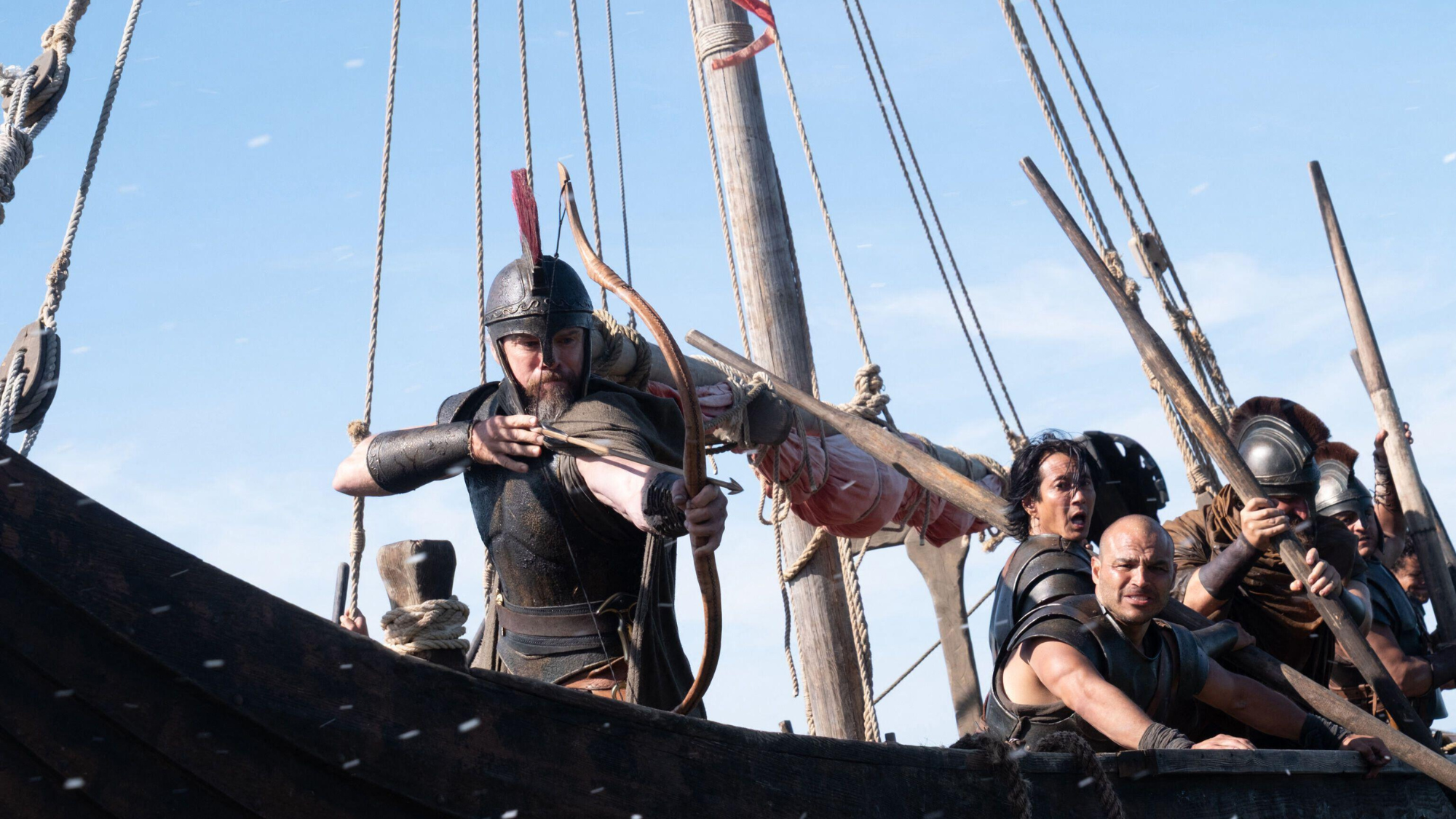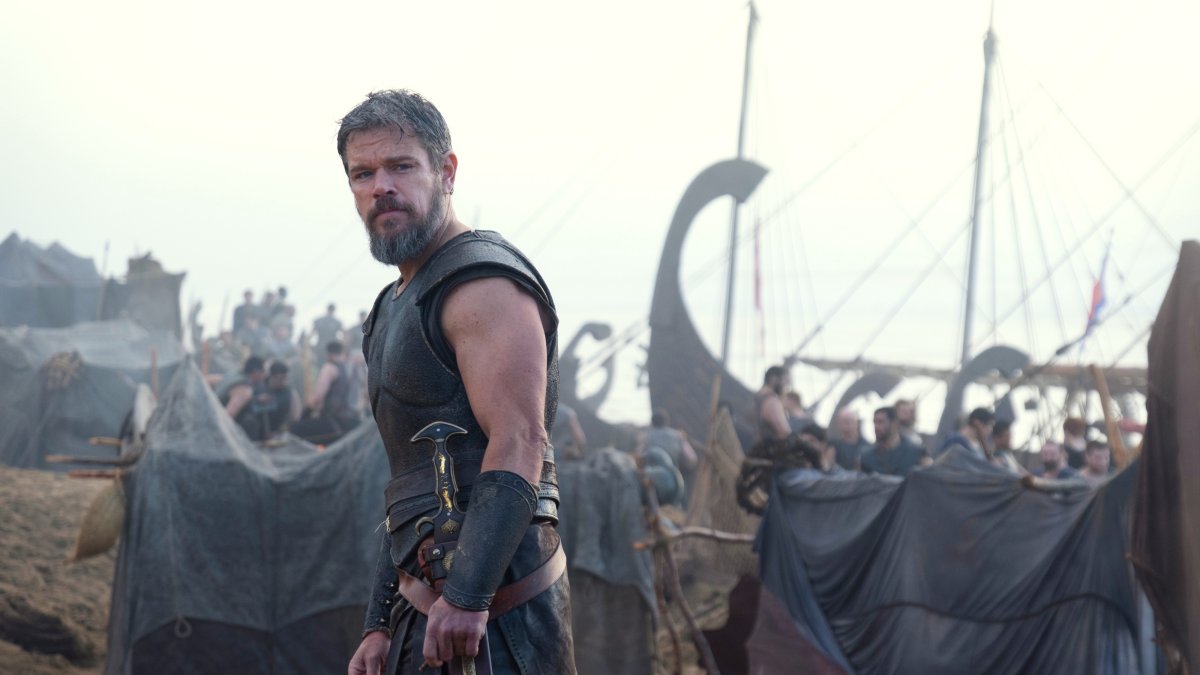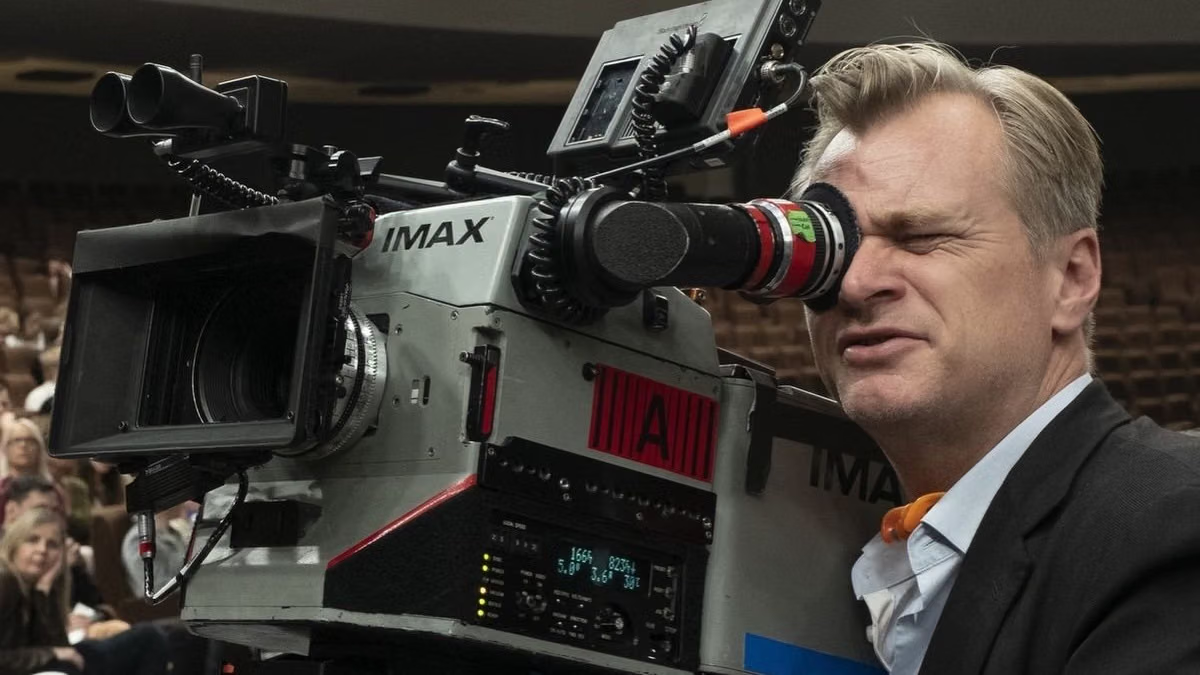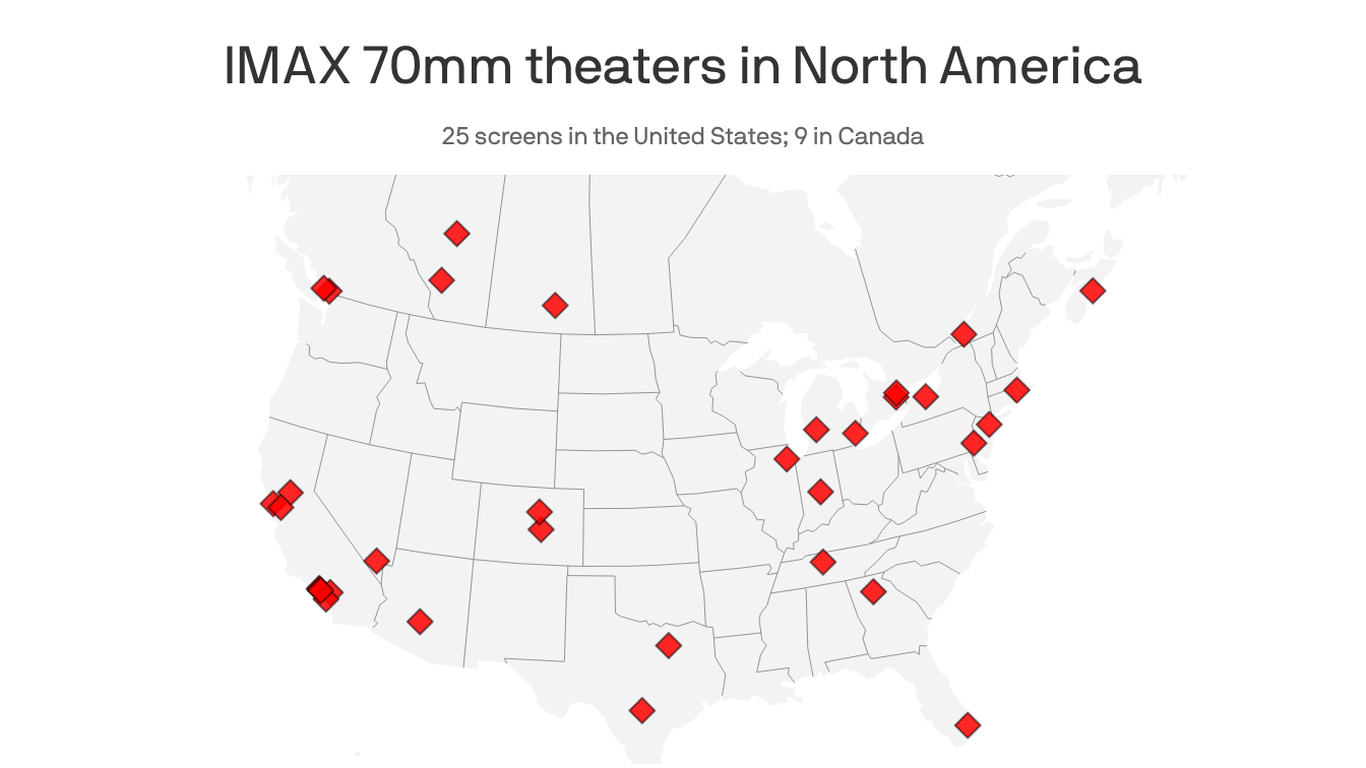
Few contemporary filmmakers have been as vocal about saving the movies as Christopher Nolan. In the early weeks of the coronavirus pandemic, he wrote an op-ed for the Washington Post about the cultural necessity of the cinema, how it served as “the most affordable and democratic of our community gathering places.” In his view, the movie theatre was as essential to public life as the library or the park, an accessible and protected space where people could get together, eat popcorn, and dream for a few hours. “In uncertain times, there is no more comforting thought than that we’re all in this together, something the moviegoing experience has been reinforcing for generations,” he wrote, arguing that cinema will never “cease to be of value.” He also had a movie coming out, the spy thriller “Tenet,” and COVID-19 lockdowns were shuttering theatres across the country, some permanently. The media conglomerates that owned both the Hollywood studios and the streaming platforms didn’t seem to mind the potential death of the theatre—directly releasing films to viewers via an at-home subscription service provided more distribution control and increased profits. But Nolan saw the shift to streaming as an existential threat to the movies, one that undermined both the public good and the vision of the filmmaker. For more technically ambitious films—of which Nolan almost exclusively makes—the theatre was basically a formal requirement. “Tenet” was shot in large-format film, including IMAX 70-mm., and was, according to Nolan, meant to be a “big-screen experience.” When it finally opened in the U.S., in the fall of 2020, it was one of the first pandemic-era blockbusters to test the box office. And even though it performed relatively well given the circumstances, the future of theatrically released pictures still looked bleak.Anxieties about the future of movie theatres, of course, predated the pandemic. At the height of Marvel’s box-office supremacy, in the late twenty-tens, audiences turned out en masse to see their favorite comic-book characters on the big screen, but not for much else. As Michael Schulman wrote in The New Yorker, in 2023, “In an I.P.-driven ecosystem, individual stars no longer attract audiences to theatres the way they used to, with a handful of exceptions (Tom Cruise, Julia Roberts). You go to a Marvel movie to see Captain America, not Chris Evans.” The Marvel Cinematic Universe prompted other studios to mint their own franchises and “universes,” pipelines of spinoffs, sequels, and sprawling ensembles. The middle class of movies—rom-coms, quiet domestic dramas, teen sex comedies—saw its role in the theatrical marketplace diminish before migrating mostly into the streaming economy. Some major filmmakers took umbrage with the M.C.U.’s dominance, including Martin Scorsese and Francis Ford Coppola, the latter of whom called the franchise “despicable.” “Tenet,” however, along with the later success of “Top Gun: Maverick,” provided a blueprint for box-office success in a post-Marvel world: a big-name director and even bigger-name actors telling a story at an enormous physical scale. The summer of Barbenheimer, in 2023, further proved that non-superhero-centered movies helmed by prominent directors and star-studded casts could still rise to the status of cultural events. The key, it seemed, was to promise audiences an immersive, irreplaceable theatrical experience, one that, if missed in real time, could not be re-created at home.Nolan’s latest film, “The Odyssey,” is, if nothing else, an event. Stacked with A-list stars and towering set pieces, it aims to tell one of the Western world’s foundational myths in a modern register, sparing no expense in rendering Homer’s epic on as extravagant a scale as possible. For Nolan, this meant shooting the film entirely on IMAX 70-mm. cameras, making it the first-ever feature film to do so. To experience the film in its intended analog format, viewers need to sojourn to one of the twenty-five theatres in the country equipped to project IMAX 70-mm. Presale tickets for these screenings went live last summer, before “The Odyssey” had even finished filming; nearly every ticket sold within an hour of its listing. A frenzied resale market followed, with secondary tickets going for as much as hundreds of dollars on sites like eBay, Reddit, and Discord. Scams abounded: anonymous online users have reportedly solicited upfront payments from prospective buyers before disappearing and deleting their accounts. For viewers determined to see Nolan’s film on the biggest screen imaginable, the risk may be worth it. The director has established himself as this century’s preëminent Hollywood filmmaker, the rare working artist whose catalogue is as commercially indomitable as it is critically lauded. Not seeing “The Odyssey” in IMAX 70-mm., or waiting to watch it at home, or on a plane, meant you weren’t really seeing “The Odyssey,” a point Nolan repeated throughout the film’s marketing campaign. “By shooting on IMAX 70 mm film, you’re really letting the screen disappear,” Nolan told the Post, last week. “It really is just a great way of giving people an experience that they can’t possibly get in the home.”Since Hollywood began experimenting with IMAX technology, in the early two-thousands, the brand has become synonymous with a sort of cinematic exceptionalism, a format reserved for the year’s biggest and glitziest blockbusters. Once known predominantly for projecting educational installations at museums and aquariums, IMAX spent decades trying to break into the mainstream, though its limited network of theatres and analog-only format proved prohibitive for major studios. In the mid-two-thousands, as Hollywood transitioned to digital filmmaking, IMAX began building and repurposing theatres across the country, outfitting them with digital-projection systems and slightly smaller, but still huge, screens. These new IMAX multiplexes may have paled in comparison with the company’s original goal of totalizing immersion, but the strategy worked: soon, the year’s most profitable films were appearing on IMAX screens. Nolan’s 2008 film “The Dark Knight” was the first major fiction feature to shoot scenes with IMAX cameras, and it is widely credited with legitimatizing the format as a destination for mainstream blockbusters. With each new release, Nolan grew more obsessed with the possibilities of IMAX, progressively shooting larger portions of his movies—with the notable exception of “Inception”—with their specialized film cameras. “The Odyssey” marks his headlong descent into IMAX maximalism, architecting his films around the scale and the scope that the format is uniquely able to deliver.Nolan is not the only filmmaker to leverage IMAX’s growing popularity to secure larger budgets from studios, and to pursue more ambitious productions. Last year, the IMAX company netted more than a billion dollars through ticket sales in its theatres alone—its highest mark ever—even as over-all box-office numbers continued to dip below pre-COVID levels. Films like “F1” and “Sinners” performed surprisingly well in IMAX 70-mm. theatres, and were both nominated for Oscars; the year’s most celebrated theatrical release, Paul Thomas Anderson’s “One Battle After Another,” also became an IMAX sensation. During the marketing rollout, it was heavily promoted that the film was shot on VistaVision, a high-resolution analog format developed in the nineteen-fifties, and that seeing it in IMAX 70-mm. was more of an obligation than an option. Similar to Nolan’s belief that “The Odyssey” can only be truly experienced in specially equipped theatres, Michael Bauman, the cinematographer of “One Battle After Another,” argued that Anderson’s film also deserved to be seen in the largest, most immersive format possible. “In a world where everyone’s all about streaming, this is like, OK, here’s a reason to go back to the cinema,” Bauman told the Times, last year. “Because this is an experience you’re just not going to get on your amazing 52-inch TV.” Unlike many of the visual-effect-heavy IMAX successes of the past decade, Anderson’s Best Picture-winning film repositioned the auteur as the driving force behind how the technology was used to showcase and eventize films, transforming the experience from being solely a garish spectacle into something that actualized the acuity of a filmmaker’s vision.Still, for people who don’t live anywhere near an IMAX 70-mm. theatre, the insistence that a film like “The Odyssey” must be seen in a particular format can feel like a cheap marketing ploy, a clever way for studios to sell more tickets. The scarcity of these screenings, too, has raised a broader question around whether the theatrical exhibition will ultimately morph into a luxury experience reserved for those who can cover exorbitant resale ticket fees and gain access to the right theatres. In an appearance on “The Bill Simmons Podcast,” the writer Chuck Klosterman expressed skepticism about the “trappings” these technological developments presented to audiences, positing that brick-and-mortar theatres would one day close, and only full-immersion experiential theatres would remain, thus creating a socioeconomic gap between those who could afford to go the movies and those who couldn’t—and ending Nolan’s dream of the theatre as both affordable and democratic. Gone would be the days of strolling up to the box office, buying a cheap matinée ticket, and sitting in a mostly empty theatre to watch a B movie with your friends. In this new apocryphal world, you would need to book theatre reservations weeks, maybe months, in advance, spending as much for tickets and concessions as you would for today’s arena concert or professional sporting event. Klosterman’s projection may overstate the extent to which theatres will become inaccessible to the average person, but the proposition also doesn’t seem so far-fetched. With streaming services selling cheap and immediate access to almost any film or television show one could possibly want to watch, the role of the theatre becomes increasingly reliant on experience rather than on product, on promoting events rather than releases. I suppose we can only hope that the people deciding which films are worthy of becoming events are the artists who create them and not the corporations aspiring to exploit profits. ♦
What the “Odyssey” IMAX Frenzy Means for the Future of Film
The scarcity of “The Odyssey” screenings in IMAX 70-mm. has raised the question: Will moviegoing become a luxury experience?
1,613 words~7 min read