The All-Star break has come and gone. The trade deadline is less than two weeks away. The World Cup is over. It’s baseball season, baby.We took some questions about the second half. Let’s get to it!Some questions have been edited for length and clarity.Get out your crystal ball, tarot cards and Ouija board and tell us which team is going to go on a big, successful run from now until the end of the regular season. Who you got? — Ed H. As Dayton Moore liked to say when I pestered him with hypotheticals, “My crystal ball is broken.” I’m the guy who predicted the Mets to win the National League East, the Royals to win the American League Central and Garrett Crochet to win the AL Cy Young award. On the other hand, I did go out on a limb and take the Dodgers to win the NL West. So maybe I am qualified to tackle this one after all.I did pick the Red Sox to make the postseason, so I can pat myself on the back for that one — though I won’t self-congratulate too strenuously, because the Sox resided in the basement of the East as recently as July 5. The revival of the Sox, and the (likely) subsequent temperature reduction on Craig Breslow’s seat, has been the story of these past few weeks. The Marlins caught fire in a similar fashion in June. Who will it be in August?Maybe it will be the Mariners. Cal Raleigh is bound to perk up at some point. The team has more talent than its rivals in the West. They could grab control of the division if they play up to their ability.But Seattle was expected to contend, and isn’t far from first place. Trying to find a losing club with a chance for a lift is tougher. My heuristic for this exercise is run differential. That statistic tends to demonstrate a club’s underlying talent. And the only club, as of Monday, with a losing record but a positive run differential, the only club with a signal that could outweigh the noise, is the Detroit Tigers. But even after a six-game winning streak to open the month, the Tigers entered Monday sitting 6.5 games back in the division and 4.5 games back in the wild-card race. Plus, they may be compelled to trade Tarik Skubal by the deadline. Detroit dealt away Jack Flaherty in 2024 and still reached the postseason, but Skubal is a much better pitcher, and any decision to move him is far more emotionally fraught.I am aware that this is not a bold answer. I just don’t see a hidden contender lurking among the middling clubs.2026 Aces Project update: MLB insiders rank starting pitchersAndy McCulloughWe just watched a World Cup where the ball was literally charged up to record and emit data in real time and all the players wore trackers, yet we rarely heard anything about that information on the broadcasts. Baseball is awash in metadata — how hard each pitch is thrown and hit, length of homers, etc. — and while I initially welcomed every bit of that, I found I really enjoyed how the World Cup matches focused purely on the game itself. What are your thoughts on baseball’s explosion of data and the fan experience? — David S. It is something I grapple with all the time. My first year covering baseball was 2010. I remember trawling through Brooks Baseball for PITCHf/x data so you could figure out how often a guy threw a certain pitch. The idea that we could get, in real time, stuff like sprint speed and route efficiency and expected batting average was incredibly far-fetched. So I also have been thrilled by the granular level of information I can now access to help write stories and convey information. The trouble is not bogging down the reader or the viewer with too much superfluous data.I think part of the trick, as writers, is sifting through all that info and extracting the stuff that matters — and also connects with the audience. I would not use batting average as a metric to describe how good a hitter is. I don’t think it does the job, but I also often wonder if I’m losing the reader by referencing OPS+ or wRC+. Does the reader know that 100 is average? When you say a hitter has a 125 OPS+, does that carry the same resonance as saying the hitter has a .300 batting average? Do I want to spend three sentences spelling all this stuff out?I understand why some fans get cranky when they look at the videoboard during a game and see a player’s OPS, rather than his batting average. I get it. I don’t understand why football teams stopped running the ball on 3rd and three, either. But the game evolves, and it’s our job as journalists to explain that evolution to our audience. And while baseball can be overrun by data during games, at the end of the day, it’s a sport that revolves around a guy on the mound holding a rock and a guy at the plate holding a club. Doesn’t get more pure than that.
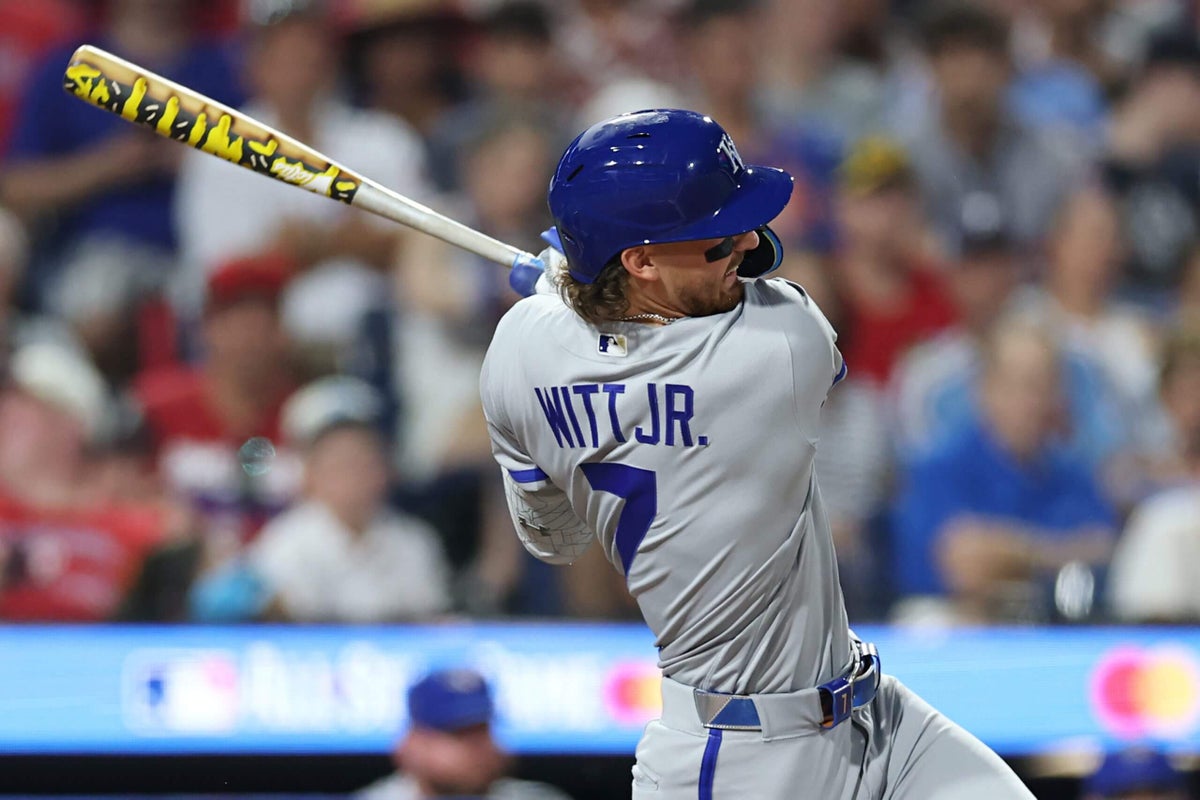
Bobby Witt Jr.’s MVP chances? Dodgers regrets with Cody Bellinger? We answer your questions.
With the second half of the season underway, we take your questions on MVPs, trades, call-ups and more.
2,490 words~11 min read