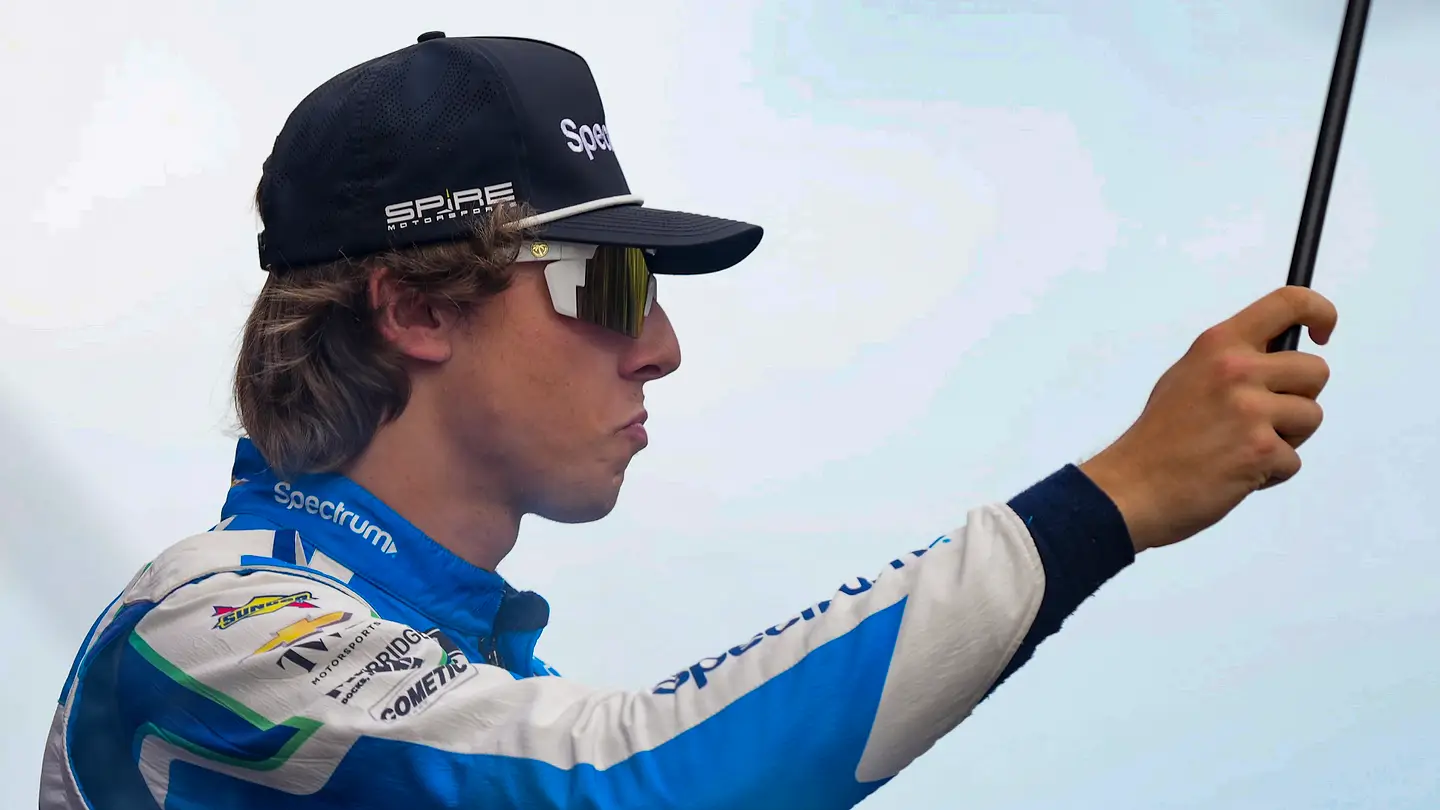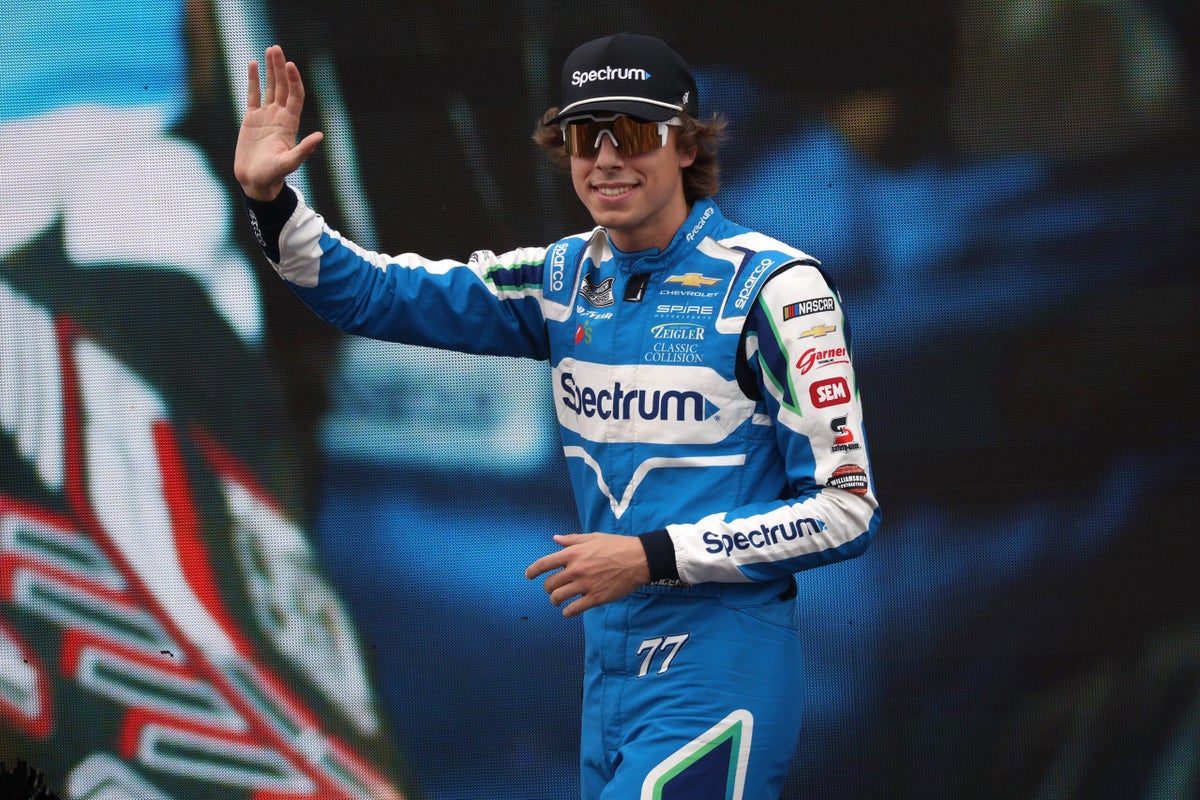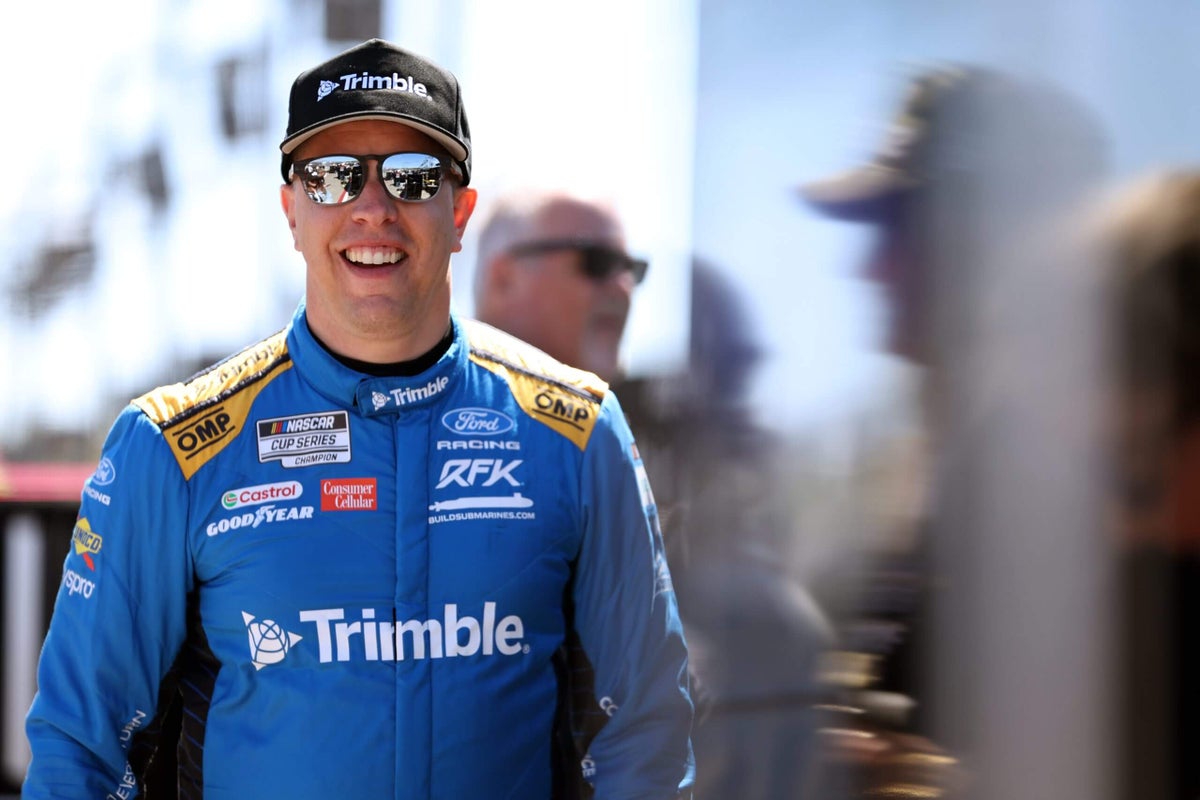
Each week, The Athletic asks the same 12 questions to a different race car driver. Up next: RFK Racing driver/team owner Brad Keselowski, who heads to Indianapolis Motor Speedway this weekend looking for a second Brickyard 400 trophy. This interview has been edited and condensed, but the full version is available on the “12 Questions Podcast.”1. Do you typically arrive for things early, late or on time, and why?On time to late, always. Arriving early is bad.Oh?Yes. I’m a big believer in this. I try not to be grossly late, but I get a lot of anxiety when people arrive early to things. I don’t like it. Have you ever been to a birthday party or something and people show up early, and you’re like, “I’m not ready?” I’ve always erred toward that (feeling).Now, there are certain things you obviously can’t be late to. But for the most part, I try to arrive exactly on time, if not slightly late.2. What is the pettiest thing that annoys you during a race weekend?The pettiest thing that annoys me is when there are policemen who are supposed to be directing traffic, and they’ve put up all the cones and stopped the lights and done all this, but they’re not doing anything.You know what I mean? You’re leaving an event, traffic isn’t flowing, there are all these cones, and there’s a policeman who has clearly been hired to do this, but they’re not doing anything. It drives me insane. I would prefer they just let the traffic go on its own. We’ll figure it out.Because if they weren’t there, we would do something. Drive on the shoulder, drive through the grass parking lot. We’d figure it out. But now they’re there, and it’s like, “I’m stuck. I’m really stuck.” And they’re not even helping.“Arriving early is bad,” says Brad Keselowski. “… There are certain things you obviously can’t be late to. But for the most part, I try to arrive exactly on time, if not slightly late.” (Sean Gardner / Getty Images)3. What is something you’ve learned to stop explaining to people?I don’t know if I learned it or I just have this luxury of where I’m at in my life, but it’s when I say no to something. Someone asks me a question: “Brad, do you want to do X, Y, Z?” Or “Can you do this?”No. Just full stop. No. And not feeling guilty about it.I read something one time — I can’t remember who said it — about how the most powerful word in the English language is “no.” It’s one of the first things your kids learn, for good reason, and it’s the most important thing to use effectively.Sometimes I feel like if you have to explain your “no,” you’re really not saying no. You’re asking for permission to say no.Saying no is a very healthy thing to do. Anytime you say yes to something, you’re saying no to something else. That’s how your life works. It’s how the principle of time works. So it’s an important word.4. If you could go back to the early days before you reached NASCAR, what is one different decision you wish you had made?Buy Bitcoin. Where was I on that one?I think you were probably in NASCAR by then?I got to Cup full-time in 2010. I think Bitcoin came out in 2009. It was trading for like 50 cents when it started. Maybe 10 cents. Why had I never even heard of it when it came out? It took me until like 2016 to hear of Bitcoin. Then people were like, “Yeah, you’ve got to buy. Look at all this money.” I’m like, “What?”I don’t know how I missed it, but I missed it. I thought it was a scam the first time I saw it. Like the Nigerian prince scam that used to come in your emails. That’s what I thought cryptocurrency was. I didn’t buy it. Big miss.5. What is it like to be in a debrief after a bad race?Bad races are defined differently among different people. I define a bad race not very much by the result, although that’s important, but more by whether I made a race-altering mistake.I’ve had races where I finished 20th and thought, “I ran a perfect race.” The finish looks bad, but for me, it’s like, no, I did everything I could. I’ve had races where I finished really well, even won, and made mistakes I was embarrassed by.So at least for me, when you’re in a debrief, it’s about, “How was your performance specific to your role?” When you know you made a mistake and hurt the team — let’s say you spin out and crash on your own — those ones are just embarrassing.Everybody put in their effort, and it didn’t come together because you hurt the day. You don’t want to be that guy. And the meeting is a reminder that, on those weekends, you were that guy.“(Buying) Bitcoin (many years ago),” Brad Keselowski laments. “Where was I on that one?” (David Jensen / Getty Images)6. I’m asking each driver two wild-card questions, one about the past and one about the present. In terms of the past, your younger self was fast and brash and aggressive and outspoken, and it seems to me that the younger Brad Keselowski might be the closest comparison to Carson Hocevar. You both being from Michigan doesn’t hurt, either. Do you see any of yourself in a young Carson Hocevar, and is that a fair comparison?A fair comparison versus whether I see pieces of myself in him? I think those are two different questions.Carson generates a lot of attention. I haven’t quite put my finger on why, but I can make a few guesses. There are the on-track incidents, for sure. His team is very interesting. Spire itself is this up-and-coming team trying to prove itself in the same fashion he’s trying to prove himself.So I see some parallels there from the time I went to Penske, when they really weren’t respected in NASCAR. Spire is in that same category, where they haven’t been respected for a long time and are trying to be respected, and they’re with a driver who is pushing them to the limit.So yeah, I can see some similarities. But every driver writes his own path. I hate to say I don’t think it’s fair to compare, but I don’t. There are different things, and he’s cutting his path in his own way. It’s not fair to him as much as it’s not fair to anyone else.When I see Carson, the biggest difference between him and me is that he is willing to cause a ruckus or a problem further back in the field. That’s an important differentiator. You’ve heard me say several times in different media sessions that we don’t get in fights for 15th. If you’re going to cause an incident or have a moment of serious controversy, for the most part, it probably should be for wins and top-twos or -threes.What I see with Carson is his boundary of controversy is much wider and deeper through the field. Carson isn’t afraid to wreck somebody for 20th, then get out and tell him, “Sorry, that’s racing.” You’re like, “Yeah. Yes, it is. Totally.” But knowing when and how to use that currency is a big part of motorsports.Carson has loads of talent. He’s with a team that is giving him great race cars. The alliance Spire has with Hendrick is very good and strong for them. Their whole organization is going through that on-the-rise moment, and he’s riding that wave and having fun with it.7. In terms of the present, I know you’re consuming all sorts of content and are constantly searching for new inspirations. So what inspires you these days, and what are you pursuing outside the race car?I live my life with a pretty simple motto, which is: “You’re going to die.” Hopefully not tomorrow. Hopefully not today. But one day you’re going to die. When that moment happens, I want to look back and feel comfortable with the impact I’ve had. And I want that impact to have been something deep and positive.It probably starts with my children. Having kids is a chance to leave a legacy on Earth and an impact that transcends yourself, genetically and more. Then, when I look at my career professionally, I ask: Did I move the needle in any way?There are a number of business interests I’ve had. The race team is probably the most public and compelling, but certainly not the only one. Behind it, I have manufacturing and engineering businesses, and those are doing very, very well. I’m really excited for the impact I know they’re having. …This is part of the legacy I want to have: the idea of building businesses and assets that put people to work. I really believe in the concept that every man needs something to work for. He needs a chance to prove himself, and that job should be something meaningful that brings joy to his life and provides for his family. Anytime I have any connection to that, I feel fulfillment.8. If you could get any driver’s helmet in the history of motorsports, whose would it be?I’m not a big collector. Collectibles are just not my thing. I gladly accept when people give them to me because I know what they’re trying to say or do. They’re trying to be gracious, and I respect that more than the collectible.But then I’m left with, like, “What do I do with this?” I literally built a room in one of the properties I have to store collectibles that I don’t know what to do with. I’ll go into this room probably once a month to put something in there, and I’ll be like, “I don’t know what to do with this. I can’t throw it away. But if I display it, nobody will really get it.” So I’m stuck in this purgatory of collectibles.I don’t want that to sound as though I’m ungrateful. I am very grateful. It’s not about that. I’m grateful somebody thought about me enough to give it to me. But once I have it, I don’t know what to do with it!9. When things are not going well, do you prefer that people leave you alone or check in on you?Be left alone, by far. I like to be left alone. I need an opportunity to understand it and digest it in my own medium. Definitely a solitude guy.10. What is something about yourself that would surprise people who think they know you?There are a lot of people, for whatever reason who associate every driver with a silver-spoon upbringing. I wish more people knew that wasn’t the case for me. I don’t lose sleep at night over it, but I would say that’s probably the No. 1 (misconception) by far.11. What is something you laugh about now that was absolutely not funny at the time?When I wrecked at the Roval in 2018. I was leading the race. There were like three laps to go, green-white-checkered. I drove into Turn 1, locked the brakes up and slid into the wall. Then like 10 other cars followed me into the wall. (Laughs.)At that moment, I was not happy, as you can imagine. But watching the replay now is freaking comically hysterical. In the moment, you’re like, “I’m an absolute dumbass. I just threw away this race. I’m so embarrassed for myself and the team.”Now I look at it like, “Yeah, so did 10 other guys behind me!” We were all stupid! I can laugh at it now, eight years later.12. Each week, I ask a driver to give me a question for the next person. The last one was with Michael McDowell, and he wanted to know: If you could only do one thing right now — either drive or own the team — which would you choose?Right now!? Oh man. Is somebody holding a gun to my head?It sounds like you have no choice.This reminds me of that Deion Sanders pizza commercial (from 1995) where he had to choose between the two with stuffed crust, and he was like, “I want both.” That’s me right now.That’s a really hard choice because I would tell you it’s 50-50 for me. It depends on the day. When your car is fast and you’re leading races, there is nothing better than being a race car driver. It’s the coolest thing in the world. I am so blessed.When you go to races and the car is slow, and it’s on the edge, and you’re questioning yourself, your team and all of life’s decisions, those are the days I want to be an owner. (Laughs.) Because then I want to be the guy who makes the decisions and fixes it.This year, we were leading Darlington. I won both stages, finished second. Good race. And I’m like, “Nah, this is where I want to be.” So I would say I’m a flip-flopper, which is not what I think Michael was asking. But hey, I have the microphone. He doesn’t.
Brad Keselowski on Carson Hocevar comparisons, his new off-track passion and more: 12 Questions
Keselowski talks about similarities to Carson Hocevar, driving and owning a team at the same time, and more in the latest 12 Questions.
2,193 words~10 min read