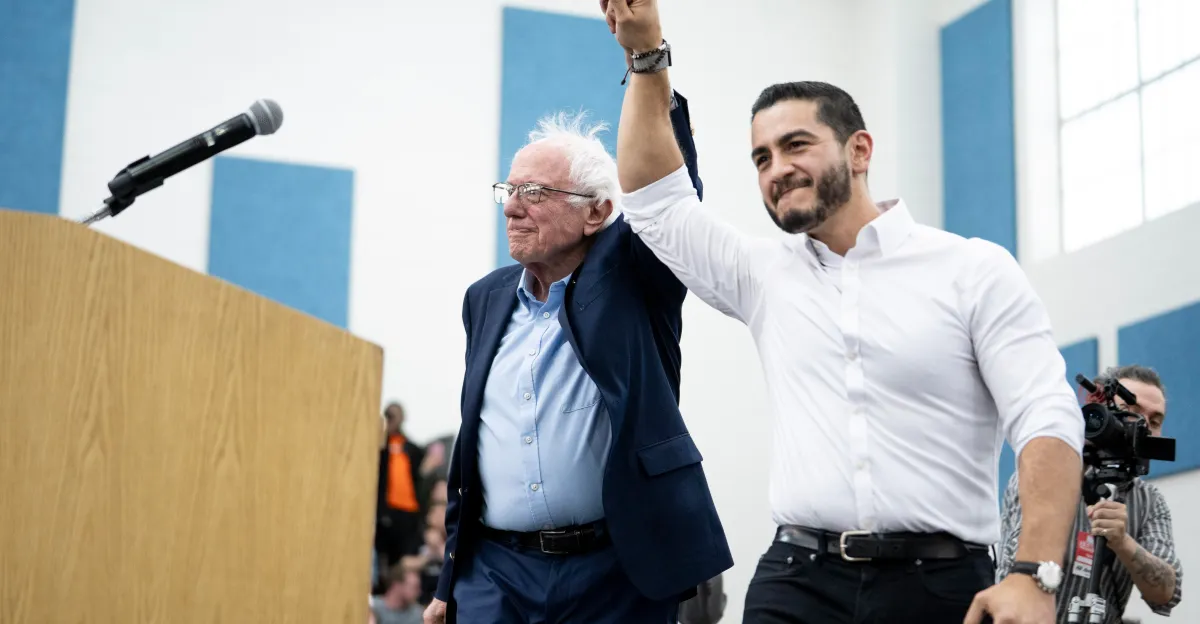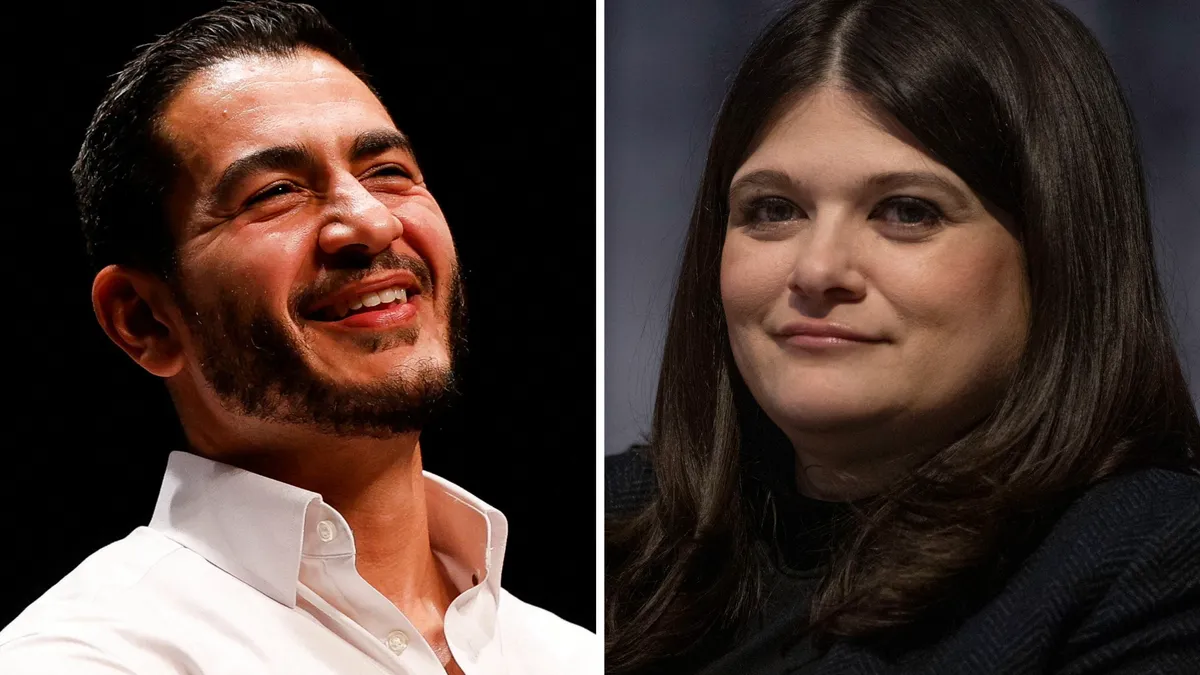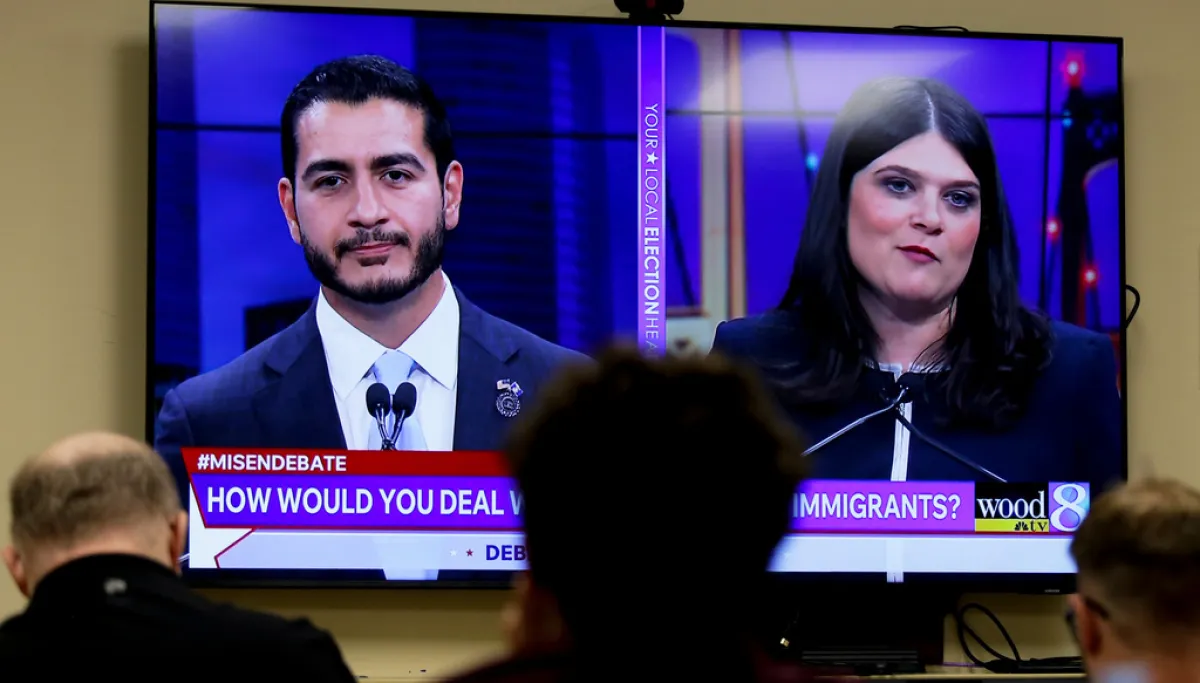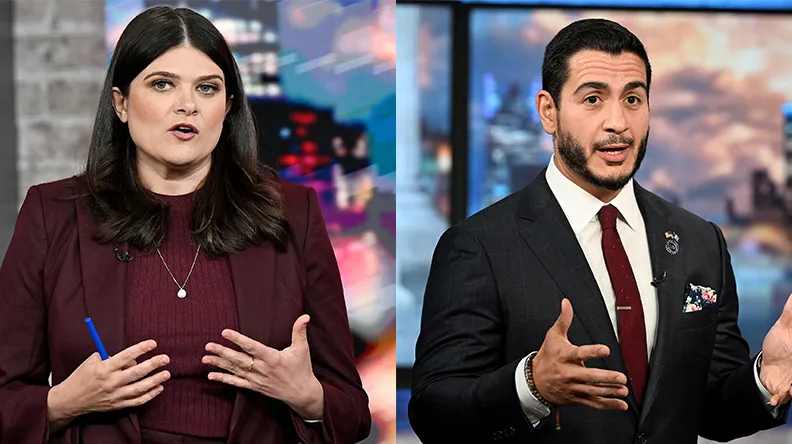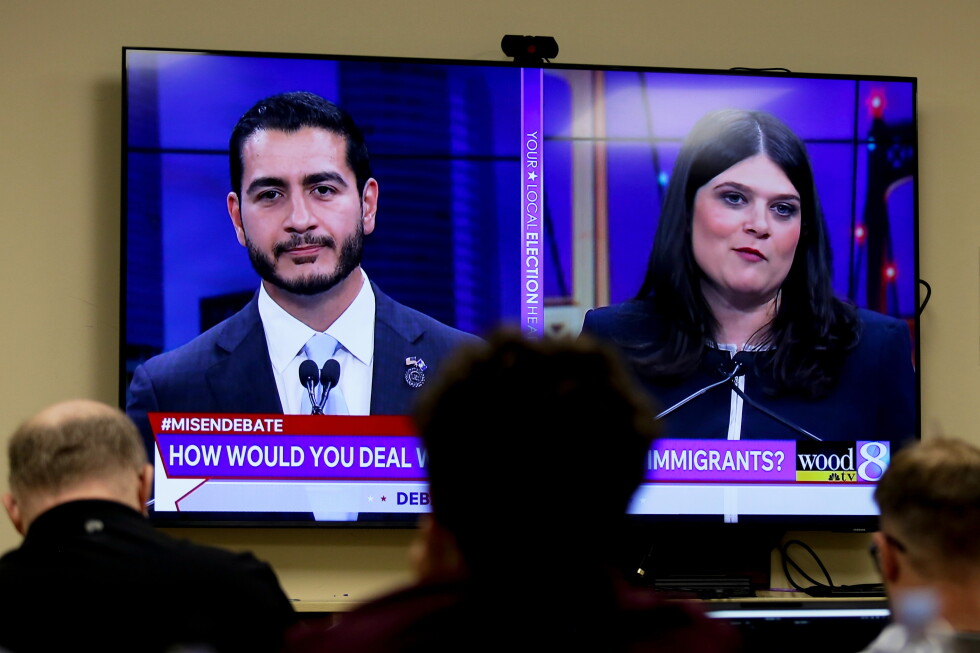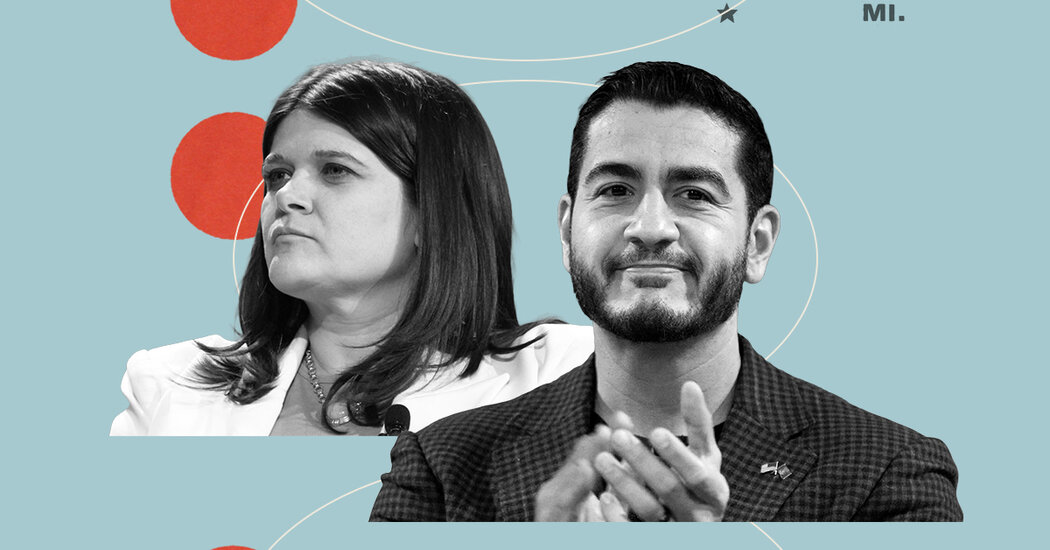
The Choice Michigan Democratic Primary for Senator The Senate candidates represent different directions for the future of the Democratic Party at a pivotal moment for Michigan.The Candidates Abdul El-Sayed The former public health official has been running a populist, progressive campaign.Haley Stevens The moderate representative has argued for a practical approach to politics. Times Opinion brought together a panel of local leaders and experts to help make sense of the race. Michigan is home to one of the most watched Senate races in the country this year, one that will help decide control of Congress and shape the future of the Democratic Party.The two candidates — Abdul El-Sayed, a former public health official, and Haley Stevens, a member of Congress — are both millennials, but offer deep differences in ideology and style.The state itself faces profound issues and divided voters. Israel’s wars in Gaza and Lebanon have personally affected many in a state that is home to some of the largest Arab American communities in the United States; the politics of the conflicts permeate this race. A ferocious backlash against data centers and artificial intelligence cuts across party and region, from Detroit to more rural communities. The state’s economy still emphasizes heavy manufacturing, even as personal income stagnates and younger residents leave for other states, making for a complex problem to solve. And of course President Trump and his administration loom over so much of politics and policy today.How would Dr. El-Sayed and Ms. Stevens deal with these issues and represent Michigan? How their messages are resonating in this battleground state could illuminate future elections, especially as the progressive left tries to gain more ground in American politics.Times Opinion assembled a panel of experts with a range of viewpoints for a new installment of The Choice, aimed at guiding Michigan voters through the core issues in this election.The Choice was prepared by Times Opinion editors, based in part on a round-table conversation with the panelists held on June 29 (before a third candidate, Mallory McMorrow, suspended her campaign). The project is also based on a survey from which Times Opinion averaged the panelists’ responses; one panelist, Richard Czuba, declined to participate in the survey.Our Panel’s Ratings We asked panelists to rate the leading candidates on how they would approach governing. Each chart reflects an average of their individual ratings. Times Opinion In the past year, we’ve seen populist candidates succeeding with anti-corporate, anti-establishment sentiment. Does that have limits in Michigan, or is that where the electorate is? What’s driving that, if it is the case?Kaitlyn BussColumnist and editor from Detroit Michigan is ready for change. It’s surprising to me how much there is an appetite for a different kind of candidate, given we just had a Senate race two years ago where a more establishment-type candidate won.Jeremy AllenExecutive editor of The Michigan Chronicle I think part of the reason that people want that change is not necessarily because politicians have done them a disservice here in Michigan, but I think there’s often this hand-in-hand desire to have change when things just aren’t going well economically.Lisa WozniakGreat Lakes conservation and climate leader There’s a pretty significant number of people that are still in the undecided camp on this. They have been feeling that politicians are not delivering for them. And so they’re frustrated. They’re distrustful of both parties right now. And they’re tired of hearing candidates who come around every two to four years and talk about big things, whether it’s skyrocketing grocery bills, the price of eggs, energy costs, gas prices now, when neither party has really delivered real change for them. And so I think they’re looking for someone who, yes, is a change candidate, but also seems reasonable and rational and not pie in the sky.Times Opinion Thinking about both of these candidates, what strengths do they bring? What are either weaknesses or unknowns about them, as candidates or as a potential senator in Washington? Let’s start with Abdul El-Sayed.Saeed A. KhanProfessor of Mideast studies and podcast host Charisma — a boundless energy when it comes to that. Youth, vigor. Certainly, one of the weaknesses is he’s never held elected office. And for people for whom experience matters, that will be a major factor.Jeremy AllenExecutive editor of The Michigan Chronicle I count the lack of elected history as a pro and a con, but I’ll put that on the pro side because just with that, carrying that progressive tag, means a lot to young voters in the state. Young voters feel as if being a progressive means that you’re going to work hard to enact policies and legislation that positively impact my life.Richard CzubaIndependent pollster in Michigan I would say his appeal is he’s fresh. But his weakness is that he does not appeal to independent voters in Michigan. He has a huge problem with this, and we’ve seen it for the past year, and I don’t know the recipe for overcoming that.Times Opinion What about Haley Stevens?Richard CzubaIndependent pollster in Michigan I think Stevens’s biggest strength is that she is the most underestimated political figure in Michigan and has been since the day she started running for office.Adrian HemondFounder of a bipartisan advocacy and outreach firm Yeah, that’s right. There are a lot of people who run for office because they want to be somebody. This is not Haley Stevens. Haley Stevens ran for office to accomplish things. Sometimes they are not very exciting things. But she is a workhorse, not a show horse. That doesn’t always serve you super well as a candidate, although it can. Her biggest weakness is that she’s like the anti-El-Sayed in terms of personal charisma. Stevens has been successful in the past at overcoming that, though.Sarah AnthonyState senator from Lansing I’m going to name both a pro and a con in the same, which is that Stevens has garnered lots of endorsements and support from some of our most well-known political figures in Michigan. Senator Debbie Stabenow — who forever basically never endorsed anyone for anything, not even dogcatcher in her hometown — all of a sudden, this has been one of the places that she said, I have to get involved, and endorsed Stevens. The same with former Governor Jennifer Granholm. So these big names, maybe you say, “Well, that’s enough. We know Debbie. We trusted Jennifer. That’s fine.” But there’s also a swath of folks who say, “That is the kiss of death. Why would we want to continue the same old, same old? Yes, those were folks who were effective in the ’90s and early 2000s, but this is not the blessing that a Haley Stevens would need for this time.” So I think both the pro and the con is that the establishment has completely gotten behind Stevens.Do you think the candidate would take more of a hands-off approach on artificial intelligence or work to pass legislation regulating the tech industry?Times Opinion In terms of the issues in this race — Michigan’s economy, affordability, data centers and A.I., money in politics, corporate greed, U.S. foreign policy, utility rates and more — is there one that stands out above the rest to people?Jeremy AllenExecutive editor of The Michigan Chronicle Data centers really seem to be the No. 1 thing that people are concerned about. Folks feel they just don’t have enough information about the long-term impacts of them. And so they’ll see a story about the noise issue or the water pollution that comes along with data centers. They feel as if they’re going to have an increased utility burden within their households because of these data centers existing in their neighborhoods.Sarah AnthonyState senator from Lansing Jeremy is spot on. As an elected leader, we get hundreds and hundreds of emails and phone calls about all sorts of things. This has been one that has united everyone.Fundamentally, this has been: Why don’t leaders listen to people? People will show up — dozens and dozens in the smallest towns in our state, hundreds in other parts of our community — and will just be crying out, “Listen to us.” Like, listen to the fact that we don’t want this. Listen to the fact that this noise does exist. Listen to the fact that after the thing is constructed, the jobs that are promised are really going to be a handful of security guards, and that’s about it. People feel as though elected leaders have already cut a side deal, already had a wheelbarrow full of money that has been poured into some account, that the soup is cooked. Yes, it’s about data centers, but more, it’s about the ability of leaders to actually care about their constituencies.Lisa WozniakGreat Lakes conservation and climate leader There’s another piece of this, which is that Michigan pays among the highest electricity rates in the Midwest and faces some of the longest amount of time out of power in the entire country. Unlike many other places in the country, frustration with this issue, combined with what feels like this unchecked data center development, has truly boiled over. The data center piece has just been another log on an already burning inferno, especially when the utilities are seen as connected at the hip with Big Tech. It’s a perfect storm that, in my opinion, is likely to swallow, in large part, the November election.Adrian HemondFounder of a bipartisan advocacy and outreach firm The data center debate is, in some sense, emblematic of Michigan’s economic issues, in that the state never really got out in front to lead on this issue and to explain what’s a good data center, what’s not a good data center, what should you be concerned about? Certainly, industry didn’t do a very good job of getting out in front of that. And now there is a lot of public antipathy toward data centers, which means that a lot of them are going to get built in other states. It’s a really interesting vise that we’ve put ourselves in over the last 30 years with industry after industry.Times Opinion The data center situation is both local and federal. It’s connected to A.I. and Big Tech. There are some substantive differences between the candidates on this.Dr. El-Sayed wants to regulate A.I. like a public utility. He supports the Bernie Sanders proposal to take an ownership stake. Ms. Stevens has talked more about job retention, privacy protections and competition. She said she’s open to federal regulation that would pre-empt state regulation. Which approach would benefit Michigan most? Which do you think is resonating?Kaitlyn BussColumnist and editor from Detroit I think trust is a huge thing here, and the fact that there is a “them” and then there’s an “us.” The trust is just so thin because there’s no transparency here in Michigan around who the people are that really want this. In terms of the policies that these candidates have laid out, El-Sayed is obviously the most nationalized, the most big government. But when voters are looking at the behemoth of what data centers and A.I. are, I think they may be more open to that idea, just because they are so scary.Richard CzubaIndependent pollster in Michigan At the core of this is powerlessness. Voters feel as though they have no power in this conversation, and the tech companies are at the very center of this conversation because Michigan, frankly, has seen this before, where a big entity comes in and then it abandons the state. And that’s what is leaving people feeling powerless.Voters want to know that their electric bills are not going up. They want to know that they are not going to pay the price of these things. And I think it behooves both sides — those who want to build data centers and those who oppose data centers — to sit down at the table and nail down these regulations. Because until you do, voters will not be open to talking about the benefits, the importance or the need for them.Lisa WozniakGreat Lakes conservation and climate leader People feel a lack of trust, but they also are feeling a sort of agency in this that they don’t have in other places, because these decisions right now are being made at the township level. And they can show up in the hundreds and thousands to express their opposition in ways that they feel they perhaps can’t at the state and federal level, to have real influence.How effective do you think the candidates would be at championing legislation to bring good-paying jobs to Michigan?Times Opinion Michigan is dealing with challenges with personal income growth, young people leaving the state, among other issues. At the federal level, what can a senator do to address the economic situation? Which of these candidates may be best positioned to do that?Richard CzubaIndependent pollster in Michigan Michigan’s economy over the past 25 years has become calcified in its nostalgia for manufacturing. I do focus groups with voters regularly, and not much stuns me, but the conversations that do are when voters say, “No, no, no, we don’t want those high-tech knowledge jobs. We’re a manufacturing state. We build things.” And that is, at the very core, what has caused Michigan’s economy to just stagnate. We have got to change. We have got to adapt. We did this survey and we asked voters: Where does Michigan rank among the 50 states? And we asked them to give us a number, and it was right in the middle. They think we’re perfectly average. Michigan voters have no idea the rest of the country is blowing by them right now on the economy.Sarah AnthonyState senator from Lansing I think that there’s a few pieces. I’m an autoworker’s kid. It’s our identity that, even if you don’t go to college and get a degree, you can walk out of high school and apply to the local factory, and you can still make a living so that you can have a second home or a second car — that’s our Michigan story. But that hasn’t been the reality for so long. We’re still stuck on that nostalgic view of Michigan. Men and boys do not feel as though they have agency in this state anymore. They cannot see a prosperous future in which they belong anywhere. They don’t necessarily belong on a college campus. I think that the reality is that the candidates that will be the most successful will offer an acknowledgment that it’s not working and a path to just clear the decks.So from a federal perspective, I think part of this is that folks don’t expect the U.S. Senate to be functional anyway. I think we’re looking for someone who will just speak to us and say, “Hey, man” — to whomever, the 22-year-old that’s in their mom’s basement that’s just trying to figure out life or the struggling single mom or the senior citizen who’s thinking that their grandkid won’t get it out of their kid’s basement. Those people are looking for someone who’s just going to be our loudest champion, not this thoughtful, creative policymaker.Saeed A. KhanProfessor of Mideast studies and podcast host I take an unscientific poll with my students every year. How many of you, when you graduate, are looking to stay in the state? How many of you are looking to leave? And it runs somewhere around 35 percent to 40 percent who want to leave the state. And then I ask a follow-up question: How many of you are looking to come back to Michigan at a certain point, to raise a family? And the numbers are really declining about people who are just simply looking to go out of state and come back. They said that there really is no future in Michigan. And it’s a bit surprising that the candidates aren’t picking up on this a bit more.Stevens and Mallory McMorrow, before she dropped out, have inexplicably leaned into the whole thing about ICE, and look at what we’ve done to go ahead and push back on Trump’s policies. The 18-to-22-year-olds may care about that viscerally because of how they feel about ICE and its violations, but they know it’s not going to translate into a job. The easiest thing for these candidates to do, somebody like an El-Sayed — and he’s not doing it, perhaps, because he feels as though he doesn’t have to — is to say, “We’re going to have something for you here in Michigan.”Adrian HemondFounder of a bipartisan advocacy and outreach firm Only about a third of adults in Michigan have a four-year college degree. And all of these candidates are speaking to people who went to college. That’s not the median voter in a statewide Democratic primary in this state. The median voter in a statewide Democratic primary in Michigan is a Black woman you find in a church pew every Sunday. These candidates are not speaking to her.Times Opinion Where does the auto industry fit into the state’s economic future?Adrian HemondFounder of a bipartisan advocacy and outreach firm The auto industry is a nostalgic totem. My father-in-law, when he was 19 years old, he and his teenage girlfriend discovered they were about to have a baby. So his dad grabbed him by the collar and he marched him down to the line at Fisher Body and said, “Congratulations. You’re hired.” And his wife never went to work. And 30 years later he retired with a pension and health care. Young people hear about that all the time now, but the same 19-year-old today with a baby, he works at Speedway or he delivers packages for Amazon, and he thinks that seems really bleak. And these candidates are not speaking to that young man.Times Opinion Is tech in the auto industry a source of jobs for the future, or is that just something people say?Richard CzubaIndependent pollster in Michigan Not unless Michigan changes dramatically.Kaitlyn BussColumnist and editor from Detroit I’ve been at nearly every auto show for the past 12 years. The shift in the auto industry and the globalization of the industry have just escaped Michigan. And then there’s this divide between the Big Three and what people think of as domestic Michigan companies and then these other car companies, which is where more of the high-skilled, progressive technology has gone. It’s just evaporated from Detroit.Jeremy AllenExecutive editor of The Michigan Chronicle It is important to understand that there are still between 150,000 and 200,000 automotive manufacturing jobs in the State of Michigan. So it remains a huge part of our economy right now. But folks with degrees are leaving the state. Detroit continues to try to brand itself as this hub for fintech and the future of tech. But the rest of the state, by and large, still wants to be considered a Midwestern state with Midwestern values, rooted in that blue-collar workmanship. And just to re-center this in the politics of it all, I don’t think that’s what the candidates are necessarily speaking to. They’re not speaking to: How can we keep our young folks in the state in a meaningful way that, again, actually gives hope?Times Opinion Israel and the wars in Gaza and Lebanon have been major issues in the campaign. Based on how they’ve campaigned, would the candidate be more critical or more supportive of Israel as a senator?Times Opinion How important is Middle East policy to Michiganders when they go to the voting booth? How have the last few years — with Oct. 7, 2023, the war in Gaza and Israel’s war in Lebanon — changed politics in the state?Richard CzubaIndependent pollster in Michigan There are some places and some communities in the metro Detroit area where that is the only concern that they have. It is a litmus test for some in Michigan in the same way that abortion has been.Adrian HemondFounder of a bipartisan advocacy and outreach firm AIPAC is a litmus test here for some voters. But outside of the Detroit metro, I think economic issues are going to decide who wins this primary and who wins the general election. To the extent that you can tie foreign policy to economic issues, maybe that has a marginal impact. Farmers having to pay twice, thrice, quadruple the price for fertilizer because it’s impeded from coming through the Strait of Hormuz — these seem to be easily resonant issues that can then appeal to voters.Kaitlyn BussColumnist and editor from Detroit I think it’s right that foreign policy is not a people’s vote-moving issue necessarily, unless you are in one of these communities that we’re talking about that’s directly affected. But in Michigan, that is a ton of people.Lisa WozniakGreat Lakes conservation and climate leader This is not just about what people think. It’s about what people feel. And that is very real. And this is a significant portion of the population in southeast Michigan, which is the home of the largest Arab-American community in the country. The Islamophobia and the antisemitism have been something that people are really carrying with them as they think about walking into that polling place. It’s not every voter across the state, but it is a good portion of the populace in Southeast Michigan.Saeed A. KhanProfessor of Mideast studies and podcast host It’s also a very diverse and fertile kind of a political landscape. In the Jewish community, for instance, you’ve got some young progressives who are backing El-Sayed. You have the more main guard sticking with Stevens as a stalwart, reliable AIPAC candidate.Here in Michigan, the Middle East issue takes on many other dimensions. It is also seen as a metaphor by many on issues of freedom of expression, on being able to redress grievances and do so fully and fairly without having any kind of recrimination. Doxxing is very real. There are parents who have students in colleges who were directly impacted by that. The idea of external forces — be they public or private sector, using this as a proxy battle such that today, you are punished for your stance on the Middle East, and tomorrow, it’s going to be that you’re punished for your stance on corporate creep or encroachment of companies. That is a perception that is felt by many people, and that becomes real in the voting booth.Sarah AnthonyState senator from Lansing Earlier, Adrian mentioned that the Democratic primary voter is a middle-aged Black woman who’s in a pew on Sunday. It has been interesting to watch how the three candidates have tried to tie the issues back to Black voters, particularly Black women voters. You have Stevens, who is trying to tap into those traditional African American constituency groups, the Baptist pastors, the N.A.A.C.P. crowd. She recently brought in Representative Jim Clyburn. And so she’s been trying to tap into that traditional voice and link things like gas prices to the conflict overseas.El-Sayed is saying: You know what? Forget all that. Let’s talk about reparations. Let’s talk about clearing the deck. Let’s talk about these very progressive issues. Clear the entire table because it’s not working.Times Opinion Political figures such as Gavin Newsom and Gretchen Whitmer represent two ways of dealing with Trump: opposing him vocally or working with him selectively. Do you think the candidate would be likely to oppose Trump no matter what, especially in public? Or would the candidate be more likely to be pragmatically flexible?Kaitlyn BussColumnist and editor from Detroit Whitmer rightly, I think, took the approach of working with Trump. And she’s maintained her popularity, but I don’t think that’s easily done. I think El-Sayed had to come out oppositional. It’s his personality. He is very aggressive in person, too, and I think that’s really resonating with people.Richard CzubaIndependent pollster in Michigan Well, Trump is going to be the factor of everything in this election. And I think Democratic voters, in the end, are looking for who best takes him on in Washington. The latest job approval for him in Michigan is 37 percent. We’re talking Joe Biden territory.Sarah AnthonyState senator from Lansing So this will definitely be a Trump election. But what I’ve been thinking about as a daughter of mid-Michigan is the fact that this community had a love affair with Mike Rogers for many, many years. In mid-Michigan, he was our congressman, and he could navigate a family farm in the morning, go to a Black church in the afternoon, finish off at one of our GM plants and then end the day at some hole-in-the-wall diner, and he would fit everywhere. And he has not lost that. Even when we had a rock star candidate in Elissa Slotkin, it wasn’t a blowout. It came down to the wire. That was a very, very tight race, even against one of our best and brightest elected leaders in Slotkin.Times Opinion What is unique about Michigan, or something that people don’t understand politically?Lisa WozniakGreat Lakes conservation and climate leader People should reconsider the assumption that we’re going to have a blue wave. I think this state is an indicator for the rest of the country about where things are going, the good and the bad. I think people are angry at the president. I think that making those assumptions right now is way too presumptive. We are the state that passed things like protections around mercury contamination before the federal government did. But we also are the state that had armed men in our State Capitol before we had Jan. 6. We also had a kidnapping plot against our governor. So we have a very complex state here. What happens here is very important. It is an indicator for the rest of the country, as to where we’re going.Saeed A. KhanProfessor of Mideast studies and podcast host I’ve lived in Michigan for over 47 years. I grew up in a small town east of Flint, in the thumb. I moved here just as the economy was starting to tank. Flint went from a population of 225,000 to, now, barely 90,000. So talk about getting hollowed out. But there is no place in the country, and quite frankly, there’s no place on this planet I’ve ever been to or lived in that doesn’t have a more resilient people that genuinely and sincerely, those that stay and have stayed, care deeply about the state. It’s not just out of despair or because they don’t have options. That kind of resilience, that kind of fortitude, is really America.Adrian HemondFounder of a bipartisan advocacy and outreach firm Like I said before, about a third of Michigan adults have a four-year college degree. I ask elected officials all the time: How many people have you talked to in the last week that don’t have a college degree? You would be astonished by how low the answer is. That’s the biggest disconnect in our state: that our state is run by highly educated people who we’ve been churning through our 15 public universities that bear very little relation to how most of the adults in this state live.Jeremy AllenExecutive editor of The Michigan Chronicle I’ll go just a little bit different. I think what makes Michigan different is you go back to the Great Migration, when folks from the Deep South came up to Michigan, and it really became this melting pot of cultures and opportunity. And I think so much of Michigan still has untapped opportunity, whether it’s politically, economically, so many different avenues of untapped potential. You could visit 10 different cities in Michigan and feel like you might have been in 10 different countries around the world. And I think that’s one of the coolest things about the state, that each region, each pocket of the state, has a unique identity. That’s what makes politics hard in Michigan, too, though, because you have to try to speak to everyone’s unique identity in a way that makes you feel authentic and allows your message to resonate with them.Richard CzubaIndependent pollster in Michigan Michigan ranks high in terms of people who were born in a state and who stayed there. It’s part of what makes this state so unique. But politically, what makes Michigan unique is we’re one of the few states where the middle still matters, where centrists matter. And the most popular elected officials in Michigan are the ones who understand that. About our panel The seven panelists assessed the candidates independently, not on behalf of their organizations. Jeremy Allen is the executive editor of The Michigan Chronicle, the state’s largest Black-owned newspaper, where he leads coverage of the issues, policies, people and stories shaping Detroit and communities across southeastern Michigan.Sarah Anthony, a Lansing native, serves as senator for Michigan’s 21st District, comprising Eaton County and parts of Ingham County. In 2023 she became the first Black woman to chair the Senate Appropriations Committee.Kaitlyn Buss is the deputy editorial page editor and a columnist at The Detroit News. She has served in a variety of roles on its editorial board. She has worked in media and in public relations and communications for nonprofits, political groups and policymakers in Michigan and Washington. She lives in metro Detroit.Richard Czuba is the founder of the Glengariff Group, a nonpartisan polling firm. He has been working on polling in Michigan for over three decades, and conducted public polls for WDIV and The Detroit News.Adrian Hemond is the chief executive and a founder of Grassroots Midwest, a bipartisan advocacy firm. He was formerly chief of staff for the Michigan House minority leader in 2013 and a lobbyist, and worked in a variety of staff roles in the Michigan House of Representatives. He serves on the board of directors of the Small Business Association of Michigan.Saeed A. Khan is an associate professor at Wayne State University, where he teaches Islamic and Middle East history, politics and culture and is the director of the Center for the Study of Citizenship. He is the host of “The Week That Was,” a weekly news podcast for Deadline Detroit.Lisa Wozniak is the chief executive and president of the Michigan League of Conservation Voters. She co-hosts a monthly radio show on WEMU about environmental issues. About our panel The seven panelists assessed the candidates independently, not on behalf of their organizations.
Opinion | Who Should Represent Michigan?
Times Opinion convened a panel of experts to help voters make sense of the race.
5,048 words~23 min read