Jung Min-kyung
Since 2017, I have covered South Korea’s political and economic landscape as a reporter, with a focus on foreign affairs, inter-Korean relations and security.As a foreign affairs reporter, I closely follow developments from the Ministry of Unification, the Foreign Ministry and the Defense Ministry, tracking shifts in diplomacy, military policy and North Korea’s evolving posture. My work focuses on the intersection of geopolitics, security and policy decisions shaping the Korean Peninsula.Earlier in my career, I also reported on South Korea’s financial sector, covering banking, markets and regulatory developments—experience that continues to inform my understanding of how economic policy intersects with national strategy.
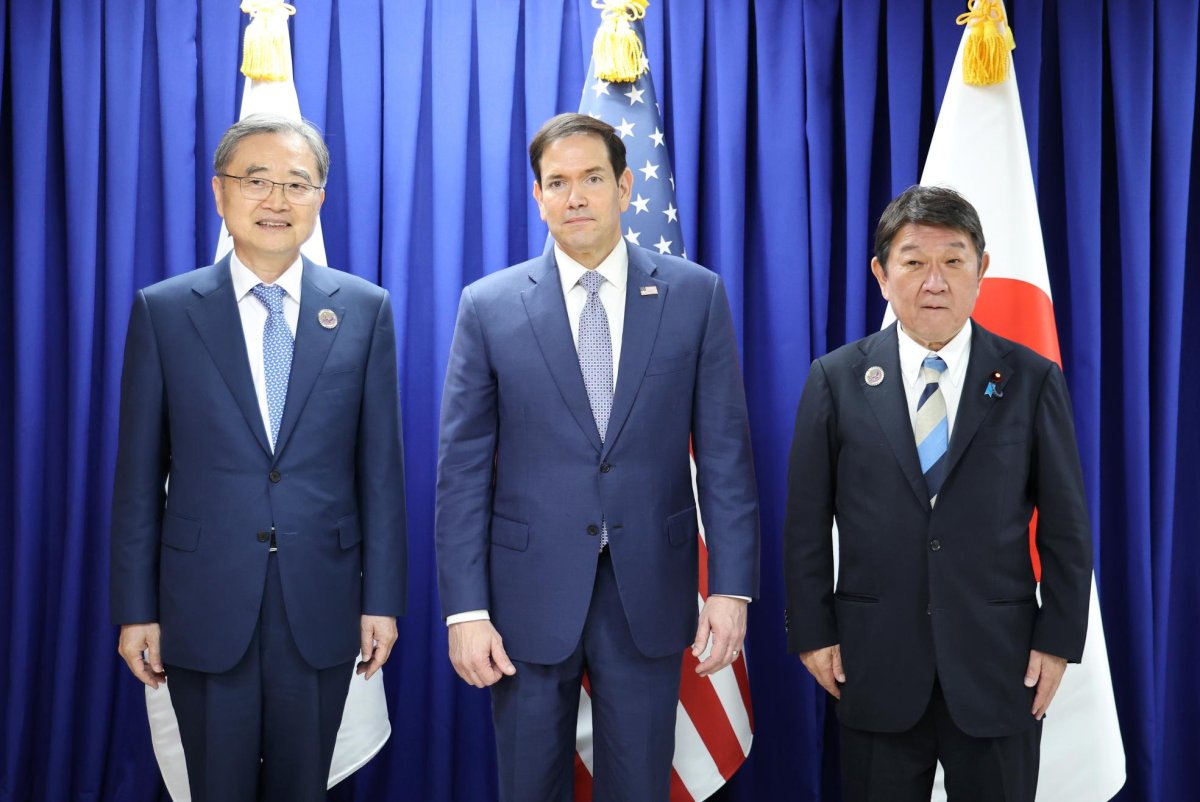
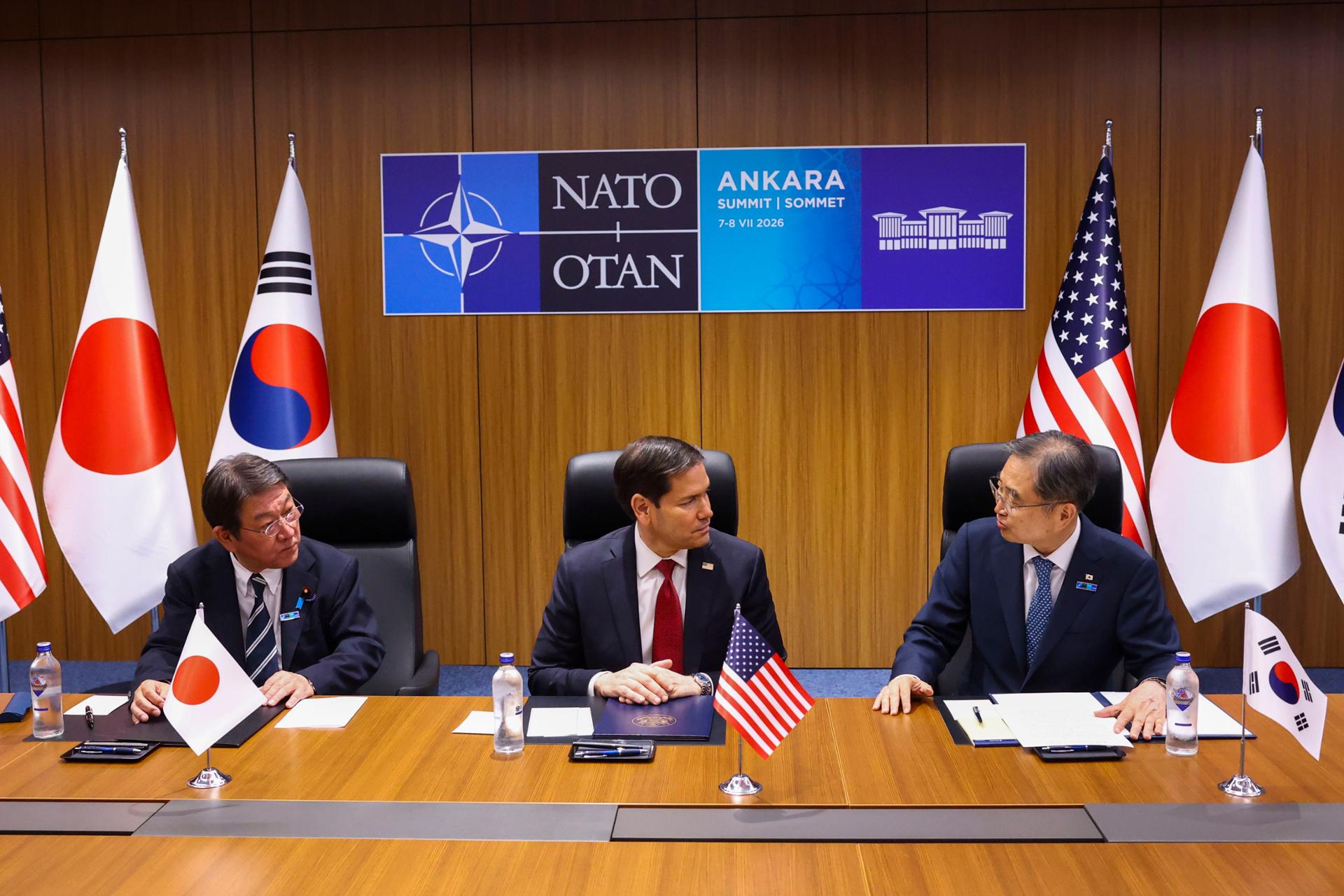
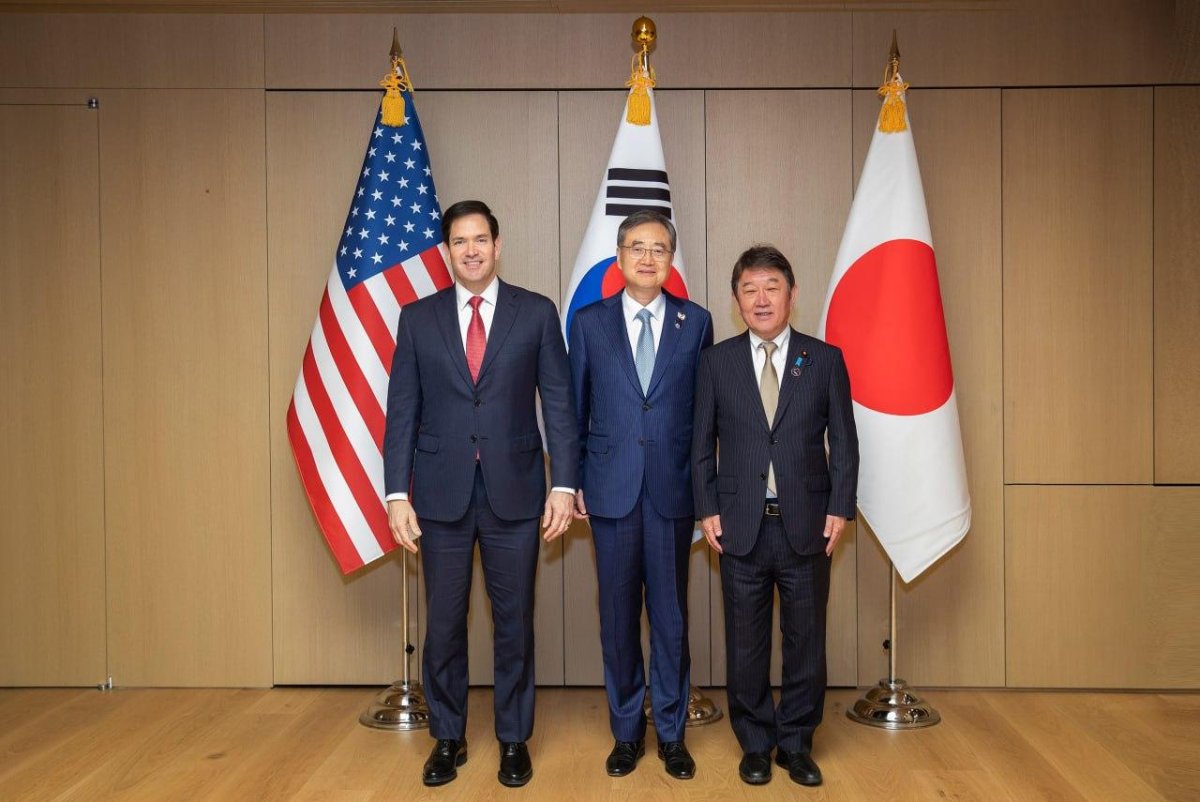
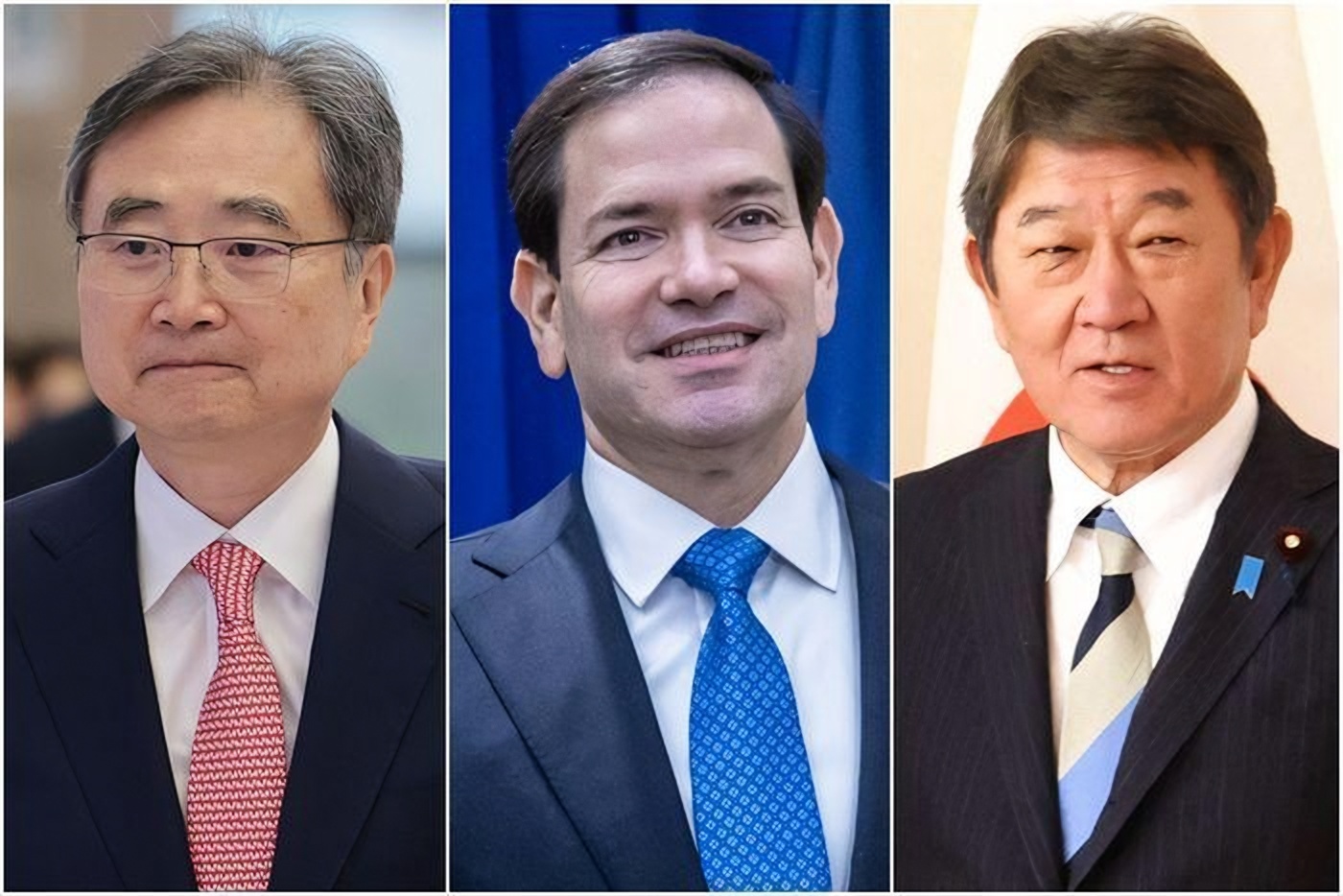
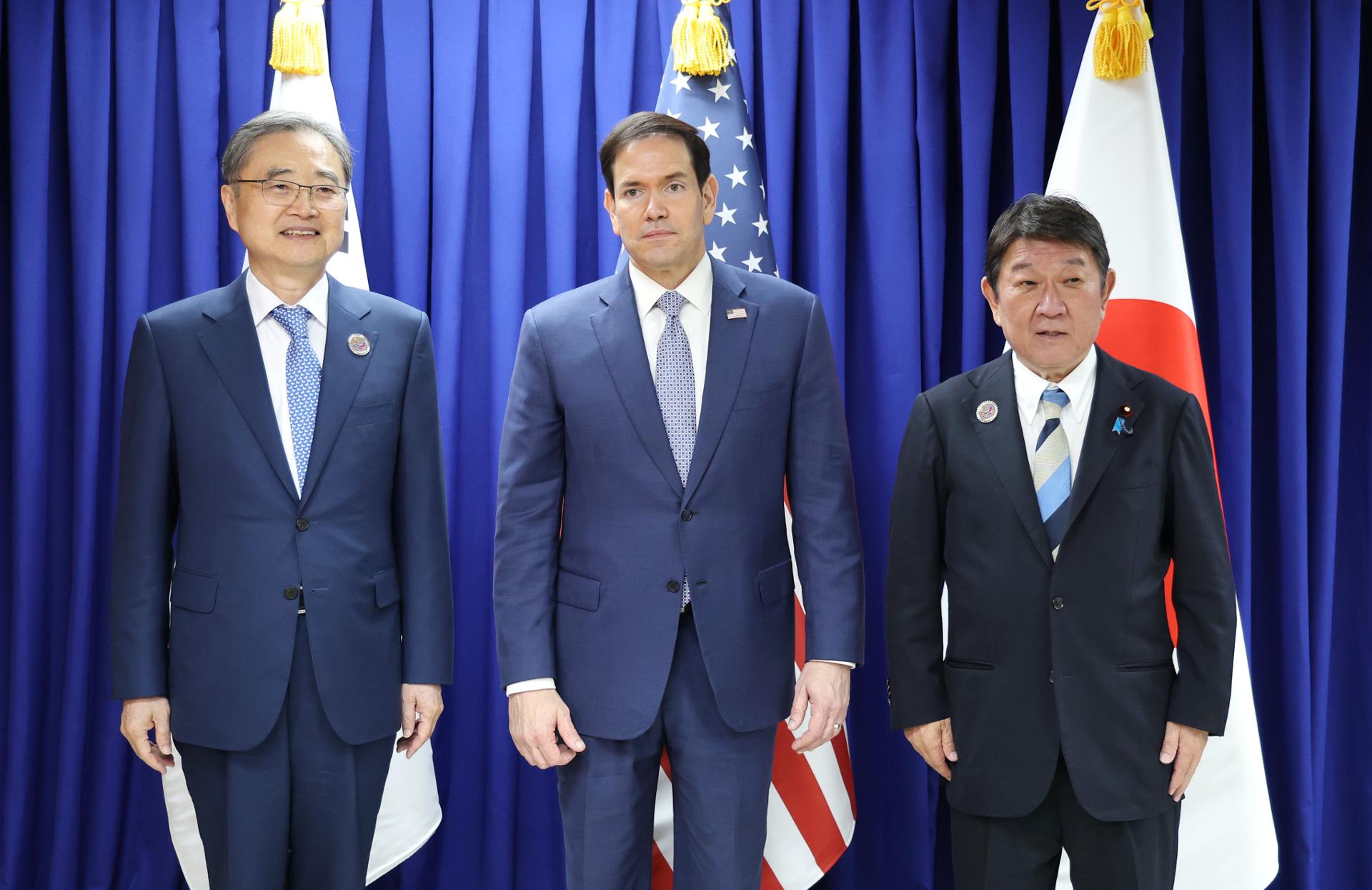
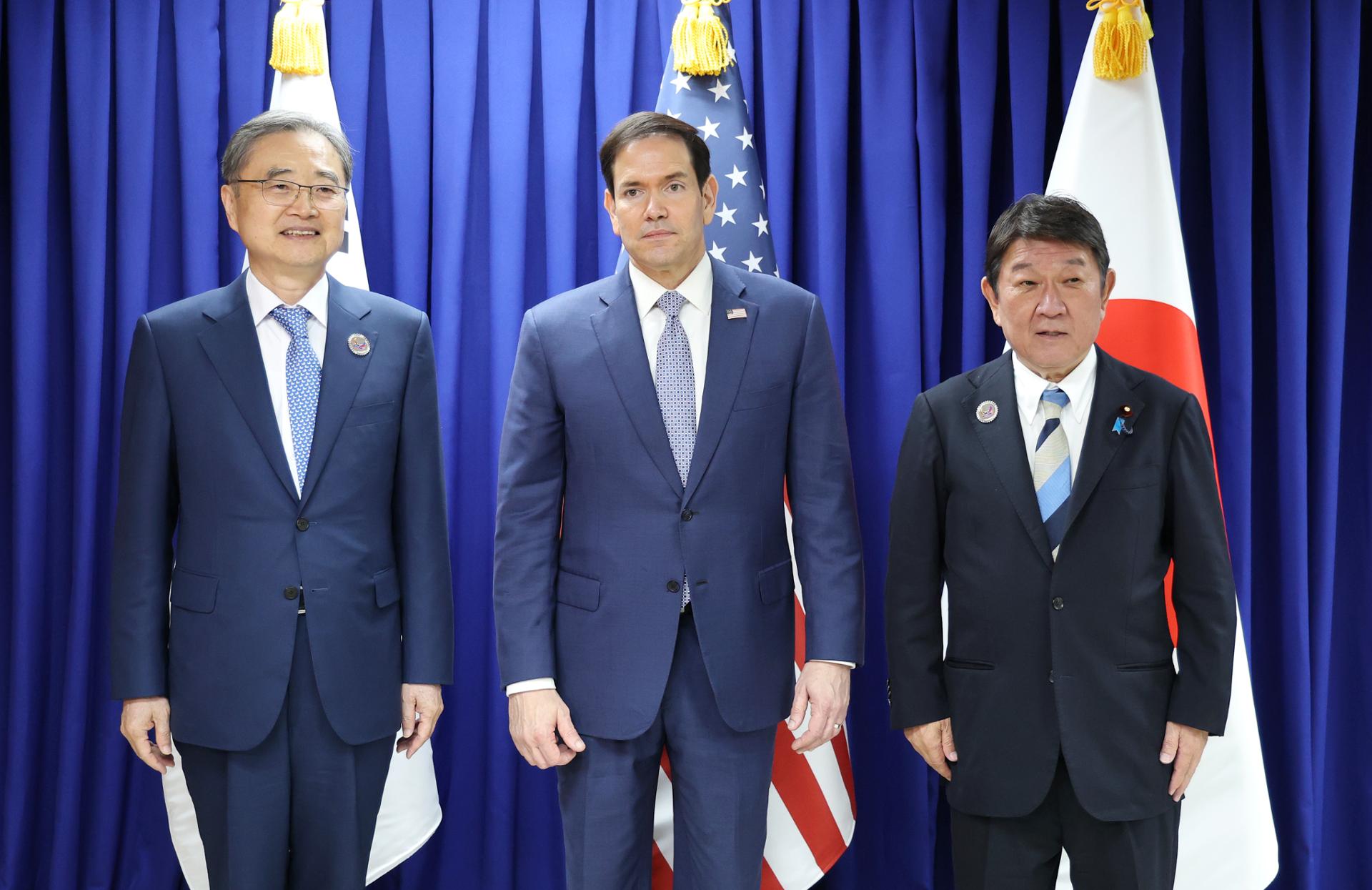
South Korean Foreign Minister Cho Hyun (left), US Secretary of State Marco Rubio (center) and Japanese Foreign Minister Toshimitsu Motegi greet one another during the South Korea-US-Japan foreign ministers' meeting held on the sidelines of the ASEAN-related foreign ministers' meetings at the Philippine International Convention Center (PICC) in Manila, the Philippines, on Wedneday. (Yonhap) The top diplomats of South Korea, the United States and Japan reaffirmed Wednesday their commitment to maintaining a robust deterrence posture against North Korea and upholding the goal of denuclearizing the Korean Peninsula, while agreeing to deepen cooperation on maritime security, supply chains and economic coercion, Seoul said.South Korean Foreign Minister Cho Hyun, US Secretary of State Marco Rubio and Japanese Foreign Minister Toshimitsu Motegi reached the agreements during trilateral talks in Manila on the sidelines of a series of Association of Southeast Asian Nations-related ministerial meetings, according to Seoul’s Ministry of Foreign Affairs.The ministers shared assessments of recent developments on the Korean Peninsula and agreed to maintain close coordination on North Korea policy, the ministry said.They also pledged to continue communication and cooperation aimed at maintaining peace and stability on the peninsula through dialogue and diplomacy, while preserving a strong deterrence posture against Pyongyang.The meeting took place just two weeks after the three diplomats met during the NATO summit in Ankara, Turkey. There, they reaffirmed their commitment to denuclearization and signed a memorandum of cooperation on promoting joint deployment of small modular reactors in third countries.Cho said the rapid succession of the meetings demonstrated the importance the three countries place on trilateral cooperation.He added that holding the latest talks during the ASEAN-related gatherings, which bring together key regional countries, allowed Seoul, Washington and Tokyo to send a united message of their resolve to strengthen coordination.Rubio and Motegi also welcomed the second trilateral meeting in two weeks and agreed to bolster cooperation among the three countries, according to the ministry.The ministers discussed regional and global developments, including those in Northeast Asia and the Middle East. They agreed closer policy coordination was needed amid growing international uncertainty.They exchanged views on attempts to unilaterally change the status quo and reaffirmed their commitment to freedom of navigation and overflight, the lawful use of the seas, and compliance with international law as reflected in the United Nations Convention on the Law of the Sea.The three also pledged to strengthen maritime security across the Indo-Pacific region, including Southeast Asia.The language appeared to reflect shared concerns over maritime tensions in the region as well as threats to commercial shipping in the Middle East, where the conflict involving the United States and Iran has raised fears of disruption to major energy routes.Speaking separately in Manila on Wednesday, Rubio said Washington remained open to negotiations with Tehran but questioned whether Iran was serious about diplomacy, according to Reuters.“The problem we're having right now is that they're not serious about talks. If they're serious, we're serious. If they're not, then we will do what's necessary to protect our interests, and also the interests of our allies,” Rubio said.He also warned against allowing Iran to control the Strait of Hormuz, saying domination of a vital international waterway by any one country would set “a very dangerous precedent” with implications extending to the Indo-Pacific region.The conflict has heightened concerns over global energy security as Iran continues to threaten shipping through the Strait of Hormuz, while Yemen’s Iran-aligned Houthi rebels have announced a naval blockade targeting Saudi Arabia.US President Donald Trump has previously called on allies, including South Korea, to contribute to efforts to safeguard freedom of navigation in the strait or otherwise support regional stability.Seoul, however, has said it has received no new request from Washington for a naval deployment and that discussions have focused on broader international contributions when conditions permit.During Wednesday’s meeting, the three ministers also welcomed the expansion of trilateral cooperation into areas such as combating transnational crime, disaster relief and humanitarian assistance, according to the ministry.They agreed to pursue further consultations aimed at producing concrete and visible results.On economic security, the ministers reviewed major risks facing the global economy and stressed that cooperation among trusted partners had become increasingly important amid continued volatility.They agreed to deepen practical cooperation in nuclear energy, critical minerals, and critical and emerging technologies, drawing on the respective strengths of the three countries.The ministers also pledged to expand coordination on protecting advanced technologies, diversifying supply chains, strengthening economic resilience, responding to economic coercion and enhancing Arctic security.North Korea’s expanding ties with Russia and China had been expected to feature prominently in the talks.“The three ministers are expected to share assessments of recent developments in North Korea's relations with Russia and China and exchange views on effective ways to respond,” Foreign Ministry spokesperson Park Il said at a regular briefing Tuesday.Park said the ministers were also expected to discuss broader regional developments, with particular attention to the Korean Peninsula, as North Korea steps up diplomatic engagement with Moscow and Beijing.Although the ASEAN Regional Forum remains the only multilateral security forum in the region that includes North Korea, Pyongyang appeared set to skip the meeting for a second consecutive year.Instead, North Korean Foreign Minister Choe Son-hui recently traveled to Russia, where she met President Vladimir Putin and other senior Russian officials.Park said Seoul was closely monitoring Choe’s visit as well as a recent increase in high-level exchanges between North Korea and China marking the 65th anniversary of their friendship treaty.“The government's basic position is that exchanges between North Korea and Russia, as well as between North Korea and China, should contribute to peace and stability on the Korean Peninsula and help bring North Korea back to dialogue. We will continue diplomatic efforts toward that end,” Park said.The three ministers agreed to use the momentum from Wednesday’s meeting to activate consultations at different levels and across a wider range of fields to deliver tangible benefits to their citizens.They also reaffirmed their intention to meet and communicate as frequently as possible, including on the sidelines of future multilateral gatherings.