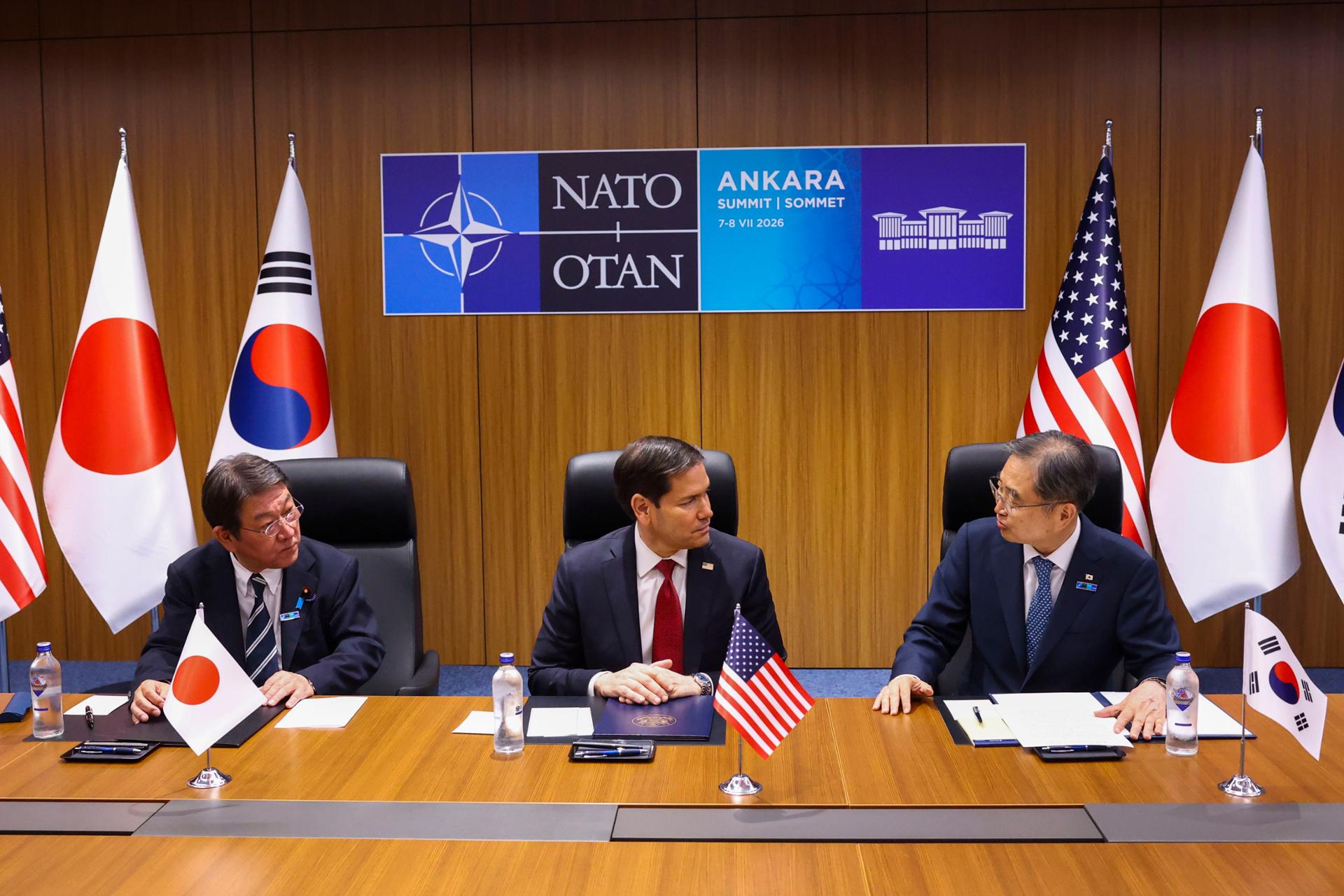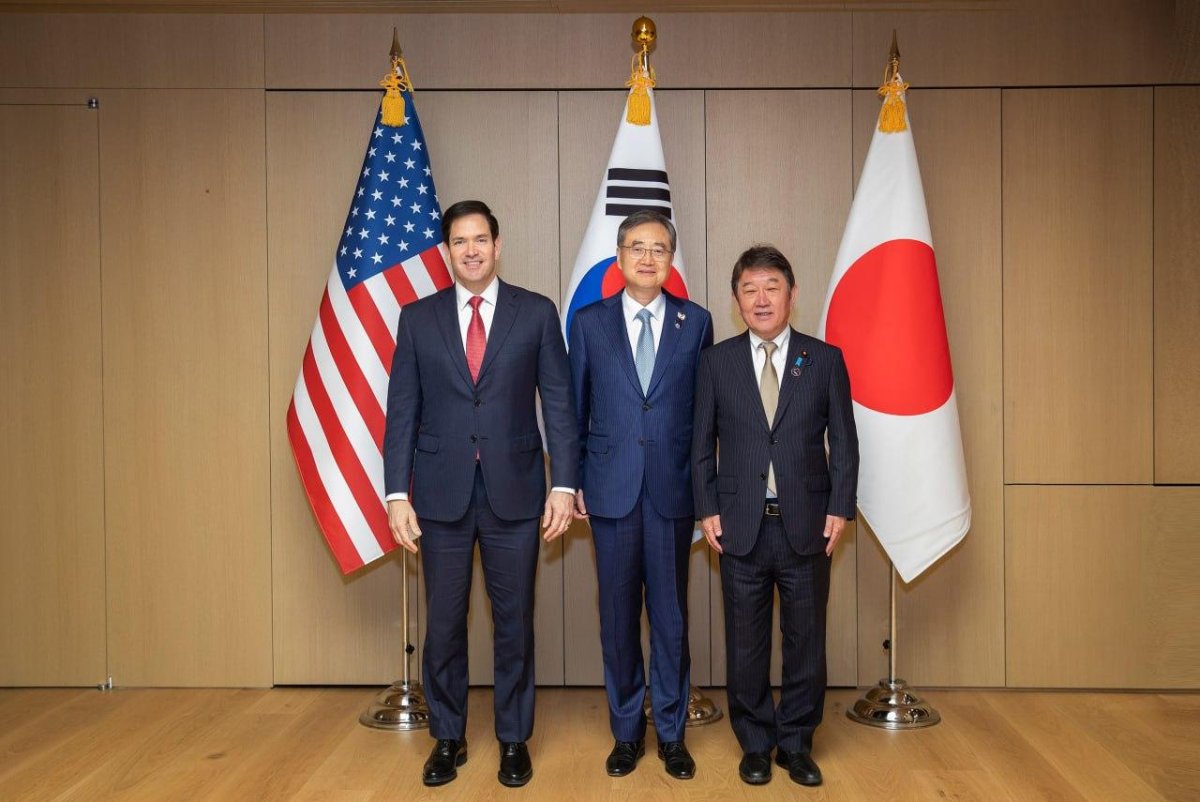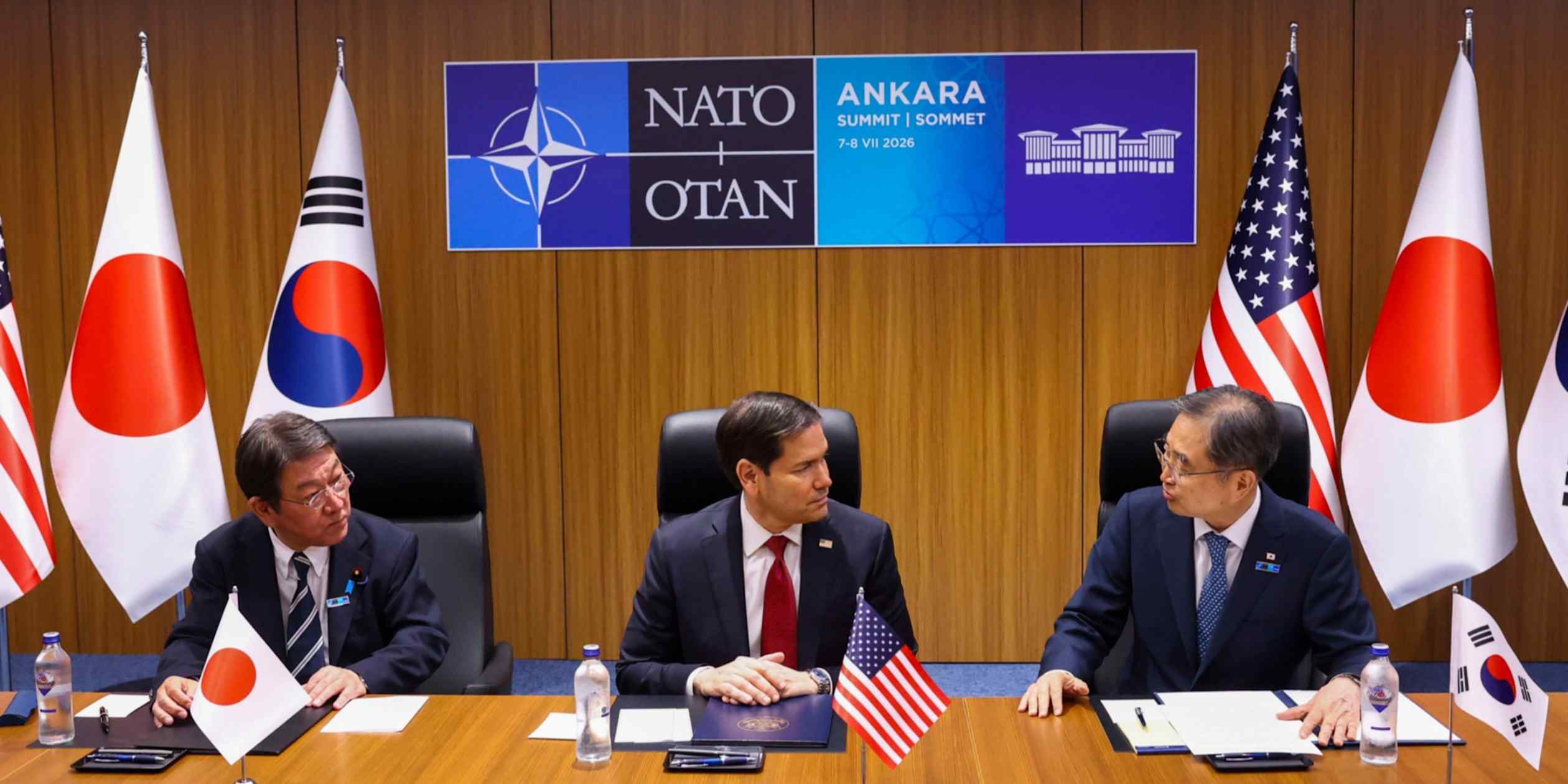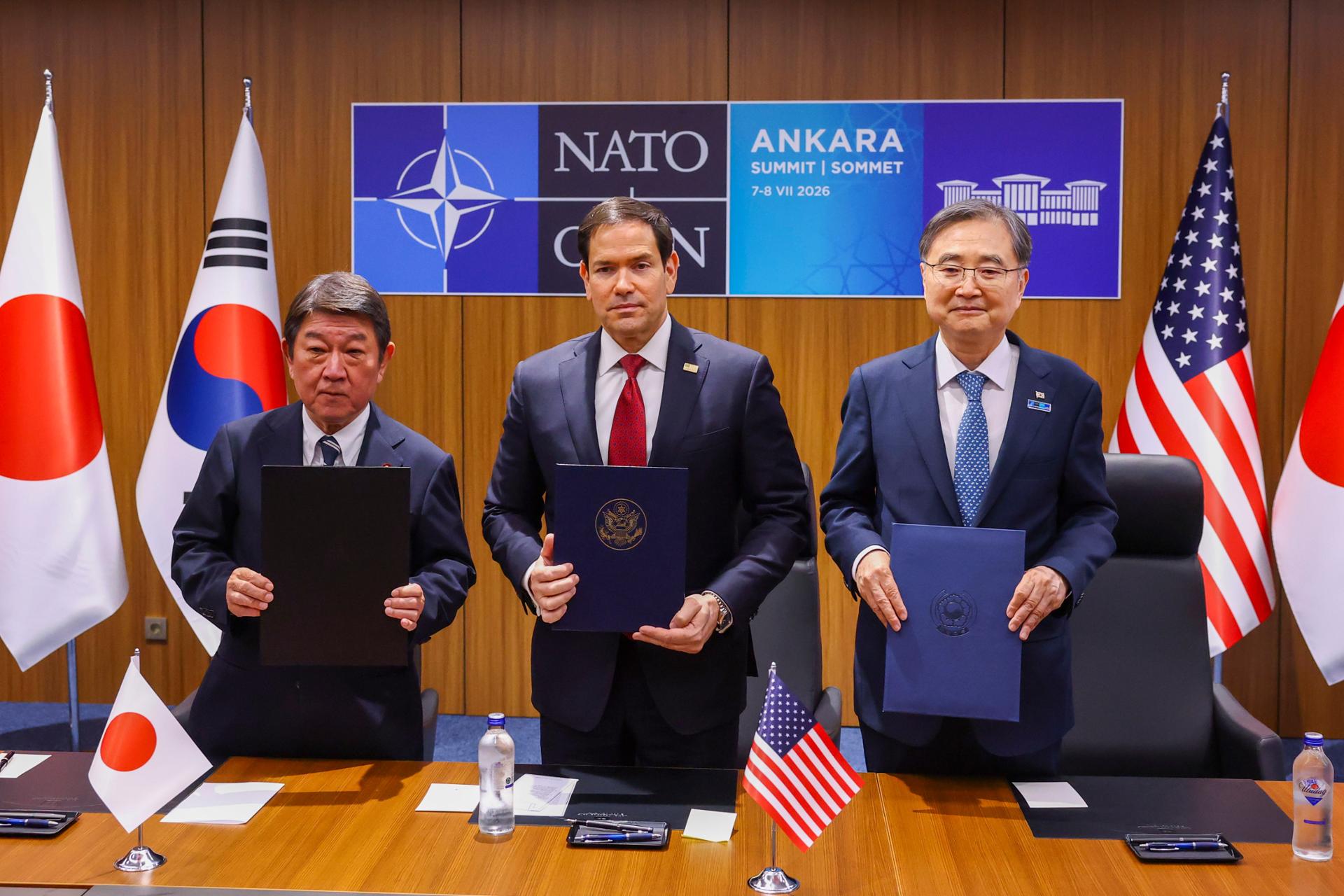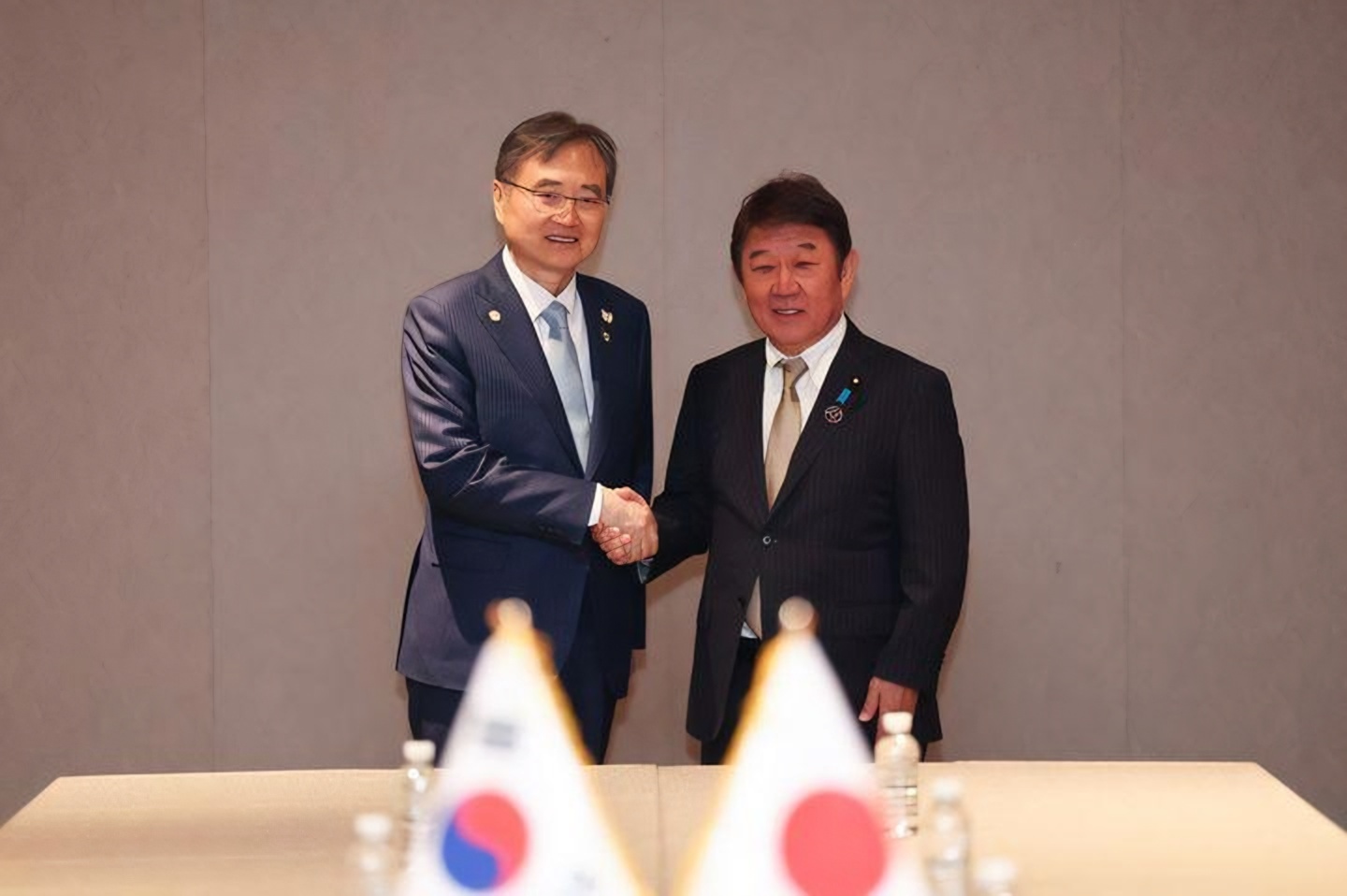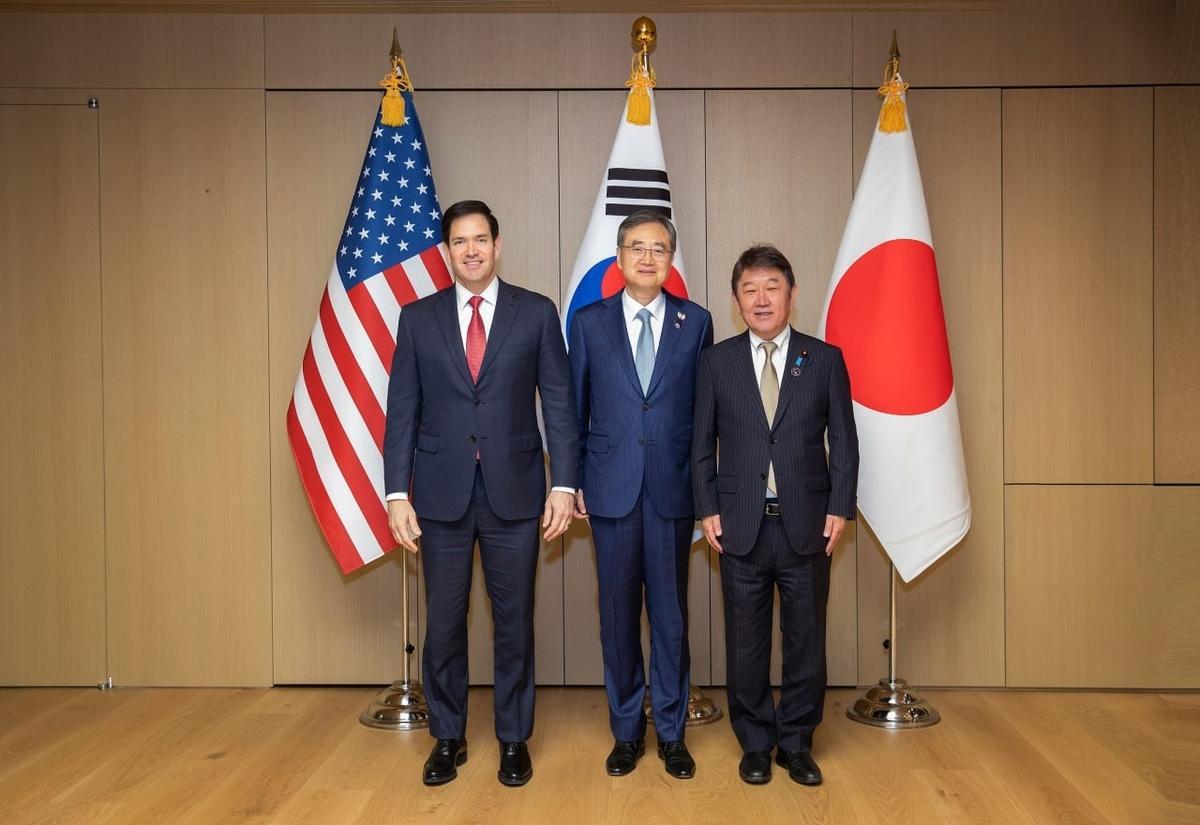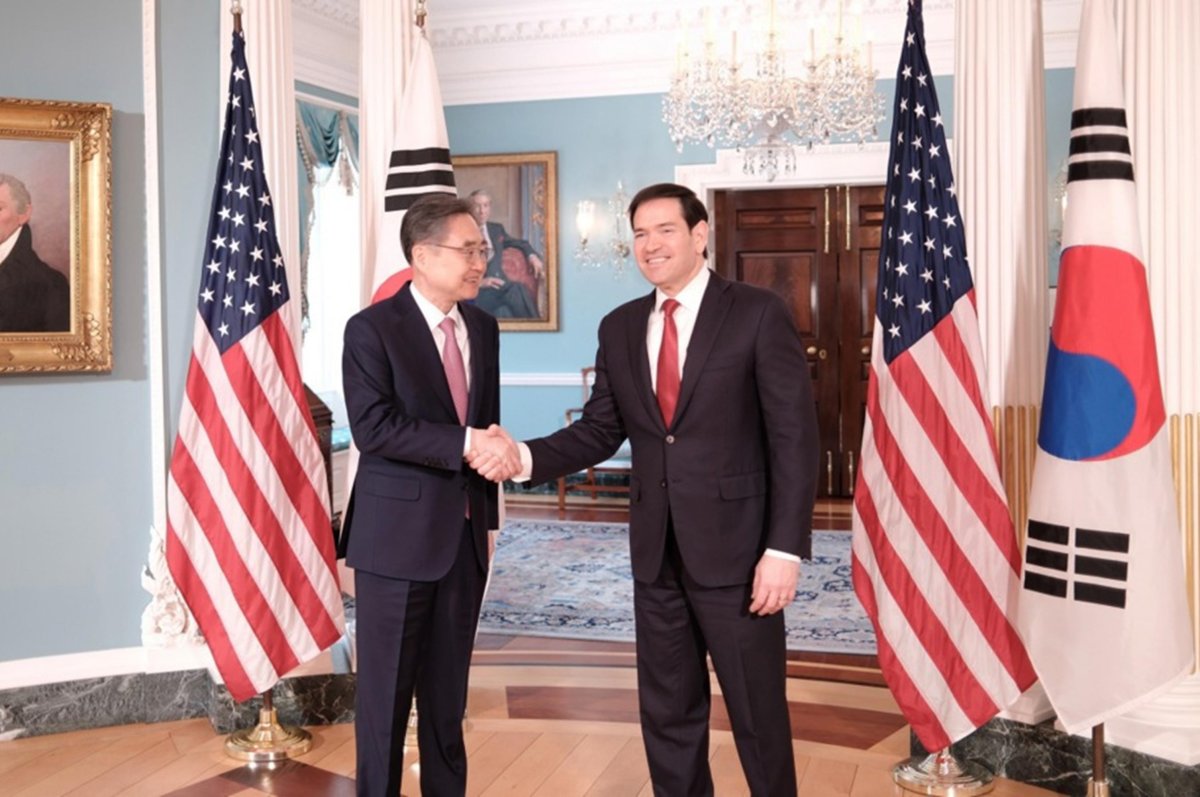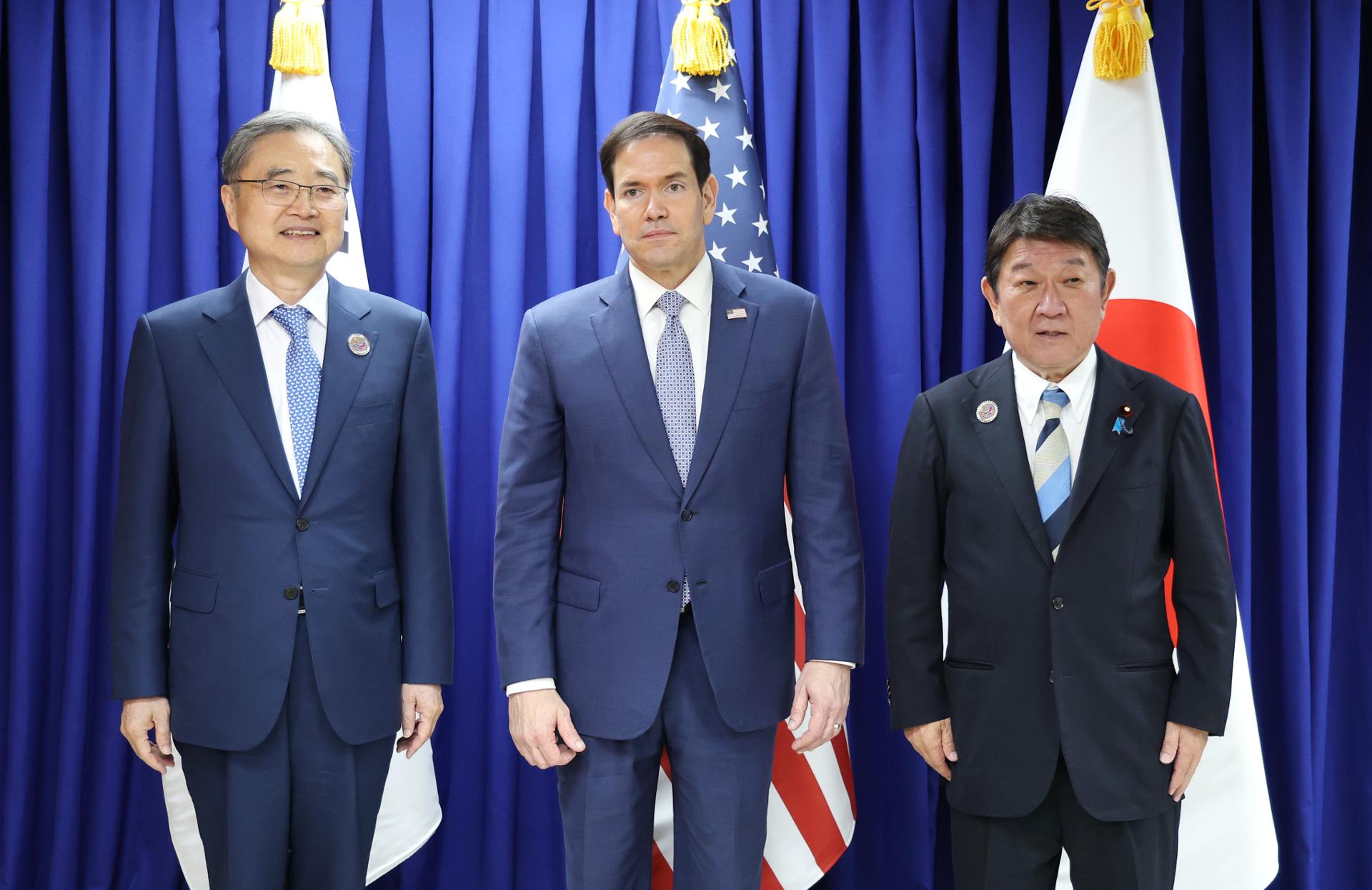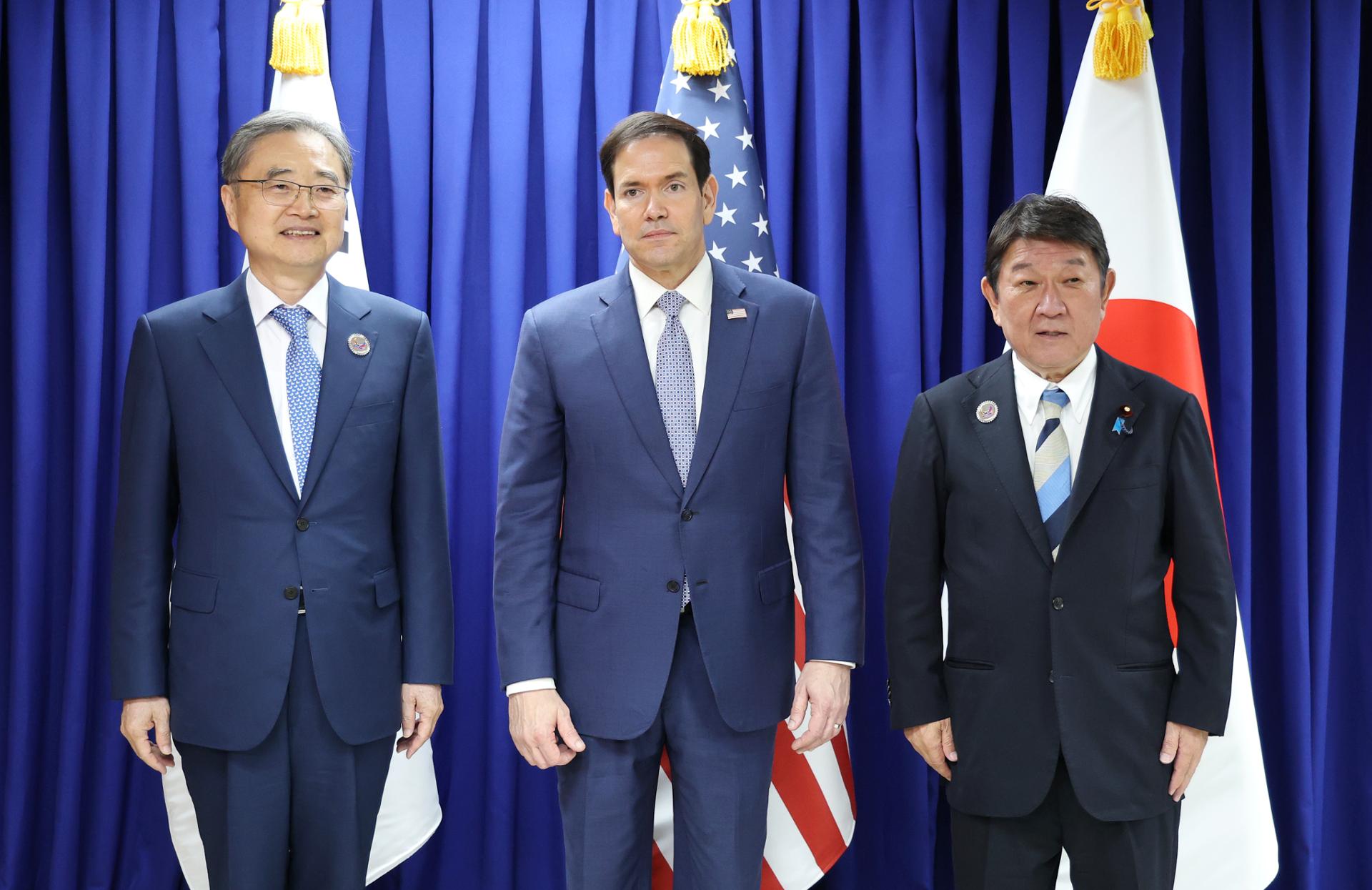
Foreign Minister Cho Hyun (right), US Secretary of State Marco Rubio (center) and Japanese Foreign Minister Toshimitsu Motegi hold talks on the sidelines of the North Atlantic Treaty Organization summit in Ankara, Turkey, Tuesday. (Ministry of Foreign Affairs) South Korea, Japan and the US reaffirmed their commitment to the denuclearization of the Korean Peninsula and agreed to deepen economic security cooperation, including through a new pact to support the deployment of small modular reactors in the Indo-Pacific region, Seoul’s Foreign Ministry said Wednesday.Foreign Minister Cho Hyun, US Secretary of State Marco Rubio and Japanese Foreign Minister Toshimitsu Motegi held trilateral talks Tuesday on the sidelines of the North Atlantic Treaty Organization summit in Ankara, Turkey.“The ministers shared their assessments of the situation on the Korean Peninsula and agreed to maintain close coordination on North Korea policy, including efforts to counter Pyongyang’s illicit cyber activities,” the ministry said in a release.“They also reaffirmed their commitment to the denuclearization of the Korean Peninsula and agreed to continue efforts to preserve peace and stability through dialogue and diplomacy,” it added.The meeting marked the first trilateral talks since the three top diplomats met on the sidelines of the Asia-Pacific Economic Cooperation summit in Gyeongju in October.During the meeting, the three countries also agreed to strengthen practical cooperation in economic security, supply chain resilience and responses to economic coercion, building on cooperation in areas such as nuclear energy, artificial intelligence and quantum technology.As part of those efforts, the ministers signed a memorandum of cooperation aimed at establishing a framework for trilateral cooperation to accelerate the deployment of small modular reactors in third countries, particularly in the Indo-Pacific region.The agreement is designed to support multiple SMR construction projects through standardized reactor designs, simplified contracting procedures, the formation of trilateral industry consortiums, project financing, capacity building and the provision of technology, fuel, equipment and related services, according to Seoul’s Foreign Ministry.Both the ministry and the US State Department said the framework would allow the three countries, each with strengths in civilian nuclear energy, to promote mutually beneficial cooperation among their nuclear industries."One of the most important issues in the world today, as we’re reminded of even now with events happening in the Straits of Hormuz and in other places, is energy security," Rubio said during the memorandum signing ceremony, according to a press release by the US State Department. "And so this Memorandum of Understanding between our three nations today allow us to move forward on joint work on small modular reactors, which is going to be in many ways the future of energy generation in a very safe, efficient way, cost-effective way that will make our economies stronger," he added.The framework aims to reduce project development risks, achieve economies of scale, encourage private-sector investment, streamline licensing procedures and optimize supply chains by developing standardized deployment models for SMR projects.Separately, the Trump administration announced more than $10 million in new funding for the State Department's Foundational Infrastructure for the Responsible Use of Small Modular Reactor Technology program to provide technical support to Indo-Pacific countries deploying safe, secure and reliable nuclear energy. The funding will support SMR project development activities and establish a regional training hub for workforce development.Rubio also welcomed the continued improvement in relations between Seoul and Tokyo, according to the US State Department.“I’m also very pleased to see that Japan and South Korea continue to engage one another with respective visits,” he said. “I know that it’s a relationship that’s been tested in recent times and in the past, but it’s one that I think has grown stronger over the last three to four years.”Rubio added that Washington has sought to foster closer ties between the two countries because South Korea and Japan are “two very close and important allies” of the United States.Although South Korea and Japan are both treaty allies of the US, they are not formal allies of each other under a mutual defense treaty. Rubio’s reference to an “alliance” between the two therefore appeared to refer to their political and strategic partnership rather than a legal alliance.Motegi welcomed the signing of the SMR cooperation pact, saying the three countries had been making “concrete efforts” since their last meeting, including strengthening critical mineral supply chains and responding to North Korea’s cyber threats.Cho said SMRs were “one of the many areas” where the three countries could work together in facing global challenges. He also congratulated Rubio on the 250th anniversary of the United States and thanked him for Washington’s role in efforts to promote peace in the Middle East and other regions.Japanese media outlets, including Kyodo News and Jiji Press, reported that the three ministers shared concerns over China’s recent submarine-launched ballistic missile test toward the Pacific Ocean.Japan’s Foreign Ministry said the ministers exchanged views on attempts to unilaterally change the status quo by force or coercion, in an apparent reference to China, reaffirmed the importance of peace and stability across the Taiwan Strait and reiterated their commitment to the complete denuclearization of North Korea.The three foreign ministers agreed to continue meeting and maintaining close communication as frequently as possible while working to deliver tangible results in various areas of trilateral cooperation, Seoul’s Foreign Ministry said.
S. Korea, US, Japan reaffirm denuclearization on peninsula, deepen energy cooperation
South Korea, Japan and the US reaffirmed their commitment to the denuclearization of the Korean Peninsula and agreed to deepen economic security cooperation, in
864 words~4 min read